

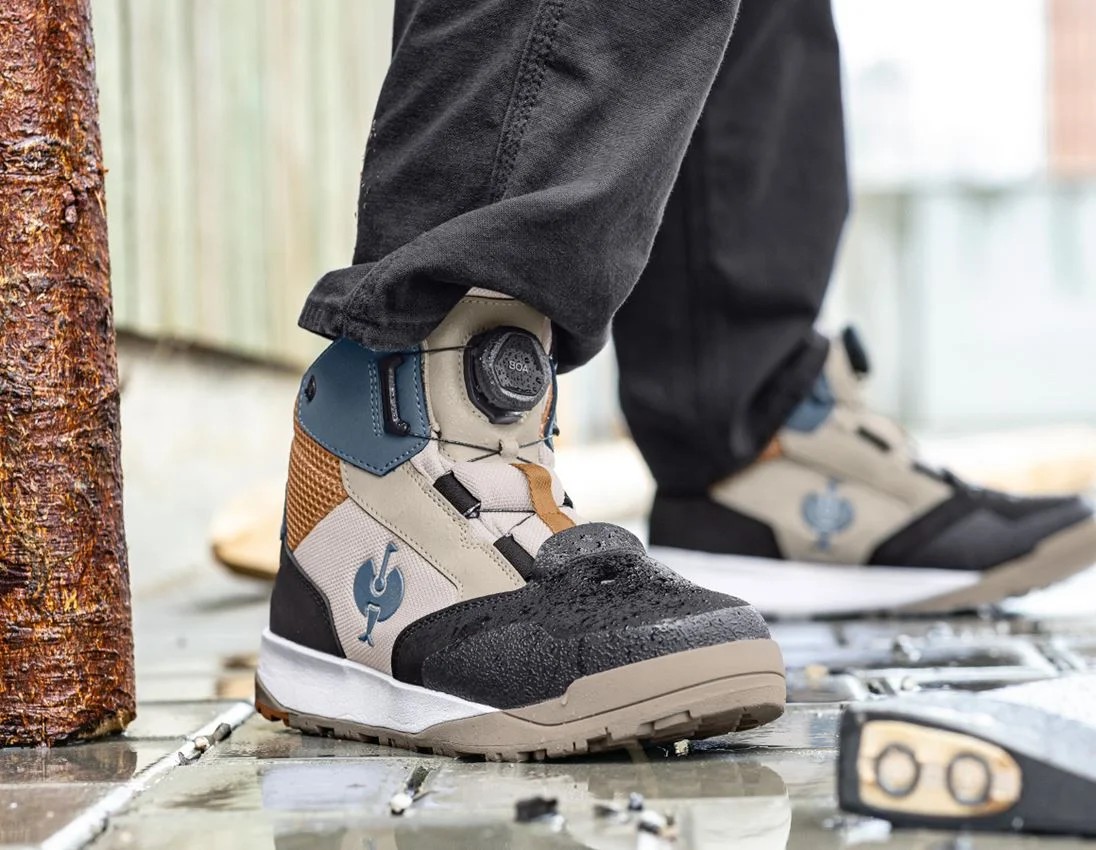
Image credit: Strauss.
Safety in the workplace is no laughing matter. This is particularly the case when referring to industrial environments associated with numerous on-site hazards. Although an ounce of protection will certainly go a long way, we also need to appreciate the importance of the proper footwear. Knowing what to look for in a pair of trainers rated for industrial use can help to prevent slips and falls, they will provide extra support to the wearer, and in some cases, they may actually be deemed mandatory.
What are the Most Effective Ways to Improve Workplace Safety?
It has often been said that safety begins from the ground up. In other words, employees need to be provided with a solid foundation when performing everyday tasks. This is why quality footwear manufacturers such as Strauss have developed a bespoke line of safety trainers for industrial environments. However, it is also important to mention that the features of the footwear in question must meet stringent standards before being deemed adequate; especially when referring to scenarios where a number of on-site hazards may be present. This observation is a convenient way to introduce the next section.
How do Safety Trainers Contribute to Overall Workplace Protection?
One important concern to mention before moving on involves the regulatory requirements that industrial workplaces must now adhere to. These rules have become much more stringent over the past few years, and many recommendations are associated with safety apparel. Footwear is a prime example. Some of the ways in which quality trainers can protect employees from accidents include:
- Reducing the chances of slips and falls.
- Providing additional support to the instep, the ankle, and the heel.
- Offering a more balanced operational platform.
- Reducing fatigue that may result in an accident.
- Decreasing the chances of specific injuries (such as an Achilles tendon strain).
Furthermore, the trainers should be available in a wide range of sizes and configurations. There may also be times when specific features are required (such as when working in an environment known for the presence of caustic liquids). It is the responsibility of management to determine any unique requirements that need to be addressed.
What Standards Should Safety Trainers Meet for Industrial Use?
Although there is little doubt that smart technology continues to transform the modern workplace, footwear tends to rely more on brick-and-mortar solutions. Having said this, trainers now offer a host of elements that can provide superior levels of protection at all times. Many of these are meant to address the standards put forth in EN ISO 20345 regulations. Examples include:
- A fully enclosed heel
- Impact protection along the back of the trainer
- A composite and/or steel toe cap
- Resistance to hazardous liquids such as fuel
- Anti-static properties
There may also be times when footwear must be equipped with high-visibility features (such as reflective stripes). Once again, this will be determined by the location in question. According to a recent study, more than 511,000 workers across the United Kingdom suffered some type of injury during the 2024-25 fiscal year. It is clear to see why choosing the appropriate footwear is so important. After all, one wrong step can quickly lead to disaster.