


A transformation at Chivas Brothers’ Kilmalid site is bringing whisky, a centuries-old product, into the modern age. There’s no need to change the drink, so generations of maturation and distillation processes remain largely unchanged. But to meet global demand, innovative operational and technological decisions needed to be made. I went along to see how this transformation has impacted people, product innovation and the future of whisky making at Kilmalid.
Key takeaways
- Tradition remains at the core of whisky making: Despite major upgrades, the fundamental processes of distillation and maturation haven’t changed in centuries. The industry is careful to preserve the craft while modernising only where necessary
- Technology is transforming bottling, not the spirit: Innovations like automation, robotics and digital inspection are mainly applied to bottling and packaging. This allows higher efficiency and scale without compromising the quality of the whisky
- Modernisation is driven by global demand and efficiency: The Kilmalid site produces massive volumes (around 20 million cases annually), requiring high-speed production lines and data-driven operations to stay competitive in a global market
- Workforce skills are evolving alongside technology: Roles have shifted from manual labour to more technical, programming-focused work. Training, upskilling and apprenticeships are essential to help employees adapt to increasingly complex systems
- People and communication are critical to successful transformation: The success of Project Optimus depended heavily on involving employees, clear communication and knowledge sharing between experienced workers and newer talent – ensuring
FAQs
- Which whisky making processes have remained relatively unchanged for centuries?
- What year did the Kilmalid site open?
- What name has been given to the transformation project at Kilmalid?
- What was key to driving transformation at the site?
The word whisky (or whiskey, if you’re from Ireland or the US) comes from the Gaelic word uisce (or uisge), meaning ‘water’. The water was certainly falling from the sky when I pulled up to the Kilmalid site in Dumbarton – bad weather, even by Scottish standards. I came all that way because I wanted to see how a whisky manufacturing site operated, and Kilmalid is the flagship bottling plant of Chivas Brothers, owned by Pernod Ricard.
A case of whisky normally includes 12 750ml bottles, totalling nine litres. This particular site produces around 20 million nine-litre cases every year. This makes Kilmalid a central node in the company’s global supply chain. With so much whisky heading out the doors, the breadth of activity is unsurprisingly significant. Sarah Badesha is the Head of Engineering at Chivas Brothers and was a warm and welcoming presence throughout the tour.
“We do everything from blending and processing the spirit, bringing it to the line, bottling and putting the spirit into cases to get it to consumers,” she said. To meet global demand, Chivas Brothers has committed significant capital investment into upgrading the site. A transformation termed ‘Project Optimus’ has taken place in recent years, which has seen the installation of a high-speed bottling line at the Clyde bottling hall.
With that has come a raft of new technologies: digital inspection, data capture and automation. But how does this impact a craft that requires patience and care?
Tradition meets tech
We featured John Dewar & Sons, owned by Bacardi, in our last magazine issue. And I was struck by something that Whisky Category Director Angus Holmes said of that company: “We are not aiming to change the craft of whisky production.” In a similar way, Chivas Brothers is deploying advanced technology to assist in its production, but essentially, there are some things you don’t mess with.
And Sarah was clear that the core of whisky-making remains unchanged in hundreds of years: “The processes around distillation and maturation haven’t massively altered,” she said. “We still make whisky the same way; however, the bottling and production environment has had to evolve significantly to remain competitive in a modern environment.” She continued: “We need to have the ability to take our beautiful aged spirit and efficiently put it into all sorts of products.”
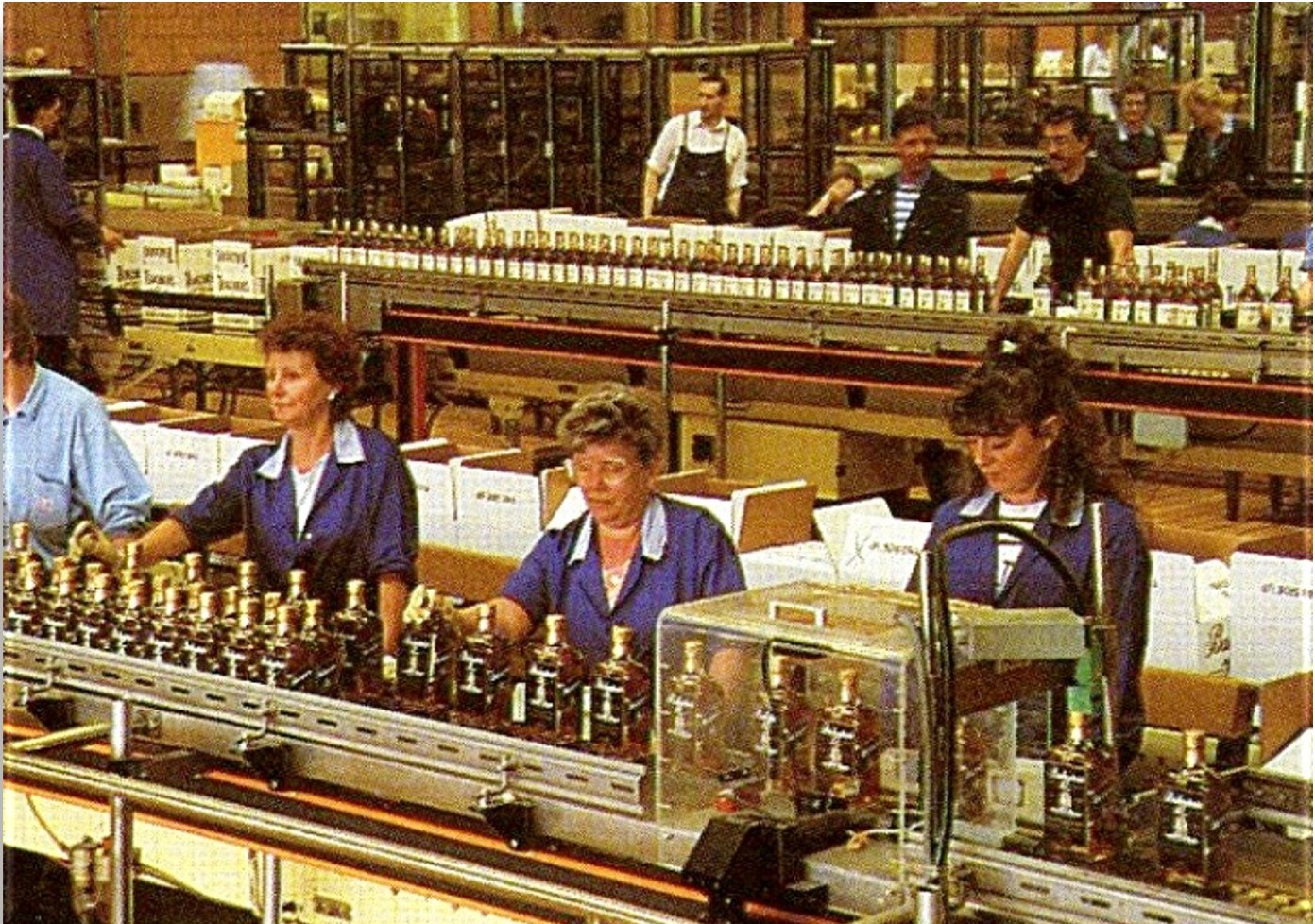
The transformation of the Kilmalid site illustrates this shift. When the plant opened in 1982, packaging and bottling were still manual. “There was far less automation and many more low-skilled jobs involved in making whisky.”
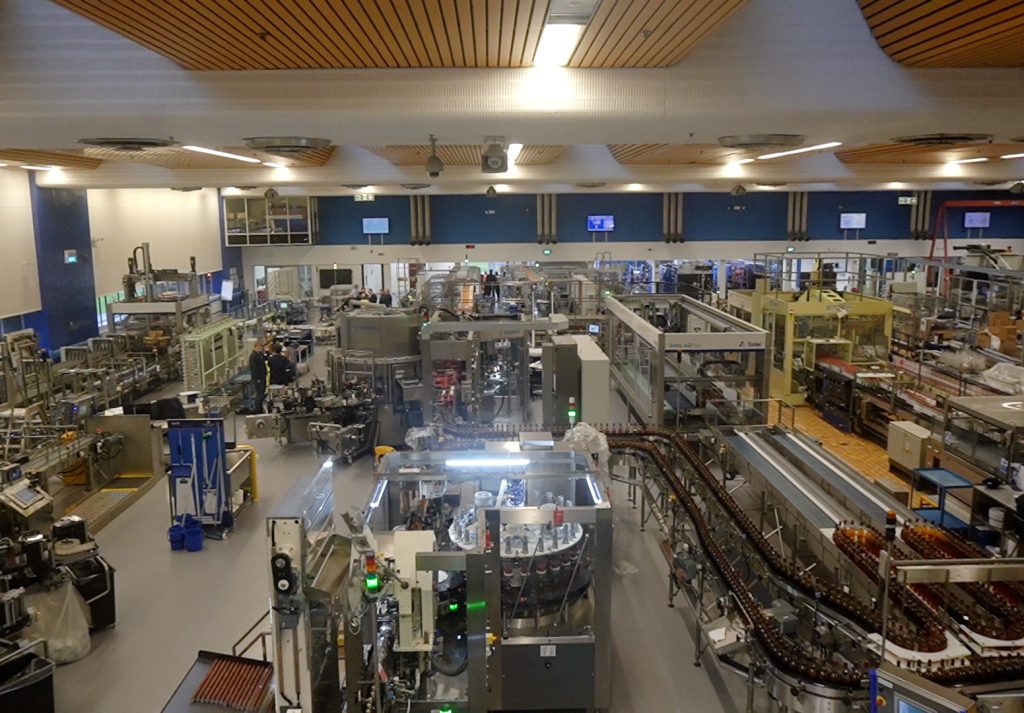
Today, the same Clyde bottling hall is a hypnotic, dizzying spectacle of sound and colour. Bottles chink as they pass meticulously through the lines at high speed and high volume. Bottles line up neatly, transparent and empty for a moment, then fill simultaneously with deep amber-coloured Glenlivet, frothing briefly before settling.
This is where modern manufacturing processes have become ubiquitous; automation, camera inspection and digital information all help to run the lines.
Tech adoption in a mature way
However, Sarah explained that the Chivas Brothers approach is pragmatic and outcome-focused. The transformation at Kilmalid is undoubtedly reaping rewards, but she insisted: “The key lies in identifying the problem you’re trying to solve rather than introducing digital for the sake of it.”
The site – and indeed the whisky industry more generally – is a relatively late adopter of digital technologies, so maturity isn’t quite at the level of some other sectors. But I’d definitely say that this approach of targeted execution and implementation in areas of need reflects a mature mindset.
That’s how technology is being utilised at Kilmalid. Performance tracking of the lines, for example, builds on an existing process, but digital inspection has improved it. As a result, operators can capture data from the lines, understand where downtime occurs, identify pain points and drive performance improvement.
The use of robotics for complex packaging has also been introduced. “For a premium product, we didn’t feel that an off-the-shelf packer was something that we could use because of the delicate nature of the product,” said Sarah. “Instead, we worked with a robotics company in Scotland to develop something bespoke.”
But for some products, the old ways live on. As Sarah explained: “There should always be a place for some of our products to be hand finished. “We have some ultra-premium ranges that sell for hundreds of thousands of pounds that are essentially pieces of art. We’re never going to automate the bottling and finishing of those products, and nor should we ever try to.”
Give the people what they want
With such a contrast between the site now and how it looked in the 1980s, jobs and skills have evolved significantly. The whisky industry has a longstanding tradition of apprenticeship programmes, which have had to adapt as the role of engineers change. “We’ve had quite a rich heritage of training our own engineers for many decades,” said Sarah.
“But the nature of what’s required of engineers has shifted significantly. Much of our equipment is PLC-driven, and there’s a lot more programming involved. This has required training programmes to be adapted to ensure that they’re fit for the future.” As equipment becomes more complex, the ability to operate, maintain and improve it directly affects productivity, downtime and cost efficiency.
Old Clyde bottling hall
Chivas Brothers has a dedicated training department focused on upskilling, supplemented by external training. And occasionally, external skills are brought in to support staff development, “where they can learn on the job,” as Sarah put it. This ensures that the workforce can fully utilise the modern technology they are working with.
In fact, this was central to Project Optimus – organisational transformation and ensuring people were ready to benefit from change. Sarah emphasised that the success of such initiatives depends heavily on people, and that communication was absolutely central: “Telling people what’s coming, helping them to understand why we’re doing it, when things are happening and how it will impact them – this was all really important.
“Communication isn’t a big enough word for it. We wanted to make sure staff could take ownership.” The project involved a wide team covering all departments within manufacturing. Operators helped build the programme and were involved in the design of the lines.
“We felt that this was fundamental for the people who would be operating the machines. We took them out to the factory acceptance tests, there was a big training programme, and we let them familiarise themselves with their new work areas before they got started.”
This level of engagement improves implementation quality, reduces disruption and increases the likelihood that new systems are used effectively.
Pass it on
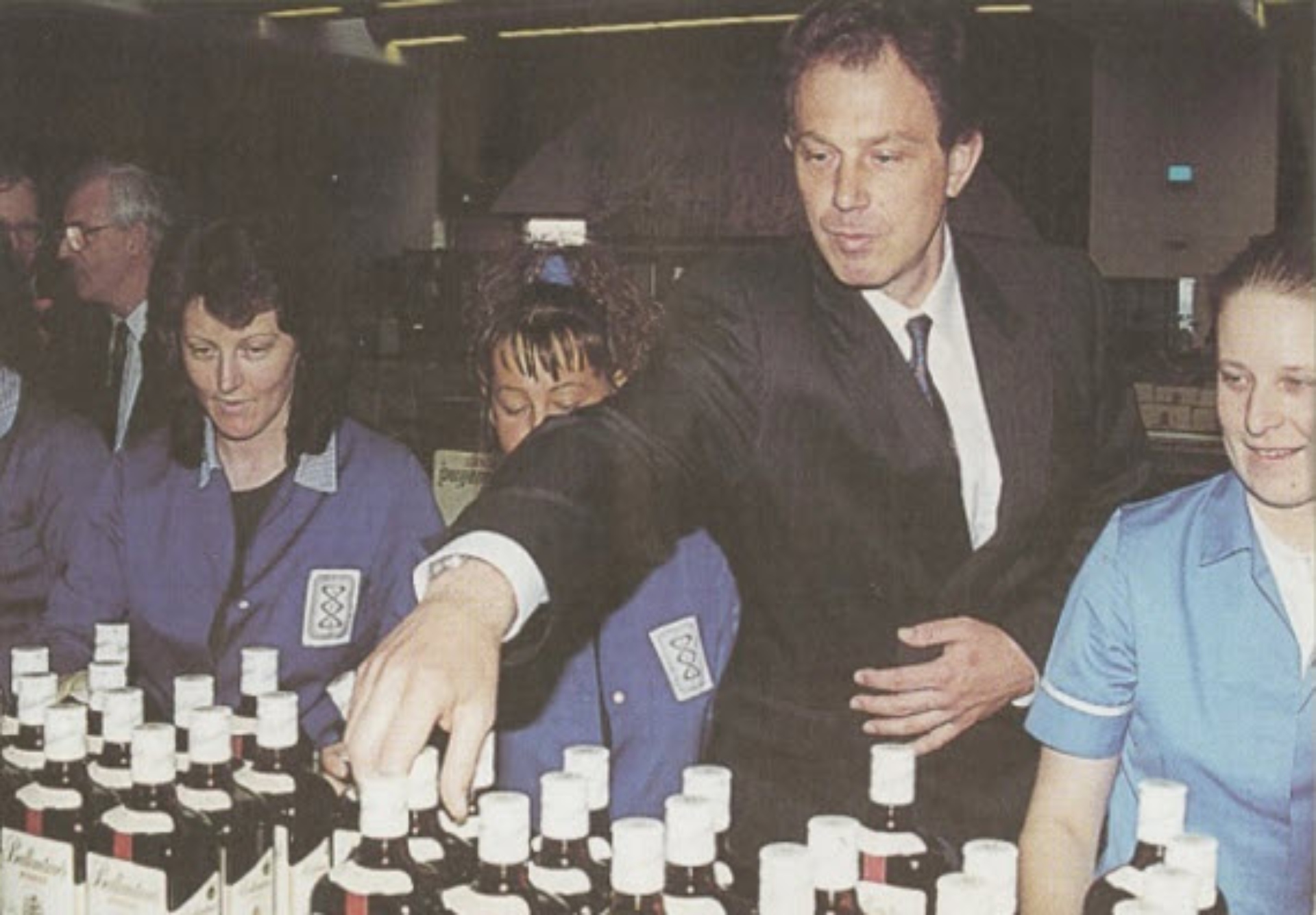
The whisky industry, like many traditional sectors, has a large number of long-tenured employees. And a key challenge is capturing and transferring that knowledge. “We’ve got a number of people who have 30 years plus experience, but we’ve also got young talent,” said Sarah.
“So that creates an organic process for them to work together and transfer knowledge. But we’re also working through a large programme of centralising and documenting changeovers.”
Former Prime Minister Tony Blair visting Kilmalid
She continued: “We do need to start moving away from engineers having all the information in a little black book in their back pocket, so there is a drive from the operations team to standardise and document that. “However, there’s no substitute for working with someone who has experience and learning from them.”
Blowing off the dust
The bottling side of the business appears more dynamic, from a technology standpoint, than the production of the spirit itself. But that’s intentional. As Sarah put it: “Bottling has to move; it has to become as efficient as other industries.
“But as a company, I think we’re quite open to innovation. In this factory, we produce flavoured whisky drinks, which was a relatively recent development within the industry. But the main innovation in whisky production definitely exists more within the bottling and packaging side of operations.”
That will continue to be the focus at the Kilmalid plant, particularly in workforce capability and upskilling in controls, automation and programming. Robotics will also play an increasing role. As Sarah noted: “From a bottling perspective, it’s about efficiency and producing at an acceptable cost.”
Safety is another major driver of transformation. Sarah believes the site often goes above and beyond both industry and legislative standards. It’s an advancement that all traditional industries must move towards. While heritage is well understood, modern realities loom large, and the industry still faces misconceptions. “People don’t normally see how we turn whisky into a consumer product. And actually, the facilities here are pretty modern.
“The reputation of whisky being a dusty old man’s industry is one that I would like to completely destroy, because this is a diverse and inclusive environment with a good proportion of diverse talent.” My aim was definitely achieved from this site visit. I wanted to see how a traditionally handcrafted industry producing a globally loved drink balances the need for technology adoption and innovation.
It’s a story that reflects wider industry challenges: how the workforce is prepared for automation, how skills are developed to keep pace with change, how knowledge is transferred, and how digital transformation is targeted to improve efficiency, product quality and safety. Chivas Brothers is focused on problem-driven innovation, investing in people and maintaining a clear distinction between where to modernise and where to preserve tradition.
For more stories like this visit our Digital Transformation channel