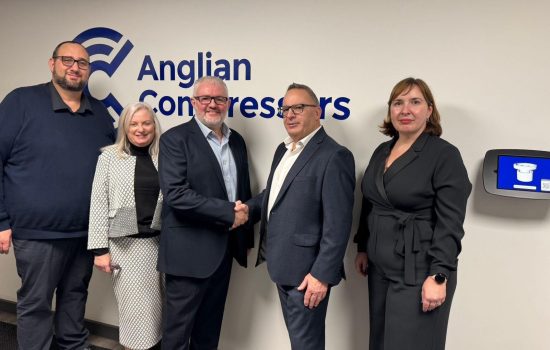


Few manufacturers would deliberately choose to run critical equipment until it fails. Yet in practice, maintenance decisions can still drift in that direction when budgets are tight, engineering teams are stretched and preventative work has to compete with more immediate demands on time and capital. The issue is not a lack of understanding about the value of maintenance, but the way risk, cost and responsibility are balanced. Ian Ainsworth, National Operations Manager (South), Atlas Copco Compressors UK.
Engineers tend to look at an asset in terms of reliability, condition and consequence of failure. Finance and procurement teams are more likely to focus on expenditure, return on investment and budget discipline. Both perspectives are valid, but problems arise when they are considered separately. A maintenance engineer may see a single point of failure and recommend intervention or redundancy, while the same proposal can appear elsewhere in the business as additional expenditure on equipment that is still operating normally. The further those decisions move from the plant floor, the easier it becomes to underestimate what a failure would actually mean for production.
That tension helps explain why reactive maintenance remains widespread. Planned and predictive approaches require time, resource and commitment in advance, whereas the cost of doing nothing is less visible until something goes wrong. Once it does, the calculation changes quickly. A reactive repair can cost many times more than planned intervention, particularly when emergency parts, labour and lost production are taken into account. For a smaller manufacturer, a single significant failure can consume the equivalent of an entire annual maintenance budget.
A maintenance engineer may see a single point of failure and recommend intervention or redundancy, while the same proposal can appear elsewhere in the business as additional expenditure on equipment that is still operating normally.
Ian Ainsworth, National Operations Manager (South), Atlas Copco Compressors UK
There is also an important difference between maintenance and other areas of compliance. Businesses are accustomed to certificates and inspection regimes that create a clear deadline for action. If a statutory inspection is due, there is usually little debate about whether it should happen. Routine maintenance does not always carry the same obvious trigger. A service interval can therefore be easier to defer, especially when an asset appears to be running normally and other spending priorities are competing for attention.
The wider business environment can reinforce that behaviour. When manufacturers are uncertain about future demand, energy costs or the longer-term prospects for a particular site or sector, it is understandable that they become more cautious about investment. But delaying maintenance on ageing equipment does not remove the underlying risk. At the same time, many sites are dealing with stretched engineering teams; leaving fewer engineers responsible for a wider range of assets. When day-to-day faults and production demands compete for the same limited resource, planned maintenance is often the first activity to be postponed.

Digital technology can help make the case for intervention more clearly. Remote monitoring, vibration analysis and connected platforms such as SMARTLINK can identify changes in condition and give engineers evidence to support a recommendation. The challenge is turning that information into something useful. Modern machines can generate enormous quantities of data, and more alerts do not automatically produce better decisions. What matters is being able to separate normal operating variation from the signals that indicate a developing problem.
That is where predictive, and increasingly prescriptive, maintenance becomes interesting. Rather than changing every component according to a rigid timetable, condition data can help determine when intervention is genuinely required. Done well, that creates the possibility of avoiding both unnecessary servicing and the risk associated with leaving a component in place for too long. Artificial intelligence could eventually make that process more effective by analysing larger populations of equipment and identifying patterns that would be difficult for an individual engineer to spot. But it will not remove the need for human judgement. Site conditions change, operating environments deteriorate and the data still needs to be understood in context.
None of this means finance teams should simply approve every recommendation that comes from engineering. Nor should engineers expect maintenance budgets to be protected from commercial scrutiny. The better approach is to make sure both sides are working from the same assessment of risk. What element of production depends on which asset? Is there redundancy? How quickly could a failure be recovered? What would the interruption cost, and how does that compare with the cost of prevention?
The strongest maintenance strategies are built when those questions are answered collaboratively. Service providers can carry out major interventions and use monitoring tools to flag developing issues, but site teams still have an important role in routine checks and day-to-day care. Finance teams, meanwhile, need enough operational context to distinguish between discretionary expenditure and investment that protects productivity, efficiency and resilience. Manufacturers do not need accountants and engineers to think alike. They need them to make decisions from the same evidence.
For more articles like this, visit our Leadership channel