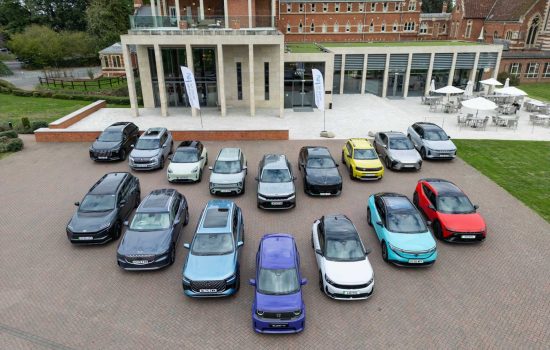


The Society for Motor Manufacturers & Traders’ (SMMT) gathered for its 109th annual dinner at the Grosvenor House Hotel in London’s Park Lane on Tuesday 24 November.
The dinner is one of the key events in the automotive calendar, attended by approximately 1,000 guests from industry, government and the media.
Automotive is a sector going through much disruption and upheaval, but opportunities for the UK industry are there to be had. The evening’s speeches covered the ZEV mandate, Made in Europe and recent political upheaval as the roadblocks hindering the sector’s progress.
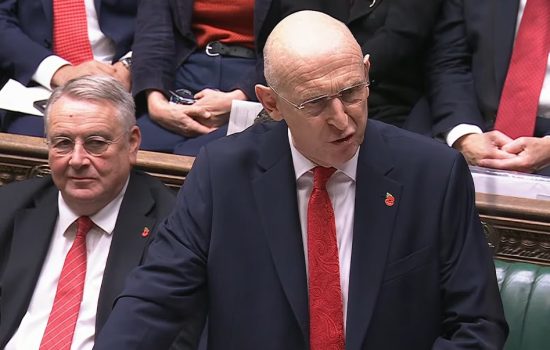
Speeches were delivered by The Rt Hon Jonathan Reynolds MP, Secretary of State for Business, Innovation, Science and Trade, Paul Philpott, SMMT President and CEO of Kia UK and association CEO Mike Hawes.
Key takeaways

Mike Hawes
- The challenges we face are bigger than ever. We have to step forward and step forward boldly. The new Prime Minister is coming up with a number of long-term plans which are all laudable and we note the value of long-term plans. But we also know the value of a phrase from another Prime Minister. In 1940 Winston Churchill demanded of his staff, “action this day”. This is what our industry needs.
- Changes to the ZEV Mandate, energy costs and the need for an agreement with the EU on Made in Europe and on rules of origin are effectively a triple block to investment.
- We need full reform, not running repairs. The ZEV mandate and European restrictions must change, or the goals of this government – decarbonisation, reindustrialisation and growth – will be nothing more than wasted breath.
- We are not asking for the mandate to be ripped up. And we are not looking at the numbers as a ceiling, more a floor that industry wants to surpass. But the costs incurred by this industry cannot continue. Reforming the mandate will not be watering it down, as critics suggest. It will be about giving this industry the breathing space necessary to achieve what we all want. And this is a government which says it is committed to giving people breathing space.
- Since we last met, France and Germany have more than surpassed the UK in EV growth. Why is that? They have more generous government incentives to stimulate demand. They legislate charge point rollout. What they do not have is a mandate. Because, mandates do not make markets; they compel supply, not demand.
- We all know Trump’s tariffs are bad for business, but so too is Made in Europe. And as we have seen today, the EU safeguard proposal to cap our hybrid exports at a level is totally insufficient. Together, they put our entire manufacturing base at risk and threaten the competitiveness of the very vehicle both sides want to be sold.
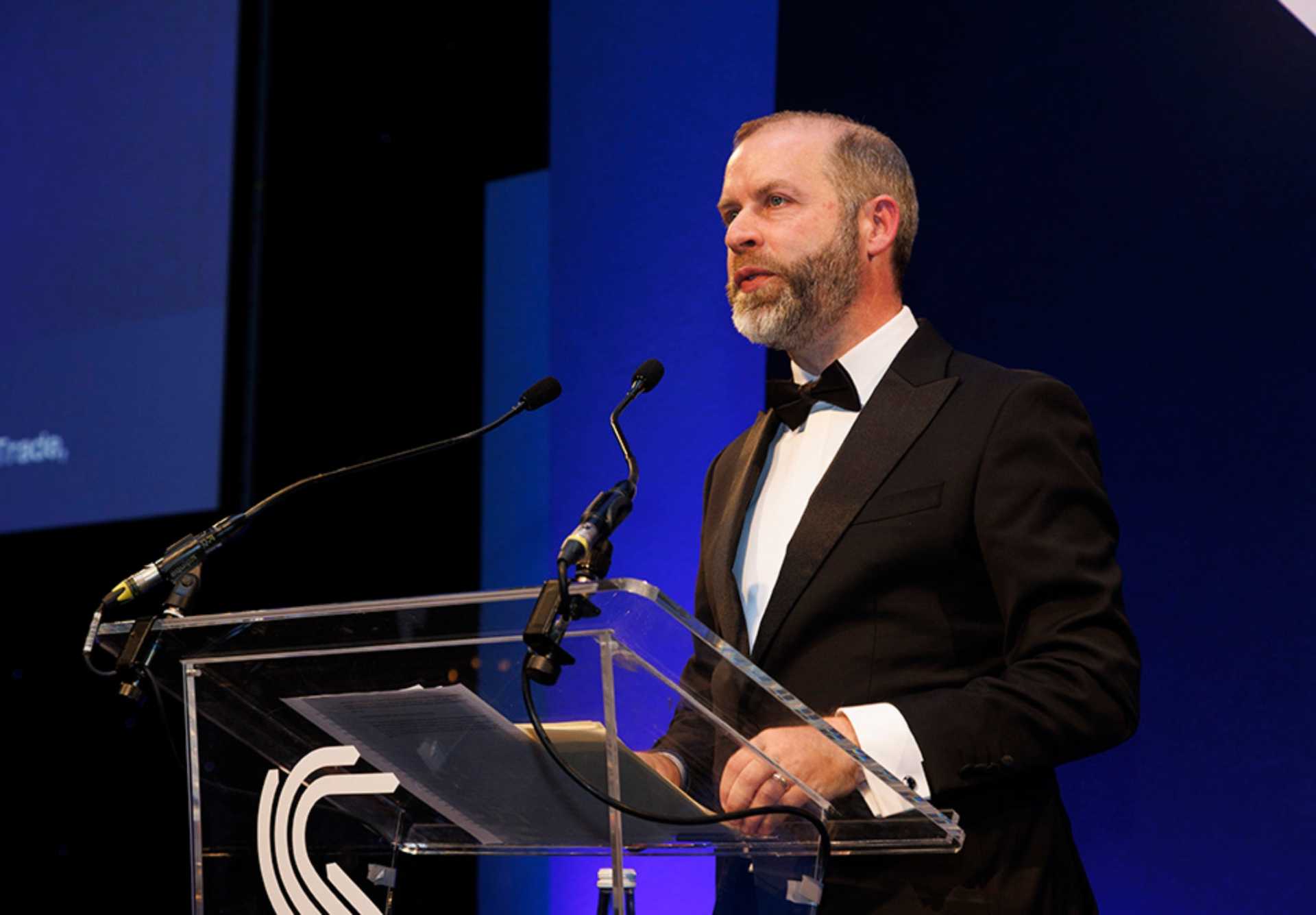
Jonathan Reynolds MP
- I don’t underestimate the challenges that this sector is facing, and the pressures SMMT members are under. But at the same time, I want to celebrate success. In September alone, in just over one week, £1bn of private sector investment was announced by a host of British automotive manufacturers.
- These investments mean more manufacturing, growth across the supply chain and well-paid jobs here on these shores. This government is committed to the reindustrialisation of the UK to bring good work, good jobs and good growth to every postcode of our country, and the automotive sector is clearly central to making that ambition a reality.
- We have launched our new joint industry-government task force. It is developing a new manufacturing and technology plan for the automotive industry, and it’s set for publication next year. This plan will shape the future focus of our ambitious investment programmes, including Drive 35, so that we really hone in on the UK’s technology strengths and use them to this sector’s full advantage.
- I know this move to bring us closer to Europe has generated a lot of headlines. But our motor industry needs Europe, and Europe needs our motor industry. Our supply chains are highly interconnected and that is why we said from the outset of our negotiations that we wanted to be a close and trusted European partner, one focused squarely on economic and security cooperation right across our industrial sectors.
- We knew that with the UK supplying ten per cent of the EU’s imported auto parts, restrictions would needlessly cause disruption for the UK, but also for the EU. The EU cannot build a stronger automotive industry by cutting the UK out of its supply chains that make it more competitive. Made in Europe has to recognise UK-built vehicles, parts and batteries are a key part of European industrial strength. And cutting us out would make it harder to compete with other places.
- We pressed hard to secure a commitment from our European friends to reciprocal market openness and to work together, especially on electric vehicles, so that we can build resilient supply chains and limit harm when protecting our economies from future threats.
- What we’ve agreed is a strong framework based on trust and reciprocity, which means the UK and the EU can work together to limit the negative impacts of exactly these kinds of measures. Our aim is to secure full market access to the EU for the UK automotive sector.

Paul Philpott
- We’ve witnessed far too much political change. Seven Prime Ministers in ten years is not a sign of good health. We need consistent policies that support reindustrialisation and help return the UK automotive sector to its rightful place in the global industry.
- We need a government that works closely with us. Not one that springs surprises, but one that openly engages and discusses change. We need a genuine partnership of equals, and we need certainty.
- Made in Europe or the Industrial Accelerator Act could effectively lock us out of Europe, denying us the opportunity to access EU incentives, making us uncompetitive in our biggest market. Together with tougher rules of origin and ongoing trade disruption, the competitiveness of UK production is under threat.
- I welcome the Prime Minister’s commitment to revisit our relationship with the EU and the recent statement of intent. But whatever our new relationship, we cannot wait for it to be an election issue in one, two or three years’ time. We need action now.
- The Industrial Strategy was more than welcome, but strategies only become real when they move from theory to action. And one year on, progress has been slower than hoped. Since the Industrial Strategy’s inception, UK vehicle production has seen further declines.
- We need appropriate regulation now and a meaningful reduction in energy costs if we are to address UK competitiveness and drive investment in critical areas like battery production. Fundamentally, we need to make the UK a more attractive place in which to invest, and the government has to change the ZEV mandate. We have the most aggressive regulatory regime in the world, married to the highest energy cost. We need policy to be an accelerator, not a break.
- The cost of compliance is eye-watering. It is not sustainable, and it’s made the journey to electrification a real threat to our industry and not the positive driver of change we all want it to be.
- I’m glad we’re working with government, defence companies and our supply chain to explore additional opportunities arising from the defence investment plan. Our national defences need to be stronger, and if we as a nation are to meet that need, then we must play to our strengths.
- I remain optimistic for the future. Whenever we’ve faced major challenges in the past, our instinct is not just to survive, but to innovate and to lead. We will get through this challenging period, but we need to work together, and we need the full support and trust of government.
For more articles like this, visit our Leadership channel