
The US manufacturing sector is facing one of its biggest workforce challenges in decades. While investment in new factories, reshoring initiatives and advanced manufacturing technologies continues at pace, employers are struggling to find the skilled workers needed to keep those facilities operating.
The numbers illustrate the scale of the issue. According to The Manufacturing Institute and Deloitte, the US manufacturing sector could need as many as 3.8 million additional workers by 2033[1], with around half of those positions at risk of going unfilled if current workforce trends continue. Meanwhile, an ageing workforce, increasing demand for digital skills and growing competition for technical talent are compounding the challenge.
The shortage extends well beyond engineers. Manufacturers are reporting persistent difficulties recruiting machinists, welders, maintenance technicians, toolmakers, foundry workers and other skilled production specialists, even as factories become increasingly automated and digitally connected.
Closing that gap will require more than simply expanding traditional education pathways. It will demand new approaches that engage students earlier, provide more flexible training opportunities and create stronger links between education and industry.
Andrew Pokelwaldt, Education & Workforce Director at IACMI – The Composites Institute, believes programs such as America’s Cutting Edge (ACE) and the new Metallurgical Engineering Trades Apprenticeships & Learning (METAL) initiative are helping redefine how manufacturers attract, train and retain the next generation of talent.
The Manufacturer sat down with Andrew to find out more…
Addressing manufacturing’s most critical skills shortages

“The biggest gaps are in the skilled production roles that are hardest to replace quickly,” said Pokelwaldt. “Machinists, foundry workers, forging technicians, metrology specialists, and people who can work with increasingly digital and automated equipment.”
While technical education remains important, employers are increasingly telling IACMI that graduates often arrive without meaningful exposure to real manufacturing environments.
“Many new workers lack practical exposure to manufacturing environments, even when they have completed a traditional academic program.”
Rather than replacing conventional education, ACE and METAL are designed to complement it by offering faster, more accessible routes into manufacturing careers.
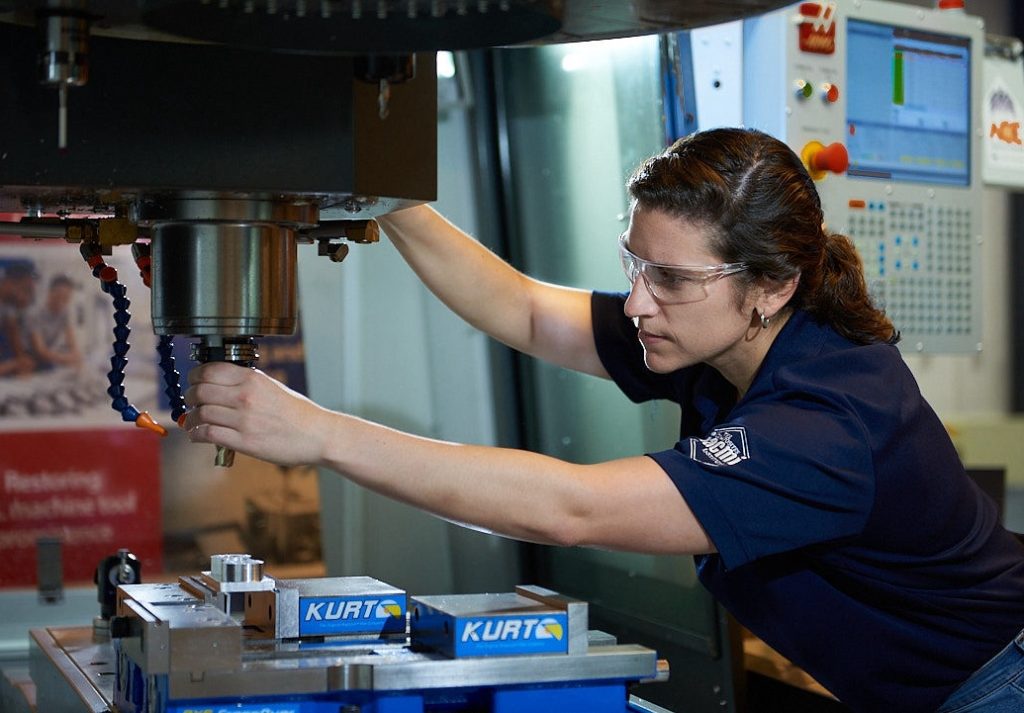
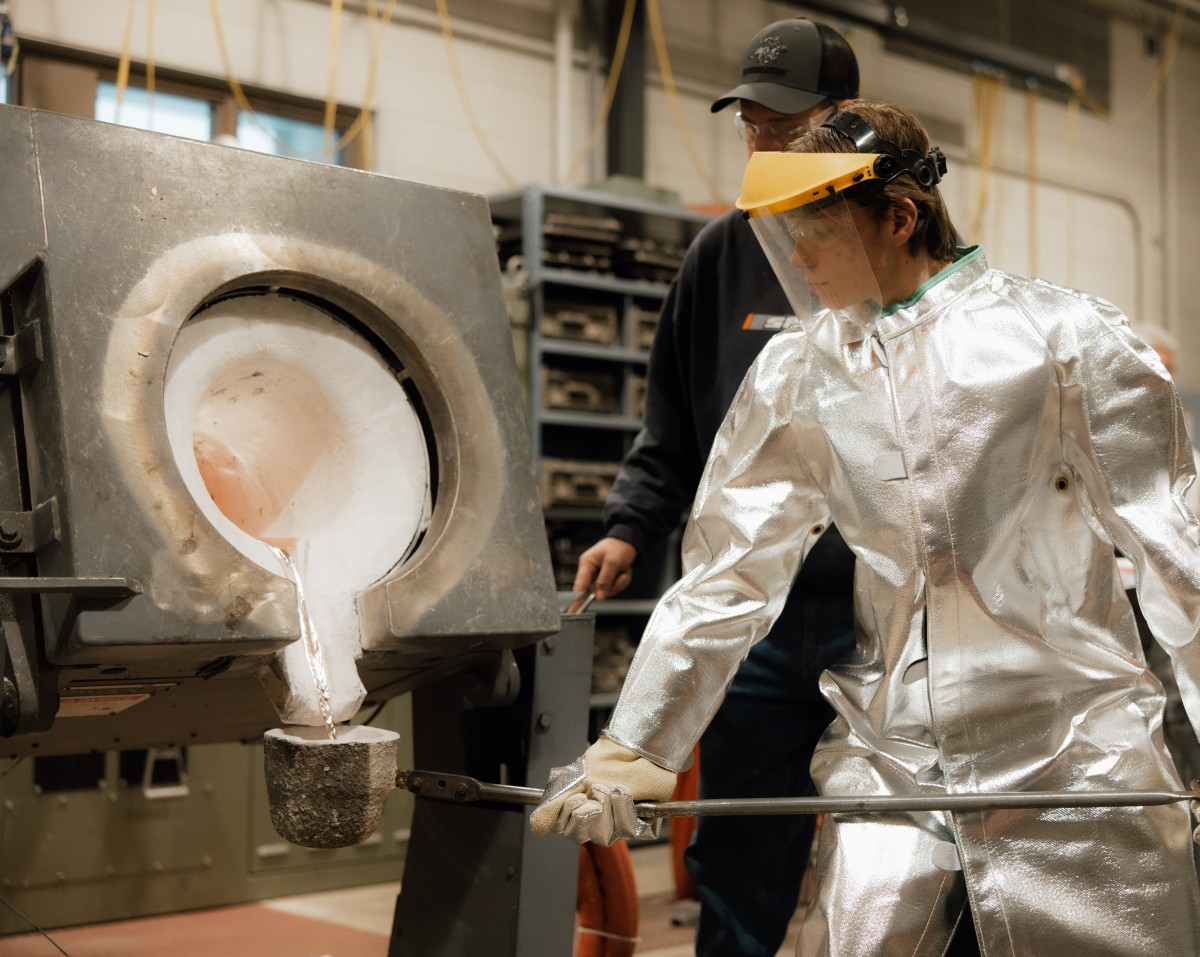
ACE focuses primarily on CNC machining and related technologies, while METAL supports careers in casting, forging and the wider metals sector. Both combine free online learning with intensive hands-on training delivered through colleges, universities and industry partners.
While ACE has become widely recognized for its work in CNC machining, composites remain central to IACMI’s mission. In fact, IACMI was established in 2015 as the nation’s institute for advanced composites manufacturing, bringing together industry, academia, and government to accelerate the adoption of lightweight, high-performance materials that improve efficiency, reduce costs, and strengthen U.S. manufacturing competitiveness.
“The key difference is that the programs can be deployed quickly, adapted to regional employer needs, and used by everyone from high school students and college students to incumbent workers and career changers,” Pokelwaldt explained. “They give people a lower-risk way to experience the work, build foundational skills, and move into further training or employment.”
From CNC machining to a national workforce model
ACE was originally developed six years ago to meet an urgent demand for CNC machinists, but its evolution has revealed a broader lesson about workforce development.
“ACE started with CNC machining because there was a clear, urgent industry need,” said Pokelwaldt. “But over the past six years we’ve learned that access is just as important as curriculum.”
Providing technical content alone is no longer enough.
“People need opportunities to discover these careers, experience the technology hands-on, and see a clear path from training to employment.”
That thinking has transformed ACE into a much broader national workforce network incorporating online learning, regional bootcamps, industry partnerships, internships and K-12 outreach. This approach is being applied to all courses under ACE, including ACE Composites, which aims to support one of the fastest-growing areas of manufacturing. Participants are taught foundational knowledge in composite materials, manufacturing processes, safety, and quality while building skills that are directly applicable to these industries.
“The next phase of growth is focused on meeting people where they are and creating stronger connections between education and the manufacturers who need talent.”
Changing perceptions before career choices are made
One of manufacturing’s longest-standing challenges remains its image among young people and their families.
Pokelwaldt believes many still picture factory work through the lens of decades-old stereotypes rather than today’s technology-driven workplaces.
“The first step is giving students and families a chance to see what manufacturing actually looks like today,” he said.
“Modern manufacturing is where some of the most exciting work is happening—from aerospace and defence to energy, robotics and advanced materials.”
Hands-on experiences are central to changing those perceptions. Through school outreach, practical activities, virtual reality experiences inside foundries and forges, and programs such as ACE and METAL Foundations, students can experience manufacturing long before making career decisions.
“It’s also important to reach parents, teachers and communities,” he said. “When they see the technology, career pathways, earning potential and impact of these jobs, the conversation changes. Manufacturing becomes less about a backup plan and more about an opportunity to build the future.”
Why workforce development starts in kindergarten
Perhaps one of the most distinctive aspects of IACMI’s approach is introducing manufacturing concepts to children as young as kindergarten age.
For Pokelwaldt, the reasoning is simple.
“Kids can’t dream about a future they haven’t seen.”
Young children are naturally curious about how things are made, making manufacturing an ideal vehicle for teaching creativity, problem-solving and teamwork.
“By introducing these concepts early through programs like ACE METAL Foundations, students begin to understand that the things they use every day are designed and made by people—and that they could be one of those people.”
The long-term objective is not immediate recruitment but sustained awareness throughout a student’s education.
“If students experience manufacturing throughout their education, they are more likely to see these careers as exciting, innovative opportunities rather than discovering them only after they’ve already chosen another path.”
(Image credit: IACMI – The Composites Institute)
Preparing workers for smarter factories
As factories increasingly adopt automation, artificial intelligence and digital technologies, workforce development must evolve alongside them.
Pokelwaldt said maintaining close alignment with industry ensures ACE and METAL remain relevant.
“Our method includes week-long bootcamps that give students practical experience with the equipment and digital tools they learn about.”
That increasingly includes technologies such as digital twins and smart manufacturing systems.
“We want to prepare students with skills in both digital and physical environments to create a comprehensive skill set,” he said. “Graduates of our programs are highly sought after and typically have no trouble securing job or internship opportunities.”
Taking advanced manufacturing training into rural America
Geography remains another major obstacle for many prospective manufacturing workers, particularly in rural communities without nearby specialist training centres.
To overcome that challenge, IACMI is introducing mobile training units capable of bringing advanced manufacturing technologies directly into underserved communities.
“Access is one of the biggest barriers to building the manufacturing workforce we need,” Pokelwaldt said.
“Instead of requiring people to travel to experience advanced manufacturing, we can introduce them to equipment, career pathways and hands-on learning opportunities where they already are.”
He expects the initiative to widen participation by connecting more students, educators and communities with training opportunities that may previously have been out of reach.
Workforce development as a national priority
For Pokelwaldt, the conversation extends well beyond filling today’s vacancies.
“Workforce development and training are about much more than filling open jobs,” he said. “A strong manufacturing workforce is a national security priority.”
Recent supply chain disruptions have reinforced the importance of domestic manufacturing capability across defence, aerospace, energy and critical infrastructure.
“We can invest in new technologies, facilities and equipment, but without the skilled people needed to operate, maintain and innovate with those systems, we can’t fully realise that investment.”
He believes strengthening workforce pipelines is therefore essential to America’s long-term industrial resilience.
“When we invest in workforce development, we’re strengthening America’s ability to compete, adapt and remain resilient in an increasingly complex global environment.”
Looking towards 2030
Asked what success would look like by the end of the decade, Pokelwaldt points to a fundamental shift in both perception and access.
“Success in 2030 means we have fundamentally changed how Americans view and access manufacturing careers,” he said.
“It means students are introduced to these opportunities early, workers have clear and flexible pathways into high-demand fields, and manufacturers have access to the skilled talent they need to grow and compete.”
For IACMI, that includes ambitious goals to expand ACE and METAL to more than 100 training sites, reach 50,000 K-12 students through ACE and METAL Foundations, and continue strengthening partnerships between manufacturers, educators and government.
Given the scale of America’s manufacturing workforce challenge, those partnerships are likely to become increasingly important. As manufacturers invest billions of dollars in advanced production capacity across the country, developing the skilled workforce to operate those facilities may prove just as critical as building the factories themselves.
Never miss a story
Sign up for our free weekly North American Manufacturing Digital Briefing to receive the latest industry news, insights and analysis direct to your inbox every Monday.
[1] Manufacturers Need as Many as 3.8 Million New Employees by 2033 | The Manufacturing Institute