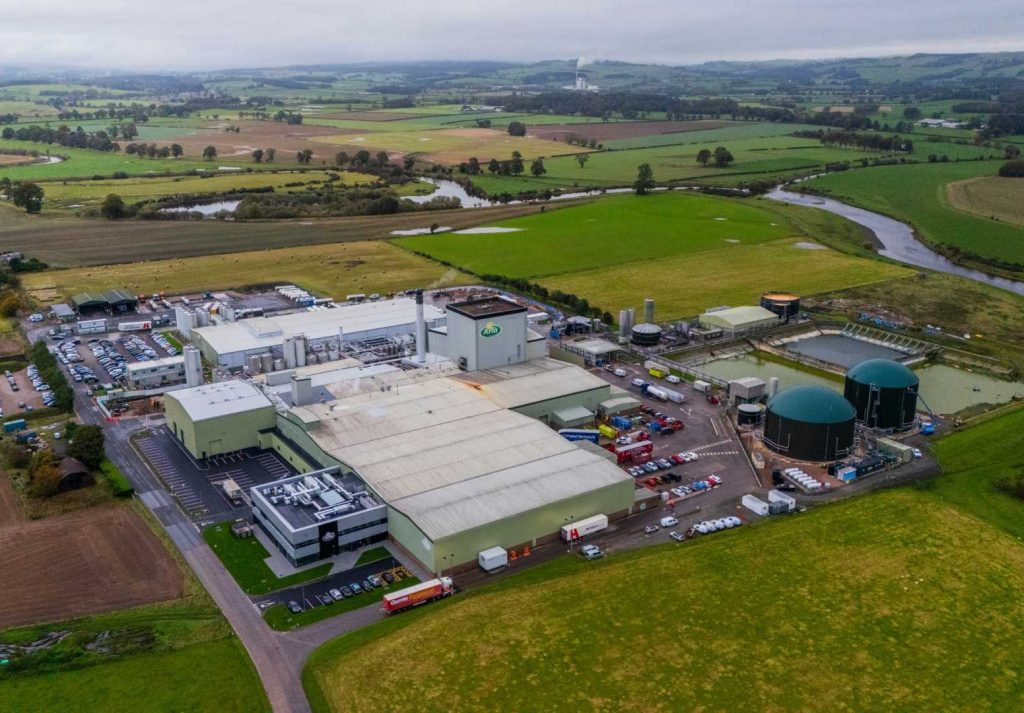
In October last year, a day of celebration at Arla Foods marked 50 years of dairy making at its Lockerbie site. Now, the focus is on the future, with an investment totalling £144m towards an upgraded cheddar facility and a centre of excellence in UHT and lactose-free milk. Within that, comes a continued pledge to sustainability, workforce development, technology advancements and a long-standing commitment to the farmers that provide the milk.
Key takeaways
- Major investment signals long-term commitment: Arla’s £144m investment in Lockerbie highlights its intention to future-proof UK dairy production, expanding cheddar capacity and creating a centre of excellence for UHT and lactose-free milk
- Local sourcing strengthens resilience and farmer support: With most milk sourced within a 50-mile radius, the site reinforces Arla’s cooperative model, supporting farmers while improving supply chain efficiency and reducing volatility
- Technology and automation are driving efficiency gains: Upgraded facilities, automation and energy-efficient processes are boosting productivity, improving yields and freeing up workers to focus on higher-value tasks
- Workforce development and diversity are key priorities: Apprenticeships, upskilling initiatives and a structured diversity strategy aim to build a future-ready workforce and address gender imbalance in the sector
- Sustainability and scale come with trade-offs: While Lockerbie’s expansion supports carbon reduction goals and regional growth, it also reflects difficult strategic decisions, such as the closure of the Settle site, to consolidate operations and remain competitive
FAQs
- Why is Arla investing in Lockerbie?
- How much is the total investment?
- How many litres of milk does the site take in annually?
- Who does Arla rely on for its milk supply?
- Why did Arla in Aylesbury make national news in 2021?
The Lockerbie site is somewhat tucked away in a rural pocket of south-west Scotland. The road that leads up to the facility runs past a large field with fencing. Highland cattle, with their pointed horns and rugged light brown, gingery coats of fur greeted me as I drove in. A comforting reminder that you’re in farming country, a key reason for the existence of Arla Foods in Lockerbie, as we’ll find out.
Since its opening in 1975, Arla Lockerbie has grown into one of the UK’s largest cheese-making facilities. Today, it takes in over 600 million litres of milk every year, producing around 200 million litres of fresh bottled milk and 42,000 tonnes of cheese. As I’m informed by Arla’s press team, that’s enough for approximately 840 million cheese sandwiches.
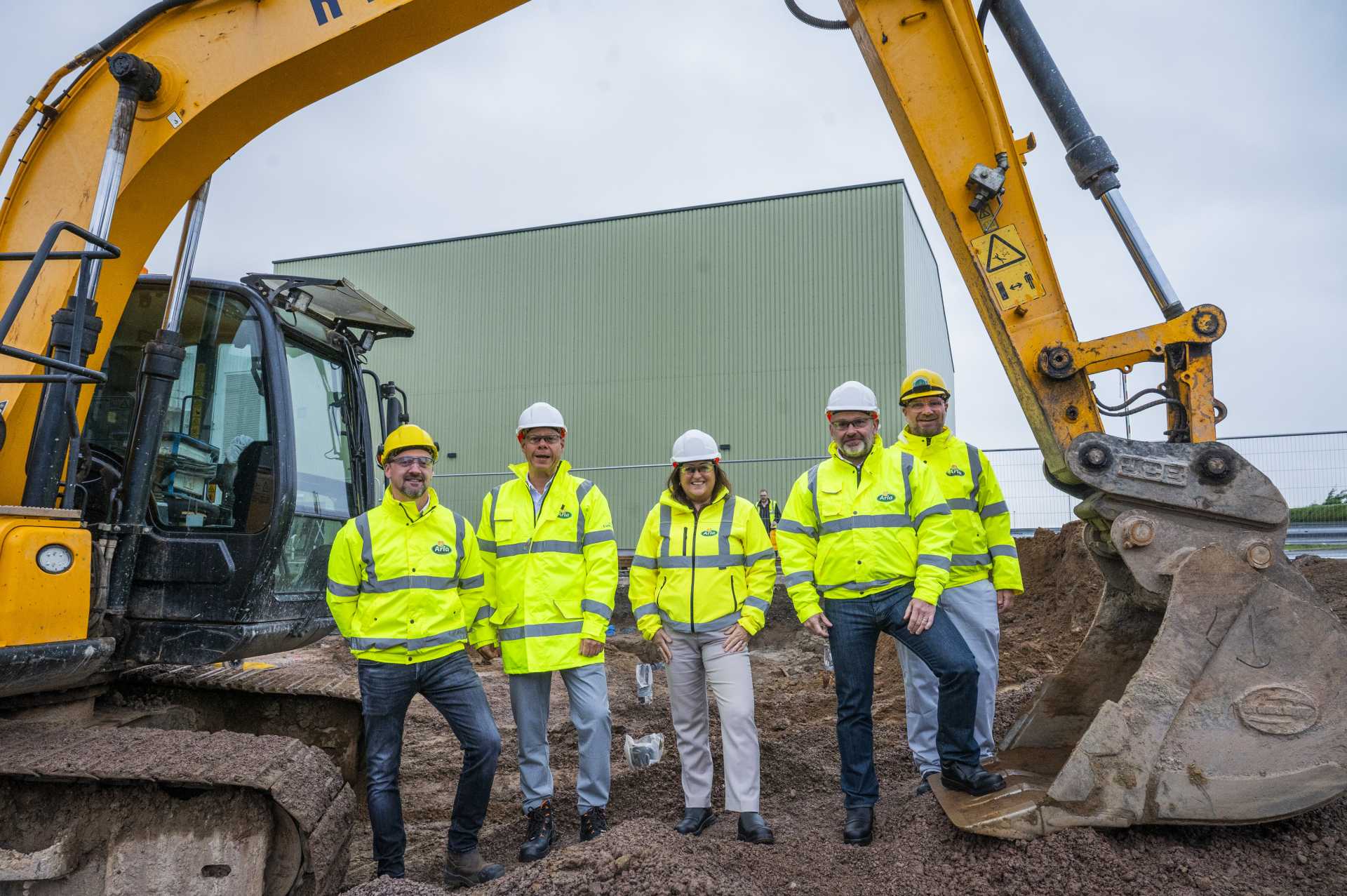
Fran Ball is the SVP of UK Supply Chain at Arla Foods. “We’ve just invested in a fantastic new cheddar manufacturing site here,” she told me. “We’ve also confirmed £90m investment in UHT (ultra-pasteurised milk) bringing a centre of excellence in UHT and lactose-free manufacturing to Lockerbie.”
The cheddar facility cost £34m to upgrade, with a £20m anaerobic digestion plant taking the total investment to £114m.
Milking it
It’s a significant outlay, but its money well spent from Arla’s perspective. The site is an important hub within Arla’s UK operations, combining multiple product streams and advanced processing capabilities. Fran explained that the decision to invest in Lockerbie is also largely driven by Arla’s farmers. “We’re in a very large milk pool,” she said.
“The majority of the milk comes into this site from within a 50 mile radius.” Arla is owned by more than 7,200 dairy farmers, with over 1,800 UK farmer owners. So, as David Boulanger, Executive VP and Head of Global Supply Chain pointed out, any new investment decision across the UK or Europe is made with the welfare of farmers in mind.
Supply chain efficiency and sustainability are also considerations, of course. Closer proximity to raw materials ensures this. “Lockerbie has a very important role to play,” said David. “We need to make any investment as efficient as possible, and we need to ensure the best price for our farmers. Being so close to a large milk pool allows us to valorise the best milk that we get from our farmers, ensuring a nutritional product.”
In a world where supply chain volatility has flared up once again, resilience has become a core priority. It’s harder for some, but when you operate in an integrated and largely local network as Arla facilities do, the stress on the supply chain is lessened.
“We face a lot of volatility,” said David. “Our job is to make our supply chains as resilient and agile as possible. This is an area we invest in significantly across our different regions. We need strong supply chains to address the challenges that we face in the world today.”
Fran added: “We obviously have a lot of our farmers in this area so, we have the fresh milk supply in that instance. But resilience is still a really important aspect for us, and we still need to be mindful of reliability, contingency and our capacities.”
As well as being in close proximity to large milk supplies, Lockerbie was chosen for investment because it’s a long-established production facility. Its 50 years of cheese making has served the entirety of the north of England and beyond. While upgrades were needed, existing infrastructure still stands firm, and can be expanded upon. It’s a site that offers both logistical and economic advantages – reducing transport emissions while also enabling future growth.
Fran said: “There’s been years of manufacturing here, and other products were made in the past. We have buildings that we can reuse, and we have space to expand. It’s very important if we want to build economies of scale.”
Future fit
As part of the investment, unsurprisingly, upgrades extend to technology across the site, on both the cheddar facility and in UHT. “The new cheddar facility incorporates the latest generation of vats, which will give us higher yields,” said Fran.
“We’re also automating some of the processes there, to make sure we get the most efficient cutting. “And in the UHT centre, we’ve got some new processes coming online which are more energy efficient, but we’re also bringing automation into loading. That was one of the areas that we identified for upgrade. That allows colleagues to use their time better, and we can eliminate some of the more manual roles.”
Continuous improvement obviously becomes harder when managing larger sites, and Arla Lockerbie is vast. But it’s a daily priority. And in reality, it wouldn’t have received this level of investment if it wasn’t. “Operational efficiency is a constant focus,” said Fran.
“We’re always looking for different opportunities, whether that’s through big CapEx investments in the latest technology, or whether that’s the day-to-day, incremental improvements that help the operators on the front line.” As mentioned earlier, while this large investment improves Arla Lockerbie immediately, it’s also focussed on making the site future fit.
And part of that plan will involve creating a technologically advanced and skilled workforce. That’s not to say these people don’t already exist at this facility, but as is the aim of most companies in the industry, Arla Lockerbie wants to ensure this for years to come. To do that, access to new skills is as vital as developing existing ones.
I was unsurprised to hear that a strong apprenticeship programme has been in place for a number of years, where investment has been put into dairy technologists and engineers. “Three of our senior team here in Lockerbie came through that process,” said Fran. “We also have apprenticeship schemes where we work with our team leaders and our managers to make sure they have the right training.”
An employee upskilling initiative also exists, and is known as the ‘Arla Performance System’, which is based on Lean principles, as Fran explained: “We’re upskilling the front line and making sure we create a culture of line centric teams that really take ownership.”
She continued: “A blend of e-learning and traditional classroom training also takes place. So, there’s a lot of different elements going on, all very much evolving to future needs, particularly around digital and automation.”
As well as having access to a large milk pool, Arla Lockerbie is also in a good catchment area for skills and has built a reputation for being a large employer in the region.
Diverse talent perspectives
By its own admission, Arla wants to create more diversity within the employees, as a large percentage of the workforce at the Lockerbie facility are still male. At The Manufacturer, we’ve long argued that this is a problem. As Fran puts it: “Our sector can’t succeed in the future without diverse talent perspectives.”
The rationale being that diversity of thought and experience brings new ideas and perspectives. Over the past four years, Arla has been implementing a structured gender diversity strategy, built on three workstreams:
- Attract: Aiming to double the share of women applicants to UK supply chain roles by 2030, supported by tools like the ‘Gender Decoder’ for job adverts, inclusive recruitment training and showcasing women already thriving in Arla’s supply chain.
- Develop: Building a strong pipeline of female leaders through mentorship, coaching and leadership accountability for inclusion.
- Retain: Ensuring women stay and progress by introducing progressive policies such as menopause, fertility leave, shared parental leave, pregnancy loss support and flexible working, alongside practical changes like improved facilities and uniforms.
“We also need to ensure that we have good development and succession plans in place for women, and that we continue to drive that,” added Fran.
“Our male allies are also a very important part of this, because we need to have a balanced colleague community where everyone can thrive.” All in on dairy Arla have placed dairy solely at the heart of its future. While £90m has gone into a UHT and lactose-free centre of excellence, the resulting products are still using milk.
All in on dairy
Arla have placed dairy solely at the heart of its future. While £90m has gone into a UHT and lactose-free centre of excellence, the resulting products are still using milk.
UHT is just regular milk that has been momentarily heated to a high temperature, which removes bacteria and extends shelf life. And lactose-free, again involves regular milk, but with lactase added to it.
As a cooperative, Arla is constantly looking for ways to drive the greatest value for its farmer owners, and have made the decision to make a strategic shift and refocus the Arla JÖRÐ product range for the food service channel. This means that Arla will no longer offer Arla JÖRÐ as a retail product in the UK. But the company is continuing to develop its plant-based portfolio with category leading brands, including Lurpak.
Arla’s Aylesbury facility, the largest dairy factory in the UK, made national news when it was blockaded by protesters back in 2021. Animal Rebellion protesters called for the company to switch to plant-based production by 2025 and said they wouldn’t move until Arla submitted to their demands and funded a transition for its workers.
However, that doesn’t really marry with the interests of a company owned by farmers. And when it comes to environmental concerns, Arla doesn’t believe it’s obligation to dairy is at odds with its sustainability ambitions. “We know about changing dietary habits, and of course, there is sustainability pressure,” said David.
“But actually, we believe dairy is part of the solution, not the problem. And our role and mission is to adjust our dairies to provide a new generation of product that can bring health to our consumers in a sustainable way.”
Arla is positioning itself to lead on sustainable dairy products and is committed to environmental targets across the wider group. “We have a target to be carbon net zero by 2050,” added David. “But closer to that, we want to decrease our carbon footprint by 63% in our supply chain by 2030. And we are on the right track for that at present.”
There has been a lot of electrification across Arla dairies in recent years, with instillations of E-boilers and heat pumps. And of course in Lockerbie, part of the new investment involved the £20m investment in an anaerobic digestion plant, which recycles the site’s waste and as David explained: “Significantly cuts our carbon footprint here in Lockerbie.”
Business impact
The investment will undoubtedly strengthen Arla Lockerbie, improving operational efficiency, sustainability credentials and production capacity. It positions Lockerbie as a central hub for advanced dairy processing, particularly in high-growth areas like UHT and lactose-free products.
The local and regional impact will also be felt. The site is expected to create around 90 new jobs. And as mentioned, a genuinely important aspect for Arla is the support the investment provides for its local farmers, quite a number of who attended the opening of the new facilities.
By sourcing milk locally, the site reinforces demand for regional dairy farming, aligning with its cooperative model. While this spells good news for Lockerbie, the unfortunate aspect of this story is that another area of the UK suffers. Arla announced in February last year that it wanted to close its Settle factory in North Yorkshire, as part of its consolidation at Lockerbie.
Despite opposition from the GMB union and other stakeholders, Arla proceeded with that decision. The closure was described as a “devastating blow” to the 130 skilled workers – which initially Arla had hoped to keep – as well as the wider community.
It does further position the Lockerbie investment as more than just a facility upgrade, its a strategic – and in the context of Settle – ruthless move to future-proof operations in the north of the UK. Such balancing acts often need to be taken in business. And Arla Lockerbie aims to balance efficiency, environmental responsibility and support for its farming community.
For more stories like this one visit our Innovation channel