



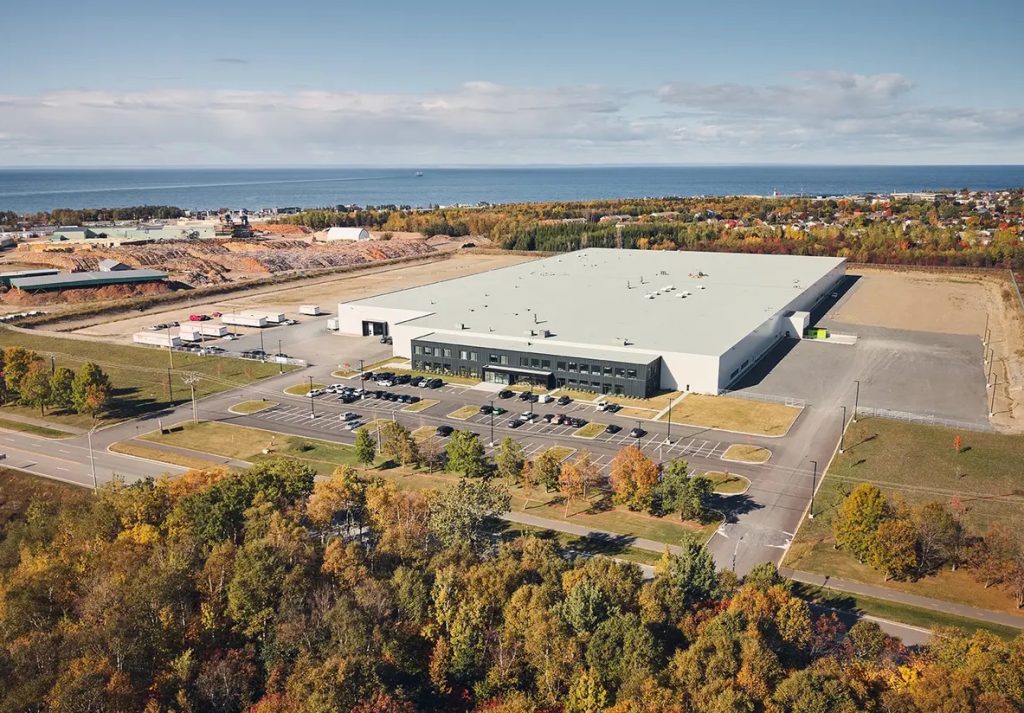
Duravit has strengthened its North American presence with the opening of a new manufacturing facility in Matane, Québec—one of the first sanitary-ceramics plants globally to rely exclusively on electric firing technology. The site marks a major step in the company’s “local for local” strategy and signals a broader shift toward sustainable, regionally focused production in the sanitaryware sector.
Around 80 guests from politics, business, and the media attended the inauguration. Senior Duravit leaders, including COO Thomas Stammel, CMO Lüder Fromm, and Canada production head Christian Gilles, joined Supervisory Board Chairman Gregor Greinert, whose presence underscored board-level support for the investment.
The C$90 million facility is central to Duravit’s global expansion plans. Production has begun with 102 employees, a workforce expected to grow to 240 by 2027 as the plant reaches full capacity. The 35,000-square-meter factory will eventually produce up to 450,000 ceramic parts annually—primarily washbasins and toilets—for the North American market.
Its location on the Saint Lawrence River provides direct access to a deep-sea port and short transport routes, reducing logistics emissions and supporting Duravit’s focus on resource-efficient manufacturing.
Traditionally an energy-intensive industry, ceramic firing in Matane is powered almost entirely by hydroelectric energy from Québec. According to Duravit, more than 99.6% of the electricity used in the plant’s 100-meter-long Riedhammer roller kilns comes from renewable sources. The kilns can fire over 600 ceramic pieces per day at 1,260°C, and excess heat is recovered for use in drying and casting processes.
The shift to electric firing and reduced transportation distances is expected to cut carbon emissions by approximately 9,000 tonnes annually.
The project received a C$19 million repayable contribution from Economic Development Canada and an C$11 million loan from Investissement Québec through the ESSOR program. Local authorities in Matane also facilitated the launch through close cooperation during planning and development.
Founded in 1817, Duravit positions the Matane plant as both a milestone in its international expansion and an enabler of its goal to achieve carbon neutrality by 2045. The company continues to emphasise long-lasting, timeless design as a sustainability principle—arguing that durable products reduce resource consumption across their lifecycle.
Interested in hearing about the latest North American manufacturing news right in your inbox each week?
Sign up to The Manufacturer Digital Briefing – North American Edition