
Inefficiency is draining billions from manufacturers every year. The fix isn’t another sweeping top-down strategy — it’s equipping managers with tools and visibility that make improvement part of everyday work.
Walk into any factory and you can feel it — the noise, the pace, the pressure. There’s a rhythm to how things run, and it only works because of the people holding it together: the managers, supervisors and team leads keeping one eye on the line, one on the schedule, and somehow still finding time to put out fires no one else even sees.
But those people are running on empty — and it’s costing manufacturing $25.8 billion in lost productivity every year. Not from lack of effort, but because so much of that effort goes into the wrong things.
The hidden drain on productivity
Manufacturing, production and maintenance managers see what few others do. They balance the big picture from upstairs with the daily grind on the floor. They know what’s slowing things down, but too often, that insight gets buried.
Our Feedback from the Field report found that manufacturing managers lose more than five hours every week to low-value work: meetings that drag on, endless messages, and fixing other people’s mistakes. That’s five hours they’re not improving flow, solving problems, or driving safety. Multiply that across every manager in every factory, and you start to see the scale of waste.
So, what could your business achieve if those hours went back into making things better?
Untapped ideas, unused potential
Every manufacturing manager I’ve met has ideas to improve operations — 93% of them, according to our research. Yet almost half say those ideas never see the light of day. Not because they’re bad, but because managers are focused on getting product out the door while executives are focused on long-term strategy. Somewhere in the middle, opportunity falls through the cracks.
It costs ideas that never get heard.
It costs problems that don’t get fixed until they blow up.
And it costs performance, because the people with the clearest view are furthest from decision makers.
The best improvements don’t come from boardrooms — they come from the people who see the small stuff every day.
One of our customers, Mowi, saw it firsthand. A production operator spotted a bottleneck in how inspections were logged. Using SafetyCulture, they redesigned the process and saved hours every week. That single idea rolled out across the whole business.
When frontline observations feed directly into top-level decisions, things move fast. Everyone works from the same truth. And when that happens, performance doesn’t just add up — it compounds.
Continuous dis-improvement?
Most factory leaders will tell you they’ve got a Continuous Improvement program — Lean, Six Sigma, TPM, IWS, or all at once. But walk the floor and talk to operators, and you’ll often hear a different story.
Too many of these programs start strong but end up buried in PowerPoints, dashboards, and “initiatives” that fall at the first hurdle. On the shop floor, it’s more forms, more audits, more noise.
We often mistake activity for progress. That’s not improvement, that’s drag. It’s exhausting teams with “CI fatigue.”
You can’t bolt improvement onto the side of a business. It has to be built into how work gets done. So, the question isn’t “Do you have a CI program?” but “Can your people actually use it to make things better?”
The management multiplier
When managers’ ideas are implemented, results follow. Across manufacturing, 59% report higher efficiency, 46% better workflow, and 44% less wasted worker time, driving higher OEE, reduced CPU, and measurable gains in throughput.
Managers don’t just need more time — they need the right data to turn insight into action. And this is where many manufacturers stumble.
Most have plenty of data, but it’s trapped in spreadsheets, whiteboards, paper forms and legacy systems. They’re data-rich but information-poor, and that creates a new kind of waste.
Every week, people lose hours chasing information instead of acting on it. When systems finally talk to each other, it’s a game-changer.
We see it every day. When managers get real visibility — live data from the floor, digital checks instead of paperwork, and actions tracked in real time — improvement stops being a side project. It becomes the way the place runs. Teams get engaged, processes tighten up, and good ideas keep coming.
Take Toyota Material Handling. They used to spend nearly a week on certification checks. By digitizing and streamlining audits and feedback, they cut the process to a day and a half. But the real win wasn’t hours saved, it was what that time went back into: better safety, smoother quality, and more product out the door.
That’s when improvement stops being a “program” or a “project.” It just becomes how work gets done.
The $25.8 billion question
For years, we’ve asked manufacturing managers to do more with less — smaller teams, tighter budgets, more targets, less time. And honestly, they’ve done an incredible job keeping things running. But maybe it’s time to flip the question.
Instead of asking, “How can they do more?” we should ask, “How can we help them do more of the right kind of work?”
For decades, we’ve underinvested in technology for the people who actually run our factories. 80% of the workforce are frontline workers, yet less than 1% of tech spend goes toward helping them do their jobs better.
We’ve digitized offices and automated boardrooms, yet the people keeping factories running still use pen and paper or spreadsheets.
And it shows. Managers drown in admin instead of leading. Operators chase data that should already be in their hands. Businesses miss opportunities because information is stuck in silos.
But when we back the people closest to the work — when we give them visibility, tools, and trust to act in real time — everything changes.
- Downtime drops.
- OEE climbs.
- Engagement grows.
And manufacturers become more resilient, not just more efficient.
The future of manufacturing won’t be built in boardrooms. It’ll be built on factory floors by equipped and empowered managers.
That’s the $25.8 billion opportunity hiding in plain sight.
Read the full Feedback From The Field report here.
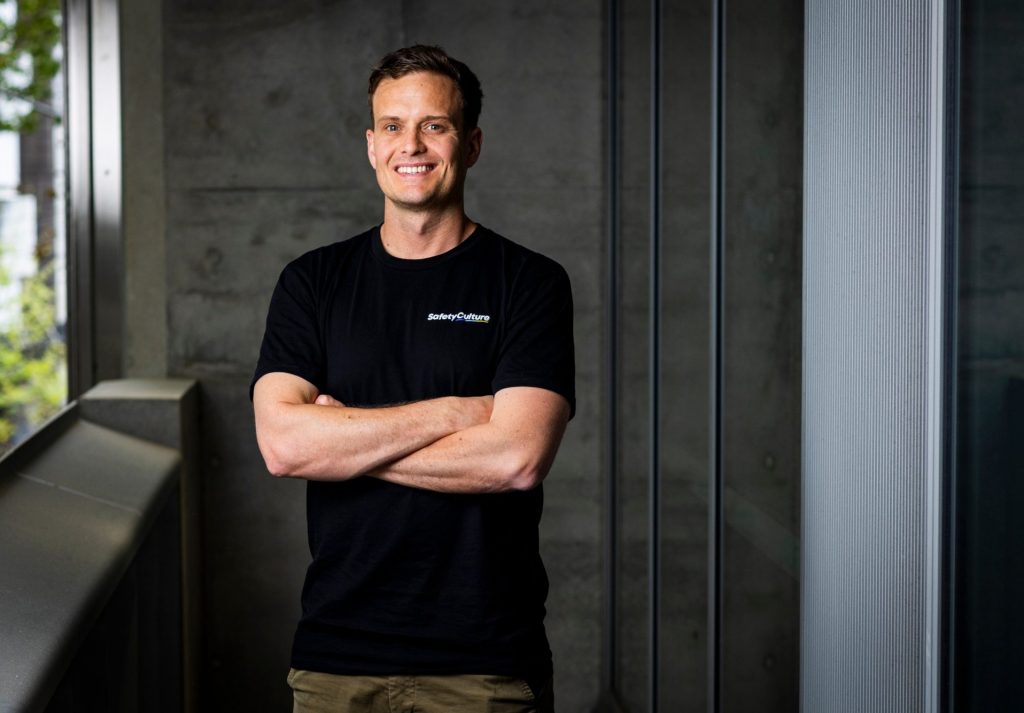
Sam Byrnes, Global Industry Lead – Manufacturing, SafetyCulture
Sam Byrnes is SafetyCulture’s Industry Lead for Manufacturing with over 18 years of experience, from shop floor supervisor to senior operations leadership. He specialises in transforming frontline operations through connected worker solutions, AI, and real-time insights.
For more articles like this, visit our Leadership channel.