
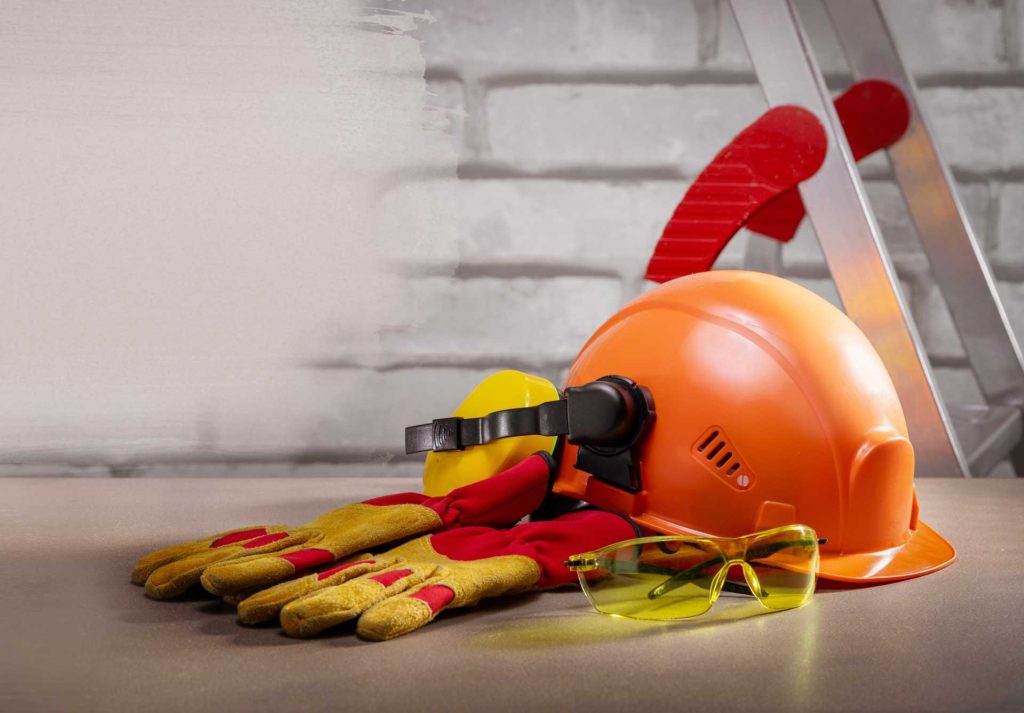
For decades, conversations about health and safety in industrial sectors have focused on the risks we can see. Moving machinery, manual handling, slips, trips and falls. These hazards are tangible, measurable and ingrained in how sites, workshops, and factories operate.
But there is another risk that, even in 2026, we still struggle to talk about properly: work-related stress.
Too often it is treated as something personal, something to push through, or something that will sort itself out if ignored.
In reality, stress is just as capable of undermining safety and performance as any physical hazard, and that blind spot is damaging our industry more than most people realise.
According to the Health and Safety Executive’s (HSE) research, stress, depression and anxiety account for around half of all work-related ill health, with nearly one million workers affected. In 2024/25, this led to 22.1 million working days lost.
In the manufacturing and construction industries, work-related stress does more than just affect morale. It affects concentration, judgement and the quality of work. It is clear it’s an issue that can no longer be relegated to the sidelines.
That’s why, this World Day for Safety and Health at Work, I’ve partnered with HSE who are calling on employers give work-related stress the same priority as any other workplace hazard and are urging professionals across the industry to adopt Working Minds practices.
Stress does not stay in people’s heads
I have spent years working alongside tradespeople, engineers and supervisors, and what I have seen time and again, is work-related stress being treated as a personal issue, rather than an operational one.
When pressure builds, it rarely shows up as something dramatic. Instead, the signs tend to be subtle. Small mistakes creeping into routine tasks. Friction between teams. People going quiet.
Over time, those behaviours increase the likelihood of incidents. In safety critical or precision environments, the consequences can be serious.
That is why it is important to be clear about one thing: work related stress is not a wellbeing extra; it is a health and safety risk. It affects how people think, act and work, with direct consequences for safety and productivity.
The challenge is not recognising that stress exists. People in the manufacturing and construction industries already know that. The challenge is addressing it in a way that is practical, realistic and fits the pace of busy operational environments.
Challenging the ‘it is just part of the job’ mindset
One of the most damaging assumptions in both manufacturing and construction is that high pressure is simply the price of performance. That if someone is struggling, the answer is to toughen up or push through.
In my experience, managing stress well does not slow businesses down. It does the opposite. Teams that feel supported make better decisions, spot risks earlier and deliver more reliably.
For manufacturing leaders wondering where to begin, the answer is simple. Do not overcomplicate it. Use the tools that already exist. Have regular, honest conversations. Act on what you hear and monitor, review the effectiveness of the changes you have implemented.
This isn’t just good practice – it’s a legal responsibility. Employers are required to identify, assess and manage risks to mental health in the same way they would any physical hazard on site. Ignoring the issue, or assuming it will resolve itself, is not an option. And that’s where HSE’s Working Minds come in, helping employers put the right structures in place and treat work-related stress like any other workplace hazard, and with the same seriousness.
Crucially, this is not about managers carrying the burden alone. Peer to peer accountability matters. Colleagues often notice changes in behaviour before line managers do. Encouraging people to look out for each other and flag issues strengthens teamwork and reinforces shared responsibility across the site.
Change starts with a simple conversation
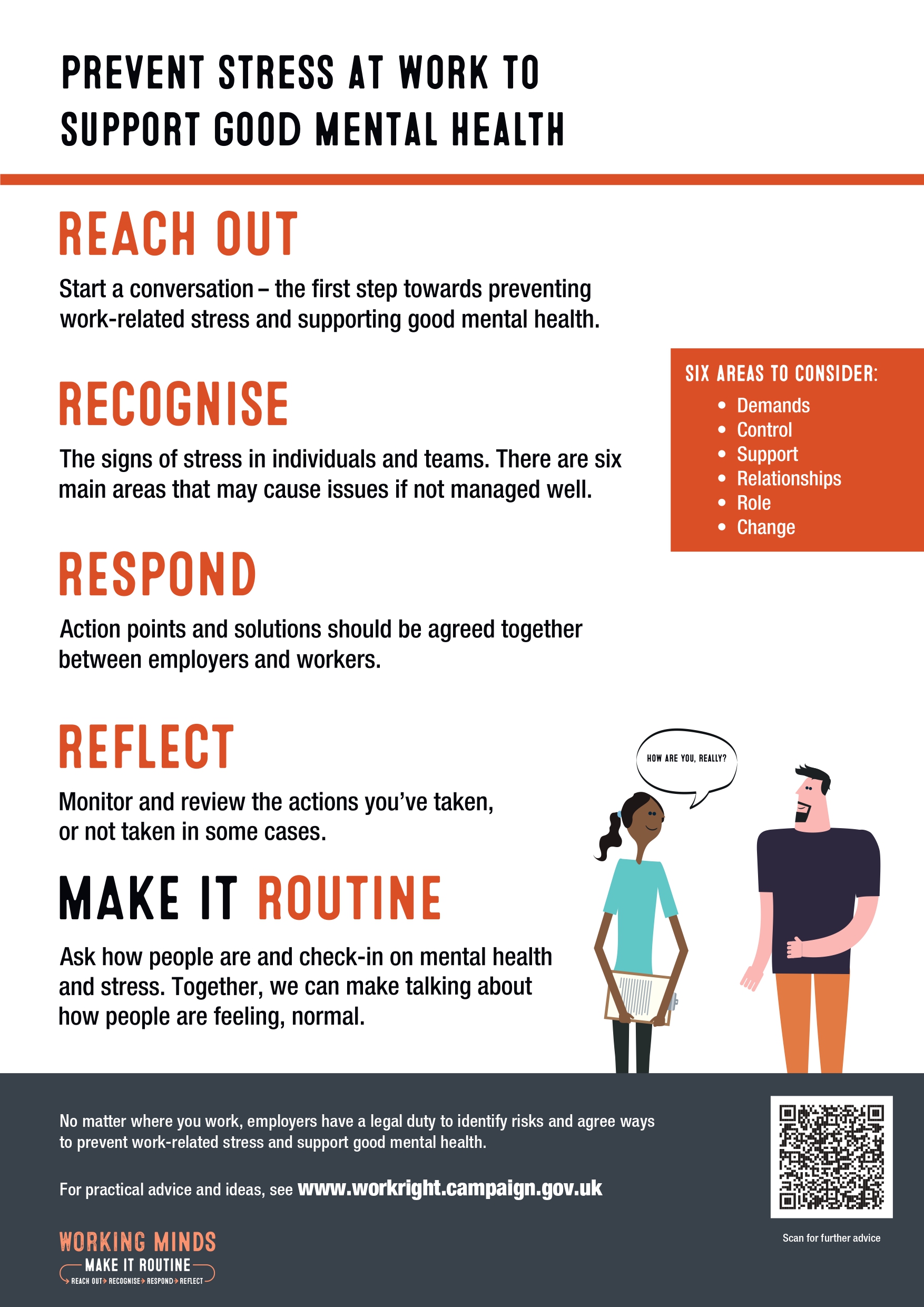
One of the most useful approaches I’ve seen is framing stress management around everyday management behaviours. That’s where the HSE Working Minds approach resonates, because it’s built around five simple actions, often referred to as the 5 Rs:
- Reach out: regular, informal check-ins, not just when something’s gone wrong
- Recognise: spotting early signs that pressure is building
- Respond: making small, practical adjustments before problems escalate
- Reflect: learning from busy or difficult periods
- Make it Routine: embedding these conversations into normal management practice
It works because none of this requires becoming a mental health expert, it treats stress like any other risk. Spot it early and deal with it proportionately.
Just as importantly, it reinforces that responsibility does not sit with one person or one department. Stress prevention works best when everyone feels able to spot issues and speak up.
When stress is recognised and addressed early, everyone benefits. The workforce, the quality of the work and the long term performance of the business.
Learn more about Working Minds and download the free resources here.
About the author
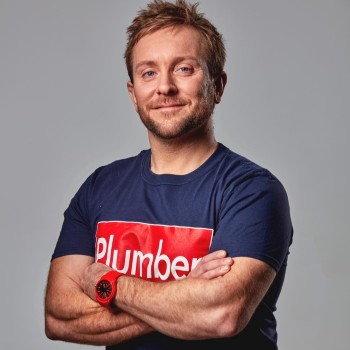
James Lawrence is Managing director of Plumberparts.
For more articles like this, visit our People & Skills channel.