The UK government has formally taken British Steel into public ownership, saying the move is necessary to protect the country’s steelmaking capability, safeguard thousands of jobs and secure the long-term future of the Scunthorpe-based producer.
The decision follows the Steel Industry (Nationalisation) Act receiving Royal Assent on 16 July, giving ministers the powers to transfer ownership after concluding that nationalisation was in the public interest.
The government said maintaining steel production at British Steel’s Scunthorpe site is essential to preserving the UK’s ability to manufacture steel domestically, supporting critical supply chains, major infrastructure projects, defence and national security.
The move follows government intervention in April 2025 to prevent the closure of the company’s blast furnaces after concerns over the future of the business under its former owner, Jingye. Ministers said that despite extensive negotiations, it had not been possible to reach an agreement that secured the company’s future while representing value for taxpayers.
Prime Minister Keir Starmer said: “British Steel is part of the fabric of our nation and a cornerstone of Britain’s industrial strength.
“Today’s decision secures the future of steelmaking in the UK, protects skilled jobs and safeguards a vital national capability.
“This Government will always act in the national interest to support British industry, strengthen our economy and ensure the industries we rely on can thrive long into the future.”
Business Secretary Peter Kyle said the decision had been taken to preserve the UK’s steelmaking capability.
“British Steel is one of the nation’s biggest steel producers, and I’ve made the decision to nationalise the business to secure steelmaking capability and maintain production in the national interest,” he said.
“British Steel now belongs to the British people, and our focus is on the future: stabilising the business, backing the communities that rely on it and building a sustainable, competitive and decarbonised steel sector for the years ahead.”
A newly appointed leadership team, comprising Non-Executive Directors, will oversee the next phase of the company’s recovery. Their immediate priorities include stabilising operations, maintaining production, strengthening health and safety and working with management, employees and trade unions to develop proposals for a commercially sustainable, low-carbon future for the business.
The government said public ownership would provide the platform needed to stabilise British Steel while longer-term options are explored, including the potential for future private sector investment.
The nationalisation forms part of the government’s wider industrial strategy for the steel sector. In March, ministers published the UK’s first Steel Strategy, backed by up to £2.5bn of investment, with the ambition of increasing the proportion of steel used in the UK that is produced domestically to as much as 50%.
Additional support measures introduced by government include £500m to support Tata Steel’s transition to green steel production at Port Talbot, enhanced assistance with industrial energy costs through the Supercharger and British Industrial Competitiveness schemes, and new trade measures reducing tariff-free steel import quotas by 51%.
An independent valuer will now be appointed to determine whether compensation is payable to the former owner, with the government expecting to introduce compensation regulations in the autumn.
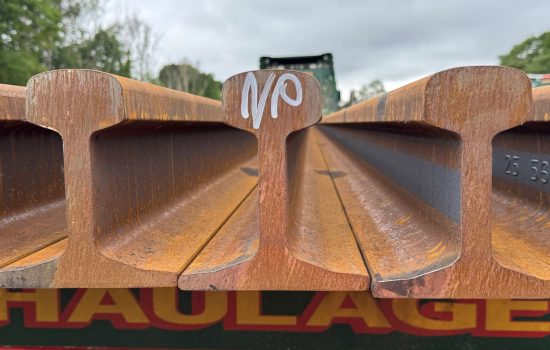
Commenting on the announcement, UK Steel Director-General Gareth Stace said: “British Steel produces products that are fundamental to building and maintaining the nation’s railways, infrastructure and manufacturing base. Retaining this capability in the UK is essential to strengthening our industrial resilience, supporting economic growth and reducing reliance on imports in an increasingly uncertain world.
“Bringing British Steel into public ownership is the right move. As the next Government takes office next week, its priority must now be to deliver a long-term plan that restores British Steel to commercial sustainability, secures investment in modern, low-carbon steelmaking and creates the competitive business environment the sector needs to thrive.
“The Government has already demonstrated its commitment to the future of UK steel through its Steel Strategy and recent action on trade. We now look forward to working closely with ministers to secure a sustainable future for British Steel and ensure that the wider UK steel sector has the conditions it needs to compete, invest and grow.”
For more articles like this, visit our Leadership channel