


The UK’s manufacturing and engineering industries are facing a skills crisis that threatens to undermine their future. An ageing workforce, combined with a decline in young people entering these industries, has created a widening skills shortage that shows no signs of slowing.
By 2026, one in five engineers in the UK will have retired. At the same time, there are currently around 61,000 unfilled roles in manufacturing alone. Without action, the manufacturing sector risks losing the very talent it needs to design, build and sustain its future.
Alastair Morris, Managing Director (UK) for Accu, explains how businesses can play a crucial role in inspiring the next generation of engineers.
“Today’s world of engineering is one that demands curiosity and critical thinking to drive future innovation. Whether developing sustainable materials, designing autonomous vehicles or using robotics to revolutionise manufacturing processes, engineers are problem-solvers. But for young people to recognise this, they need early and meaningful exposure to what engineering and manufacturing actually look like in practice.
New statistics from the Institution of Engineering and Technology also show that 76% of engineering employers struggle to recruit for key roles because applicants lack practical skills and experience. This highlights the importance of early intervention in schools to spark interest among students and provide practical hands-on skills where they can solve real-world challenges, helping to ease the transition from classroom learning to industry.
Bringing engineering to life with collaboration
Businesses have a crucial role to play in inspiring the next generation of engineers and innovators. Those who engage directly with schools and colleges can help to reshape how students view the sector and address these misconceptions. When industry professionals engage with and support young people in real-world engineering challenges, students get a much better understanding of the many different roles in engineering.
Practical challenges, such as designing and building small robots or experimenting with 3D printing, not only spark interest but also give students a sense of achievement and a deeper understanding of how theoretical learning applies in the real world.
A powerful example of this in action is the STEM pilot project delivered by Accu in partnership with its local High School in Holmfirth. The six-week AccuBot challenge tasked pupils with designing and building their own ant-weight combat robots, guided by Accu’s engineers to give students a hands-on experience with precision engineering components. Students explored core engineering processes, including CAD design, early prototyping, parts handover, print checks, wiring, drive integration and driver practice. The project finished with a robot combat finale at Accu’s headquarters, where five student-designed machines competed in three-minute battles inside a purpose-built arena.
Beyond classroom-based engagement, participation in student-focused events offers another way for businesses to inspire the next generation of innovators. STEM exhibitions and skills events give students the chance to meet engineers face-to-face, ask questions and explore real examples of industry innovation. For many young people, these events are their first opportunity to see engineering in action, to handle components, watch demonstrations and understand the diversity of roles that exist within the sector.
Earlier this year, Accu exhibited at the Makers Central event in Birmingham, alongside Kids Invent Stuff, whose channel is dedicated to inspiring young inventors and bringing young people’s design concept ideas to life. At the event, visitors experienced live demonstrations of AccuBots and the opportunity to control the combat robots in their arena to encourage participation.
Student engagement can also be extended to colleges and universities by setting engineering challenges. Businesses can set students challenges and host workshops at schools to provide technical support and mentoring, allowing young people to work with real tools and components under the guidance of professional engineers. Winners of the project can be announced at events like Get Up to Speed with STEM, which offers a unique opportunity for businesses to connect directly with future talent, showcasing their innovations while helping to bridge the skills gap in STEM.
Removing barriers to participation with sponsorships
Many schools encourage students to participate in extracurricular activities to develop their skills and expand their knowledge, but with stretched budgets, they often lack the resources and funding to fully support these programmes. Businesses can help close this gap by offering sponsorships and funding parts and components that equip students with the tools they need to experiment and build projects.
During 2025, Accu has sponsored 40 universities and six schools across seven countries, offering up to £1,950 store credit per academic team for students to purchase professional-grade components for motorsport vehicles, drones, rocketry, marine engineering, aerospace systems and clean energy projects.
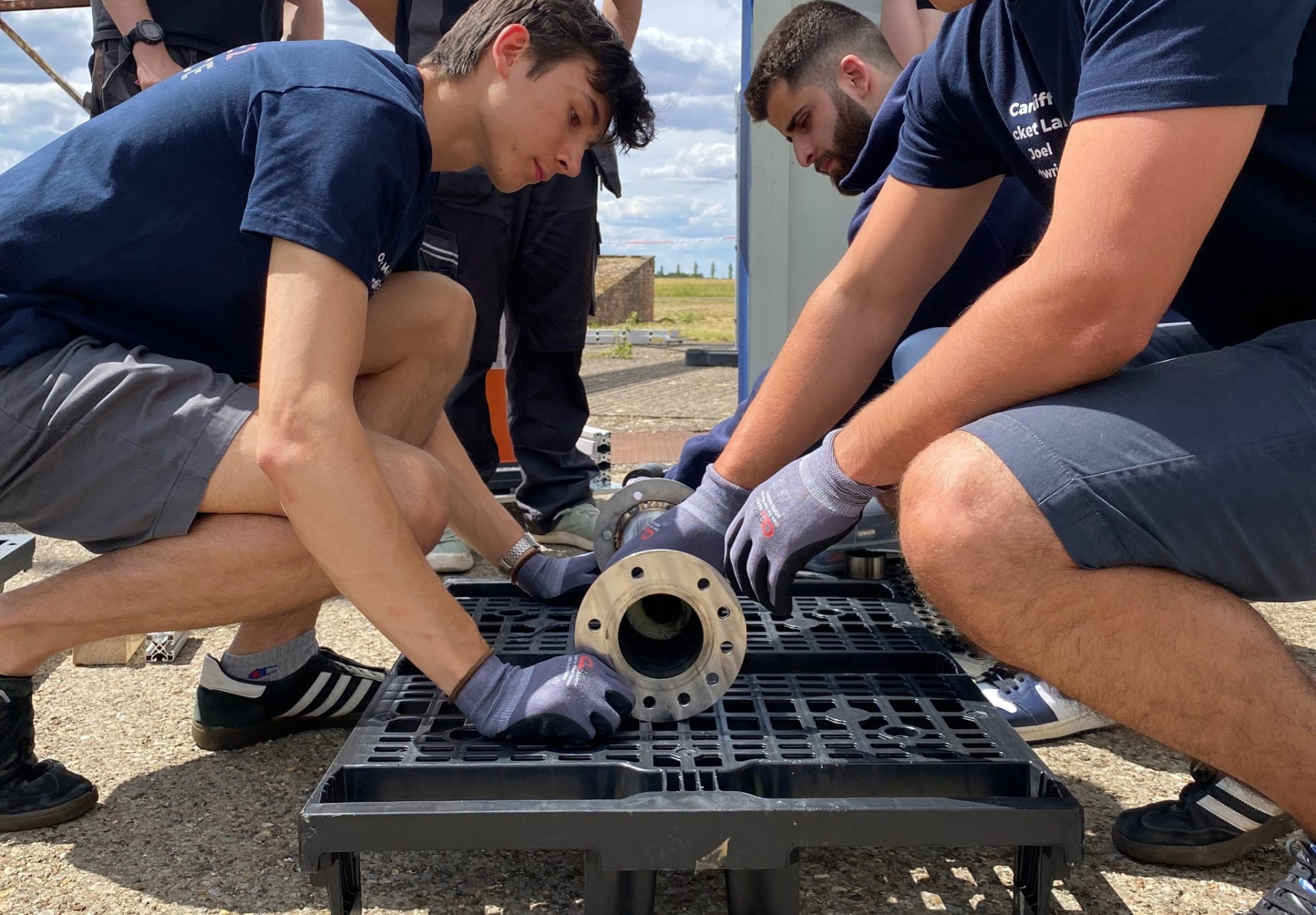
Accu’s recent sponsorship involves three student teams in the Race2Space Rocketry competition, providing components to teams from Sheffield Hallam University, the University of Sheffield and Cardiff University. These components, including precision screws, bolts, nuts, washers and cable ties, were used to build high-performance rocket engines.
The company also supported two schools to take part in the FIRST Tech Challenge UK National Championships this year. As a result, the winning team, from Langley Park School, earned the opportunity to represent Great Britain at the FIRST Global in Panama. The team will also compete at the European Premier Event in Eindhoven, becoming the first UK comprehensive school to compete internationally.
Businesses can also engage students on a global scale by supporting initiatives like STEM Racing, where young people aged 9–19 form teams to design, build and race miniature cars, applying real-world engineering and project management skills in a competition supported by Formula 1, educators and businesses and professional engineers.
Collaboration between businesses and schools
By collaborating with schools, businesses themselves gain significantly from greater staff engagement from those involved in the projects, from raised awareness and from future applications for roles such as apprenticeships.
Working closely with schools and universities allows companies to increase interest in STEM-related careers and nurture future talent. In doing so, they can identify passionate young individuals early and provide mentorship through apprenticeships to ensure that future engineers leave school with the skills needed to follow a career in the industry.
Addressing the UK’s engineering skills crisis requires a proactive approach to working with young people, and businesses are uniquely positioned to drive this change. By bringing engineering to life through hands-on activities and building long-lasting partnerships with schools and universities, businesses can inspire young people to pursue a career in the industry. With engineering potentially offering so many opportunities due to the adoption of technology and AI-driven models, young people just need to be inspired and shown just what their future career could be.”
For more stories like this, visit our People & Skills channel