

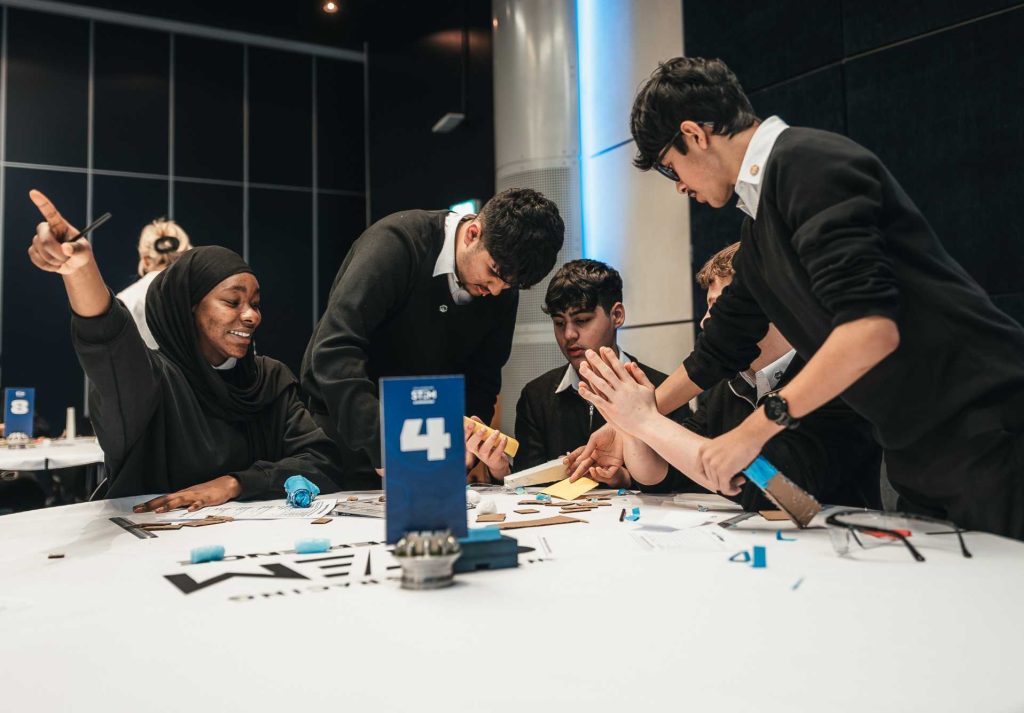
Beyond the glamour of the grid, Atlassian Williams F1 is attracting engineering talent. Through free, inspiring STEM workshops, the team is turning Formula 1’s aspirational appeal into a powerhouse for the next generation of talent.
FAQs
- How is Formula 1 helping to promote STEM education?
- What do students do in the Williams STEM workshops?
- Why is there a skills gap in engineering?
Key takeaways
- Atlassian Williams F1 Team is using Formula 1’s appeal to attract young people into STEM careers.
- Hands-on, immersive learning experiences significantly increase student interest in engineering (from 52% to 87%).
- Soft skills like teamwork and communication are taught alongside technical engineering concepts.
- Taking students out of the classroom environment boosts engagement and confidence.
- Industry-led initiatives are essential to solving the long-term engineering skills shortage.
How Formula 1 is driving interest in STEM careers
Rapid innovation, complex data and the pursuit of millisecond gains are the heartbeat of Formula 1. Williams are opening their doors and inviting students in to see what lies beyond the track.
Tackling the engineering skills gap through motorsport
Right now, the engineering industry is facing a massive and existential problem; a lack of skills and new talent, further hampered by unappealing and outdated stereotypes. Albeit very much part of the engineering sector, motorsport doesn’t have that problem. Glamourised on social media, television and film, a career in the sport is a dream come true for many young people. What is perhaps a little less understood is the wide variety of roles and opportunities available.
Inside the Atlassian Williams STEM workshop programme
Williams has been running STEM workshops for school children aged 8-16 since 2023.
From roadshow to experience centre
Originating as a roadshow, in 2024 the team decided to bring this in-house and give these workshops a home at the Williams Experience Centre, in Grove, Oxfordshire – on the same site as the official home for its F1 team.
Engaging thousands of students across the UK
The success is clear to see. The site welcomed over 7,000 students from across the UK in 2024; that figure almost doubled last year. Opening its doors five days a week – to two schools a day – the whole experience is offered free of charge, with Williams even organising transport and activities.
“We have around 2,000 contacts registered to bring a group to the programme, spanning more than 1,000 different schools. We receive constant emails from teachers asking when more dates will be available,” said Georgina Phillips, Instructional Design and Delivery Manager at Atlassian Williams F1 Team.
What students experience on the day

As an ex-teacher herself, Georgina has a passion for education, as do many others who have joined her on the programme from similar backgrounds.
Hands-on engineering challenges
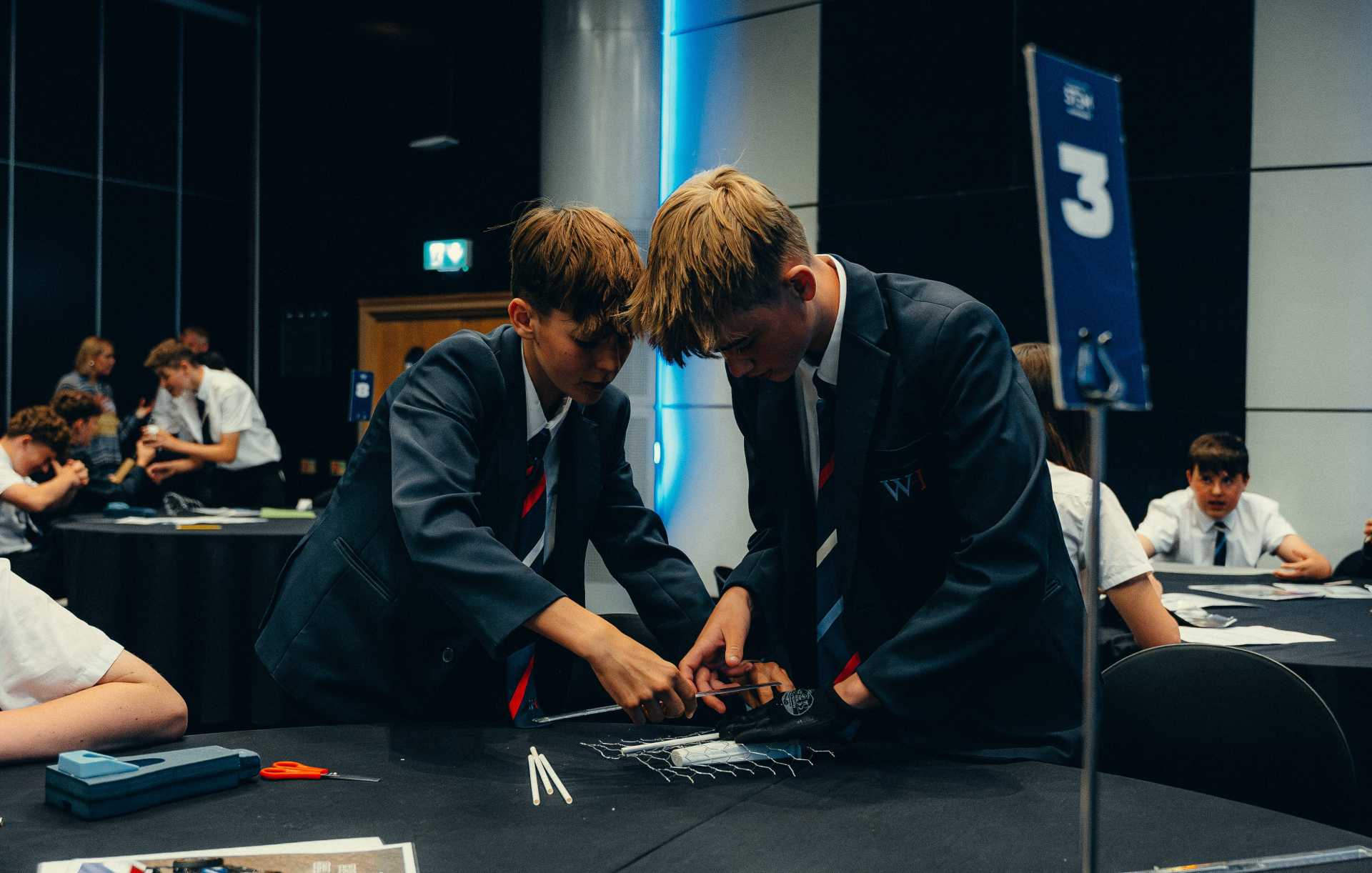
The day consists of three parts: a workshop which incorporates building, testing and presenting of Formula 1 nose cones, a tour of the Williams Heritage Museum and a session on a Formula 1 simulator. The same activities are given to every student whether 8 or 16 years old and covers elements of maths, science and technology.
Developing teamwork and communication skills
The aim is to expose children to careers in STEM and the world of motorsport engineering. “Our goal is to inspire students to pursue STEM school subjects and ultimately STEM career paths, be it in Formula 1 or elsewhere. That includes both the need for foundational STEM skills and softer skills like teamwork,” said Katherine Solomon, Head of Education at Atlassian Williams F1 Team.
The aim of the workshop is to replicate what happens in real life. “During the workshop students can approach me to say their team are not listening. Instances like this we see as an opportunity to discuss why; is there a better way to get your voice across and how can you be a better listener when someone else is speaking? These are all skills that we need, beyond the technical aspect of engineering,” Georgina explained.
The softer skills are just as important and can be difficult to teach. “Students take part in the engineering and design process from ideation to prototyping and through the crash test rig. But within their teams, they each have a role. There is a team principal, someone will be in charge of finance, while another individual will be looking at the marketing of the vehicle. They get to see that if one aspect of the team doesn’t pull their weight, none of them will succeed. It mimics what jobs are like in real life, when you need to collaborate and work together,” said Katherine.
Why environment matters for student engagement
Learning outside the classroom
“Teachers are often amazed at how engaged the students are,” added Georgina. A key reason for this is the environment. “They’re out of their comfort zone, which is a great start. They’re in our environment and we put them into mixed teams,” she said.
Inevitably there will sometimes be a reluctant student, but when the challenge begins, they quickly become engaged and want to get on with it. “Working with people they don’t usually interact with helps the students focus on the task at hand and use teamwork and communication skills in different ways than they may have before,” she said.
Building confidence through collaboration
One of Georgina’s highlights of the programme is seeing the confidence grow within the students. “At first, they can be shy, but they often end up fully embracing the challenge. When they stand up on the stage at the end of the session, they are proud of what they have done,” she said.
Often the presentation is a time where students have the opportunity to reflect on what went well, and elements of the day that were perhaps, less successful. “They realise that it might have been harder to communicate with one another than they first thought, or they may have misspent the budget. But they learn from that and can talk about what they could do differently in future,” Georgina said.
Extending STEM learning beyond the workshop
The Williams STEM Experience is one day of the school year and although impactful, it creates engagement with students that teachers want to continue in their classrooms.
Supporting teachers and schools
“Every teacher that comes into the programme is asked if they’d like to be part of the programme’ advisory board. This helps us to test resources with them and find out what they need from us,” explained Katherine.
New digital resources for parents and educators
One of the concepts that has emerged from the advisory board is a community website to serve parents and educators, providing exciting STEM focused resources so they can supplement what the Atlassian Williams F1 Team did outside of the classroom.
“Examples of these resources are pre- and post-visit activities and lesson plans for teachers to use in the classroom. We want them to reinforce what was demonstrated on-site while still being aligned with different national curriculum components, be it STEM specific or some of those softer skills,” added Katherine.
Williams are currently testing a quarterly newsletter of resources and fun hands-on activities that can be used by educators and parents at home. For 2026 the programme is focussing on the key influencers within a student’s life who can help them on their academic journeys. “We have a few activities up our sleeve, keeping in mind how we can approach the goal of the programme from every angle,” she said.
Measuring the impact of STEM engagement

Measuring ROI can be difficult and due to the relatively short time the programme has been running, Williams is yet to have any students who have attended the STEM workshops returning as engineers or apprentices. “One day in the future, that would be the ultimate measurement of success,” said Georgina.
Tracking student interest in STEM careers
Students are asked how interested they are in STEM careers both when they first arrive for a STEM workshop and again at the end of the day, with some contrasting responses. “When they arrive around 52% tell us that a STEM career is something they’d be interested in pursuing. By the end of the day this figure jumps to around 87%, showing the influence of our programme,” said Katherine.
Evaluating success through NPS and feedback
Williams measure student satisfaction using the Net Promoter Score (NPS) metric and its overall score is 65, more than double the global benchmark of 30 for the 14+ age demographic.
Williams is not measuring if students have learned the concepts of maths and science, but how to apply them in the challenge.
What other organisations can learn from Williams
Williams and its partners collectively recognise that there is a shortage of skills within the engineering sector, and nothing will change without a push from within industry.
Building a future talent pipeline
“We’ve got to look at the skills that are missing now and what skills we need for the next 20-30 years in order to keep the sector alive. If our programme can influence young people to pursue a career in the industry, then we’ve made an impact. But, if everyone could do that, imagine how great the change could be,” said Georgina.
Showcasing career opportunities in engineering
Many young people who are still in school are unaware of all the roles that exist within manufacturing and engineering. For other businesses, Georgina says it’s all about opening the door to the opportunities that exist.
“As a company you need new skills to develop, and this could be your pipeline for the future. Show them what you do and why it’s a cool industry to work in,” she added.
Beyond the school years
Last year, Williams welcomed nearly 150 people across all its different Early Careers programmes, industrial placements, graduate programmes and apprenticeships.
While on-site, Molly Cooper sat down with Aaron Cheeseman, CNC Programmer and Machinist at Atlassian Williams F1 Team, who started his journey with the company five years ago. He began as a Level 3 apprentice during his first year of college and is now completing his Level 6.

From a day-to-day perspective, how quickly after starting your Level 3 apprenticeship did you become involved in machining operations?
AC: It was very quick. In my first year I spent most of my time at college learning basic techniques and skills, but by my second year I was fully integrated into the business.
For me, once I’d proved my competency, I was placed on some important projects which gave me a purpose to what I was studying.
What knowledge have you gained through the academic side of the apprenticeship that has been applicable on the shop floor?
There are many different skills that have been immediately transferable. One key lesson has been around different methods of research and how to conduct formal and informal interviews with people in my department.
In my work, I have been changing templates and then using questionnaires to gain feedback on the current process. Once I have collated this information, I have then been acting on the findings. It’s been a great way to help me improve.
Can you describe how your apprenticeship with Williams provided on-the-job training and development?
Throughout the early stages of the apprenticeship, I was given various training from the business. One week every month I would be placed on various selected projects to take part in practical work. It gave me the opportunity to develop through guidance from senior machinists and engineers as well as offering a safe space to learn and make mistakes.
The most important thing that I have found in my apprenticeship is the ability to find new methods through trial and error.
How essential is mentorship from senior machinists to your success?
Mentorship has been essential and I have learned so much from senior machinists and engineers.
Something that is part of the culture is an open environment for discussion. If you have tried something, you can talk with senior employees and get their opinions.
Sometimes they would give advice on what they would do differently, but sometimes they will confess that they would never have thought of doing something that way.
In that situation, you can enhance current methods, creating better processes for everyone.
Why did you choose the apprenticeship pathway over a full-time university degree?
I started my apprenticeship after my GCSEs. I’m a very practical learner and I learn through doing.
I did initially begin my A Levels and was given opportunities to play about with products, using trial and error, but there was no purpose to it.
When I’m in an environment where trial and error has tangible benefits and the changes, I make matter, it suits my learning style much more.
Where do you see your career progressing within Williams or the wider manufacturing industry?
I would love a career in aerodynamic design as it’s always been a career I have dreamed about since I was younger.
I never thought that it would be something I could achieve but now, taking my initial apprenticeship at Williams, they continue to bring out my potential. They have allowed me to develop and taking my Level 6 apprenticeship has given me the confidence to go on to pursue that.
Why should manufacturing or engineering businesses start or significantly expand an apprenticeship programme?
There are many different reasons why investing in the future is great. The talent needs to come from somewhere.
New talent needs to be trained by the employers at some point, even if they take the education route. It also provides the opportunity for other people in the business to learn from new people with ideas that are different from the traditional. Someone may have worked in one role for 30 years and they might be stuck in a certain way of working. An apprentice can come in and show them something new.
Apprenticeships are beneficial to both people and the business.
Further reading
For more articles like this, visit our People & Skills channel.