
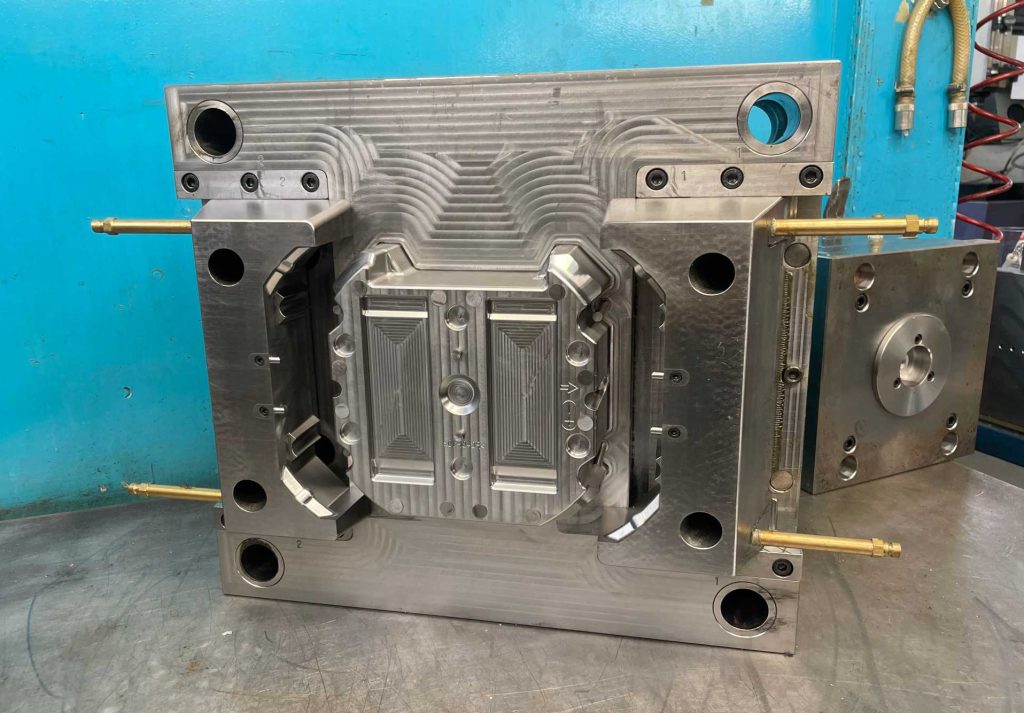
Founded as a press tooling business, BEC Group has evolved into a trusted tooling and plastic injection moulding company and engineering partner. The Manufacturer finds out how technical expertise, customer collaboration and sustainable materials are shaping the future of the business.
Key takeaways
- Engineering across multiple sectors – BEC Group supports projects spanning aerospace, agriculture, medical and industrial manufacturing.
- Technology needs technical expertise – Advanced CAD and CAM tools speed up design and production, but engineering knowledge remains essential.
- Sustainability starts with the application – The business helps customers assess recyclable and compostable materials where performance requirements allow.
- Collaboration improves outcomes – Working closely with customers from design through to testing helps optimise manufacturability and reduce lead times.
- Machining technology is driving efficiency – Advances in cutting tools are improving speed, precision and production efficiency while helping reduce tooling costs.
FAQs
- Which sectors does BEC Group work with?
- How does design for manufacture improve product development?
- How is BEC Group helping customers use more sustainable materials?
- What role does plastic injection moulding play in the company’s projects?
- Why is customer collaboration important in tooling and product development?
- How have advances in cutting tool technology improved manufacturing efficiency?
Forty-eight years ago, Geoff Elvy founded BEC Group with two partners. Today, only he remains, having led the company to its current New Milton site in 1988. Originally established as a press tooling business, the company operated in a very different era during its early years. “CAD didn’t exist back then – everything was done on paper and drawing boards. My aim was to find people who needed us for project work,” Geoff explained.
One of the company’s first major projects was supporting the development of some of the earliest debit and credit card payment terminals, alongside telecommunications equipment for companies including Vodafone.
From press tooling to engineering projects
Over the years, the business has evolved from a tooling and mould design specialist into a diverse, projects based manufacturer.
“We’ve worked with customers across a wide range of sectors including aerospace, agriculture, medical and industrial. Through that experience, we’ve developed the ability to deliver tooling quickly – from receiving a customer’s CAD files through to design and producing the first parts,” Geoff explained.
Turning concepts into manufacturable products
“However, an initial CAD design is not always suitable for a mould tool in its current form,” said Mike Tharme, Engineering Director at BEC Group. “My role is then to produce a DFM, design for manufacture, where I work with the customer’s design team to work out if the parts can actually be made.”
From there, any changes are sent to the CAD designer to see if they are possible. This will go back and forth until they reach a final version which can be manufactured. “We’ve invested in the latest CAD and CAM software for decades, but no matter how advanced it becomes, we still need human expertise. The software can automate parts of the process, but the people element remains essential,” explained Mike.
Each project can come with its own set of challenges.
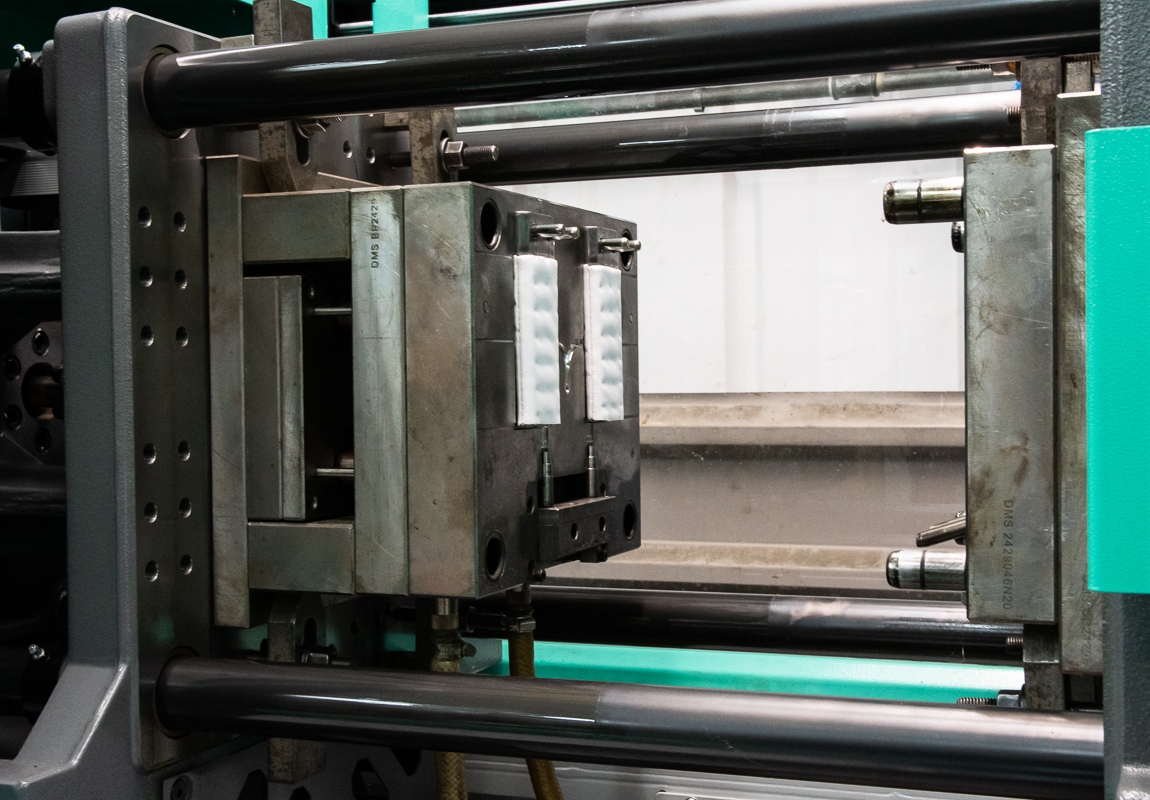
“Typically, there will be design constraints for a mould tool that have to be followed. An example could be a flip phone which has to open and close. These challenges will be tackled in the design stage,” Mike added.
Sustainable materials and circular engineering
In recent years, BEC Group has found more customers requiring the use of sustainable materials.
Finding materials that meet performance requirements
“They often ask for recyclable or compostable materials. It’s our job to find out if sustainable materials are the right fit for the customer. A few years ago, it was often the case that these sorts of materials were simply not fit for purpose, but now, there are far better formulations on the market,” added Mike.
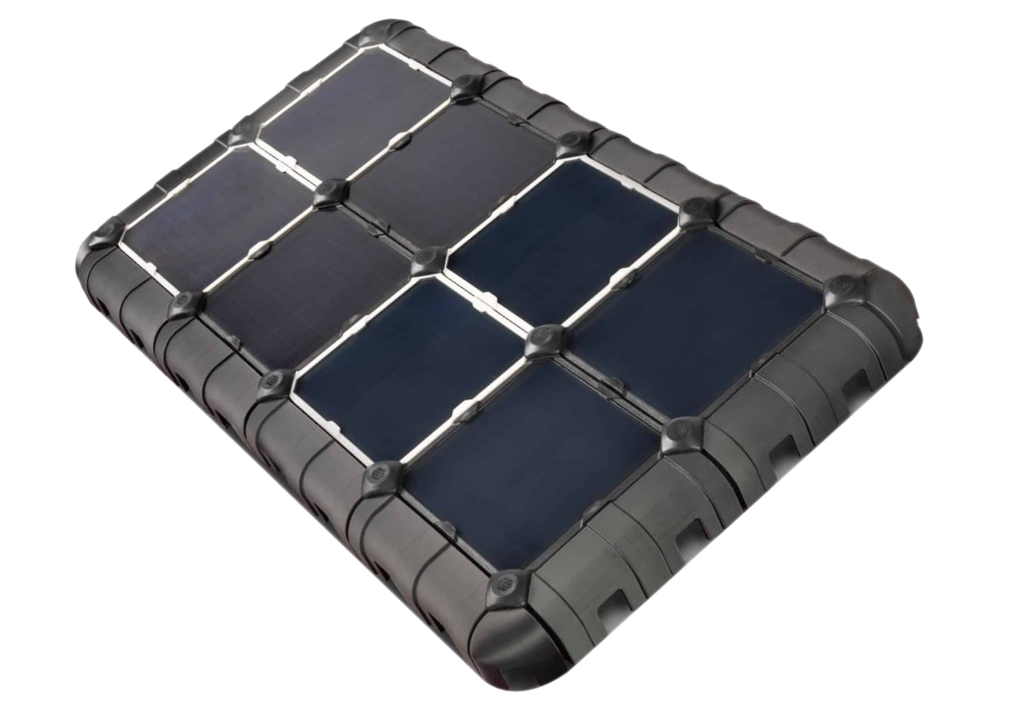
One example of BEC Group’s approach to sustainable engineering is its work on a solar tile system designed for large industrial vessels, including bulk carriers. Its customer, MarineSolar Energy Solutions, needed these tiles to be engineered to withstand harsh operating conditions, allowing personnel to walk on them, while also enduring repeated heavy impacts, such as cargo being loaded onto the deck.
Developing a circular solar tile system
Sustainability is a key driver in this project. We are currently exploring the use of recycled engineering materials, including recycled fishing nets, which will make for a truly circular story.
Paul Holland, Technical Director, BEC Group
In recent weeks the business has been exploring options to produce specific parts of the full array in suitable recycled materials, that can achieve the performance required and form part of the circular economy.
For the customer, the project had to be designed with the circular economy in mind. “The tiles have an expected service life of around 20 years, and they can be removed and repurposed for other applications, rather than being sent to landfill,” explained Paul.
The company is also investigating ways to improve the recyclability of the solar elements themselves, recognising that conventional silicon wafers remain one of the biggest sustainability challenges.
Longer-term, research is focused on developing more recyclable alternatives, including graphene-based solar technology.
Alongside sustainability, safety and performance remain critical. “For this project, the material also needed to be self-extinguishing and suitable for demanding industrial environments,” Paul added.
Working with customers from concept to testing
Throughout the project, BEC Group worked closely with its customer to understand the application’s requirements, source the appropriate engineering materials, carry out testing and provide sample swatches before tooling was completed. This ensured correct materials were selected early, helping to reduce lead times between tooling and production.
Future trends in tooling and manufacturing
Looking ahead, BEC Group’s future will continue to be customer and project focused. The materials and manufacturing methods used for each tool are dictated by the customer’s application.
Some projects are extremely technical and require engineered plastics, so recycled materials can’t be used. On other projects, customers are much more focused on the sustainability of their product, so we’re driven by those requirements. Ultimately, it’s all chosen by the customer.
Mike Tharme, Engineering Director, BEC Group
Improving speed and precision through machining technology
Although the fundamental principles of toolmaking have remained largely unchanged, Mike added that advances in machining technology have significantly improved efficiency over the years. “The process itself has not evolved all that much because fundamentally, there is still a set series of rules for making a mould tool,” he said.
When Mike first joined BEC Group, the business used basic high-speed steel cutters. Today, carbide tooling has become more affordable and the development work by cutter manufacturers means the tools last longer, cut faster and achieve tighter tolerances. “All of that helps compress overall production time, which ultimately reduces tooling costs for everyone,” he said.
Customer story: MarineSolar Energy Solutions
While visiting BEC Group, The Manufacturer spoke with customer, Chris Russell, Chief Technology Officer at MarineSolar Energy Solutions. The company is developing a pioneering solar power system for large vessels, which is purpose-built for the marine environment and designed to provide renewable energy directly to a ship’s load.
How did your partnership with BEC Group begin?
CR: We’re a UK-based start-up so wanted to work with a UK-based company on this project. From BEC Group’s history, we recognised they had the right experience. As a business we used a purchase expert who used their expertise to source BEC Group. Ultimately, they were the right choice because of their speed to market and the assistance they can provide in developing the tooling.
What challenge were you trying to solve and how did BEC Group support you throughout the project?
One of the biggest challenges we had with our product was with the clamping components on the tiles. Initially we had chosen an aluminium material however, this was proving prohibitive due to the complexities of the design. As such, we then transitioned to plastic. In addition, we also required the product to withstand a marine environment and be recyclable. BEC Group were able to advise us on the materials, create the tooling and help us trial the products. This solved our problem and made our product both lighter and cheaper.
What progress has the project made towards full-scale deployment and what milestones are still to come?
The tooling we developed with BEC Group was production quality, even though some of the moulds had a limited number of cavities. To date, we’ve produced almost 16 mould tools, enabling us to move into the first stage of commercialisation. The product is expected to launch to the market early next year.
What are the key advantages of working with BEC Group?
The knowledge and experience that BEC Group has, alongside the flexibility they have been able to provide has been great. They have delivered everything we have asked for and we’ve never had a tool that wasn’t right first time. The components have all fitted together and performed as intended. We’ve made extensive use of 3D modelling and rapid prototyping throughout the development process, but it was BEC Group’s tooling quality, precision and tolerancing that attracted us to them. Their ability to manufacture both the tooling and the components on the same site has also made a significant difference.
How are customer expectations around sustainability and recyclability changing how the business operates?
Customer expectations are critical for us. Our product is designed to help reduce global carbon emissions through the use of solar technology, but we also want to ensure we’re not, in turn, creating components that can’t be recycled or contribute to the circular economy. Our entire design is based on materials that can be reground and remanufactured into the same components, with little or no loss of strength or performance. Because the plastics are highly resistant to corrosion in saline environments, the products also have a long service life and can be repurposed for use on land or even on other vessels.
What’s next for this project and what does the next 12–18 months look like for your work with BEC Group?
Over the next 12-18 months, MarineSolar Energy Solutions will be moving towards full-scale production. Alongside this, we’re continuing to develop larger products for new markets. Advances in technology, mounting systems and product design now allows us to create more complex shapes than ever before. Our partnership with BEC Group gives us confidence that the tooling will be delivered on time whenever we need it. Because of the nature of our product, rapid prototypes aren’t sufficient, as they don’t accurately replicate the appearance, strength or performance of the final product. Our customers expect us to demonstrate that the product performs exactly as we claim, so every prototype has to be fully functional, not just visually representative.
Further reading
- British Plastics Federation – Plastics manufacturing and sustainability resources
- Made Smarter – Digital technology support for UK manufacturers
- Manufacturing Technology Centre – Advanced manufacturing and engineering insights
For more articles like this, visit our Innovation channel.