
What does it take to manufacture Britain’s iconic folding bicycle? Molly Cooper visited Brompton‘s factory to discover how technology, sustainability and craftsmanship are driving success.
Key takeaways
- Digital manufacturing: Brompton is using data, sensors and Industry 4.0 technologies to improve quality, efficiency and traceability.
- Skills still matter: Automation supports production, but specialist skills such as hand brazing remain central to the manufacturing process.
- Customer-led innovation: Better forecasting and customer insight are helping Brompton expand its range and bring new products to market.
- Sustainability in action: As a certified B Corp, Brompton is focusing on waste reduction, recycling and more sustainable operations.
- Technology and talent: The business is investing in both digital tools and homegrown skills to support long-term growth.
FAQs
- How are Brompton bicycles manufactured?
- How many bicycles does Brompton produce each week?
- What technology is Brompton using in its manufacturing processes?
- How is Brompton improving the sustainability of its manufacturing?
- How does Brompton use customer insight to develop new bicycles?
Brompton’s journey from folding bike to global brand
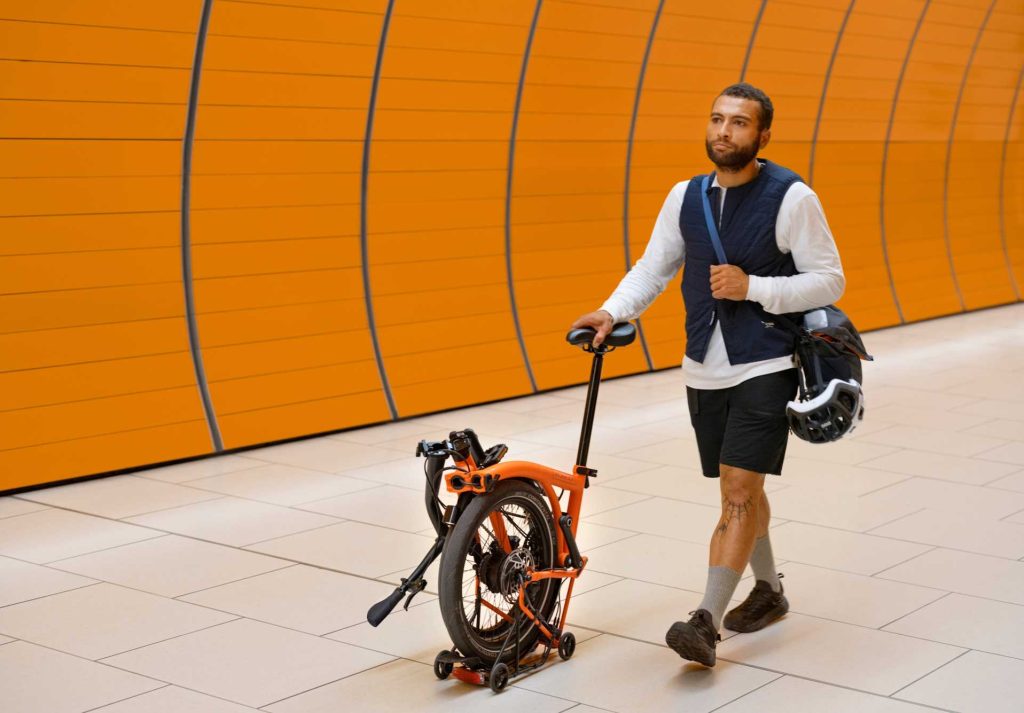
The folding bike – famous among London commuters for its ability to squeeze onto packed trains and tuck away under desks. For over 55 years, Brompton Bicycle has been improving the lives of city cyclists everywhere and its trusted name has kept customers coming back.
Brompton Bicycle has a rich history, beginning in 1975 by founder Andrew Ritchie. He had seen the foldable bicycle, admired it as an invention but knew it could be better. “Last year we celebrated our 55th birthday and each year we have iteratively improved the bike and the ranges it comes in,” said Alex Watkins, Manufacturing Engineer at Brompton Bicycle. Within his role, Alex focuses on operations and optimisation of the factory, all while keeping the best quality, meeting demand and streamlining processes. “I’m lucky to work in the exciting part of the factory, where everything comes together.”
Meeting changing customer demands
The expanding of the range has been influenced by customer demand and the portfolio now has something to suit most requirements. “
On our website we provide a virtual assistant, where a browsing customer can see what lines we offer depending on budget, material and power,” explained Alex. The bicycles are also customisable from gears, colour and functions.
“Many people think electric bicycles are a new invention, but we began incorporating an electric system on our core range over ten years ago and now it’s an option on every variant we manufacture. It reflects how substantially we’ve grown our portfolio,” Alex added.
Five years ago Brompton was exclusively manufacturing its core range but since then, has expanded and introduced its T Line, a lighter, faster version of the core product made from titanium.
Brompton has a loyal customer base, and even with a product that is built to last, the business has a strong line up of returning customers who are looking for their next bicycle. “Typically, they realise how much they use their first bicycle for commuting and then want another for social purposes, or an electric version,” Alex said.
Brompton’s community even takes part in the company’s own championship races and events around the world. “Unlike other bicycle brands, we don’t take ourselves too seriously. Our bicycles are made for getting around cities and keeping fit. When it comes to our races, participants aren’t wearing Lycra, but rather a shirt and tie, and they have to unfold their bike on the start line,” Alex joked.
Inside Brompton’s manufacturing process
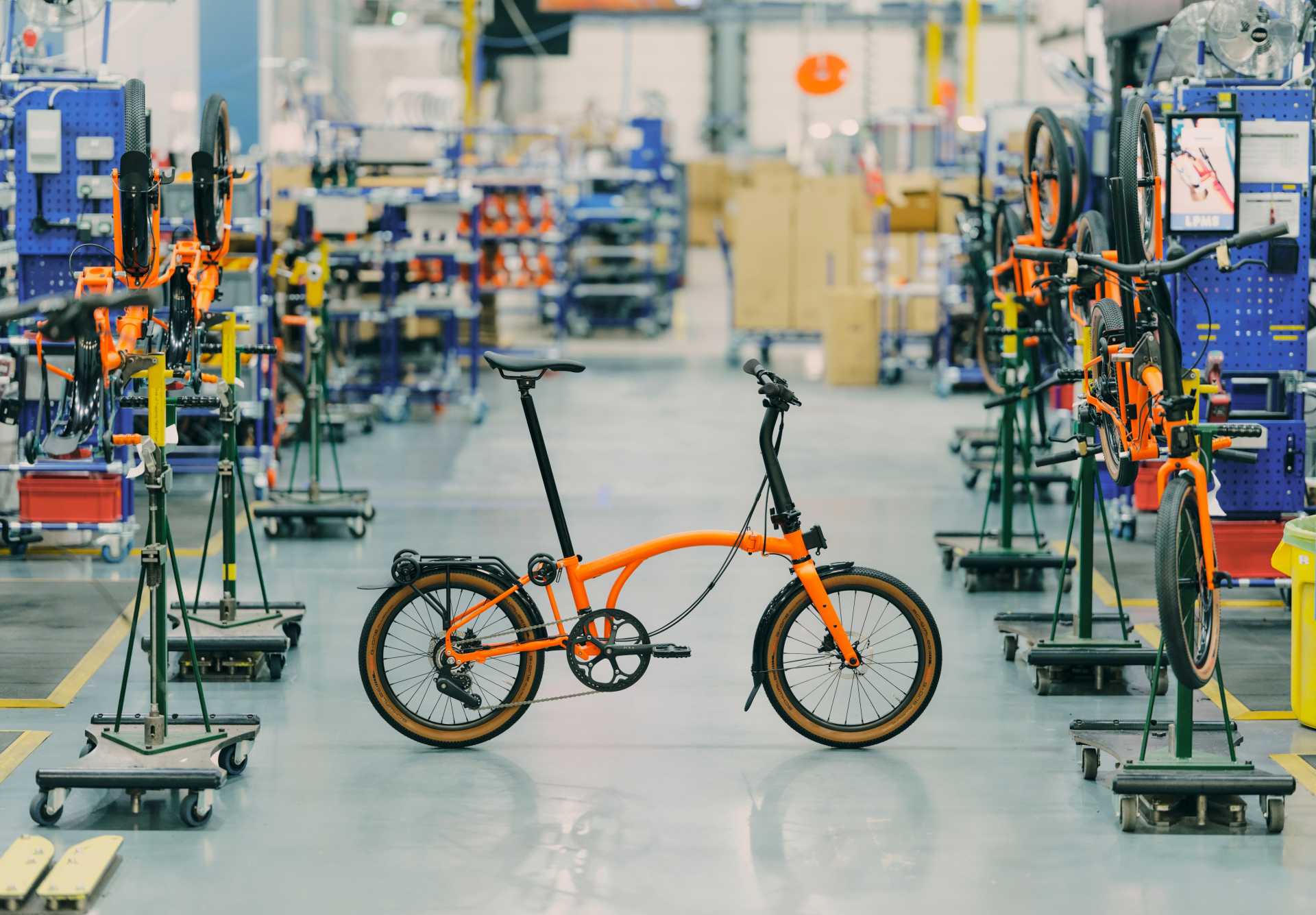
The Brompton factory is split into four smaller production lines that create the final product. The factory operates from 7.00am to 4.30pm Monday to Thursday, with Fridays being used for factory maintenance. “On average we currently produce 350 bikes a day, 1,400 bikes a week. Our record during COVID-19 was 2,500 in one week,” Alex continued. In the first area, Brompton receive all of its pre-cut and formed tubing from its suppliers. Then using skilled labour, the brazing technicians join them together to create the frame. The second area is for components, wheel and gear assembly. “As the product is specific to us we have to assemble every part on-site,” Alex added. The next step is to add colour to the metalwork and finally, assembly of all parts, resulting in a finished bicycle.

How technology is transforming the factory
Incorporating smart manufacturing technologies
Throughout the manufacturing processes smart machines are aiding operations at Brompton.
Over the past five years, the biggest change for the business has been ergonomics, the catalyst for which was the growth in demand experienced during COVID-19, when the company had to pivot from manufacturing hundreds of bicycles to thousands. As such, the machines the company has introduced are focused on repetitive tasks, helping Brompton produce the required volume more quickly.
Other technologies have been introduced to help the business drive quality. “Through new sensors, we have developed algorithms, creating new controls over production, moving us into Industry 4.0,” Alex added. This has allowed Brompton to deliver a better product to its customers.
Looking ahead, the business has some exciting projects in the pipeline that will utilise these new technologies, including a digital passport on each bicycle so customers can trace date of production and source of materials. “There has been challenges in understanding what we want and how we do it, but it’s a roller-coaster and we’re riding it in the right direction,” said Alex.
Building a resilient and responsive supply chain
Better forecasting and planning
At a time when trading environments are so volatile, it’s the manufacturers that have built collaboration into their supply chain that will thrive and Brompton is certainly in that category, having created long-established relationships with suppliers over the years, with many of them being part of the business since day one.
Brompton also supports local businesses which can come with its own challenges, such as when certain types of manufacturing moves exclusively to Europe. “However, we work as closely with British suppliers as we can,” said Alex. Standardised planning has been key for Brompton to continue its production.
During COVID-19, the business had a huge influx of orders due to the nature of its product offering which allowed people to exercise alone and commute without mixing with others. Since then, the business has only built upon that growth.
“Even though we were already producing large volumes of bicycles we had to increase our orders from our suppliers to meet that increase in demand. Yet, we wanted to ensure that same level continued after the pandemic. To help with this we involved other teams such as marketing to perform research, predict trends and gain insights into what our customer base was looking for, as well as what their priorities were when purchasing a new bicycle,” explained Alex.
In the last two years, Brompton has seen a significant shift in its ability to plan. “When I joined the business five years ago, the production plan could change on an hourly basis, now we have the most amount of models being produced on the shop floor, meaning we can’t be as flexible. Therefore, moving towards better forecasting and planning will allow us to operate more effectively,” he added.
Sustainability and circular manufacturing
Going green
Brompton is a B Corp certified business, a status very few bicycle manufacturers can boast. “Looking back, we were already actioning many of the items that the certification required prior to achieving it, but we’re really proud of going through that journey and gaining that status,” said Alex.
To help continue and improve on its sustainability efforts, the business has a strong internal sustainability team which focus on this every day. “We are now conscious about what waste we are producing and how we can recycle what we create. It’s become part of the thinking behind each project we work on,” he said.
As part of its sustainability initiatives, Brompton worked out that 42 of the company’s bicycles can fit into one parking space!
Investing in people and specialist skills
Attracting new talent
Along with a recognisable product, Brompton has strong values and brand presence which has helped with its recruitment over the years. “We have a unique energy at our site; each individual is willing, approachable and friendly, supporting the work we do here. This attitude helps us when we want to recruit,” said Alex.
Over the last ten years the skill set at Brompton has expanded, drawing influence from industries such as automotive. “With the new titanium materials for the T Line, we worked with an aerospace partner and with our e-bike, a Formula One team. Working with other industries has in-turn given us the support we need when trying to bring new skills into the business,” he added.
Each year, Brompton offers several graduate scheme placements. “This works well for us because the young people we invite bring with them new ideas and talent,” said Alex.
The business also opens its doors to the local community and recently invited in a group of young girls from Year 8. “You wouldn’t expect them to be so interested but they asked so many questions and came up with their own designs for future products at Brompton. Some of them we may even use!,” he said.
Preserving specialised manufacturing skills
Brompton’s brazing (a process to join metal together) expertise is one of its most specialised manufacturing skills and is increasingly rare within the UK. “We’ve invested in our own in-house brazing school to train people and preserve that expertise,” said Alex.
Rather than recruiting experienced braziers, Brompton develops talent from within. Employees who have worked in assembly and demonstrate strong manual skills are typically well-suited to the role and as such, are offered training as they already understand the brand, the product and the company’s manufacturing standards.
“Becoming a skilled brazier is a long term investment, with training typically taking between one and two years. However, it is also one of the highest-paid shop floor roles which encourages people to learn,” he added.
Planning for future growth
Keeping up with change
As a 55 year old business, Brompton Bicycle has to ensure its keeping up with the times and trends. One focus area of this ethos has been learning more about customers and feeding that information directly into the company’s operations.
“We’re defining what our goal is as a business and having a structured plan in place is key to our growth. Having a roadmap helps us to continue driving forward,” said Alex.
For other similar aged manufacturers, Alex would advise that they do the same. For Brompton, a key part of the company’s future strategy is having a plan to execute, keeping it clear and positioning itself where it needs to be in the market.
This plan has also helped the business manufacture its new ranges. “The new products that have come to market over the last five years have done so because of this plan and us listening to what our customers want,” he added.
Racing ahead with technology and innovation
Looking ahead, Brompton is planning to embrace emerging technologies wherever they can add value, using them to shape its roadmap for the next five years. By gaining a deeper understanding of its customers, the business hopes to improve planning, accelerate innovation and bring new products to market more quickly.
“Alongside the technology, we are focusing on the expertise of our people, encouraging them to share ideas with us to help us grow. We are going to continue exploring new materials for our bicycles and improving on our existing designs. Ultimately, the goal is to build the best bicycles possible while delivering the best value to our customers,” said Alex.
Further reading
- British Cycling – A look at how the wider cycling sector is approaching carbon reduction, sustainable travel and environmental responsibility.
- HVM Catapult – An overview of how sensors, data and connected technologies can improve productivity, flexibility, quality and manufacturing performance.
- AMRC – The University of Sheffield AMRC explores how manufacturers can use digital technologies, sensors and data to improve productivity and develop digital skills.
For more articles like this, visit our Digital Transformation channel.