

Bucher Municipal’s Dorking site won a The Manufacturer MX Award in 2025 for the company’s dedication to product innovation and design. On our visit, we caught up with Gareth Knopp, Innovation and Simulation Manager, TMS, to discuss all things operations and innovation.
Key takeaways
- Bucher Municipal is transitioning from traditional manufacturing to a digital-first model powered by AI, machine learning and simulation technologies.
- The company is investing heavily in sustainability through EVs, hydrogen-powered systems and energy-efficient vehicle optimisation.
- Advanced technologies including ADAS, automation and Smart Assist tools are helping improve safety, operator experience and productivity.
- Bucher Municipal is using simulation and digital tools to shorten development cycles, reduce costs and accelerate innovation.
- The manufacturer’s innovation-led culture and investment in talent development were central to winning a 2025 The Manufacturer MX Award.
FAQ’s
- How is Bucher Municipal using AI in manufacturing?
- What sustainability initiatives is Bucher Municipal focusing on?
- What are ADAS systems in municipal vehicles?
- How is digital transformation changing road sweeper manufacturing?
Bucher Municipal’s digital-first manufacturing strategy
From snow covered mountains to bustling city streets, Bucher Municipal manufactures a wide range of vehicles worldwide, with its UK operations in Dorking focusing on truck-mounted road sweepers. However, the company is doing more than just building hardware; it is currently redefining the sector by shifting from traditional manufacturing to a digital-first approach. By embedding artificial intelligence, machine learning and advanced simulation into its development cycles, Bucher Municipal is not only optimising vehicle performance but also fostering a culture of innovation.
The company’s evolution has seen a shift away from diesel-only solutions toward a mix of alternative energy sources, including electric vehicles (EVs) and hydrogen-powered systems. Alongside this, Bucher is integrating smart technologies such as advanced driver assistance systems (ADAS), automation and AI-powered ‘Smart Assist’ tools that aim to improve operator experience and increase productivity.
Product innovation and competitive advantage
Historically, Bucher Municipal has always worked to create the next best thing and improve how it is powered. Yet now, the trends are leaning towards optimisation through data-driven decision making; to be able to make well-informed choices about how to use and deploy equipment, as well as efficiencies of the equipment itself.
The legendary Henry Ford’s assessment of the market following the invention of the automobile was that: “If I had asked people what they wanted, they would have said faster horses.” And Bucher feel it is at a very similar stage in its own journey. “Some of the projects we’re developing now could generate a foundational shift in the world of street cleanliness,” said Gareth Knopp, Innovation and Simulation Manager, TMS, Bucher Municipal.
Balancing customisation with economies of scale
The company’s USP is its ability. “We’ve got the recipe right and can balance customisation to a level that suits us. It allows us to maintain economies of scale while also enabling the customisation that we can deliver to our customers,” he said. The end-to-end chain at Bucher Municipal is full of people with great ideas around how to make things work. “Being able and innovative is what sets us apart,” Gareth added.
Protecting intellectual property through patents
However, with innovation also comes the requirement to protect what is yours. “While we are looking at new technology and thinking about what comes next, we’re also protecting our intellectual property. We have multiple patent families from fan design and steering systems to automation, machine learning and artificial intelligence,” he said.
Building a culture of innovation
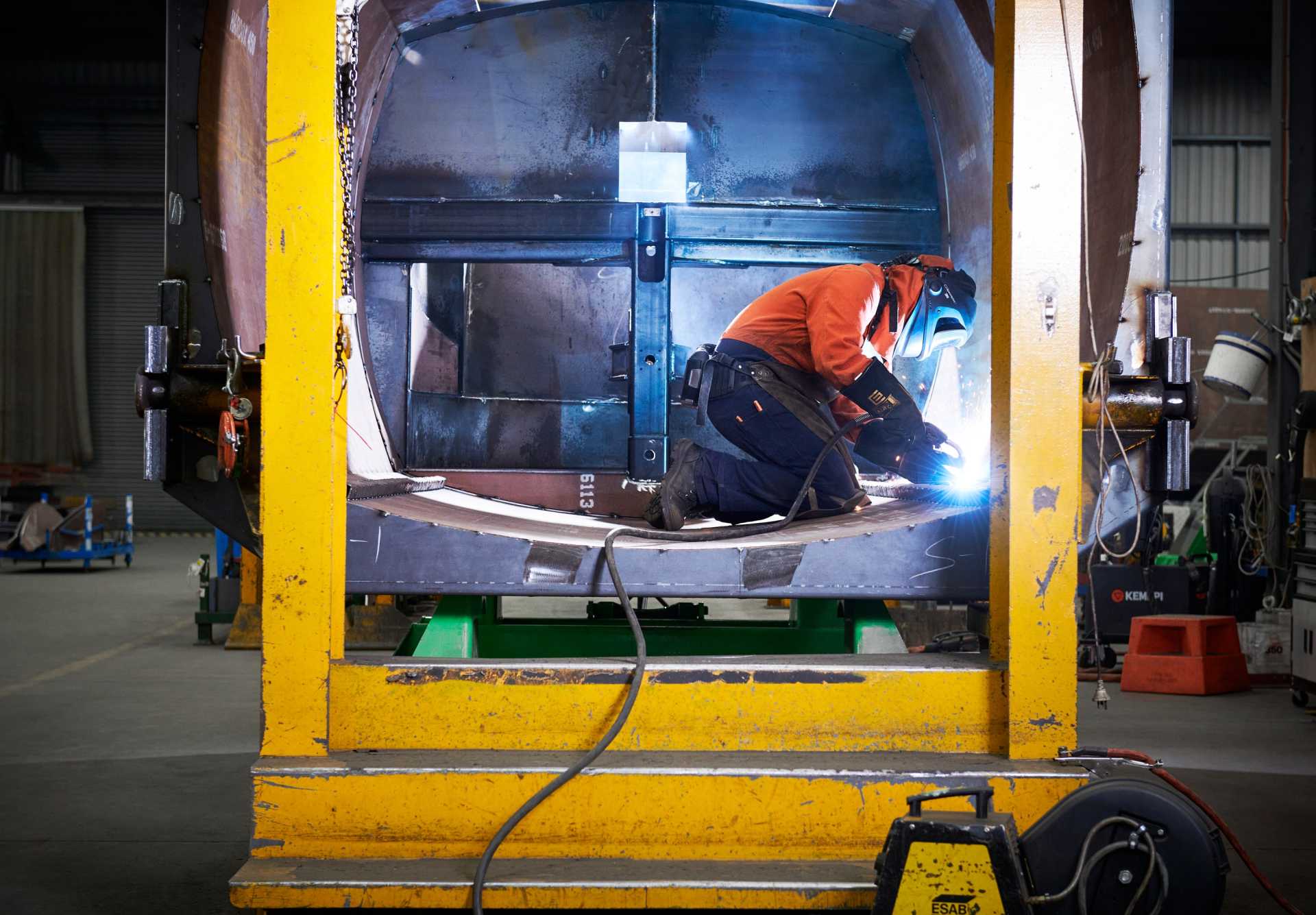
The forefront of innovation “Innovation isn’t a department, it’s a culture. And ensuring that we’ve got the right environment which fosters the ability to innovate is vital,” explained Gareth.
Reducing development cycles through simulation
Bucher Municipal is using tools such as AI and simulation to allow the company to de-risk certain areas of product creation and allow for development and innovation to grow. Through this, it is able to fulfill the needs of its customers that other businesses can’t.
In turn, this sets them apart. “We are shortening development cycles to improve efficiency and lower the total cost of ownership. We are doing this by employing new technologies that can meet those needs while at the same time, supporting our sustainability and ESG goals,” he said.
“Part of our core mantra is to be able to do more with less.”
Gareth Knopp, Innovation and Simulation Manager, TMS, Bucher Municipal
Cross-functional collaboration in product development
As well as new products, Bucher Municipal is also looking at the technology landscape and how that is constantly evolving. “This is all brought together by having experts in a variety of different cross-functional areas; and that involves product management, sales, marketing and engineering being able to come together and understand the ideas we’re creating and how they can be built into a new product process,” said Gareth.
For Bucher it’s simple; a business can’t become a market leader if it rests on its laurels. Although the business relies on product innovation and thinking ahead of the market, it requires a great team to bring that to life. “It’s critical that we foster an engaged, productive and happy workforce. We’re always thinking about how we can make the organisation a good place to work and support our people and their innovation,” he added
Expanding operations at the Dorking site
A growing business
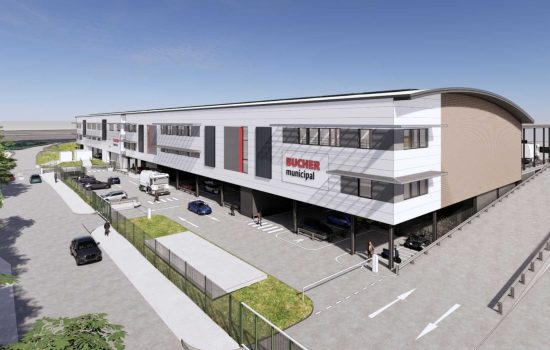
Bucher Municipal is expanding its operations with a multi-phase redevelopment of its Dorking site. The business will be integrating a new 3.1-acre manufacturing plant with the recently acquired Carville Plastics site.
This investment aims to modernise facilities, increase production capacity and improve sustainability. By consolidating its footprint, Bucher Municipal is future-proofing its global manufacturing leadership while enhancing the working environment for its 480 local employees.

Digital transformation across manufacturing operations
Like many manufacturers, it’s an exciting time when it comes to digital transformation, with the rapid rate that technology is growing and influencing manufacturing operations and processes.
ERP integration and smart manufacturing technologies
“Around seven years ago, we began looking at the different tools that we could potentially use within the business, from AI, machine learning and computer vision, to optimising and automating the control systems of the sweeper. We currently have an ongoing project involving those elements as well as driving our own efficiencies with ERP systems and integrating those into our manufacturing processes,” said Gareth.
“The beauty of a road sweeper is that it’s also influencing the environment for society as well -making streets cleaner and improving air quality.”
Gareth Knopp, Innovation and Simulation Manager, TMS, Bucher Municipal
Sustainability, net zero and smarter operations
As you’d expect from a company that specialises in cleaning the environment around us, sustainability is at the heart of every operation at Bucher Municipal and its unique market position allows the company to assist its customers and those in its supply chain on their own journeys. A prime example is how the organisation is striving to optimise the physics of the road sweeper so that it uses the least amount of energy possible to perform its various cleaning functions.
Optimising vehicle performance through AI
And now, with the advancements of AI and machine learning, it is also working on optimising the control of vehicles for sustainability. “The beauty of a road sweeper is that it also influences the environment for society as well; making streets cleaner and improving air quality,” said Gareth.
A major issue for many local councils is the difficulty of trying to meet air quality targets. Bucher Municipal is assisting in this regard through better optimisation of its vehicles, ensuring they do the right job at the right time.
“It’s part of our core mantra; to do more with less – achieving a cleaner environment with less energy, cost and environmental impact,” said Gareth.
Real-time data and intelligent deployment
Indeed, rather than traditional fixed schedules for street cleaning, in the future Bucher envisions systems that measure cleanliness in real-time and deploy resources only when needed.
This approach can reduce costs, improve efficiency and lower environmental impact. Similar innovations are seen in winter maintenance, where sensors measure road temperature and automatically adjust salt distribution, reducing waste and environmental damage.
Skills, talent and workforce development
Developing skills and retaining good talent are important to the industry and Bucher Municipal is no different.
Graduate programmes and university partnerships
The company’s Dorking site has an undergraduate programme where it works closely with local universities to inform students about the business and encourage them to look at careers within the industry.
“We’ve currently got graduates across all areas of the organisation, in manufacturing, production, engineering, design and all the AI-related activities we are working on,” said Gareth.
Every business right now needs to ensure that it is investing in people who have the right skills to be able to fulfill the roles that are needed at this crucial time for industry. “It is a fundamental part of everything we do and contributes to the sustainability of the organisation,” he added.
The future of smart cities and autonomous municipal vehicles
Looking to the future, Gareth still believes the mega trends of today such as data-driven decisions, smart cities and autonimisation of vehicles will continue. “From there, our ethos will be around creating vehicles with even more efficient fans and power trains, so they can almost control and optimise themselves, providing the user with insight into the ways they should or could be used,” he said.
This will ultimately mean that customers will be able to deploy sweepers with improved utilisation and effectiveness, having an even greater impact on street cleanliness and air quality.
Improving safety through ADAS technology
There will also be a growing focus on the workplace environment for the operators themselves. The ADAS (Advanced Driver Assistance Systems) Bucher is delivering are improving the conditions within the cab area to reduce the cognitive load on the drivers.
“Anyone would agree that driving a 16-tonne truck around London is a stressful job, all while trying to do it safely in an environment that includes pedestrians and other road users. Therefore, it’s vital for us to be able to make decisions on behalf of the driver to allow for an overall safer operation with repeatable cleanliness,” said Gareth.
Bucher Municipal’s award-winning innovation
Winning at TMMX
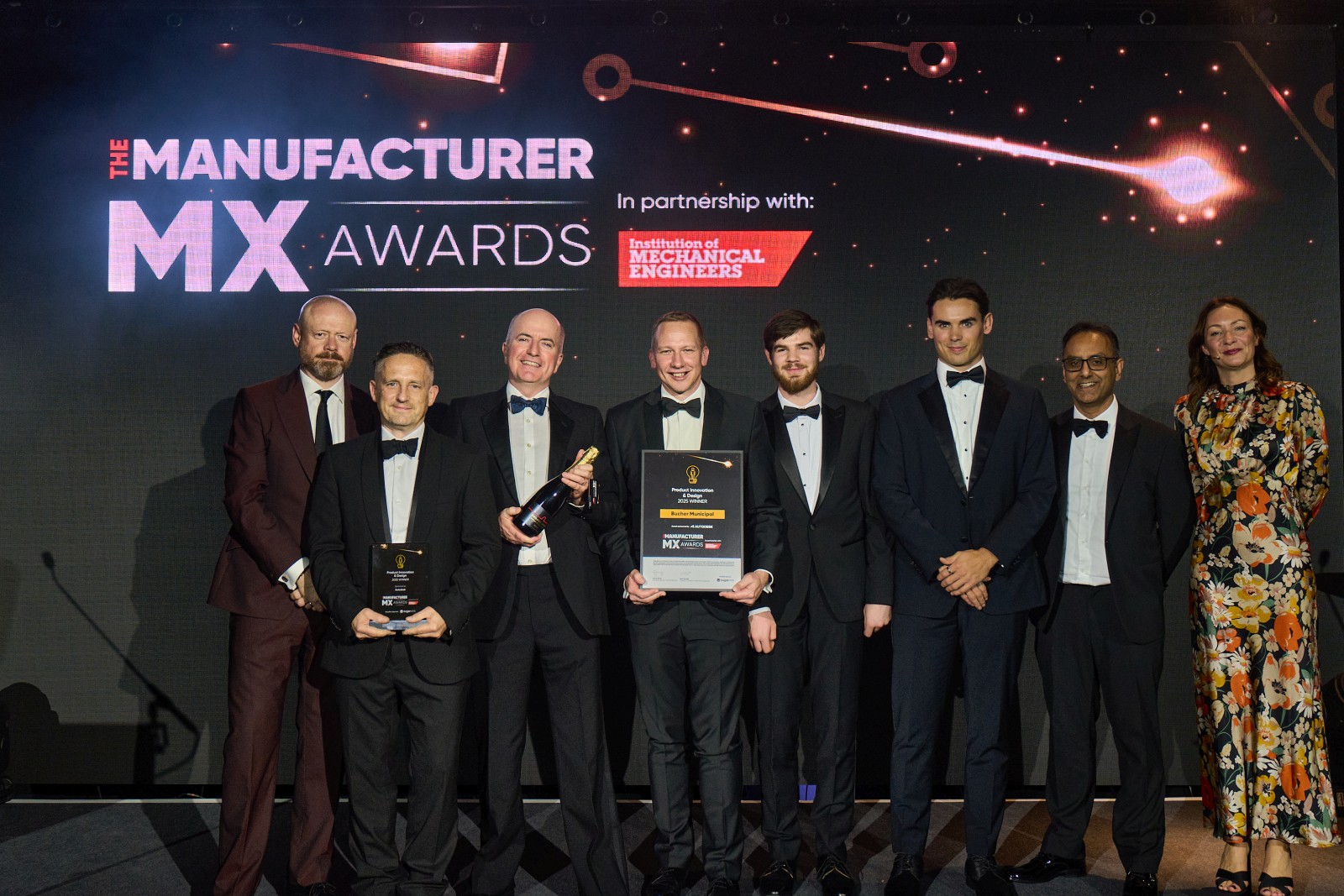
Back in November 2025, Bucher Municipal won The Manufacturer MX Award in the Product Innovation & Design category. During our visit, we asked Gareth about the win.
In your awards submission you discussed a ‘world-first project’ at Bucher Municipal. Can you talk a bit more about that?
GK: The use of hydrogen as a fuel is very exciting yet challenging. Hydrogen comes with a lot of infrastructure issues as well as environmental concerns around where you can fill up and what type of hydrogen is being used i.e., preferably green rather than blue or grey. Not only that but hydrogen is a costly fuel. As of now, we’re working with JCB, a company that’s developed a hydrogen burning engine based on its diesel equivalent, which has been converted to a spark ignition instead of a compression ignition. The great thing about this project is that fundamentally, it is still an engine. That means our technicians and engineers can still work with something they are familiar with. For us, it’s not just about getting that technology to market but also, being able to support and maintain it once it’s out there. So far, we’ve built a technology demonstrator which includes a hydrogen engine within one of our vehicles which runs the sweeping gear. It’s currently in the testing phase; assessing the longevity of hydrogen as a fuel and how that could work once it’s been deployed on the roads and in our cities.
How did it feel to win the award?
On the night, sitting and listening to all the names in our particular category, and then hearing ours called as the winner was great. For us, it really meant something and was so rewarding, especially with the award coming from The Manufacturer, and the in-depth process behind the programme.
What do you think made you stand out?
Innovation is baked into our culture. The enthusiasm that everyone has for our products, the company and the people was shown to the judges. They asked us such insightful questions that made us dig into the details and I believe it was how we answered those that set us apart.
Entries for the 2026 TMMX awards are now open. Click here.
Further reading
- McKinsey & Company: The next frontier in industrial AI
- World Economic Forum: How AI is transforming manufacturing
- Make UK: Manufacturing sector insights
For more articles like this, visit our Innovation channel.