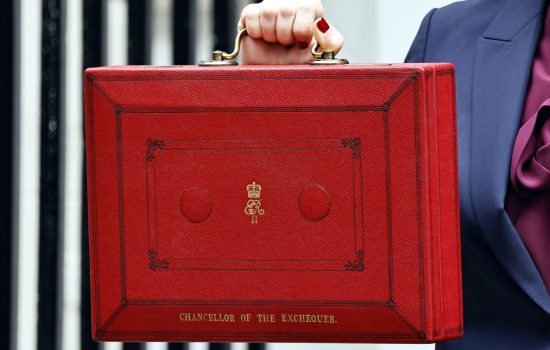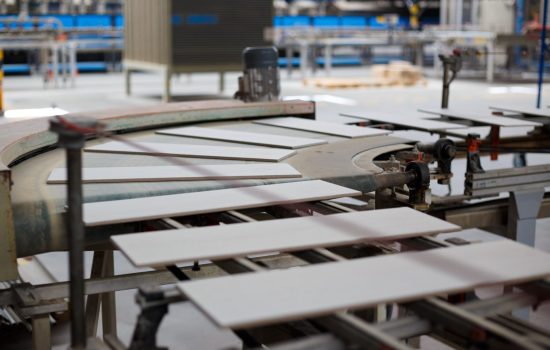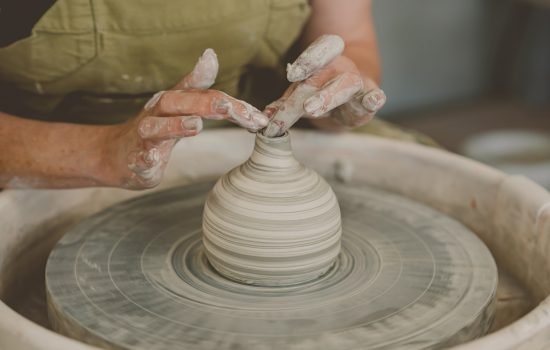


The UK ceramics industry – spanning everything from bricks and bathroomware to advanced components in jet engines and medical devices – finds itself at a critical crossroads, as rising energy costs and policy pressures threaten its future despite the essential role it plays in underpinning modern manufacturing. Rob Flello, Chief Executive of Ceramics UK, speaks to The Manufacturer.
Contrary to popular belief, the influence of ceramics isn’t confined to Stoke-on-Trent. It extends across the UK, with over 150 ceramics sites dispersed throughout almost every region. Ceramics UK, the trading name of the British Ceramic Confederation, has represented the sector for around 100 years. It covers 90% of the ceramics industry and acts as an umbrella organisation for a variety of sub-sectors including brick making, sanitary ware, healthcare, aerospace, defence, refractories crucial for steel and glass making, and of course, the pottery that many people associate with ceramics production.
Since this interview the government has launched a £120m investment package for the ceramics sector to safeguard jobs and put it on a sustainable pathway for the future.
Key takeaways
- The UK ceramics industry is much more important than pottery alone: It plays a critical role in major sectors like aerospace, defence, healthcare, steel and construction, supplying essential components for products such as jet engines, MRI scanners and industrial refractories.
- Energy costs are the industry’s biggest challenge: Ceramics manufacturing depends heavily on gas and electricity, and despite some recent price drops, energy remains far more expensive than before the Ukraine war, putting major pressure on businesses.
- Industry leaders believe government support is inadequate: Ceramics UK argues that current government support schemes exclude most ceramics manufacturers, leaving firms without meaningful financial relief despite promises to back UK manufacturing.
- Many businesses are struggling just to survive: Weak demand in construction and hospitality, combined with rising costs, carbon taxes and wider industrial pressures, have pushed many ceramics companies into survival mode, with some already collapsing or entering administration.
- Urgent intervention is seen as essential for the sector’s future: The industry believes expanded energy support and reduced policy burdens could protect jobs, growth and wider UK supply chains. Without action, the UK risks losing key manufacturing capabilities tied to ceramics production.
FAQs
- Why is the UK ceramics industry important?
- What is the biggest challenge facing ceramics manufacturers?
- Why are ceramics companies unhappy with government support?
- How are current economic conditions affecting the sector?
- What could help secure the future of the ceramics industry?
“Say the word ‘ceramics’ and many people immediately think pottery,” said Rob. “However, the sector is far more nuanced than that. Glass, steel or cement manufacturing would be impossible without ceramic refractories, for example. The turbine blades of Rolls-Royce jet engines are really complex structures, and can only be made with a ceramic core. There are also ceramic parts that form MRI and CT scanners, so some of our members are at the forefront of advanced manufacturing.”
In fact, the sector contributes over £2bn each year to the UK economy and produces items and components that are used in homes and businesses across the country and the world.

A turbulent landscape
Despite this varied and innovative sector, almost every area of ceramics is going through its own troubles, with Rob having no hesitation in describing the current situation as “grim”. House building, for example, remains flat and with mortgage rates increasing, this sector is showing scant signs of recovery.
“Any element of construction – whether that’s bricks, roof tiles, pipes, sanitary ware, floor and wall tiles – is in for another torrid year. Our best guess is that everyone will be hanging on for another 18 months or so before they’re going to see any sign of life,” Rob warned.
Ceramics UK’s refractory makers predominantly supply into the steel and glass industries. Steel’s woes have been well documented with tariffs and business rates impacting on the sector’s competitiveness.
Likewise, glass has been hit hard by government policy around the Extended Producer Responsibility (EPR) tax. Businesses with over £1m turnover and 25+ tonnes of packaging must pay fees based on the amount and type of packaging supplied, aiming to reduce waste and promote recycling.
As this tax is fundamentally based on weight, it has proved extremely punitive for glass manufacturers since coming into full effect at the end of last year. “Any refractory maker that supplies into the UK glass or steel industry has experienced a knock-on effect of these industries’ troubles. Thankfully, a lot of our makers export but in terms of the domestic market, glass and steel have taken a battering, and businesses exposed purely to the UK market are having a horrible time.”
We have heard warm words from government on multiple occasions about the heritage, skill, innovation and critical position of ceramics within UK manufacturing, only to be excluded from vital energy support.
My worry was that the Industrial Strategy would be a damp squib. And sure enough, it’s done absolutely nothing for us. It’s a bit of paper that gave a photo opportunity to the government, and not much more.
The truth is that many of our members are just hanging on right now… hoping they’re still in business in 12–18 months’ time… Almost every area of ceramics is going through its own troubles… the current situation is ‘grim’.
Rob Flello, CEO, Ceramics UK
 We have heard warm words from government on multiple occasions about the heritage, skill, innovation and critical position of ceramics within UK manufacturing, only to be excluded from vital energy support.
The situation in UK hospitality is looking just as precarious and so any Ceramics UK members providing tableware into that sector are also struggling. As are higher end giftware manufacturers, illustrated by the news of Denby – a 217 year-old pottery firm – calling in the administrators in March citing reduced demand, escalating employment costs and soaring energy bills.
“Some of our advanced manufacturers, particularly in the defence sector, are doing quite well at the moment. There’s a high volume of ceramics in IT and medicine and they are also bucking the trend, but that’s the exception rather than the rule. Unfortunately, those success stories constitute a very small percentage of our membership,” Rob added.
The cause of the sector’s problems
Unsurprisingly, energy costs are top of the list of concerns of Ceramics UK’s members. The sector’s gas-intensive nature exposes it to broader energy volatility, particularly in light of ongoing global events. In the short-term, many manufacturers are hedged or have long-term energy contracts. However, despite that apparent position of strength, few businesses have purchased their gas fully.
Many have only purchased 80-90% in advance, and so are still exposed on the remaining 10-20%. “This is a definite worry,” Rob added. “Many of our members are even making decisions around whether to reduce production so in turn reducing their gas usage, or indeed, selling gas back to the energy company.”
Rob added that the situation is not quite as dire as it was at the start of the Ukraine war, when gas rose to £8.00 per therm. But at around £1.40 a therm, it is still a far cry from the ~30p per therm prior to the Ukraine conflict.
Carbon taxes are also causing a huge problem and a real disincentive to businesses wanting to grow. Rob added: “Following COVID, one of our members was looking to double their production. However, after doing the numbers they found they would be paying an extra £1m in carbon tax if they did so – it just wasn’t economically viable. That company’s now closed and gone offshore. So it is a real drag on the UK economy.
“And obviously, the UK has the most expensive electricity in the world, and a huge part of that is made up of government levies, so firing products using electricity comes with a huge amount of extra cost,” added Rob. “And, it’s going to get worse. I recently heard a government minister say that in three or four years’ time, they expect the price of electricity to fall.
“That’s really interesting, because we’ve just finished an allocation round where the government have given very expensive contracts for around the next 15 years. So quite how they expect the prices to fall, I don’t know – the two just don’t align.”

To ease the pain on Ceramics UK members Rob suggested that it would be ideal if the government scrapped the UK Emissions Trading Scheme. However, in that unlikely event, a pause would be hugely beneficial, stating that it would give the industry much needed breathing space to grow and invest.
He claimed the scheme will have zero impact on the global carbon position. “If you look at the graphs of the Committee on Climate Change over the last 40 years, as UK emissions have fallen off a cliff, global emissions have risen. That’s because we simply swap good British manufacturing for high-carbon imports.”
In addition, Ceramics UK is also pushing for government to extend the British Industry Supercharger. A support package designed to reduce electricity costs for energy-intensive industries, the scheme currently only applies to around one in ten of Ceramics UK members.
“As so few of our members qualify for the scheme, the vast majority of businesses will continue to face the highest industrial electricity prices in the G7 and globally,” Rob added.
“We need the government to reconsider its plans, and work with us to back one of the UK’s most enduring and strategically important manufacturing industries. Indeed, the Chief Executive of Denby was quoted publicly as saying that if they’d been in the Supercharger scheme, it may well have been the difference between going into administration.”
Scheme stress
To further assist businesses with skyrocketing energy costs, the government – as part of the Industrial Strategy – has also introduced the British Industrial Competitiveness Scheme (BICS). However, Rob’s perception of this additional initiative is little more than a consolation prize for those businesses who don’t qualify for the Supercharger.
Not only that, but under current criteria, businesses will be competing for a relatively small piece of the BICS pie. There will be gateways (and gatekeepers) through which manufacturers will need to pass to gain access to any BICS funding, and it’s Rob’s belief that, due to the scheme being born out of the Industrial Strategy – which leans heavily towards sectors such as automotive and aerospace – it will actually be something of a closed shop to Ceramics UK members.
“There’s going to be multiple barriers to entry under BICS. And once businesses are through the door, any funding will be divided across thousands of businesses, so our members will be fighting for scraps,” he warned.
In mid-April the government announced its intension to expand BICS to include an extra 3,000 businesses. While on the surface this appeared a positive move, Rob claimed that the scheme still broadly ignores the ceramics sector, further ramping up pressure on association members.
Despite support from certain MPs who have fought fiercely on behalf of the ceramics industry in the House of Commons, the sector is in desperate need of action, as Rob added: “We have heard warm words from government on multiple occasions about the heritage, skill, innovation and critical position of ceramics within UK manufacturing, only to be, once again, excluded from vital energy support.
“At the moment, our industry is being ignored and, while the Secretary of State for Business and Trade, Peter Kyle, has committed to speak to the sector specifically, I cannot stress enough how urgent it is that we see swift intervention on energy bills for our members.
“Ceramics UK is calling for an immediate reconsideration of the BICS criteria, where it is particularly baffling that certain ceramic goods are excluded from eligibility while comparable products from other sectors are being included.”
This is part of the reason why Ceramics UK is throwing its weight behind getting its members included within the Supercharger instead. However, the route into that scheme has also been barred thus far, and ministerial meetings have failed to yield results.
Rob added: “We had a recent meeting with the minister, but unfortunately he trotted out all the reasons why they can’t bring us into the scheme – which they could do at the stroke of a pen. None of those reasons hold any water for me.”
As such, Ceramics UK is looking to up the ante and to raise the profile of the sector to make government take notice. There has been a consultation around broadening the Supercharger, however, Rob is less than confident – based on previous experience – that any action will be taken for at least 18 months. Not an encouraging timescale when Ceramics UK members need help now.
“BICS doesn’t even start until 2027, at the absolute earliest. The Supercharger, which has been running for a number of years, has just been increased, going from 60% to 90% relief, but that’s not much good when only ten per cent of our membership qualify.”

The Industrial Strategy – falling short
Rob was also less than complimentary of the government’s Industrial Strategy, with the announcement thus far doing little or nothing for the benefit of the association’s members.
The strategy was released to much fanfare with regular mentions of the previous government’s lack of support for manufacturing, but Rob lamented that his main fears prior to the strategy’s launch have been realised, with a plethora of opportunities missed.
“My worry was that the strategy would be a damp squib. And sure enough, it’s done absolutely nothing for us. The government could have created a strategy that takes a proper look at British industry, asks what it needs and how they can help.
“With the Supercharger, for example, government could easily bring our industry into that scheme. But instead, they are coming up with all sorts of reasons why they can’t. So for me, the Industrial Strategy is a bit of paper that gave a photo opportunity to the government, and not much more.”
The Industrial Strategy speaks at length about advanced manufacturing sectors such as automotive and defence, while ceramics is an area of manufacturing that often gets swept under the carpet. And part of the problem is the perception of the industry. For a long time, the industry was perceived as being just about pottery gifts and tableware.
Despite this, Rob has felt for some time, that the sector has punched above its weight. However, as he explained, there’s a difference between being listened to – getting the wants and needs of the sector acknowledged – and actual action being taken.
“We’re on the government’s radar, they’re talking and listening to us, but at the moment the action piece is missing. We’ve put a lot of effort into explaining that there can’t be a defence, medical or steel sector without us.
“And in terms of size, the number of people employed in this country making virgin steel, for example, is less than a tenth of the number of people that work in the UK ceramics industry. And yet, in the past, government has recalled parliament to sit over a weekend to take action to preserve the UK virgin steel sector, but we get pushed down the line.
“It’s very frustrating, but we keep making the case, and we’re getting heard, which is a start. We’re at least in the door and sat at the table.”
What’s next for the ceramics sector?
All things considered, it’s a challenging time right now for the nation’s ceramics manufacturers, and Rob described the short-term prospects for the sector as something of a white-knuckle ride.
“The truth is that many of our members are just hanging on right now; trying to get through this period and hoping they’re still in business in 12-18 months’ time,” he added.
“The long-term picture will depend on when and if government act. If they get our members into the Supercharger, and stop punishing the industry, then we’ve got a really good opportunity that all manufacturing will grow and be in a good place. If government carry on the path they’re on at the moment, I think we’re all in trouble.”
It’s clear that the UK ceramics industry stands as a vital yet under-recognised pillar of modern manufacturing, deeply embedded in supply chains ranging from construction to advanced technology.
However, escalating energy costs, uneven policy frameworks and limited government support have placed the sector under severe strain, leaving many businesses in a precarious position.
While there remain pockets of resilience and long-term potential, the industry’s future will ultimately hinge on swift and meaningful policy intervention. Without it, the risk is not just the decline of ceramics manufacturing, but the erosion of wider UK industrial capability that depends upon it. In terms of what government can do to help it’s clearly a case of actions speaking louder than words.
For more stories like this visit our Leadership channel