

Walk through any production facility and you’ll find maintenance teams juggling competing demands: keeping lines running, satisfying regulators, controlling budgets, and managing a growing documentation burden. For years, the default response has been more paper, more spreadsheets and more reactive firefighting. That model is running out of road.
The numbers are stark. Frequent short-term stoppages are estimated to cost the UK food and beverage sector £4–5bn annually. A conveyor failure or missed preventive maintenance task can cascade from a line stoppage into quality loss or a food safety incident. Yet many manufacturers are still managing assets through disconnected systems and tribal knowledge held by senior technicians, a risk that is financial, reputational, regulatory and in some cases, a direct threat to consumer safety.
Closing the collaboration gap
One of the most underappreciated barriers to maintenance effectiveness is organisational, not technological. Maintenance teams, operations managers, and HSE professionals often work in silos, sharing data only when something goes wrong.
Progressive organisations address this through what intelligent asset management (IAM) practitioners call a “circle of collaboration”: aligning maintenance, operations and safety to the same business goals and creating a single source of truth for asset data. When teams see the same information in real time, maintenance becomes a shared discipline rather than a cost centre.
From reactive to predictive
Most organisations sit somewhere on a spectrum from purely reactive to genuinely predictive, using IoT sensor data to anticipate failures before they occur. By feeding operational data into a centralised IAM platform, teams can identify patterns manual inspection would never catch: a vibration trend in a motor, declining refrigeration efficiency, or a component nearing end of service life. Acting on those signals separates organisations that control their maintenance spend from those controlled by it.
Suntreat: digitisation in practice
Suntreat, the citrus grower and packer behind the premium Sumo Citrus brand, illustrates what thoughtful IAM adoption looks like. Part of the AC Food Family, Suntreat handles fruit for approximately 150 grower families across over 9,000 acres. Like many midsize food manufacturers, the company had reached an inflection point: modernising leadership, expanding operations, and a maintenance function still running on paper.
Kevin Watson, VP of Operations, explained what they needed: “A flexible, scalable platform and a partner who understands how to help us evolve as a business at every stage of our asset management journey.”
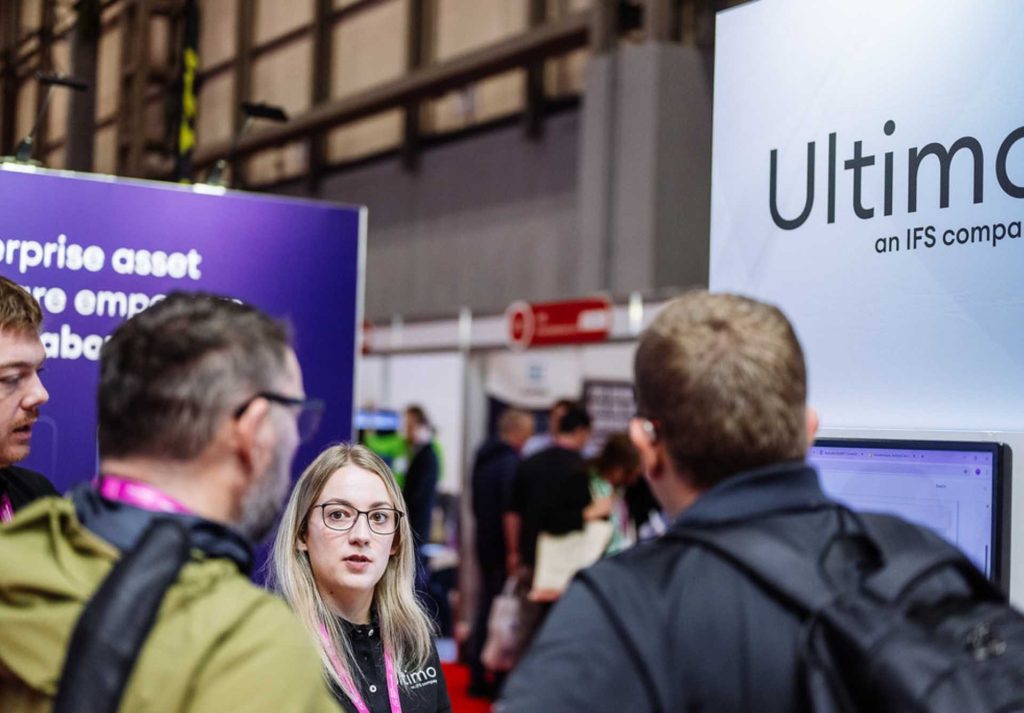
Suntreat selected Ultimo for its intuitive interface, industry track record and ERP integration capability. The implementation covers Asset Management, HSE Incidents, Lockout/Tagout, Work Permits, and Power BI dashboards, spanning forklifts, sorting systems, refrigeration, and cold storage.
Compliance and resilience
For food manufacturers, regulatory compliance isn’t peripheral to asset management; it’s central. A complete, timestamped maintenance history for every critical asset puts you in a fundamentally different position during a regulatory inspection or recall investigation than working from scattered paper records.
The COVID-19 pandemic reinforced this. Facilities with digital maintenance management demonstrated far greater resilience than those dependent on physical proximity and paper processes. In an era of supply chain volatility and labour pressure, that resilience is now a permanent strategic priority.
The bottom line
For manufacturers still weighing IAM investment, the starting point isn’t the most sophisticated analytics platform available; it’s an honest assessment of where current processes are failing. Centralising asset data, connecting maintenance workflows to business systems, and building a genuine audit trail: these fundamentals compound over time, laying the foundation for everything from predictive maintenance to AI-driven optimisation. In a sector where the cost of failure is measured in food safety and consumer trust, that foundation is worth building carefully.
For more articles like this, visit our Digital Transformation channel