We often speak about the importance of collaboration here at The Manufacturer, particularly around the topic of digital transformation in manufacturing. A fantastic example of this can be seen from one of our European neighbours who is bringing manufacturing, technology, academia and government together to transform industry.
Back in July, The Manufacturer popped over to Porto in Portugal to the annual conference hosted by PRODUTECH, the Production Technologies Cluster promoted by the Portuguese Manufacturing Technologies Industry.
Key takeaways
- PRODUTECH R3 stands for Recovery-Resilience- Reindustrialisation
- PRODUTECH is formed of 45 production technology suppliers, 37 user companies, 26 research and technology organisations and associations and 17 industrial sectors
- Within the innovation ecosystem 85 new production technologies have been developed, tested, implemented and been made available to the market
- The initiative takes advantage of the cross-cutting nature of production technologies
- The PRODUTECH R3 Innovation Pact is structured into 15 transformative programmes, which are grouped into five areas (A – Customisation of products and proximity production; B – Adaptive, collaborative and competitive production; C – Interoperable, intelligent and autonomous production systems; D – New technologies for the production and use of advanced materials; E – Efficiency in the use of resources and direct integration of renewable energies in production processes)
FAQs
- What is PRODUTECH R3 and its role in manufacturing innovation?
- How does PRODUTECH R3 support digital transformation in manufacturing?
- What are the sustainability initiatives in PRODUTECH R3?
- How does PRODUTECH R3 foster collaboration between industry, academia and government?
- Which companies and sectors benefit from PRODUTECH R3 initiatives?
PRODUTECH R3 is also made up of three transversal programmes aimed at complementary related areas, such as capacity building and training, internationalisation and qualification, and two support programmes, aimed at the wide dissemination of the initiative and its results, as well as the overall management and coordination of the agenda
The conference was held within the framework of the PRODUTECH R3 Mobilizing Agenda, which focuses on production technologies for reindustrialisation – a sector of growing strategic importance in Portugal. Essentially this focuses on the collaborative creation of production technologies that will make a meaningful difference to manufacturing businesses who are looking to digitally transform and become more efficient, productive and sustainable.
The PRODUTECH R3 project is based on a partnership that brings together 108 companies and other entities from production technologies, the main sectors of industry and the scientific and technological ecosystem. This includes the collaborative development of 85 new innovative products and services which are also being demonstrated in more than 52 pilots in companies from the user sectors.
It is a strategic and integrated initiative made up of a series of programmes aimed at industry transformation; industry qualification for resilience, growth and innovation, training and professional education in innovative production technologies; and the industrialisation of companies.
By combining developments with demonstrators and pilot lines with a wide variety of end users, it is expected that by 2027 this will be translated into sales for the technology suppliers of around €62m. PRODUTECH R3 will therefore help create greater internal and external visibility for the national production technology sector through the creation of a true innovation ecosystem, based on strategic collaboration between industry and user sectors.
History and methodology
PRODUTECH was established in 2008 by a group that comprised national associations, R&D organisations, universities across Portugal, industrial technology providers and companies from several manufacturing sectors who were users of production technologies.
“There was a common vision on the pivotal positioning of the production technologies sector towards the competitiveness of the manufacturing industry, and on the pertinence to foster an intra- and inter-sectorial strategic cooperation,” said Pedro Rocha, Executive Director at PRODUTECH.
As suppliers of capital goods, software and engineering solutions, the production technologies sector provides effective production capacities to a broad range of industrial sectors. In fact, Pedro explained that these technologies emerged as a central element for the productivity, efficiency, responsiveness, development and innovation of the manufacturing companies they serve, enabling higher levels of competitiveness in operations, the industrialisation of new products and even the deployment of new business models.
Despite the specifics of various industrial sectors, the main trends and key manufacturing challenges faced by the sector are often horizontal – as is apparent when The Manufacturer hosts its events, seminars and summits – and many of the enabling technologies and solutions that can provide the answer to these challenges, are agnostic.
“Since the very beginning, we knew the cross-sectoral nature of production technologies. To make it work we obviously needed the companies producing these technologies, academia, supporting research etc, but we knew that we also needed our customers in the manufacturing sector to come together,” added Jose Carlos Caldeira, Strategic Advisor for Innovation, Produtech.
“We brought to the initiative a number of different manufacturing companies, in sectors such as textiles, shoe making, metal working, furniture, even cork – all the traditional sectors that are the main pillars of manufacturing in Portugal. We then started to develop the technology in a collaborative way, with the end user segments at the core.”
Pedro added: “PRODUTECH’s initiatives and fostered cooperation aim to promote the development of new industrial technologies and to leverage this horizontality, while exploring the full potential for cross-fertilisation and intersectoral technology transfer.”
Intervention, opportunity and benefits to the industry
PRODUTECH’s five key intervention areas strengthen Portugal’s manufacturing competitiveness, digital transformation and industrial resilience:
- Growth, consolidation and qualification of the industrial base
- Promoting access to strategic information and intelligence
- Enhancing visibility and internationalisation
- Development of cooperation networks
- The mobilisation of stakeholders to cutting-edge research and development and innovation, towards the deployment of advanced manufacturing technologies in the industry
Pedro added: “PRODUTECH’s approach builds on a virtuous triangle of innovation, where the latest scientific and technological developments are put at the service of the generation of new advanced production technologies that aim to respond to both current and emergent industrial trends and requirements.”
Innovation is produced on a collaborative, and also competitive, base between the production technologies companies, supported by R&D organisations, and in straight cooperation with reference end users from several industrial sectors.
“Cooperation and networking are core elements of PRODUTECH,” Pedro continued. “It enables higher levels of collective efficiency as key elements of competitiveness. And this is of particular pertinence both in the context of the SME-based industrial fabric, that characterises Europe, and in the context of mid-caps and large enterprises, to maintain a competitive edge through innovation and operational excellence.”
Jose added: “At its core PRODUTECH is built on the concept of getting together with the end user sectors and discussing their priorities and challenges. From there we can establish which are the most cross-sectoral, and then ask the companies from the production technology sector – together with universities and end users – to develop new products, technologies and services, to tackle these challenges.”
Collaborative industrial ecosystems
This cross sectoral nature is explored in PRODUTECH’s large scale and flagship projects, where developments are deployed in at least two demonstrators and pilots of companies from two different sectors. Having in mind their impact in terms of the companies’ competitiveness, PRODUTECH has been proactive in proposing measures to the government to open funding programmes and other initiatives to help other companies to further invest in the development and adoption of advanced technologies.
“It’s been a big effort and when we created Produtech in 2009, and we made our first integrated project with 40 partners, some people said it would be impossible to mobilise all those different entities,” Jose added.
“Now we’re moving to the next level where we now have 108 partners, so it’s still a big challenge. However, what holds the idea together is the fact that it really corresponds to a need from each entity involved. If we launched this project 20 years ago, it would have almost certainly failed.
“However, now companies understand the importance of not only applied research and innovating based on knowledge, but also of having an active role in the definition of production technology. Any company that wants to be leader or front runner has to play a role in the definition of their production technology, preferably in a collaborative way.”
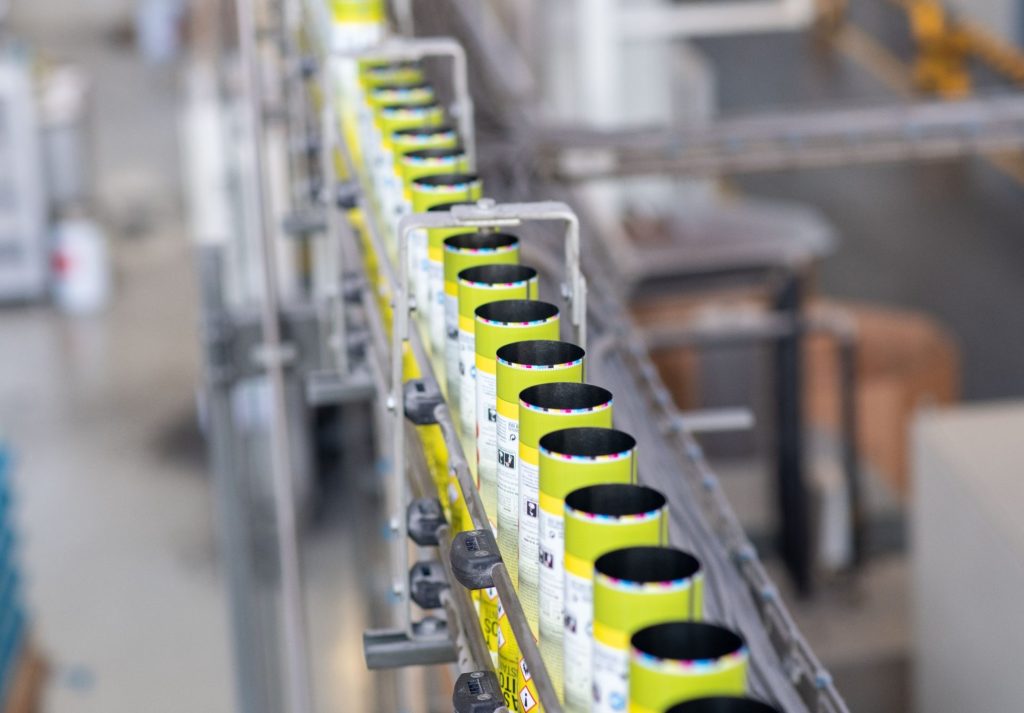
One of the manufacturing end users that is playing a lead role in the PRODUTECH cluster is COLEP Packaging, a major supplier of metal and plastic packaging.
COLEP’s products are used for the storage of products with a long shelf life, for example in the canning industry, or in aerosols to contain materials under pressure. It is therefore vital to ensure the structural integrity of each package produced.

As part of the PRODUTECH R3 project, the company developed a comprehensive analysis of a wide spectrum of inspection techniques, from manual visual inspection to the mastery of cutting-edge technologies, such as artificial vision, ultrasonic inspection and artificial intelligence-based systems.
Pilot projects undertaken at COLEP Packaging:
Q4All
Quality 4.0 solutions for the optimisation and use of resources in the packaging, cork and food sectors
- Adaptable quality control tools for flexible packaging systems
Digital and autonomous factory
Digital and sustainable factory
- MES (manufacturing execution system) intelligent, intuitive and visual
DigiIndustry
Digitisation and automation of industrial processes
- Software (API) for the integration of information flows
- Simulation model (software) with the digital representation of industrial processes
Tech4Decarb
Technological solutions for the decarbonisation of the manufacturing industry
- Sectoral roadmaps and methodological guides for industrial decarbonisation
- Tools for the optimisation and management of holistic systems for the supply, storage and management of thermal energy based on renewable energy sources
- Advanced energy management tools linked to industrial planning
- Solutions for retrofitting burners to adapt to renewable gases
- Thermal energy storage systems and technological solutions for energy storage, waste heat recovery and energy integration
- Sensor solutions for the characterisation of natural gas and hydrogen blends and for the characterisation of gaseous effluents
- Industrial effluent treatment solutions for supplying water to green hydrogen production plants
- Biomass technology platform for industry
Digital4Circular
Solutions for sustainability and circularity based on digitalisation
- Smart objects enabling sensors for digitalisation
- All-synergy product family – modules oriented to supra indicators, advanced sustainability reporting
- All-synergy CircProsys module
- Vanguarda MarketPlace software
- Vanguarda Lean and Green 4.0 software
For more articles like this, visit our Digital Transformation channel