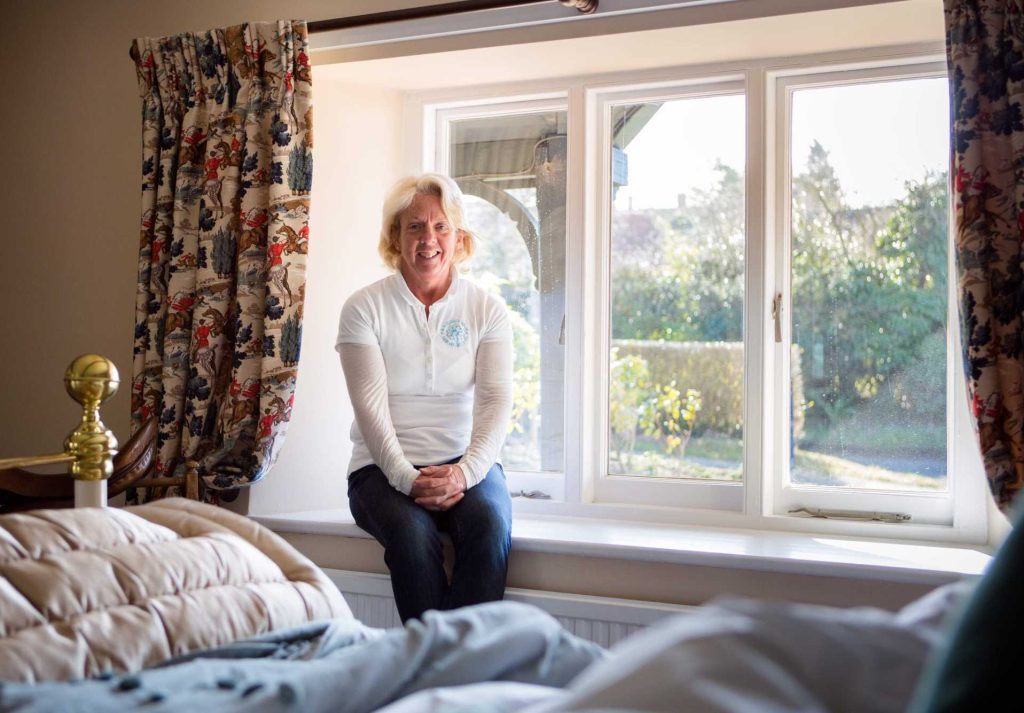
Amanda Oldfield, Founder, Wrought Iron & Brass Bed Company
Every day, consumers are looking beyond mass-produced furniture in favour of products that are built to last. The Manufacturer visited the Wrought Iron & Brass Bed Company to discover how craftsmanship, sustainability and innovation are shaping the future of British manufacturing.
Key takeaways
Craftsmanship is making a comeback – Customers increasingly value handmade, long-lasting products over mass-produced alternatives.
Bespoke manufacturing reduces waste – Every bed is made to order, strengthening customer relationships while avoiding overproduction.
Sustainability is built into every process – From carbon neutrality to packaging reuse and local sourcing, environmental responsibility is embedded across the business.
Technology supports craftsmanship – Robotics and digital tools are improving efficiency while preserving traditional skills.
Local sourcing strengthens resilience – Prioritising British suppliers has helped the business navigate supply chain disruption while reinforcing its brand values.
FAQs
What makes the Iron & Brass Bed Company different from other bed manufacturers?
How is technology supporting traditional craftsmanship?
What sustainability initiatives has the business introduced?
Why is British sourcing so important to the company?
What is the company’s approach to British wool and traceability?
British craftsmanship is making a comeback
As journeys to manufacturing businesses go, our trip to the Iron & Brass Bed Company was certainly one of the most picturesque.
A drive up through rural Norfolk took in some beautiful countryside, all the way to the manufacturer’s showroom and workshop, both situated on the Sandringham estate.
That’s not to say that a countryside location can’t be the setting for some pretty advanced manufacturing.
We’ve all heard – and maybe even uttered the phrase – ‘they don’t make ‘em like that anymore’. And that, in essence, was the ethos behind the Iron & Brass Bed Company.
Founder Amanda Oldfield grew up with beautiful, old iron beds but when she searched for something similar when she become a mother herself, she failed to find anything that possessed the same soul, weight of memory or was still made in Britain.
She decided to change that by not merely creating beautiful beds, but rather to build something that families could cherish, and a legacy that could be passed down.
In an age of fast furniture and disposable consumer habits, the company is proving that tradition, craftsmanship and sustainability can still define a successful modern business. The company is the only UK metal bedmaker certified by Made in Britain, as well as holders of two Royal Warrants.
One of the most notable shifts for the company in recent years has been a growing consumer appreciation for handmade products. According to Amanda, customers are increasingly seeking out items that offer quality and a sense of heritage, and it is these characteristics that make the company stand out as a truly luxury brand.
“People value the fact our beds are handmade,” she said. “They want to invest in something that will last – a lifetime guarantee, and that old-fashioned ‘buy it once’ mindset.”
This trend stands in stark contrast to the mass-produced, short-lifecycle furniture that has dominated the market for years. Instead, customers are gravitating towards products with a story.
Bespoke manufacturing with sustainability at its core
Made-to-order production reduces waste
At the heart of the company’s offering is a fully bespoke service. Each bed tailored to the customer’s exact specifications, and only produced once an order has been placed.
“A bed is never made until it’s got an owner,” Amanda explained. “The manufacturing process itself is deliberately transparent. Customers are even invited to visit the workshop to see their bed being manufactured – from raw iron entering the factory to the final powder-coated frame ready for delivery.”
End-to-end control of the customer experience
This emphasis on craftsmanship extends beyond production into logistics. Unlike many manufacturers, the company handles its own deliveries, ensuring complete control over the customer experience while also reducing environmental impact.
Beds are delivered, assembled in the customer’s home, and all packaging is taken away for reuse. “Nothing gets wasted,” Amanda added. “We keep our carbon footprint down wherever we can.”
This closed-loop approach is part of a broader sustainability strategy that has seen the business become carbon neutral – an achievement that sets it apart within the sector.
Technology as an enabler of craftsmanship
In addition, one might think that traditional, handmade, even artisan manufactured products would have stayed processes, reluctant to embrace change and adopt technology. This could not be further from the truth at the Iron & Brass Bed Company with technology viewed as a tool to enhance craftsmanship rather than replace it.
Robotics supporting skilled manufacturing
Don’t be fooled by the rural location and workshop in a converted farm building; the company are constantly looking forward and are currently in the process of commissioning a new industrial welding robot, which will speed up production time and free up operators to engage in more highly-skilled tasks.
“With the next generation now stepping into leadership roles, digital transformation is becoming an increasingly important focus,” Amanda added. “Our sons are taking over the business, and they’re far more in tune with new technology, which allows us to work smarter. The robot welder is there to support our artisans, improve precision and help us develop new product lines, rather than replace the craftsmanship of the business.”
Building resilience through British supply chains
Local sourcing creates long-term resilience
In recent years, manufacturers across the UK have faced significant disruption – from Brexit and the pandemic to ongoing geopolitical tensions. Yet Amanda’s business has remained relatively insulated from these challenges.
A key reason is its commitment to sourcing materials locally.
“We’ve always bought British,” she explained. “We believe in sourcing everything on our doorstep as much as we can.”
While this approach has occasionally led to minor delays – particularly during periods of increased demand – it has largely protected the business from the more severe supply chain issues experienced elsewhere.
The company has also shown agility in responding to cost pressures. Rising fuel prices in 2022 prompted a shift to a four-day working week, with longer hours but improved efficiency – a move that Amanda described as highly successful.
Redefining sustainability in furniture manufacturing
Embedding sustainability into every process
Sustainability is not just a buzzword for the business – it is embedded in every aspect of its operations.
From reusing packaging to investing in energy-efficient technologies, the company is constantly seeking ways to reduce its environmental impact. But perhaps its most innovative initiative lies in its approach to materials – particularly wool.
The company recently launched a fully traceable British wool mattress, made using locally sourced wool and designed to reconnect customers with the origins of their products.
“Wool is an amazing natural resource that’s not being valued,” Amanda added. “Much of it gets burned or buried.” See full case study below.
A team-driven culture built for the future
Late last year, Amanda was recognised with an Inspiring Leader Award at the Made in Britain Awards – an achievement she described as both humbling and unexpected.
“To hear my name read out was just mind-blowing,” she recalled.
Yet she is quick to deflect credit to her team, emphasising the collective effort behind the company’s success.
“When we make a bed, that’s a whole team effort. We couldn’t do what we do without our people.”
This team-centric approach – combined with a definite family affair – is central to the company’s resilience and growth.
By fostering a culture of shared responsibility and pride in craftsmanship, the business has built a workforce that is deeply invested in its success.
As the company enters its next chapter, the focus remains on evolution rather than reinvention. Plans include expanding product ranges, improving sustainability practices and continuing to champion British materials and craftsmanship. On-site we were shown the location of a new production facility, fresh with newly levelled floor and awaiting a solar panelled roof.
In a manufacturing landscape often dominated by scale and speed, this Norfolk bedmaker offers a compelling alternative: a business where quality, sustainability and human connection are not just values, but the foundation of everything it does.
And in a world increasingly defined by uncertainty, that foundation may prove to be its greatest strength.