

Kaye Darke, Head of IT at construction equipment manufacturer, Mecalac, discusses how the long-term investment in Oracle Fusion Cloud is transforming operational visibility, improving collaboration across the business and supporting a more connected, data-led future. In addition, to mark the launch of the Manufacturing AI Readiness Index 2026, researched and published by The Manufacturer, in partnership with Oracle and IBM, Kaye also explains the company’s AI journey thus far and its emerging role within the business.
Can you provide some background on Mecalac?
KD: Mecalac Construction Equipment UK Ltd was formed in 2016 following the acquisition of Terex Construction Equipment in Coventry, bringing together a strong UK heritage from brands such as Fermec and Benford with Mecalac’s innovation-led approach.
The business operates worldwide, manufacturing excavators, loaders, dumpers and backhoe loaders, with an increasing emphasis on electric and sustainable solutions.
In 2025, Mecalac became part of the Fayat Group, strengthening its position within the global construction equipment market and providing additional opportunities for collaboration, innovation and long-term investment across the group.
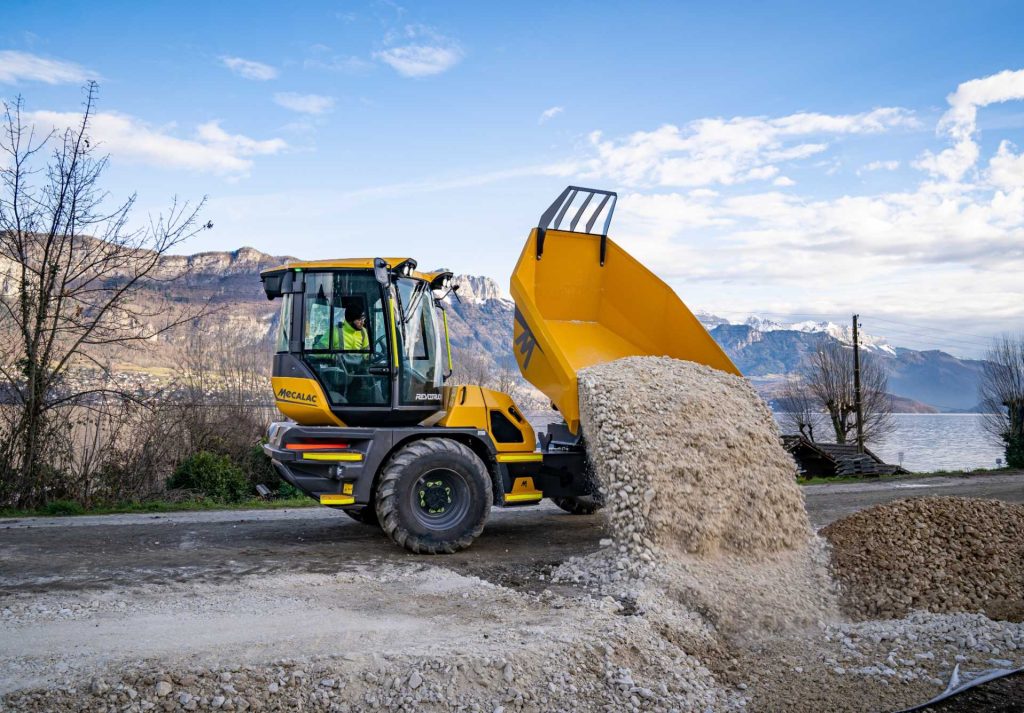
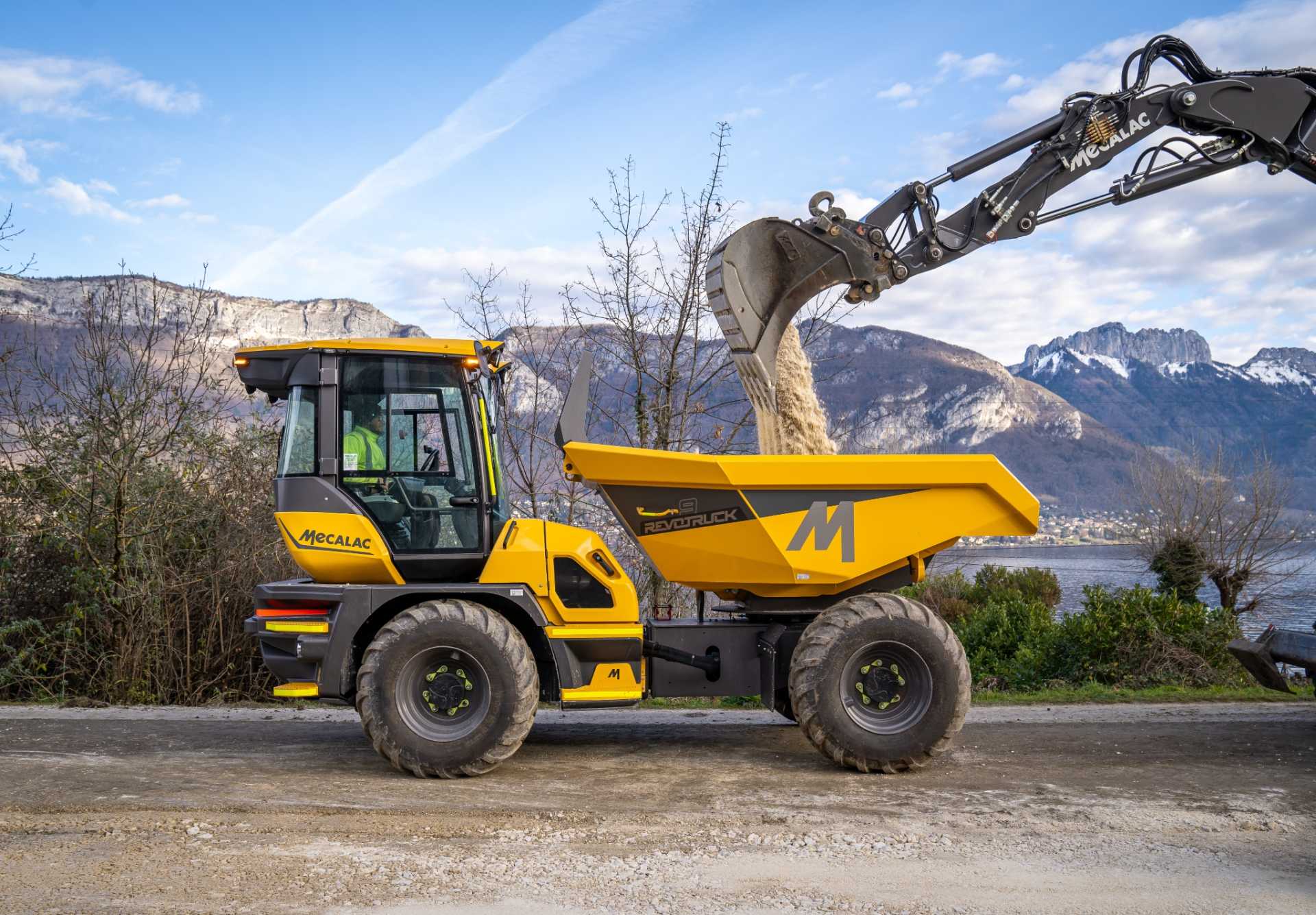
The UK operation remains a key manufacturing and engineering hub, producing site dumpers and compaction equipment, and leading innovation through products such as the Revotruck – a rotating cab dumper designed to significantly improve operator safety, visibility and comfort.
What are the biggest manufacturing challenges facing the business today?
Like many manufacturers, we are balancing increased expectations around efficiency, flexibility and sustainability, while managing complex operations across production, inventory and supply chain.
Key challenges include:
- Maintaining visibility across increasingly complex operations
- Ensuring stock accuracy and availability
- Reducing manual processes while improving efficiency
- Responding quickly to changing customer and market demands
These challenges are not unique to Mecalac, but they do require a strong foundation of connected systems and reliable data to manage effectively.
What led to the decision to adopt Oracle Fusion Cloud?
We adopted for Oracle Fusion Cloud in 2018, making us one of the early adopters of cloud ERP within UK manufacturing.
The decision was driven by the need to move away from legacy systems towards a platform that could support long-term growth, improve visibility and enable better integration across the business.
Rather than viewing it purely as an ERP replacement, we saw it as an opportunity to establish a scalable, cloud-based foundation that could evolve alongside our operations.
Having a scalable cloud platform also positions the business well for future growth and closer collaboration as part of the Fayat Group, ensuring systems and data can continue to evolve alongside the wider organisation
How was implementation success defined in the early stages, and has that definition evolved?
In the early stages, success was focused on stabilisation – ensuring the system was implemented correctly, core processes were working and the business could operate effectively on the new platform.
Over time, that definition has evolved significantly.
Success is now more aligned to:
- End-to-end process visibility
- Reduction of manual effort through automation
- Data-driven decision-making
- Continuous improvement across operations
What were the biggest challenges during the initial rollout?
As with any large ERP implementation, the biggest challenges were around process alignment, change management and tight timescales.
Moving from legacy systems to a cloud-based platform required:
- Re-thinking established ways of working
- Aligning business processes with system capabilities
- Ensuring data quality and consistency
Additionally, as an early adopter, we were implementing a platform that was still evolving, which required flexibility and adaptability.
How did you manage change across the organisation when introducing a cloud-based ERP?
Change management was a critical part of the process.
Key approaches included:
- Engaging stakeholders early in the process
- Providing clear communication around the reasons for change
- Supporting users through training and ongoing support.
- Departmental champions to aid support
- Encouraging a mindset shift from ‘how we used to do things’ to ‘how we can improve’
Ultimately, adoption came from demonstrating the value of the system in day-to-day operations.
Your approach emphasised end-to-end connectivity rather than a standalone ERP – what does that look like in practice?
In practice, this means Oracle Fusion Cloud acts as the central platform connecting multiple areas of the business rather than operating in isolation.
For example:
- Warehouse operations are integrated through RF scanning technology
- External systems feed directly into Oracle for automated order processing
- Reporting tools provide real-time visibility across production, inventory and planning
This approach reduces manual intervention, improves data accuracy and ensures that different parts of the business are working from the same information.
What lessons helped shape the approach to further system development and would you do anything differently?
One of the biggest lessons learned was that cloud ERP is not a one-time implementation but an ongoing journey.
Key learnings include:
- The importance of data quality from the outset
- The need to continuously refine processes, not just systems
- The value of incremental improvements over large-scale changes
If we were to do anything differently, we would place even greater emphasis on process standardisation and user adoption earlier in the journey.
What benefits has this brought to the business and what kind of operational insights are now possible that weren’t before?
The implementation of Oracle Fusion Cloud has enabled significantly improved visibility across operations.
We now have:
- Better insight into stock levels and availability
- Improved tracking of production and order status
- Real-time reporting to support operational decisions
This has reduced reliance on manual processes and enabled more proactive management of the business.
Has improved visibility influenced collaboration between departments such as production, inventory and planning?
Yes, improved visibility has had a direct impact on collaboration.
With access to shared, real-time data:
- Production, inventory and planning teams are better aligned
- Decisions can be made more quickly and with greater confidence
- There is less reliance on manual communication and data reconciliation
This has helped create a more connected and coordinated way of working.
What advice would you give to other manufacturers considering a move to cloud ERP?
Our key advice would be:
- View it as a business transformation, not just an IT project
- Invest time in aligning processes, not just implementing systems
- Focus on data quality early
- Be prepared for continuous improvement rather than a one-time change
Cloud ERP delivers the most value when it is treated as an evolving platform.
You describe cloud ERP as a continuous journey – what does the future look like?
Looking ahead, our focus is on continuing to build on the platform to drive further efficiency and insight.
This includes:
- Supporting closer collaboration and continued digital transformation as part of the Fayat Group
- Increasing automation across processes
- Expanding the use of real-time data and reporting
- Further improving integration across systems
- Supporting innovation within manufacturing operations
Having been on the journey since 2018, we see Oracle Fusion Cloud as a long-term foundation that will continue to evolve alongside our business.
Use case: AI realities in modern manufacturing
 AI is no longer viewed through the lens of future potential; it is now an active priority for manufacturers of all sizes. However, while awareness and intent have accelerated, adoption remains uneven.
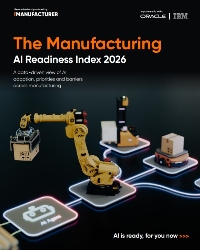
The Manufacturing AI Readiness Index 2026, published by The Manufacturer, in partnership with Oracle and IBM is a snapshot view of AI adoption within UK manufacturing, looking at where industry stands today, revealing a sector that is engaged and increasingly aligned on the potential of AI, but which is still working through the practical realities of implementation.
Mecalac’s own AI journey is one in its early to developing stages of maturity. Thus far the company’s focus has been on building the right digital foundations – particularly through the adoption of Oracle Fusion Cloud and the integration of core systems across manufacturing, warehouse and supply chain.
While there is no doubt that AI is recognised as an important capability for the future, the company’s priority has been ensuring that reliable, connected data and streamlined processes are in place. Achieving this fundamental baseline creates the conditions for AI to deliver meaningful value rather than being applied in isolation.
Much like the findings of the Manufacturing Readiness Index, there has been a clear shift in recent years in how AI is viewed within Mecalac.
Whereas it was previously seen as more of a future concept, today, AI is increasingly recognised as a practical tool that can support operational efficiency and decision-making, particularly when combined with strong data and reporting capabilities.
Kaye added: “As our systems and data have matured, conversations have moved from “what is AI?” to “where can AI add value?” – which is an important step forward.”
Indeed, the key parameter of adding value is where manufacturing is seeing a seismic shift, and at Mecalac, the impact of AI is emerging primarily through data, reporting and process optimisation.
While the business is not yet heavily reliant on standalone AI solutions, the biggest opportunities – and where the company have achieved some significant quick-wins – have been around enhancing data analysis and insight generation, supporting forecasting and planning activities, identifying patterns or inefficiencies within operations, and helping improve future forecasting for areas such as seasonal spares demand and inventory planning.
“As our connected data and reporting capabilities continue to mature, we see significant future potential for AI to support more predictive and proactive decision-making across manufacturing and supply chain operations,” added Kaye.
Of course, implementing AI is not always plain sailing. Issues can arise and even the most successful pilot project can fail to achieve widespread scale up – particularly in larger siloed operations.
And Mecalac is no different, with the business encountering challenges that have proved common across many manufacturing organisations. Key to which is data quality and consistency; AI is only as effective as the data it relies on.
There have also been system integration hurdles to overcome, to ensure data is connected across the business; clarity of use cases – focusing on practical applications rather than adopting AI for its own sake; and change management – making sure teams understand and trust new technologies.
Kaye continued: “For us, the approach has been to prioritise building strong digital foundations first, which will enable more effective and scalable AI adoption over time.”
Overall, Mecalac view AI as a natural next step in its own digital journey – building on the platform, data and processes already established through Oracle Fusion Cloud and wider system integration. As part of the Fayat Group, the company has also identified opportunities to further expand digital innovation and explore how AI can support smarter forecasting, operational efficiency and long-term manufacturing strategy.
Ready to dig deeper? Complete the form below to download the full Manufacturing AI Readiness Index 2026 report:
For more articles like this, visit our Industrial Data & AI channel