

Rory O’Keeffe, Commercial Director at Europlaz, heralds the newfound popularity of vocational training and explains why the UK should have embraced it sooner.
There’s a curious shift happening in Britain right now. After decades of pushing young people towards universities, where many emerge with debt and degrees they’re not sure they wanted, the country has come to realise we need people who can actually do things.
Apparently, we’ve finally remembered that an economy built entirely on PowerPoints, policy frameworks and ‘strategic initiatives’ tends to fall apart when a machine jams on a production floor and there’s no one left who knows how to fix it.
The government has sort of responded by announcing measures to bolster apprenticeships, BTECs and vocational training.

At Europlaz, we’ve known this for a long time. We’re a global medtech manufacturer, not a think tank.
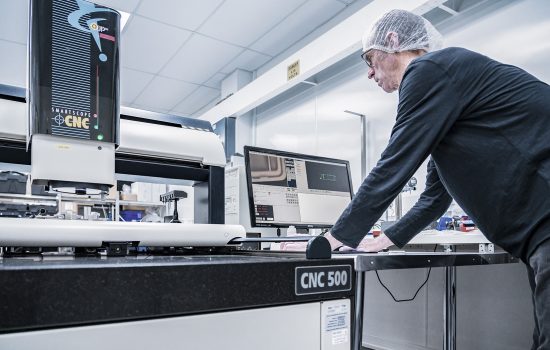
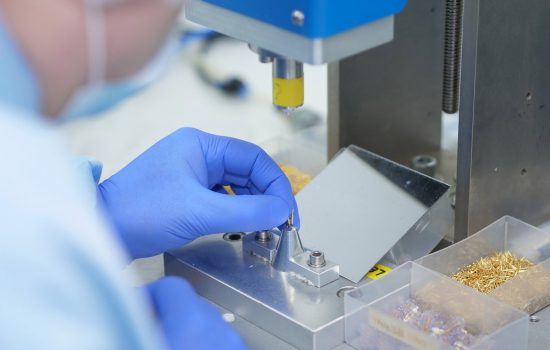
Our business literally doesn’t function unless skilled people are willing and able to operate cleanroom machinery, troubleshoot complex tooling, and develop the next generation of specialised medical devices that help to save lives and improve treatments for hundreds of thousands of people ever year. And because we’ve bet our future on that reality, we’ve built the systems to support it.
Our latest milestone is the appointment of Anya Grattidge as our new Head of People. On paper, she’s exactly the kind of person you’d expect to see floating between glass towers in Canary Wharf.
Morgan Stanley experience, executive coaching credentials, time in global finance and high‑growth scale‑ups. In practice, though, her specialism is wonderfully grounded and committed to creating practical, people‑centred systems that help real organisations grow and give hardworking teams clear, structured routes to progress.
And that’s precisely what we need. Europlaz has grown revenue by 120% to £15.56m and expanded our team by 25 people to 130. That kind of scale isn’t about glossy announcements; it’s about nuts‑and‑bolts capability.
As we take on more complex customer programmes and expand our own product portfolio, we need training frameworks, technical progression routes, and proper leadership development.
One of our first priorities is modernising processes – moving away from email trails and paper forms and into central systems that help everyone get on with their jobs without unnecessary admin slowing them down. It’s not glamorous, but it has the potential to be transformative.
But what matters even more is our commitment to skills, which I believe is the main rallying call for industry.
While policymakers discuss how to make vocational training attractive again, we’re simply investing in it and other manufacturers – regardless of sector – should aim to follow our approach.
This year, we’re increasing our training and development budget by 500%. That isn’t a typo. We’re doing it because the best way to ensure the UK has a pipeline of technical talent is to actually build one, especially with many workforces losing valuable skills and technical experience to retirement every year.
It’s also baked in our expansion plans that we’ll recruit ten apprentices and graduates in 2026.
Apprenticeships are far too often framed as a second‑choice option, when in reality they offer exactly what so many young people want – a clear route into meaningful work, the ability to earn while learning, and a path into middle and senior management that doesn’t require a university detour.
Many of our most experienced technical staff started on the shop floor and we’d love it if the next generation of leaders are able to say the same.
There’s something else worth saying. Young adults today are often handed bleak narratives about the world of work – unstable, uninspiring, ‘giga‑based’.
Yet small and mid‑sized manufacturers can offer something very different, most noticeably the opportunity to join a company where you can genuinely shape the future.
You’re not one employee out of tens of thousands; you’re someone whose ideas actually ripple through the business. And unlike the caricature of cold manufacturing environments, Europlaz has a family‑run spirit and flexibility that many larger organisations simply can’t replicate.
Our Southminster facility houses ISO Class 7 cleanrooms, precision moulding technology, and the infrastructure to manufacture Class I, II and III medical devices. It’s advanced, specialised, and requires a level of technical expertise that university courses rarely teach.
That’s why vocational routes matter. They produce the people who keep these systems running, and importantly, who will design what comes next.
Britain is finally remembering the value of vocational training. Many manufacturers never forgot it.
And as the country works out how to rebuild its technical workforce, the emphasis will be on companies seizing the moment and doing what they should have always been doing…investing in people, creating real opportunities, and proving that manufacturing offers not just jobs, but fulfilling, long‑term careers.
For more articles like this, visit our People & Skills channel.