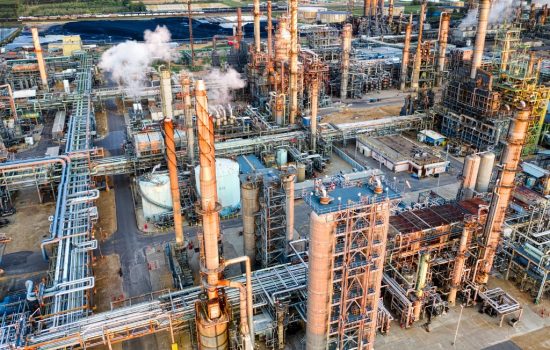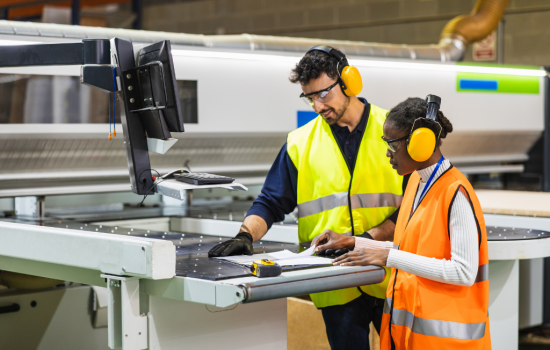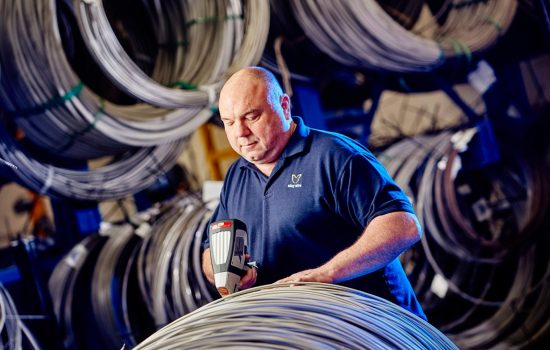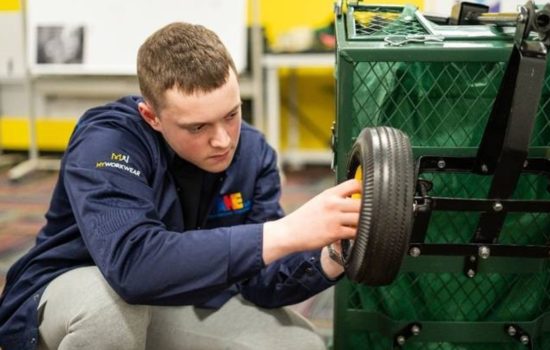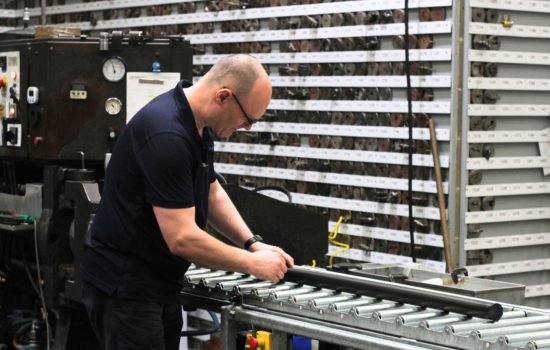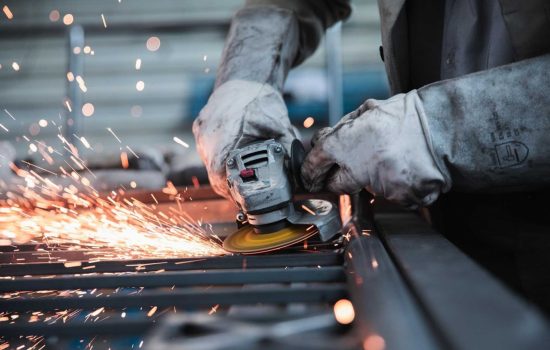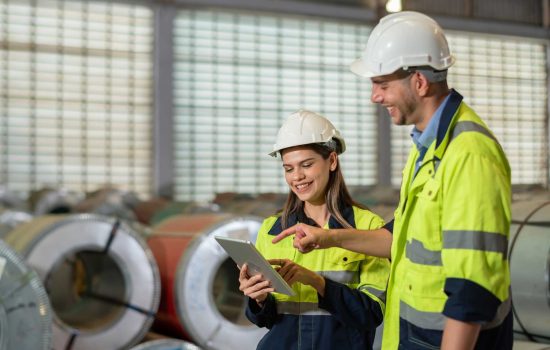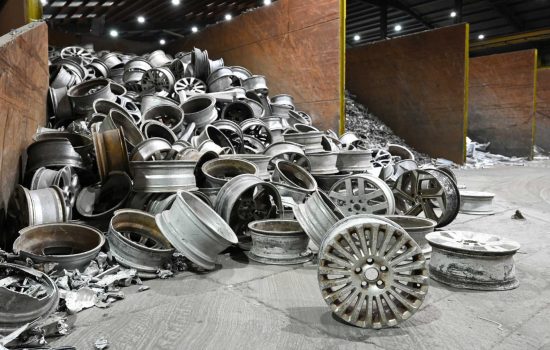


Following a near ten-year hiatus, Make UK has relaunched its Photography Competition for 2026 with the goal of showing the world the realities of modern manufacturing and creating a true picture of what the sector really looks like.
As the saying goes, ‘stop and smell the roses’; well, spare a moment to pause, and take a look around you. The chances are you’ll be surrounded by manufacturing innovators and problem-solvers. From the cars and trains that get us to work. The medicines that save lives. The food on our shelves. The clean energy technologies powering the future. The devices in our hands.
Enter Make UK’s 2026 Photography Competition
Manufacturing is all around us and is an integral part of our everyday lives. Not only that but behind every manufactured product is a story. However, all too often that story is staying untold. There are certain perceptions that many people have around manufacturing; ideas that don’t often recognise the innovative, creative, skilled and inspiring people, products and processes that make the everyday possible.
Make UK and The Manufacturer want to change that. Manufacturers, photographers and the public are being invited to help create what could become the largest collection of modern manufacturing photography ever assembled in the UK.
“However, this is far more than a photography competition,” said Stephen Phipson CBE, competition judge and Chief Executive of Make UK. “This is an opportunity to challenge outdated perceptions, celebrate the people and businesses behind the products we rely on every day, and create a powerful visual record of modern manufacturing in Britain.
“The truth is that manufacturing in the modern world is a lot different to how most people perceive it to be. So, we want to get people to engage visually with what it’s really like in a modern advanced manufacturing facility.”
This doesn’t mean purely images of machines or production lines, but rather a unique story about why the UK is still one of the largest manufacturing nations in the world.
Whether you’re a seasoned industry veteran or a sector newbie, often the overwhelming response when entering a modern manufacturing environment is one of surprise. “I’ve been in this sector a long time, but when I go and visit businesses around the country, I’m always amazed by what’s going on, and the competition is fundamentally about how we capture some of that powerful imagery,” Stephen added.
The competition is also aligned closely to World Photography Day (19 August), the National Manufacturing Day (24 September), and Smart Manufacturing Week (9-10 June), which will help amplify the message of the importance of manufacturing.
The keyword of the competition, Stephen added, is innovation; an area where the UK leads the world. “When I visit the US or Europe, I’m often that the UK is where all the innovation and invention is. For the competition, we want to capture the immense progress we’ve made in this area.”
This of course means process innovation as well as product innovation, and automation is now playing a huge role in vast areas of manufacturing, transforming the sector over the last ten years.
“We have factories in the UK that are manufacturing products that didn’t even exist a decade ago,” Stephen added. “For example, we created nearly 40,000 new manufacturing jobs in the renewables sector last year; all supporting wind farms, carbon capture and hydrogen technology – industries that are all in their infancy. Again, we want to showcase some of that innovation in the competition.”
The competition asks photographers to create images that make people think, “I didn’t realise that was part of UK manufacturing.” And challenging these long-held perceptions is so important to the future of the sector.
This is far more than a photography competition. This is an opportunity to challenge outdated perceptions, celebrate the people and businesses behind the products we rely on every day, and create a powerful visual record of modern manufacturing in Britain.
The truth is that manufacturing in the modern world is a lot different to how most people perceive it to be. So, we want to get people to engage visually with what it’s really like in a modern advanced manufacturing facility.
Stephen Phipson CBE, Chief Executive, Make UK
 This is far more than a photography competition.
 A recent Make UK survey showed that people outside the sector viewed manufacturing as a dwindling, disappearing and dying sector; one characterised by hard hats, hi-vis and smoke belching Victorian factories; and certainly not a sector you’d encourage your children to choose as a career.
“The results of that survey were ingrained in perceptions,” added Stephen. “Walk around a modern manufacturing facility; it won’t be a dark factory with people sat at benches; it’ll look more like a lab or a hospital. They are fantastic looking places, producing incredibly clever products. And of course, one of the most powerful ways of changing those outdated perceptions is through visualisation – through photography.”
In addition, the raft of emerging digital technologies that are playing an increasingly integral role within modern manufacturing means that it is a sector in competition. Those digital, data related skills that are now much sought after by manufacturers are in demand elsewhere, so it’s vital that young people are shown what a career in manufacturing can mean and the opportunities available.
Many young people are excited about the prospect of digital careers, which aligns perfectly with the modern realities of manufacturing that now has digital twins, coding and data analytics at its heart. Yet currently, the younger generation are simply not joining the dots.
Stephen continued: “We need to help young people make that link and really showcase what’s going on in our sector because they are the lifeblood of our industry’s future. The sector currently has 50,000 vacancies and apprenticeship starts are declining year-on-year.
“Some of the reasons for this are structural and down to the government to fix, but by the same token, we need to start a movement ourselves; we need young people to want to come and join the sector.
“Throughout my entire career, engineering in the UK has been viewed as second class compared to other qualifications. In contrast, an engineer has the same status as a doctor in places like Germany, because they understand its value. We’ve never really had that culture. So, this competition is all about creating something different to promote why manufacturing is so important to the UK.”
There are four categories with each category open to three levels:
- Best young photographer (under 20 on 24 October 2026)
- Best amateur photographer
- Best professional photographer
Manufacturing Makes Things Possible
Manufacturing is the invisible force behind countless moments in our lives. It’s in the food we eat, the homes we live in, the technology we depend on and the innovations shaping our future. Yet too often, the manufacturing story goes untold.
Capture the products, processes, components and innovations that make modern life possible, revealing the industry that is hiding in plain sight all around us. Because behind every moment, there’s a manufacturing story.
Stephen added: “Many people simply don’t realise the volume and variety of innovative products, components and parts we manufacture in the UK. The wings for Airbus planes for example, are 100% manufactured in the UK. Most people simply aren’t aware of that?”
The People Who Make It Possible
Every product starts with people. From engineers, technicians and production teams to apprentices, trainers, health and safety professionals, HR teams, designers, planners and the countless individuals working behind the scenes, this category celebrates the people whose skill, dedication and expertise make manufacturing possible.
We’re looking for images that capture the human side of industry: collaboration, craftsmanship, leadership, learning, problem-solving and pride in a job well done. Show us the people who create, support, improve and enable manufacturing every day.
“This category is about telling the story of the people in manufacturing, and why they do what they do,” Stephen continued. “We have some incredible talent in the UK, and this category is about capturing that visually.”
Manufacturing Reimagined
Challenge perceptions of what manufacturing looks like. Show us the advanced technology, innovation, automation, sustainability and cutting-edge facilities that are transforming modern industry and shaping the future.
Stephen added: “Manufacturing isn’t about people sitting on production lines, pulling levers. It’s about automation, robotics, AI, coding and data analytics – technology that wasn’t part of the industry’s everyday language a decade ago. So, this category is all about changing perceptions and reimagining what manufacturing really is.”
The Beauty of Industry
Reveal the unexpected beauty of manufacturing. Capture the scale, colour, craftsmanship, precision and detail found in industrial environments, whether through sweeping landscapes or intimate close-ups.
“Fundamentally, this is an artistic competition, so this category is about the beauty of industry,” Stephen said. “Take a look at some of the cars we manufacture in the UK; they’re absolutely beautiful. We have design centres that service the world for different sectors.”
Winners will share part of a £5,000 cash prize fund, and have their work displayed in a dedicated gallery space at Smart Manufacturing Week 2027.
Anyone can enter, regardless of experience – all you need is a camera. Entries open on 24 August and there is a simple upload form to submit your photo ahead of the closing date, which is 11:59pm on 24 October 2026.
If you need inspiration, we strongly encourage you to get involved in National Manufacturing Day, when the manufacturing industry will open its doors to the public, bringing opportunities to capture your entries.
If you’re not already involved in National Manufacturing Day, visit Make UK’s dedicated page to find your nearest open day – and your next photo opportunity.
Full terms and conditions and our privacy policy are available on the Make UK website.
Show us manufacturing through a fresh lens.
We’re looking for striking, original photographs that capture the people, innovation, technology and ambition behind modern UK manufacturing. Surprise us. Change perceptions and tell a story.
Entries must depict manufacturing activity taking place in the UK. Eligible sectors include food and drink production, materials processing and brick making. Architecture and agriculture are not eligible.
Please tell us what is shown in your image, where it was taken and, where relevant, who is featured.
Anyone identifiable in a photograph must have given permission for the image to be taken and entered into the competition.
The strongest entries will showcase the qualities that define UK manufacturing today: innovation, expertise, pride and achievement.
Be selective and enter your best work. A few outstanding photographs will always have more impact than several similar images.
Remember that manufacturing is driven by people as much as machinery. Skilled individuals from all backgrounds play a vital role in designing, making and improving the products and technologies we rely on every day.
Photography has the power to challenge outdated perceptions of manufacturing. We encourage entrants to showcase the modern reality of the sector: innovative, high-tech, diverse and full of opportunity.
When submitting your entry, please provide clear information about what is shown in the image, including what is being made, where it is being made and, where relevant, who is involved.
Anyone identifiable within an image must have given their permission to be photographed and for the image to be entered into the competition.
The strongest entries will capture the qualities that define UK manufacturing today: innovation, ambition, expertise, dynamism, pride and world-class achievement.
Above all, be selective. Choose your strongest images and enter only those that best tell your story. A small number of outstanding photographs will always have more impact than multiple similar shots.
- 19 August – Make UK Photography Competition announced on World Photography Day
- 26 August – Entries officially open
- 24 September – National Manufacturing Day
- 24 October – Closing date
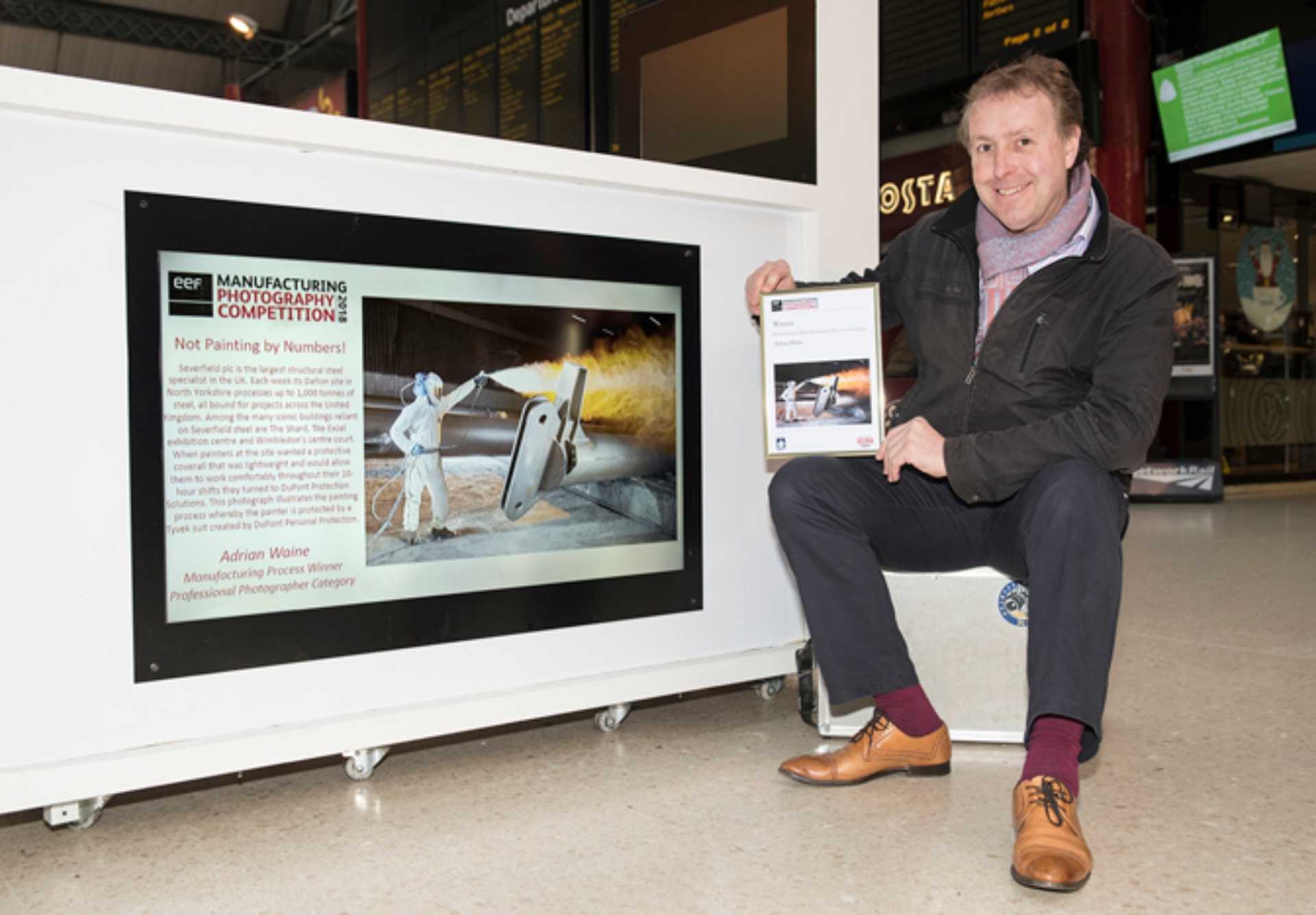 Adrian Waine, a location photographer working from Cheshire, won Make UK’s Photography competition in 2018. His entry, Not Painting by Numbers!, Commissioned by DuPont Personal Protection, was taken at Severfield in Yorkshire, the largest structural steel specialist in the UK.
Each week its Dalton site in North Yorkshire processes up to 1,000 tonnes of steel, all bound for projects across the UK. Among the many iconic buildings reliant on Severfield steel are The Shard, The Excel exhibition centre and Wimbledon’s centre court.
Adrian spoke to The Manufacturer.
How did it feel to win and what impact did winning the competition have on you?
AW: I think human nature takes over, everybody likes to win. Having honed my craft for a very long time, it feels exceptionally good to be recognised from an outside panel who know nothing about me, where I’ve been or where I’ve worked.
They have chosen my work because it stands tall and in all fairness stands out against the competition. My winning shot was later featured alongside other winners at a variety of railway stations nationwide.
Closest to me was Liverpool Lime Street and I had a friend come and take my portrait alongside it combined with my award. I then circulated this image numerous times on LinkedIn. When you’re a winner, there’s no doubt you have to make the most of it. Best of all, nobody can take that success away from you.
What was the story behind your winning photograph?
I aim to transform the ordinary and turn it into the dramatic. For me, this is all about lighting. It is a great way of exaggerating an effect and in this case, hiding a great deal of the background. This is the trick for me, light the subject dramatically, lose the background entirely and concentrate solely on the person doing the job.
In this example, he looks like he’s throwing fire from a spacesuit. Actually he’s just painting a big piece of pipe. I have been told that he looks like he’s on the moon. Perfectly possible – the floor is encrusted with dry paint, so it does have a non-Earth appearance. And he could be defending himself on some kind of alien terrain. He does conjure up these thoughts, but no, he’s actually painting. On so many occasions, I have been asked “what’s he doing ?” Well, clearly, I have changed his everyday appearance so much with my lighting, that first impressions are not that of painting but something far more serious. Final result, it created the attention I aimed for.
Do you have any advice for this year’s entrants?
I’ve often taken tours around factories for the purpose of working out a plan for shooting. During such a visit, I usually try to look at a subject from all sorts of angles – sometimes high up looking down on it, sometimes right down at floor level. On other occasions right up close.
The aim is to try and pick a place where the viewer would not usually see the subject. Then I ask whether it is best isolated? Does it require a person or is it allowed to be an abstract? Without taking risks, try and work with the toughest shot possible. A judge ought to recognise the effort put into it. Even though it may be not turn out to be the best shot, the effort utilised in reaching that point should hopefully be recognised.
What makes manufacturing such an interest subject matter for a photography competition?
I am lucky enough to have been to hundreds of factories. I have seen so many things being made, ranging from bread to polytene to bricks. They all have their own processes, quality control and mechanisms for moving materials around; not forgetting, sometimes intense heat or freezing temperatures.
In truth, it is not always the final product which is of the most interest but the intensely clever machinery and processes involved in its manufacture – conveyors, kilns, wrapping machines, robotics.
The subject matter is endless and manufacturers should think more about how this could be used to market themselves. With such a variety of activities inside a factory, there are plenty of subjects to choose from and so much to see along the way, from raw materials coming in to finished products going out.
That leaves a lot of scope for anyone involved in a competition. A tip here might be to get access on a weekend when the site is less busy or even on shutdown. There are still plenty of subjects when the noise has died down and it makes the photographer’s job much safer too. My main tip would be, don’t make it look ordinary.
For more articles like this, visit our Leadership channel