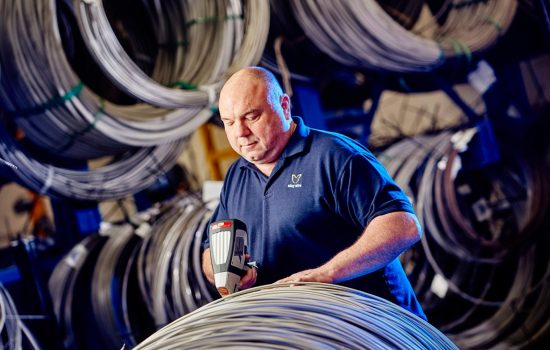

With interest from the nuclear sector rising every year, Alloy Wire International’s Technical Director Andrew Du Plessis looks at six of the most popular material choices for an industry that prides itself on mission critical safety.
As we reach the mid-point of 2026, we always look back at the sales mix and the markets where our material is heading to. This year, despite a myriad of outside economic challenges, conflicts and uncertainty around Trump’s Tariffs, interest continues to be strong, whilst the pipeline of opportunity is full of promise for the next six months.
In addition to the traditionally strong aerospace and oil and gas sectors, we have also seen a large spike in the volume of orders from customers involved in nuclear – in fact, it now makes up probably 10% of our annual £16.5m turnover.
The high temperature and corrosion resistance properties of our alloys are perfectly suited for end-use applications and often play a pivotal role in the core of nuclear reactors, development of new mini reactors and in the complex world of decommissioning.
But what do customers in this arena look for in a supplier? Traceability is arguably the biggest requirement, an ability to prove the authenticity of the materials (traced back all the way to the mills) and how the wire is processed at our state-of-the-art factory in the West Midlands in the UK.
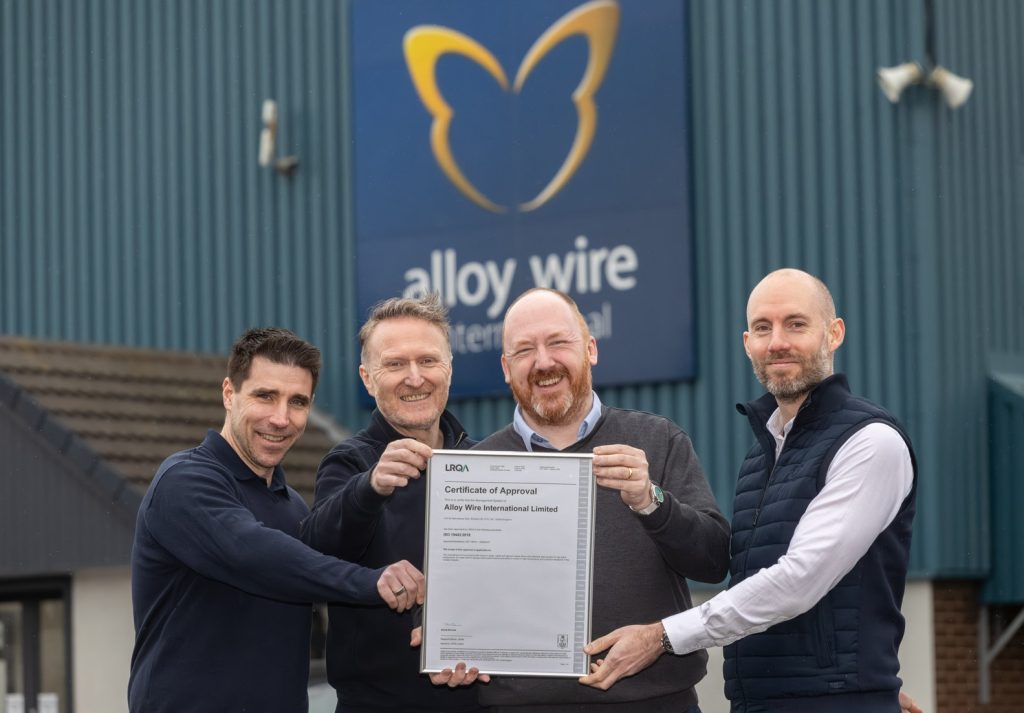
A close working relationship with our suppliers ensures we receive original data that we can then build into our management system, a management system that has been reinforced by recent accreditation to ISO 19443 (the nuclear-specific global quality standard).
Alongside this, we have invested heavily in our in-house testing department so we can retain as much control as possible, not to mention speed of turnaround when you consider the backlog seen at some testing houses.
In fact, our testing equipment – including tensile testers, a Micro-Vickers Hardness tester and lab furnaces to support heat treatment – means we can offer 90% of all mechanical tests at our factory. The newly refurbished and updated metallography lab also delivers full macro and micro evaluation capabilities.
Stockholding and the ability to source alloys quickly is the final requirement and this is an area AWI is well versed in, giving nuclear customers in the UK, Europe, Asia and America access to 400 tonnes of material at any one time. This ensures we can meet most orders in just three weeks.
So, what are the main alloys customers are buying?
Inconel 718
Inconel 718, a high-strength, corrosion-resistant nickel-based super alloy, is used in various critical applications in the nuclear industry.
Its exceptional properties make it ideal for nuclear reactors, particularly in components exposed to extreme temperatures, pressure, and corrosive environments.
Commonly used in reactor core components, such as fuel assemblies, control rod components, and reactor vessel internals, the alloy’s high-temperature resistance and excellent mechanical properties ensure structural integrity and long-term performance under challenging operating conditions.
In addition, Inconel 718’s resistance to radiation-induced degradation makes it a preferred material for nuclear fuel handling systems.
Inconel X750
This is a popular material in the nuclear industry due to its excellent high-temperature strength and corrosion resistance properties.
One of the key applications of Inconel X750 is in the construction of reactor components, including pressure vessels, reactor cores, and steam generators.
Its ability to withstand extreme temperatures and harsh environments makes it ideal for use in nuclear fuel processing plants when handling radioactive materials and in equipment like hot cells and glove boxes.
Alloy X-750’s durability and reliability make it a trusted material for the safe and efficient operation of nuclear facilities.
Alloy 400
One significant use of Alloy 400, a nickel-copper alloy known for its high strength and corrosion resistance, is in the construction of nuclear reactors where it is employed in components like springs for valves and heat exchangers.
Its resistance to stress-corrosion cracking and high-temperature performance makes it an ideal material for handling some of the harsh operating conditions found in nuclear power plants.
Nimonic 90
Nimonic 90 is a nickel-chromium-cobalt superalloy used in nuclear applications where components require high-temperature strength, creep resistance and corrosion resistance.
It is primarily used for components that face high thermal stress and mechanical loads, such as reactor turbine components.
The alloy’s ability to resist high temperatures and cyclic loads makes it ideal for turbine discs, blades, and springs and fasteners that must operate reliably in corrosive, heat-intensive environments.
Alloy 80A
Alloy 80A is a nickel-chromium alloy known for its high strength and oxidation resistance.
Due to its excellent creep and corrosion resistance at elevated temperatures, it is commonly used in nuclear reactors for reactor core components, fuel element cladding, and control rod mechanisms.
Additionally, this alloy is often chosen for its resistance to thermal fatigue and ability to maintain structural integrity in harsh environments.
Stainless Steel 316
Stainless Steel 316 is widely used in the nuclear sector due to its excellent corrosion resistance, high temperature strength, and resistance to radiation.
Its low carbon content makes it resistant to sensitisation, reducing the risk of intergranular corrosion in high-temperature environments. Furthermore, superior mechanical properties and durability ensure it is a preferred material for long-term use in nuclear storage applications.
For more articles like this, visit our Innovation channel.