

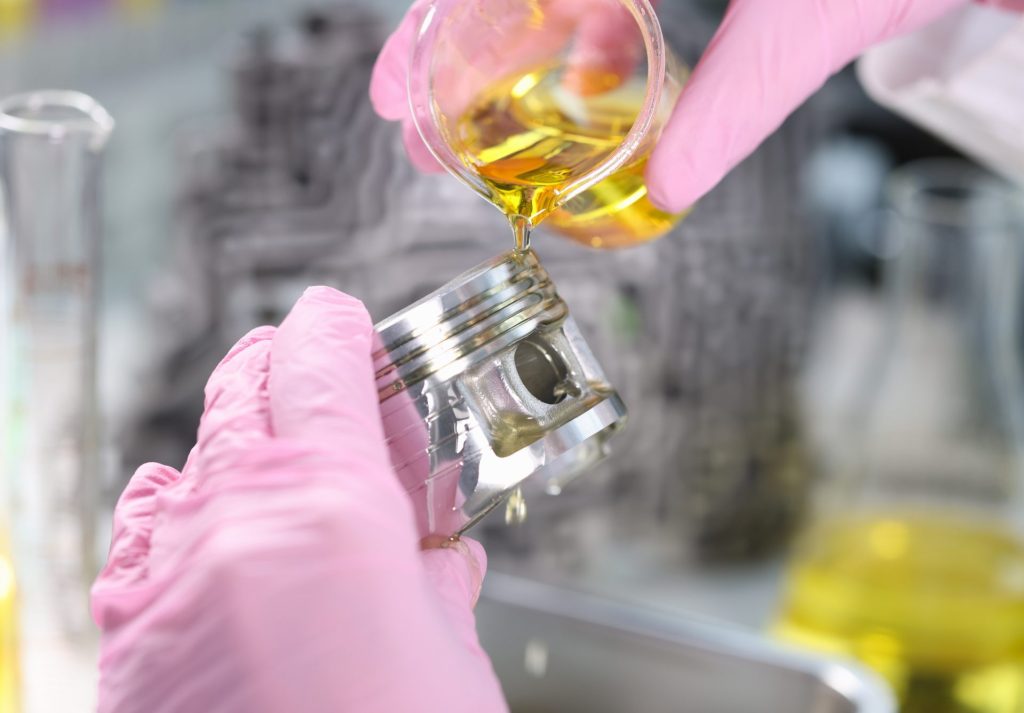
In this exclusive op-ed for The Manufacturer, Dr. Cassandra Higham, Industrial Director at Castrol, argues that intelligent fluid management, through real-time monitoring of lubricants and coolants, represents one of the most practical and high-impact ways for manufacturers to enhance reliability, cut costs, and take a meaningful step toward Industry 4.0.
Key takeaways
-
Fluids drive performance: Lubricants and coolants are critical to machine reliability, productivity, and product quality — yet often overlooked.
-
Reactive maintenance is costly: Traditional manual checks lead to waste, unplanned downtime, and reduced equipment life.
-
Intelligent monitoring adds control: Real-time data enables predictive maintenance, optimising fluid use and preventing failures before they occur.
-
Automation delivers measurable savings: Automated coolant management can significantly cut costs, labour, and waste while improving tool life.
-
A gateway to Industry 4.0: Smart fluid management offers a scalable, low-barrier entry point for manufacturers beginning their digital transformation journey.
In modern manufacturing, robotics, automation and digital transformation often take centre stage. Yet beneath the surface, the reliability and productivity of these advanced systems hinge on something more fundamental – the fluids that keep machines running. Lubricants and coolants, though rarely at the top of boardroom agendas, play a pivotal role in maintaining uptime, protecting assets and ensuring product quality.
Traditionally, both lubrication and coolant management have been treated as background processes: checked periodically, adjusted manually and often overlooked until a problem arises. This reactive approach can be detrimental, leading to unplanned downtime, shorter tool life, wasted resources and reduced product consistency.
However, that dynamic is steadily changing. Advances in real-time monitoring and intelligent fluid management are transforming what was once a routine maintenance task into a source of competitive advantage.
Why traditional approaches fall short
Conventional oil and coolant checks typically involve scheduled sampling and operator judgment. A sample is taken, sent for analysis, and results arrive days or weeks later. During that lag time, machines may already be operating under compromised conditions, with water ingress, oxidation, microbial growth, or pH imbalance, silently undermining performance.
When measuring conventional oils, this gap between cause and detection is what engineers call the ‘failure development period’. It is a window in which damage accumulates unnoticed, driving up repair costs and disrupting schedules reducing overall equipment effectiveness.
Equally, manual monitoring of coolant systems introduces inconsistency and fluctuations in concentration. When concentration levels drift, microbial growth accelerates, and excess dosing becomes common. The outcome is the same: avoidable higher costs and lower precision.
Data-driven lubrication: shortening the feedback loop
The introduction of intelligent lubrication systems has closed this gap significantly. Sensors embedded in lubrication circuits now provide continuous readings on water contamination, oxidation, particulate debris, and temperature, often at 15-minute intervals, rather than once every few weeks.
The value is not simply the data itself but the ability to act on it. When combined with expert interpretation, these insights allow maintenance teams to take preventive action before issues escalate.
Crucially, real-time lubrication monitoring can also help organisations move from time-based to condition-based maintenance. Instead of replacing fluids on a fixed schedule – often too early or too late – teams can align interventions based on actual need. This reduces waste, lowers costs and frees up skilled staff to focus on higher-value tasks.
Coolant management: the next frontier
While oil monitoring has gained momentum, coolant systems represent an equally powerful but underexploited opportunity, especially for manufacturers. Coolants are essential for thermal stability, surface finish and tool longevity. Poor control, however, introduces hidden costs: inconsistent component quality, increased tool wear and higher operational costs.
Manual checks with a refractometer or pH strip can only go so far. Intelligent coolant management platforms now provide automated, continuous tracking of concentration, pH, conductivity, temperature, and usage. More importantly, they can initiate corrective action – adding water or coolant as required – without waiting for human intervention.
This level of control matters. In precision manufacturing sectors such as automotive and aerospace, even small fluctuations in coolant conditions can lead to rejected parts, wasted material and lost production time. By keeping systems within optimal ranges, intelligent coolant management safeguards both quality and throughput.
Talking about savings generated, automating coolant management has enabled one of our manufacturing customers to achieve up to €72,636 in annual savings across 10 milling machines. The savings have been driven by reduced concentrate consumption, lower labour costs, extended emulsion life and decreased tooling expenses.
The business case: measurable value
Across both lubrication and coolant systems, the benefits of intelligent monitoring can be grouped into five key categories:
- Cost reduction and waste minimisation
Continuous tracking avoids overdosing, premature fluid changes, and excess disposal. - Extended tool and equipment life
Stable fluid conditions reduce wear, prolonging the lifespan of cutting tools, pumps, and machine components. - Improved product quality
Consistency in temperature and lubrication helps maintain tolerances and surface finish, this is especially vital in EV (electric vehicles) and aerospace applications. - Enhanced productivity and uptime
By detecting issues before they escalate, manufacturers can reduce unplanned downtime and increase machine availability. - Consumption reduction
Moving from calendar-based to condition-based maintenance reduces water, chemical, and oil consumption.
Overcoming adoption barriers
Despite the clear advantages, some manufacturers hesitate to adopt intelligent fluid management. Their concerns include upfront cost, IT integration and perceived complexity. These are valid but increasingly addressable.
Today’s solutions are modular and scalable. Manufacturers can begin with simple alert systems, establishing value through trial deployments, before moving toward full integration with enterprise maintenance software. Data security is also a priority, with encrypted transmission and role-based access ensuring compliance with their corporate standards.
Perhaps most importantly, the journey does not require a single leap from manual to fully automated systems. Progressive adoption – moving step by step from manual checks, to continuous monitoring, to automated intervention – allows manufacturers to build confidence while capturing incremental benefits.
Lessons from steel production
Steelmaking is perhaps one of the few industries that clearly illustrates the true value of fluid intelligence. In this sector, where unplanned downtime can cost upwards of €22,000 per hour, the stakes are very high.
In one case, a steel manufacturer implemented real-time oil monitoring across critical gearboxes. Within weeks, the system detected water ingress, enabling preventive action that saved over $100,000 and avoided major production disruption.
In another, continuous monitoring eliminated the need for three complete oil changes in a single year, reducing both cost and environmental impact. Together, these interventions demonstrated how fluid management can quickly deliver return on investment, while laying the foundation for broader digital transformation.
A practical entry point into Industry 4.0
For many manufacturers, intelligent fluid management offers an accessible first step towards Industry 4.0 practices. Unlike large-scale automation overhauls, these systems can be implemented gradually, tailored to each site’s needs and scaled over time.
The pay-off is both operational and strategic. Preventive fluid management does more than prevent breakdowns, it enhances asset reliability, optimises resource use and builds resilience into supply chains. In an environment where margins are tight and customer expectations high, these benefits can be the difference between firefighting and forward control.
Lubrication and coolant management may not always make the headlines in manufacturing, but their impact is undeniable. By moving from reactive maintenance to data-driven control, manufacturers can unlock savings, improve quality and reduce environmental footprint, all while strengthening uptime and resilience.
The question is no longer whether intelligent fluid management adds value, but how quickly manufacturers can integrate it into their operations. Those who act early will not only reduce costs and risks but also position themselves as leaders in reliability-driven manufacturing.
For more articles like this, visit our Leadership channel.