
In this exclusive op-ed for The Manufacturer, Beko’s Akın Garzanlı explores how home appliances of the future will increase convenience, save energy and water, and reduce costs.
Step into your kitchen. Now imagine it knows you. It knows what’s in your fridge, what you like to cook, and when electricity is cheapest. It’s already preheated the oven, suggested a low-energy recipe, and reordered detergent before you even noticed it was running low. Welcome to a kitchen that anticipates your needs—where dinner plans, energy savings, and household essentials are all handled before you even think to ask.
For over 170 years, appliances have supported domestic life. Over time, the capabilities of these appliances have advanced at a steady rate. But manufacturers now find themselves at a crossroads, where they have the opportunity to increasingly integrate artificial intelligence into consumer tech, and radically modernise their capabilities.
Today’s households expect so much more – they are time-starved, cost-conscious, and they are more mindful than ever about sustainability. To meet such high expectations, home appliance manufacturers must reimagine the kitchen as an intelligent ecosystem—one that seamlessly integrates with your routines, simplifies your day, and contributes to a healthier planet. The modern kitchen is no longer a static space; it’s a responsive partner, adapting to your habits and preferences while working quietly in the background. This is technology designed to blend in, not stand out—intuitive, efficient, and quietly smart.
The kitchen of the future is also a sustainability hub, where cutting-edge technologies can simultaneously respect the planet and benefit the customer. Smart appliances can now adeptly navigate energy fluctuations by activating during off-peak hours to conserve resources and reduce costs. By optimising their operation based on real-time energy pricing, these appliances empower users to make more informed decisions about their energy consumption.
But for these benefits to be fully realised, there’s a growing need for interoperability across devices and platforms. As an industry, we must move beyond proprietary systems and explore open standards—ensuring smart appliances can integrate easily into wider smart-home ecosystems, regardless of brand. Just as smartphones revolutionised daily life by converging tools into a unified experience, the next leap in the home appliance sector will be driven by seamless connectivity.
Both our dishwashers and our washing machines prompt users to activate energy-saving modes. The latter, for example, can suggest eco-friendly programmes such as cold washes, which significantly cut down on both energy and water use compared to conventional cycles. This focus on efficiency is not merely a collection of features—it represents a comprehensive commitment to fostering a lifestyle that prioritises sustainability.
As part of this shift, we must also rethink how appliances are manufactured and maintained. Lifecycle impact—from raw material sourcing to end-of-life recycling—should be central to R&D. The rise of modular design, for instance, can extend product lifespans by enabling easier repairs and upgrades. Similarly, software-driven maintenance alerts and remote diagnostics are helping reduce downtime and service visits, minimising environmental and logistical costs.
Kitchens are much more than a place of culinary creation. They are becoming pivotal centres for cultivating a more sustainable way of living while saving money. Looking ahead, they will become even more personalised. Virtual assistants will guide cooking, track food expiry, and support healthy eating. Appliances will monitor loved ones’ usage patterns and allow remote control to offer assistance from anywhere. This is technology with purpose—crafted not just to serve, but to enhance. It’s about creating a home that feels more human, more sustainable, and more attuned to real life.
The integration of AI into everyday appliances represents a significant step towards this vision. Platforms such as Beko’s HomeWhiz and similar systems now provide users with real-time control over their home appliances through smartphones, facilitating better management of energy and water usage. When implemented thoughtfully, such technology enables appliances to learn from daily routines and optimise performance accordingly. Dishwashers can detect load size and soil levels, automatically adjusting water, energy, and detergent use. Refrigerators move beyond simple cooling—preserving freshness whilst managing electricity consumption through adaptive technology.
However, the real promise of these innovations will only be fulfilled if sustainability is embedded at every stage of their development. As manufacturers, we must take full responsibility for ensuring that environmental stewardship is not an afterthought, but a foundational principle—from initial concept through to design, production, usage, and end-of-life. Smart kitchens must not only be intelligent, but also inherently sustainable—reducing resource consumption, extending product lifespans, and minimising environmental impact across the entire value chain.
This is not a challenge any one company can meet alone. It requires a shared commitment across the industry to prioritise long-term environmental responsibility over short-term gains. We must collaborate—with regulators, technology partners, and utilities—to create open, scalable systems that support both innovation and sustainability. This includes aligning around circular design principles, promoting energy-aware behaviours, and developing infrastructure that supports smart energy usage on a broader scale.
We are tasked with pioneering innovations that not only resonate with consumers but also address the global imperative for sustainability. The reliability of appliances has always been non-negotiable. But it is time to go a step further. Let’s strive for a home that works for the person, and for the planet.
About the author
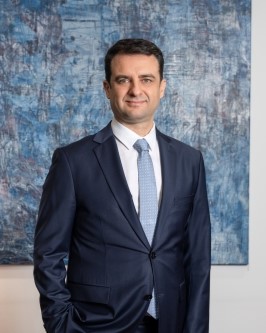 Akın Garzanlı, is currently the Chief Marketing Officer at Beko, having worked for the company for more than 20 years in various capacities.
Leading 22 global and local brands in more than 55 countries with a marketing team spread across a large geography and developing marketing strategies that make a difference, he is in charge of global brand management and marketing communications, industrial design, product management, small domestic appliances, content excellence, marketing insight and analytics, and marketing growth and transformation. In addition to the marketing function, he also oversees the Middle East, Africa, Russia, Belarus, and Central Asia regions as of 2023.
Garzanlı started his career in 2002, when he became responsible for Beko’s global markets. He has held key positions in the company’s global functions, including sales, product management, marketing and customer service. In 2018, he was appointed as Global Customer Care Director, and as of 2020, he assumed the role of Global Brand Director in addition to this position.
Garzanlı graduated from St. George’s Austrian High School in Istanbul and holds a bachelor’s degree from Istanbul University in the field of Management. He earned his MBA from the Koç University. Garzanlı also completed several programs at Harvard Business School and Kellogg School of Management.
For more articles like this, visit our Innovation channel