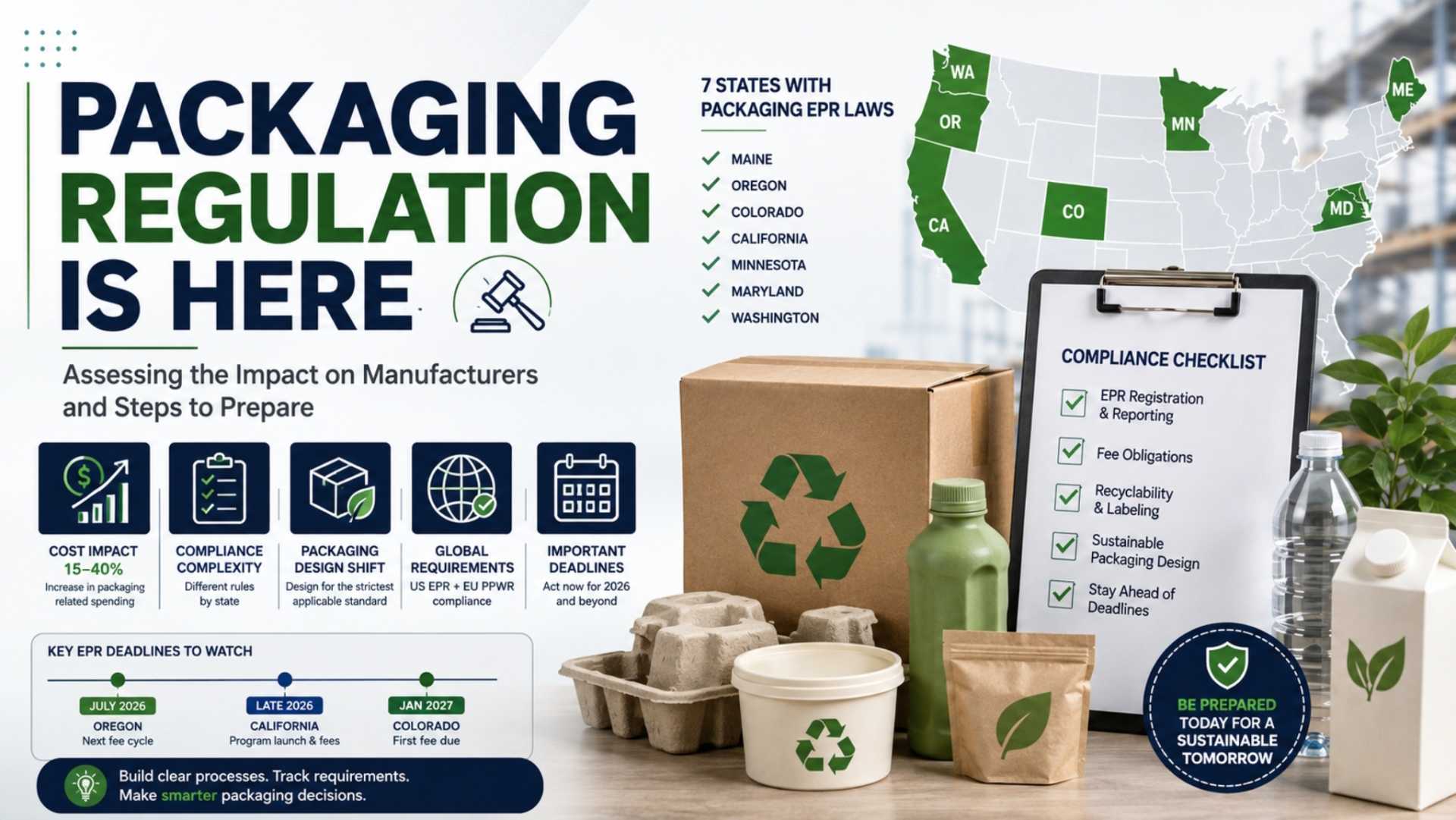
Packaging regulation in the US has largely developed at the state level for years now. That is forcing manufacturers to review how they approach packaging entirely. Seven states have already passed packaging Extended Producer Responsibility (EPR) laws: Maine, Oregon, Colorado, California, Minnesota, Maryland and Washington. Faisal Ur Rehman explains.
These programmes are moving into active reporting, registration and implementation stages in 2026. It means packaging compliance is a business issue rather than a future sustainability concern.
- Q: What is changing with packaging regulation in the US in 2026?
A: Packaging Extended Producer Responsibility (EPR) is moving from policy development into active registration, reporting and fee requirements. Seven states—Maine, Oregon, Colorado, California, Minnesota, Maryland and Washington—have enacted packaging EPR laws, making compliance an immediate business consideration for manufacturers. - Q: How could packaging EPR affect manufacturers’ costs?
A: EPR introduces producer fees that can increase the overall cost of packaging. Manufacturers should consider a potential 15–40% increase in packaging-related spending as programmes phase in, although the actual impact will vary depending on materials, volumes, products and the states involved. - Q: Why is packaging compliance becoming more complex?
A: The US does not have one nationwide packaging EPR system. Each state can establish different registration, reporting and fee requirements. Manufacturers selling across multiple states therefore need processes capable of managing different regulations rather than waiting for nationwide harmonisation. - Q: How could EPR influence packaging design?
A: EPR may encourage manufacturers to rethink materials, packaging structures, recyclability and labelling. Some companies may choose to create one packaging design that meets the strictest applicable requirements, reducing the need for multiple state-specific SKUs and simplifying production and inventory management. - Q: What should manufacturers do now to prepare for packaging EPR?
A: Manufacturers should map their regulatory exposure, establish a centralised packaging data system, design against the strictest applicable standards, review recyclability claims and maintain a clear calendar of registration, reporting and fee deadlines. They should also consider European and UK requirements when selling internationally.
However, this is not just a US story. According to the latest report of the European Union, ‘The EU’s Packaging and Packaging Waste Regulation (PPWR) generally applies from August 12, 2026. The UK’s packaging EPR system is already placing reporting and financial obligations on affected producers.’
What has actually changed in 2026?
The biggest change is that packaging EPR is moving from policy discussions into operational work. This means manufacturers need to identify the packaging that they place in a particular market.
First, check if it falls under a state program. Then get the data reported and account for fees. For example, Washington requires covered producers to meet obligations under its Recycling Reform Act starting in 2026.
California is another important development. Its SB 54 packaging EPR regulations were approved by the Office of Administrative Law on May 1, 2026. The law establishes a producer responsibility system which covers packaging and certain single use plastic food service ware. The following are the key points that businesses need to review as EPR requirements take effect.
The cost impact of EPR
When EPR reaches the end of its useful life then it changes the part of the cost linked with packaging. Producer fees are becoming an important factor in packaging budgets. Businesses should plan for a potential 15-40% increase in packaging related spending as EPR fees phase in.
The actual effect will depend on the products, materials, volumes and states involved. So the range should be treated as a planning figure rather than a fixed increase for every manufacturer.
Oregon’s program is already operating. Other state programmes are moving through their own fee and reporting stages. Manufacturers should keep an eye on the next fee cycles in Oregon in July 2026, California later in 2026 and Colorado in January 2027. The broader lesson is simple: packaging costs can’t just no longer be viewed. Regulatory costs may become part of the total packaging cost as well.
Growing compliance complexity
The bigger challenge for many manufacturers may be managing different state requirements. There is no single US packaging EPR system that covers every market. Because every state can set its own rules for registration and fees. This creates extra work for companies that sell products over multiple states.
A manufacturer may use the same packaging nationwide. They still need to determine how that packaging fits within different state programs. Real harmonisation around the US is unbelievable in the near term. Companies should therefore build processes that can handle different requirements instead of waiting for the rules to become uniform.
How EPR could affect packaging design?
EPR can also change how manufacturers approach packaging itself. Do you know the importance of compliance decisions? They are material choices, packaging structures and recyclability. California is likely to have a strong influence because of the size of its market and the scope of its packaging rules.
Some manufacturers could choose to redesign packaging for a wider market instead of creating a separate version only for California. Maintaining different packaging for individual states can create more SKUs. It also increases inventory and production complexity. A single design that meets the strictest applicable requirement may be easier to manage in some cases.
The added burden for global manufacturers
The impact becomes more complex for manufacturers that sell outside the US. Companies selling in Europe will also need to follow the EU’s Packaging and Packaging Waste Regulation (PPWR). This adds another set of packaging requirements on top of the EPR rules in US states.
Packaging made for the US market may need changes before it can be sold in Europe. Manufacturers should check these requirements during the design stage instead of making changes after production starts.
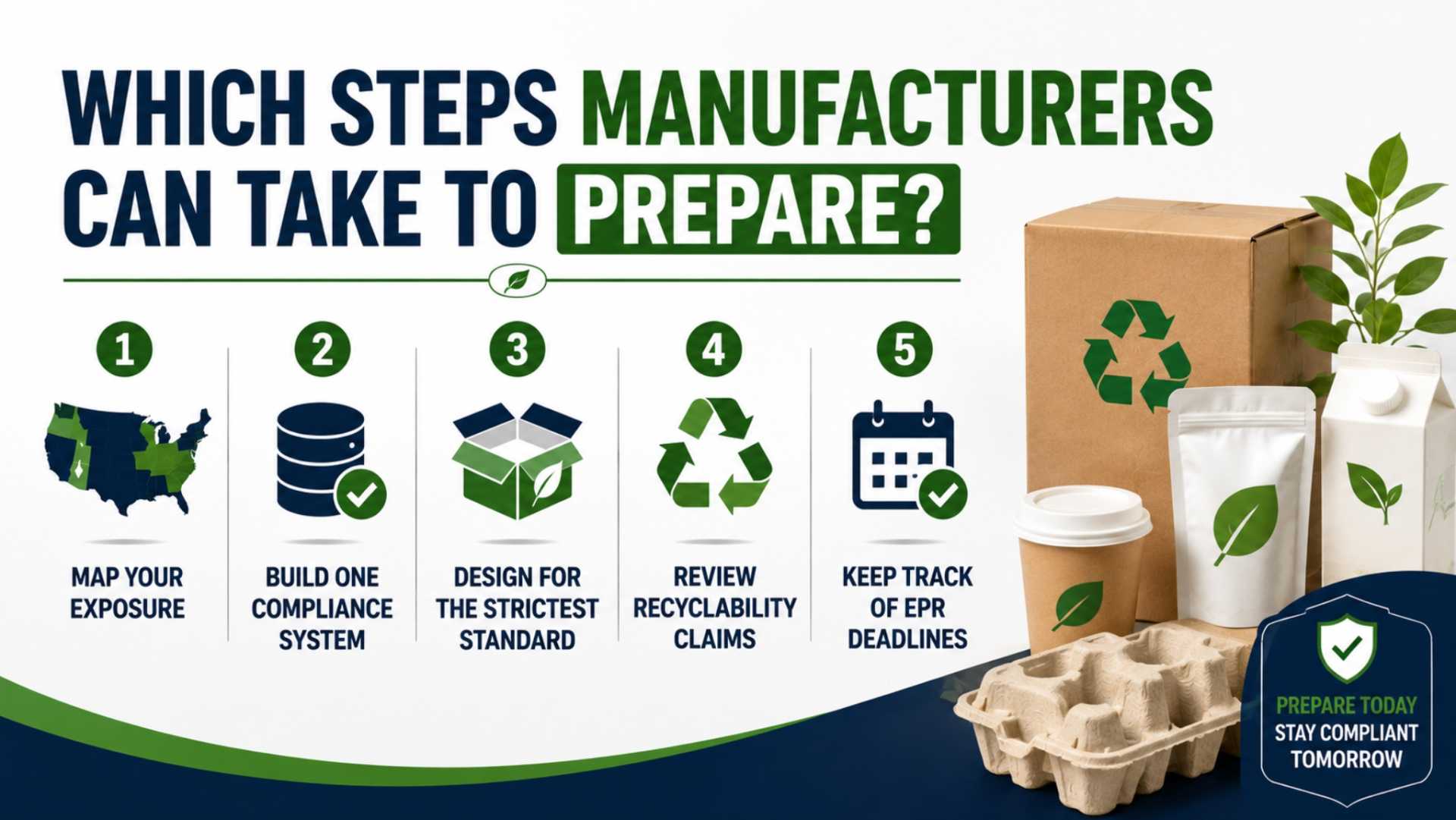
Which steps manufacturers can take to prepare?
Packaging compliance needs to become part of regular business planning. The following steps can help manufacturers to manage current EPR requirements and prepare for new rules.
- Map where you have exposure: Start with the seven states that have enacted packaging EPR laws: Maine, Oregon, Colorado, California, Minnesota, Maryland and Washington. Then look beyond those states. Pending proposals in places such as Illinois, New York and Massachusetts should remain on the regulatory watch list. The goal is to know where your products may face new requirements before they take effect.
- Build one compliance data system: Managing every single state as a separate project can create unnecessary work. A centralised system can keep packaging specifications, material weights, sales information and reporting records in one place. This also makes it easier to update information when new state requirements come into effect.
- Design for the strictest applicable standard: Manufacturers should review their current packaging against the strictest requirements that apply to their markets. This can help identify where materials and labels may need to change. Some companies may choose one packaging design that meets the strictest rules they need to follow. This can reduce the need to create separate packaging SKUs for different states.
- Review recyclability claims: Recyclability claims on packaging also need closer attention. Manufacturers selling into California should review labels and recycling symbols against the requirements of SB 343. Checking these claims during the design and artwork approval stage can prevent problems later.
- Keep track of EPR deadlines: Manufacturers should maintain a clear calendar for registration and reporting. Oregon’s July 2026 deadline, California’s late 2026 timeline and Colorado’s January 2027 fee date are important dates to watch. These dates give manufacturers more time to prepare for upcoming requirements.
A Real-World Packaging Example
The regulatory changes are also affecting the packaging industry. These sustainability requirements are encouraging packaging manufacturers to choose more sustainable packaging options. A custom packaging manufacturer like Elite Custom Boxes is fully aware about the latest regulations. Its packaging experts offer recyclable materials that help to reduce packaging waste. The company specialises in rigid boxes, folding cartons and retail packaging as well.
Final Thoughts
Packaging EPR should not be treated as a single deadline that manufacturers can check off a calendar. The US system is developing around individual states. Europe and the UK are also moving forward with packaging requirements.
More states may introduce new rules. At the same time, existing programs can change as regulators gain experience. Manufacturers that wait until a fee or reporting deadline arrives may have less options.
The better approach is to build compliance into normal packaging decisions. That means knowing where products are sold, keeping reliable packaging data and reviewing materials before a new requirement creates a problem. This means knowing where products are sold and keeping accurate packaging data before new rules take effect. Companies that prepare early will have more space to adjust when the next requirement arrives.
 Faisal Ur Rehman is Content Editor at Reusable Packaging News and Forklift News, published on PackagingRevolution.net. With over four years at the site, he writes under the mentorship of Rick LeBlanc, a supply chain journalist with 30+ years of experience covering pallets, reusable packaging and material handling.
His work focuses on packaging compliance, reusable transport solutions, pharmaceutical packaging, and supply chain logistics.
For more articles like this, visit our Sustainability channel