


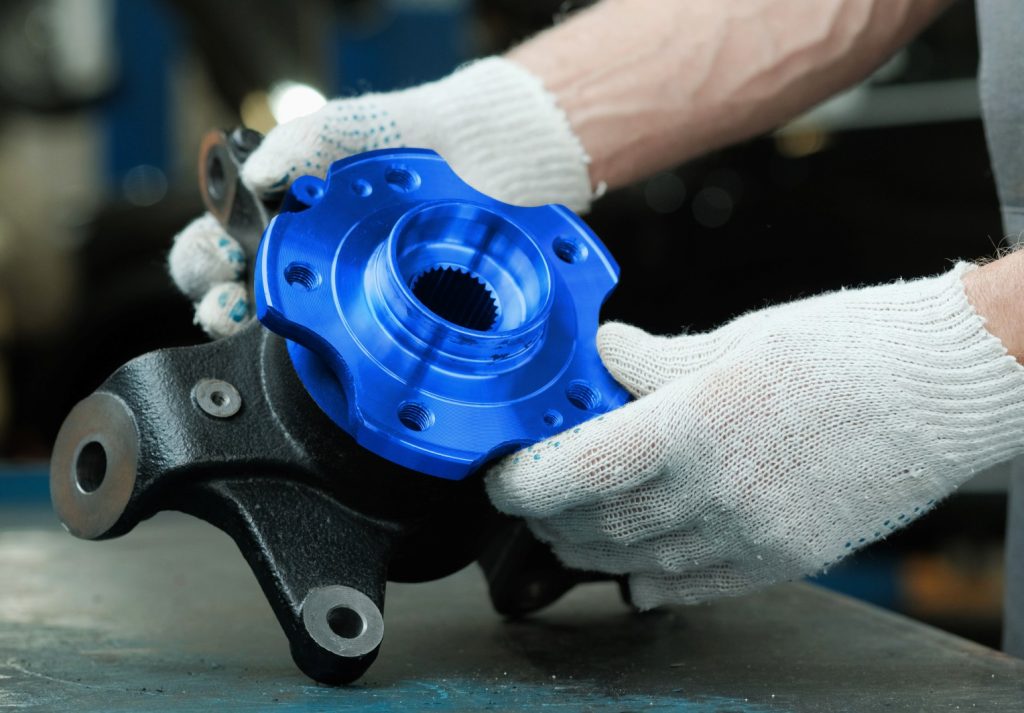
AI-enabled sourcing is helping manufacturers accelerate production, improve visibility, and build more resilient supply networks in an increasingly complex industrial landscape.
From Design Approval to Production Reality
For many manufacturers, innovation is no longer the primary constraint. Product teams are generating ideas, validating designs, and pushing boundaries faster than ever. The real bottleneck lies in what comes next: turning those approved designs into reliable, cost-effective production at scale.
This transition—from design to factory—is where complexity accumulates. Manual sourcing processes delay manufacturability feedback. Fragmented supplier networks slow decision-making at the moment speed matters most. As production timelines compress and supply chains remain volatile, these inefficiencies are no longer tolerable—they directly impact growth, margins, and competitiveness.
AI-enabled sourcing is emerging as a critical lever to address this challenge. But beyond the hype, its real value lies in how it reshapes decision-making across the manufacturing lifecycle.
Where Traditional Sourcing Slows Growth
The conventional sourcing model is inherently reactive. A need arises, manual sourcing processes are initiated, suppliers respond, and decisions are made—often with incomplete information. This approach introduces several structural barriers:
- Time delays: The traditional sourcing approach can take days or weeks, particularly when multiple suppliers and iterations are involved. In fast-moving markets, this lag can mean missed opportunities or delayed product launches.
- Limited visibility. Cost, lead time, and manufacturability are often assessed late in the process, when design changes are expensive and disruptive. This creates a disconnect between engineering intent and production reality.
- Fragmentation of supplier networks. Many manufacturers rely on a mix of known partners and ad hoc sourcing, making it difficult to scale consistently while maintaining quality and cost control.
These challenges are not new, but they are becoming more acute as manufacturing becomes more complex and globally distributed.
AI as a Decision Engine, Not Just an Efficiency Tool
Much of the early conversation around AI in manufacturing focused on productivity gains. While automation can reduce manual effort, this perspective understates the broader opportunity.
AI’s real impact lies in enhancing decision quality and speed. Instead of simply accelerating existing workflows, AI enables a fundamentally different approach to sourcing—one that is continuous, data-driven, and predictive.
By analysing large volumes of historical and real-time data, AI systems can provide early insights into:
- Expected costs and lead times
- Manufacturability constraints
- Supplier performance and capacity
- Potential risks across the supply chain
This shifts sourcing from a reactive exercise to a proactive capability. AI enables manufacturers to evaluate suppliers, production options, lead times, and risks far more quickly and with greater context than traditional sourcing methods. Decisions are no longer made in isolation but informed by accumulated knowledge across projects, suppliers, and production conditions.
Improving Visibility Earlier in the Process
One of the most significant advantages of AI-enabled sourcing is the ability to bring critical insights upstream. Traditionally, manufacturability feedback arrives after designs are finalised, forcing costly iterations.
With AI-driven tools, engineers can receive near-instant feedback during the design phase. This includes guidance on material selection, geometry optimisation, and process suitability. Similarly, cost and lead-time estimates can be generated in real time, allowing teams to make informed trade-offs early. This improves alignment between engineering, procurement, and operations—reducing surprises later in the process.
The result is not just faster sourcing, but better-designed products for manufacturing from the outset.
Building Flexible and Resilient Supply Networks
Beyond individual decisions, AI plays a critical role in strengthening the broader production network.
Modern manufacturing supply chains are dynamic systems, influenced by fluctuating demand, regional disruptions, and shifting supplier capabilities. Managing this complexity manually is increasingly impractical.
AI enables a more adaptive and resilient network by continuously analysing supplier performance, capacity, and risk signals. Rather than relying on static supplier lists, manufacturers can dynamically match demand with the most suitable partners at any given time.
This approach offers several advantages:
- Flexibility: The ability to scale production across multiple suppliers and regions
- Risk mitigation: Early identification of potential disruptions or bottlenecks
- Performance optimisation: Continuous improvement based on data-driven insights
Importantly, this does not replace human expertise. Instead, it augments it—providing teams with better information to make more informed decisions. As seen in practice, combining data insights with human judgement remains essential for achieving consistent outcomes.
Overcoming the Implementation Challenge
Despite its potential, implementing AI in sourcing is not without challenges.
A common mistake is attempting to layer AI onto existing processes without addressing underlying inefficiencies. Technology alone cannot fix fragmented workflows or poor data quality. Successful adoption requires a more fundamental rethink.
Three priorities stand out:
- Data foundations: AI systems depend on structured, reliable data. This often requires integrating information from multiple sources—ERP systems, supplier data, quality records—into a unified framework.
- Process redesign: Rather than automating existing workflows, organisations should ask: what would the ideal sourcing process look like if designed today? AI should be embedded into this redesigned system, not added as an afterthought.
- Organisational alignment: Adoption depends on people. Teams must understand the value of AI, trust the insights it provides, and incorporate it into their decision-making processes. Clear ownership and governance are essential to ensure accountability and consistency.
A Shift from Reactive to Proactive Manufacturing
Ultimately, AI-enabled sourcing represents a broader shift in how manufacturing operates.
Instead of reacting to production needs as they arise, organisations can anticipate challenges, optimise decisions earlier, and build supply chains that adapt in real time. This transition—from reactive to proactive—has profound implications for growth.
Manufacturers that embrace this shift can:
- Accelerate time-to-market
- Improve cost control and margin visibility
- Enhance product quality and manufacturability
- Build more resilient and scalable operations
Those who do not risk being constrained by the very processes that once supported them.
Looking Ahead
As the manufacturing landscape continues to evolve, the pressure to move faster, operate more efficiently, and manage complexity will only increase.
AI-enabled sourcing is not a silver bullet. But it is a powerful enabler—one that allows manufacturers to rethink how decisions are made, how supply networks are managed, and how products move from design to production.
The question is no longer whether AI will play a role in sourcing. It is how effectively organisations can integrate it into their operations to unlock its full potential.
For leaders preparing for the next phase of growth, the priority is clear: build the systems, data foundations, and capabilities that allow smarter scaling—not just faster execution.
About the author
 Ole Marx is EMEA Regional Sales Director for Xometry.
Ole is responsible for leading Xometry’s sales strategy and driving revenue growth across Europe and the UK. Based in Germany, Ole oversees the commercial teams that connect customers with Xometry’s AI-powered marketplace, helping businesses build more agile and cost-effective supply chains through on-demand manufacturing.
With over two decades of industry experience, Ole brings a unique dual perspective to the role, having spent more than ten years on the front lines of procurement. This background allows him to bridge the gap between commercial growth and procurement imperatives, ensuring that Xometry’s solutions meet the rigorous cost-saving and supplier-development needs of modern enterprises.
Throughout his tenure, Ole has been a key advocate for the integration of digital tools within the procurement cycle. He focuses on helping clients leverage Xometry’s instant-quoting capabilities and automated workflows to streamline sourcing, reduce lead times, and enhance supply chain transparency. His strategic approach is instrumental in helping customers navigate complex manufacturing projects and achieve substantial cost efficiencies through technological innovation.
Prior to joining Xometry, Ole held various senior leadership and procurement roles where he specialised in supply chain optimisation and strategic negotiation. His deep understanding of both the buyer’s journey and the seller’s objectives makes him a vital asset in facilitating long-term partnerships between Xometry and its pan-European client base.
For more articles like this, visit our Data & AI channel

