
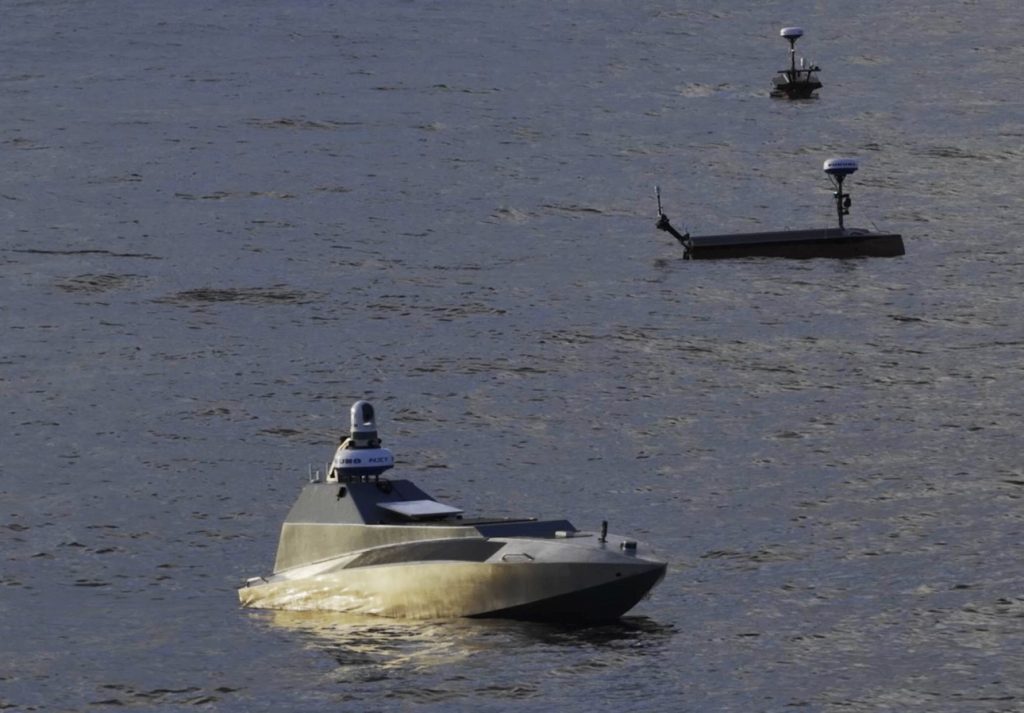
San Diego-based manufacturer and designer of autonomous surface vehicles (ASVs), Seasats, has completed an eight-day continuous sea trial of its high-speed “Quickfish” unmanned surface vessel (USV), marking a significant step forward in persistent autonomous operations.
The Quickfish platform is designed as a high-speed interceptor, capable of speeds exceeding 35 knots, while also offering on-station endurance measured in weeks—far beyond the typical 1–2 day limits seen in many small USVs.
This extended endurance enables the vessel to be pre-positioned in strategic areas, supporting applications such as port security, border protection and coastal defence.
Tackling the endurance challenge
Since its unveiling in late 2025, Quickfish has undergone a series of offshore tests and customer exercises focused on autonomy, safety systems and operational reliability.
Two features distinguish the platform from comparable systems. It includes a dedicated payload bay for deploying unmanned aerial vehicles, and combines low-speed electric propulsion with a high-speed jet drive—allowing it to balance efficiency with rapid response capability.
“Solving the persistence problem is a critical piece for moving these vehicles beyond one-way attack missions and into a wider range of maritime operations,” said Mike Flanigan, CEO and founder of Seasats.
Growing role of USVs in modern conflict
The development comes amid a rapid evolution in the use of unmanned surface vessels in naval operations. Recent conflicts have demonstrated their effectiveness in both offensive and defensive roles, from disrupting naval fleets to targeting commercial shipping.
However, limited endurance has remained a key constraint for broader deployment. While short-range missions may suffice for strike operations, longer-duration capability is essential for surveillance, deterrence and persistent security roles.
Seasats is among a small number of companies working to overcome this limitation. The company has previously demonstrated long-range capability through trans-Pacific and trans-Atlantic crossings, helping secure major US defence contracts.
These include an $89m SBIR Phase III award in 2025 to support US Marine Corps USV programmes, followed by a $24m APFIT contract in 2026.
Scaling autonomous maritime defence
With demand growing among the US and its allies, long-endurance USVs are expected to play an increasingly important role in maritime defence strategies.
Flanigan added that scalable, reliable platforms such as Quickfish will be critical as defence organisations look to expand the use of autonomous systems across a wider range of missions.
Interested in receiving the latest North American manufacturing news in your inbox each week?
Sign up to The Manufacturer Digital Briefing – North American Edition