
The compound semiconductor industry in South Wales – a sector often described as one of the UK’s quiet economic powerhouses – is undergoing a notable cultural shift as the proportion of women in its workforce continues to climb.
New figures released to mark International Day of Women and Girls in Science show that women now make up 29% of the wider semiconductor industry workforce, up five percentage points since 2019. The increase places South Wales ahead of several other advanced technology fields, including artificial intelligence and quantum computing, where female representation remains markedly lower.
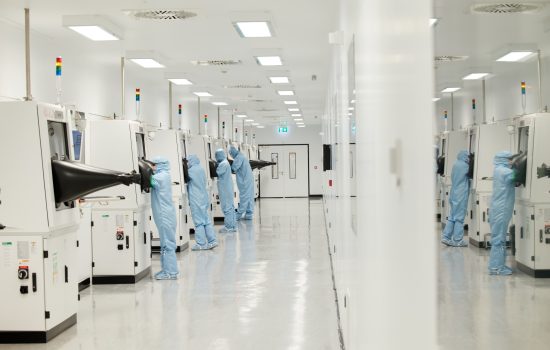
The cluster, coordinated through the CSconnected partnership, is a globally significant hub for the design and manufacture of materials that underpin AI systems, advanced communications, healthcare devices and defence technologies. It contributed £434m to the UK economy in 2024, with more than 90% of its output exported worldwide. Average salaries are around double the Welsh mean, underlining its importance as a high-value employer.
Outpacing other high-tech sectors
While progress on gender diversity has been slow across much of the technology landscape, the South Wales ecosystem appears to be moving faster than most. Industry data suggests women account for roughly 22% of the AI workforce, and fewer than 14% of senior roles. In quantum technologies the imbalance is even starker, with women representing fewer than 2% of applicants and around 80% of companies reporting no women in senior positions.
By contrast, the compound semiconductor cluster has developed a visible cadre of female leaders. Women are heading global manufacturing operations, steering high-growth start-ups and directing major research programmes within universities and innovation centres. Advocates argue that this visibility is beginning to reshape perceptions of who belongs in deep-tech careers.
Tackling the pipeline problem
Despite the upward trend, sector leaders acknowledge that significant barriers remain. According to CSconnected, efforts to widen participation must begin long before traditional recruitment stages. Interventions at age 14 or 15 are often too late to influence subject choices or confidence in STEM disciplines.
To address this, the organisation is investing in long-term initiatives spanning early-years engagement, school outreach, apprenticeships, technical training and postgraduate research. The strategy is focused not only on attracting new entrants but on retaining talent and supporting progression into senior roles – an area where many technology industries continue to struggle.
The approach reflects a broader economic reality: demand for compound semiconductor expertise is rising rapidly as governments and businesses race to secure supply chains for next-generation electronics. Meeting that demand, CSconnected argues, will require drawing on the widest possible talent pool.
Diversity as a competitive advantage
Marking the international awareness day, the cluster has chosen to highlight the achievements of women working across its companies and laboratories. The message is deliberately pragmatic: greater diversity is not simply a social objective but a driver of innovation and growth.
With global competition intensifying and the UK positioning itself as a leader in strategic technologies, the evolution of the South Wales workforce is being watched closely. If the current trajectory continues, the region could offer a model for how deep-tech industries can expand while becoming more representative of the society they serve.
Jutta is an experienced finance executive who has held senior positions at global semiconductor companies for over 25 years.
She joined IQE in January 2024 from Intel Corporation, where she served as a Senior Finance Director at Intel Foundry Services, supporting Intel’s Foundry business transformation. Prior to joining Intel, Jutta served as Vice President of Finance at GlobalFoundries Inc, a global leader in semiconductor manufacturing and she also held various positions at Advanced Micro Devices Inc. (AMD), a multinational semiconductor company. She holds an MBA from Technische Universität Dresden.
Julie Fazackerley is the Chief Executive Officer of Microlink, bringing more than 25 years of experience across aerospace, defence, advanced manufacturing, and emerging semiconductor technologies.
Her career began in the UK Civil Service before she joined BAE Systems. There, she held leadership roles in project management, production, and export operations, working directly with international customers across Saudi Arabia, Oman, and Europe.
Among her most notable achievements, Julie led the project for the PHASA‑35 high‑altitude, long‑endurance (HALE) unmanned aerial vehicle, collaborating closely with Prismatic before its acquisition by BAE Systems. The aircraft’s pioneering solar array technology, developed by Microlink Devices, served as her first introduction to the company she would eventually lead.
As CEO of MicroLink Devices, Julie has overseen the transformation of the UK facility from a team of ten in a single room to a fully operational manufacturing lab, successfully transferring key production processes from the US and securing critical certifications. Her leadership is grounded in a people‑first philosophy: create an environment where individuals enjoy their work, trust each other’s expertise, and the results will follow.
Looking ahead, Julie’s vision is to expand Microlink’s manufacturing capability in the UK, enabling end‑to‑end production of its advanced solar technologies for aerospace and space applications. She aims to position the company as a leading solar manufacturer globally, with parallel growth across both the UK and US operations. Passionate about widening participation in STEM, Julie advocates for early engagement to inspire the next generation of technical talent, particularly women, while championing a more accessible pathway into science and technology careers.
Dr Susan Gormley is currently CEO at Kubos Semiconductors, an early-stage SME developing innovative semiconductor material for visible wavelength microLEDs. Susan holds a 1st Class BEng in Electronic and Electronic Engineering from Warwick University and a PhD in Semiconductor Physics from Cardiff University. Susan has over 35-years experience in the compound semiconductor industry, beginning as a research engineer and progressing into senior leadership roles across commercial and operational functions. Reflecting on her personal journey Susan states “In the late 1980’s I was just one of three females studying Electrical and Electronic Engineering at Warwick University and the majority of my career has been spent in male dominated environments. I’m encouraged to see female representation increasing in the sector but there is still much to do. At Kubos we are proud to champion diversity in the workplace and on International Day of Women and Girls in Science, I applaud the contribution women are making to the semiconductor industry and encourage others to explore opportunities in this critical sector.”
Dr Susan Gormley is currently CEO at Kubos Semiconductors, an early-stage SME developing innovative semiconductor material for visible wavelength microLEDs. Susan holds a 1st Class BEng in Electronic and Electronic Engineering from Warwick University and a PhD in Semiconductor Physics from Cardiff University. Susan has over 35-years experience in the compound semiconductor industry, beginning as a research engineer and progressing into senior leadership roles across commercial and operational functions. Reflecting on her personal journey Susan states “In the late 1980’s I was just one of three females studying Electrical and Electronic Engineering at Warwick University and the majority of my career has been spent in male dominated environments. I’m encouraged to see female representation increasing in the sector but there is still much to do. At Kubos we are proud to champion diversity in the workplace and on International Day of Women and Girls in Science, I applaud the contribution women are making to the semiconductor industry and encourage others to explore opportunities in this critical sector.
Hazel obtained her Master’s degree in physics from Imperial College, London and a PhD in non-linear laser optics from the Optoelectronics Research Centre, University of Southampton. She has over 15 years’ experience working across industry and academia in the photonics sector in R&D, sales and business development. She played an instrumental role in the growth of Covesion Ltd from start-up to key quantum technologies manufacturer.
Since moving to Wales in 2015, Hazel led business development for the Centre for Photonics Expertise facilitating industry-academic collaborations across South Wales. In 2022 she joined Cardiff University as the Programme Manager for the ‘CSconnected Strength in Places Fund’ project funded by UKRI, working with CS Cluster partners to build on regional strengths in advanced semiconductor materials and manufacturing, driving cluster development and expansion.
As Business Development Manager for CSconnected since July 2024, Hazel continues to support growth for the South Wales Compound Semiconductor Cluster, focussing on supply chain opportunities and harnessing regional, national and global connections.
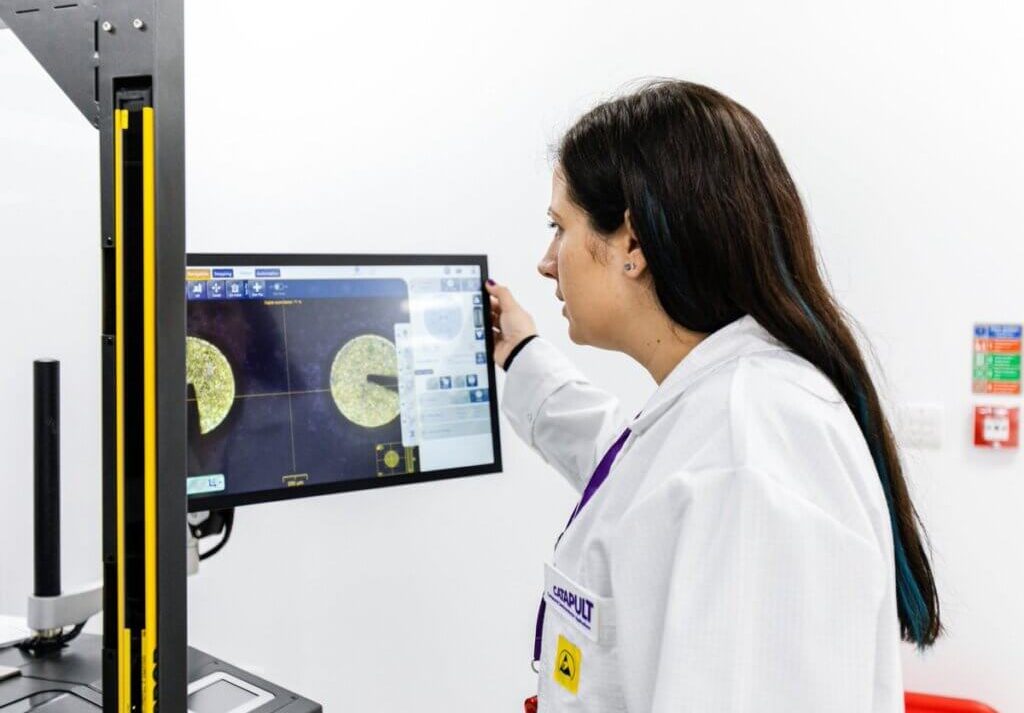
Caroline was appointed Chief Executive Officer in September 2025, setting the strategic direction and delivering the organisation’s purpose and is a member of the board of directors.
Caroline joins the Catapult from Kubos Semiconductors, where she was CEO for more than 6 years. She brings over 30 years of experience in the technology sector, where she has developed a broad knowledge of working with VC-backed businesses and blue-chip multinationals.
She has held senior commercial and executive positions in several companies, focusing on developing and commercialising new technologies and products.
Caroline holds a B.Eng in Electronic and Electrical Engineering and an MBA from the University of Bath.
For more articles like this, visit our People & Skills channel