The Manufacturer recently visited Saab UK’s newest electric underwater robotics facility in Fareham. We spoke to Tim Broom, Director of Operations, about its products, the markets it serves and how it’s making its business people-centric.
Key Takeaways
- Saab UK’s new Fareham campus combines manufacturing, R&D and radar production across three specialised buildings, supporting 400 jobs and local apprenticeships
- The company’s ROVs serve a wide range of industries, from offshore energy and defence to marine science and aquaculture, for safer, efficient underwater operations
- Saab UK is investing in the future by developing electric, autonomous and resident subsea systems that cut emissions and meet growing global demand
- The business has a strong emphasis on data-driven innovation and a people-centric culture, to help drive continuous improvement
- The company is investing in its relationship with schools and universities and in its apprenticeship programme
FAQs
- What does Saab UK’s new Fareham facility focus on?
- What industries use Saab Seaeye’s remotely operated vehicles (ROVs)?
- How is Saab UK addressing skills shortages?
- What are the main industry trends shaping Saab UK’s product development?
- What is the significance of the new SR20 ROV?
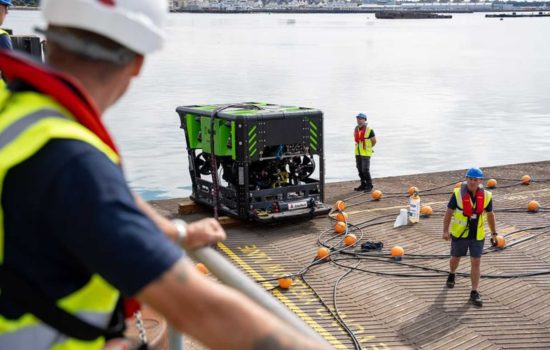
Entering the high security Saab UK facility, you feel a sense that what’s happening inside is important stuff. At its newest campus in Fareham, it has engineering development, design and manufacturing all in one place. It’s here that the company produces its ROVs (remotely operated vehicles) including the Seaeye Falcon, Seaeye Leopard and Seaeye SR20.
“Our products are used in numerous markets, predominantly offshore energy, oil and gas and renewables, but also in the defence industry and marine science as well,” said Tim Broom, Director of Operations at Saab Seaeye.
Fareham facility
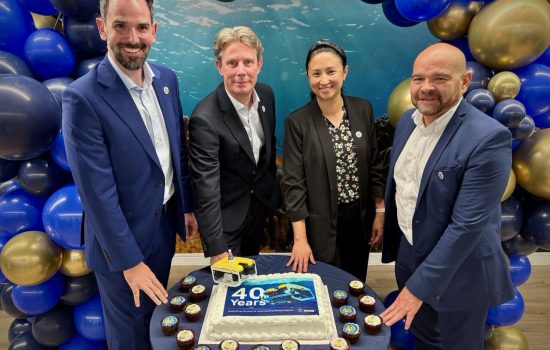
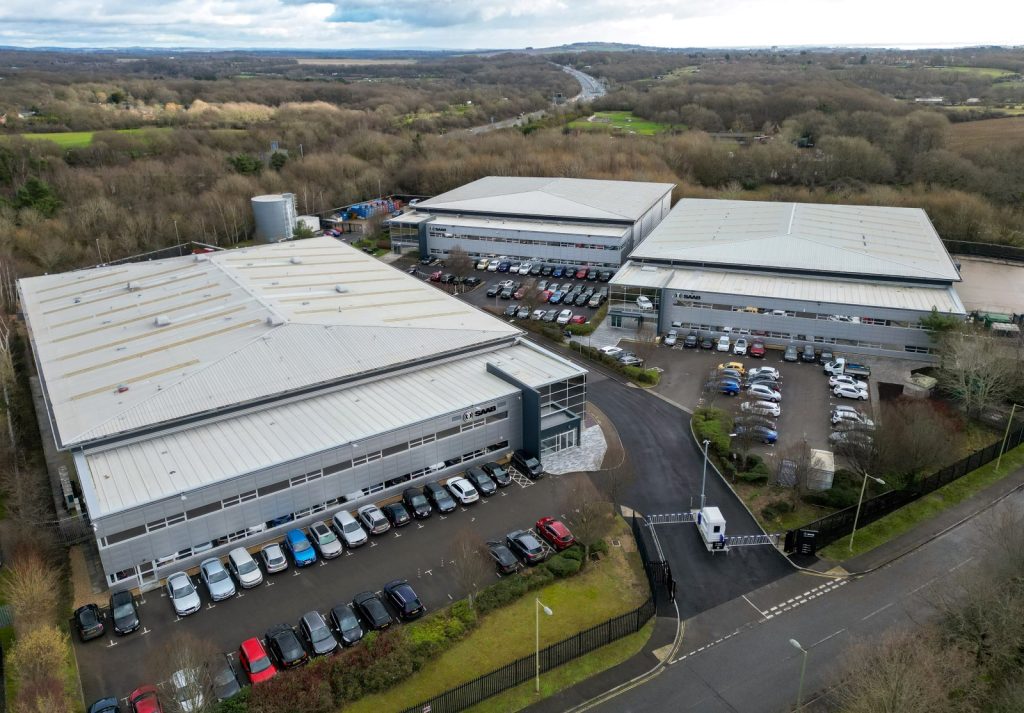
Saab UK celebrated the official opening of its new three building campus in February 2025. The opening marked the conclusion of the investment pledged by Saab in 2023, supporting 400 jobs and providing opportunities for local apprenticeships.
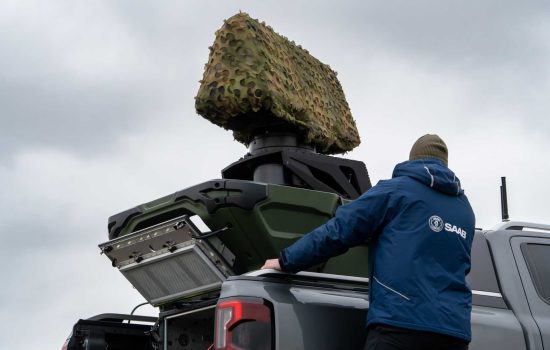
Saab UK has been transitioning into the trilogy of buildings at the Fareham site over the last 18 months, each housing a different area of the business. The first, T1, is the manufacturing facility for Saab UK’s Seaeye portfolio, where it builds its subsea robotics. T2 is a prototyping, engineering and development facility which includes the new products. “T1 includes our traditional production lines which are more ordered and structured. However, T2 is research and development, with new technology and testing,” explained Tim. The final building, T3, is for Saab UK’s Sensor System business, where the company manufacture the Giraffe 1X radars.
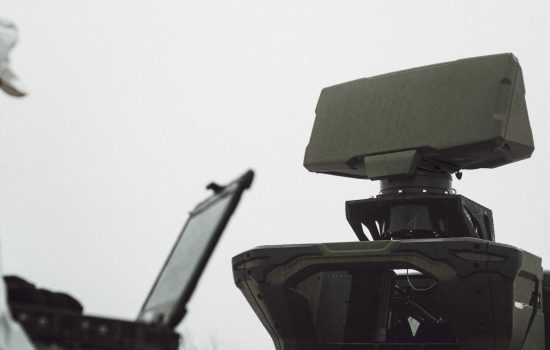
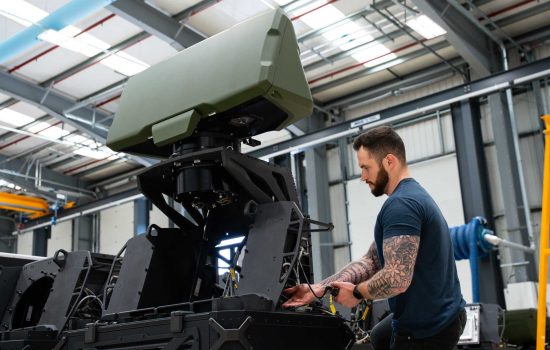
Saab UK’s new campus is expected to significantly benefit the UK Ministry of Defence. The site is a centre of excellence ready to meet future customer radar requirements and servicing, in addition to supporting in-service radars operated by the UK Armed Forces; the Giraffe 1X, Giraffe AMB air defence radars and TAIPAN (Arthur) artillery locating radars.
The new campus provides Saab UK with more capacity to deal with its growing business as well as showcasing brand new, state-of-the-art manufacturing facilities.
“We’ve got the ability to manufacturer products which allow us to satisfy our customers’ needs. They want to see reduced risk offshore, lower carbon footprint and smarter, more efficient products,” he added.
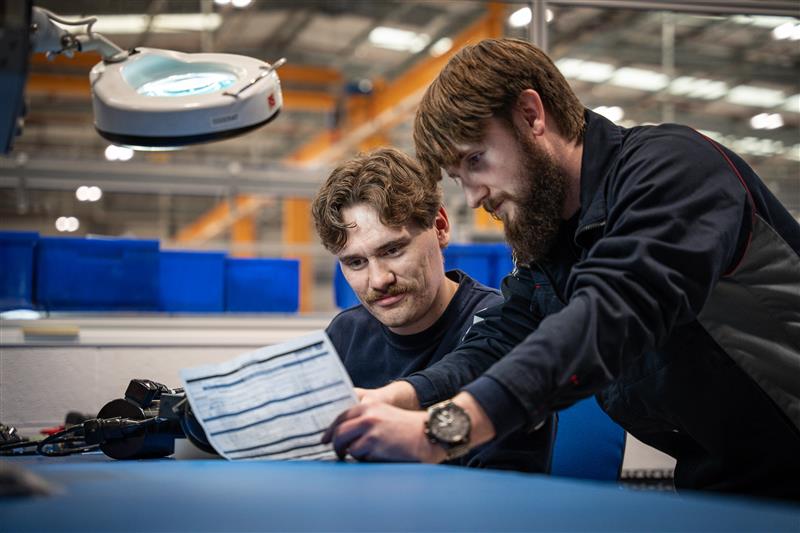
Sea exploration, science and saving submarines
Saab Seaeye was originally founded with the idea of reducing the risk of diving in the North Sea, supporting the maintenance and the building of wind farms, protecting subsea cables and inspecting or diving into radioactive waters.
“Over the last five to ten years, fish farming has seen significant expansion and our ROVs are used to inspect underwater nets and structures, ensuring they remain intact and secure. The application also involves locating and removing dead fish to prevent decay and the spread of disease which has become an important and fast-growing area of our business,” explained Tim.
Another area of business for Saab Seaeye is seabed mineral exploration. With increasing demand for rare earth elements and other critical materials used in battery production, its ROVs are being used to conduct detailed seabed surveys and collect geological samples. “Scientific research institutions also use our products to access areas that are either too deep or too dangerous for divers. Our ROVs enable these organisations to carry out vital underwater surveys in challenging environments,” he added.
But beyond commercial use, Saab Seaeye supplies defence markets around the world. Its technologies can be used for harbour security and other maritime safety applications. One key application has been submarine rescue. In the event of a stranded submarine, its ROVs can deliver oxygen, tools or emergency supplies to the crew below. “We have found it’s a capability that many naval forces are actively seeking to enhance,” said Tim.
Saab Seaeye is also involved in leisure and tourism with the likes of super yacht owners who want to include an ROV, either as a toy or to survey ships around them for security reasons.
Apprenticeships and employment
Like many organisations in recent years, Saab Seaeye has found itself struggling to find the right skills needed for the desired growth it wants to achieve.
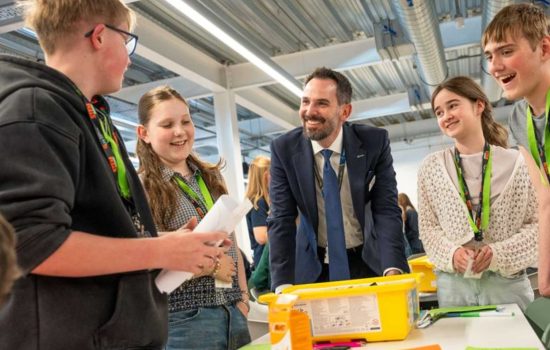
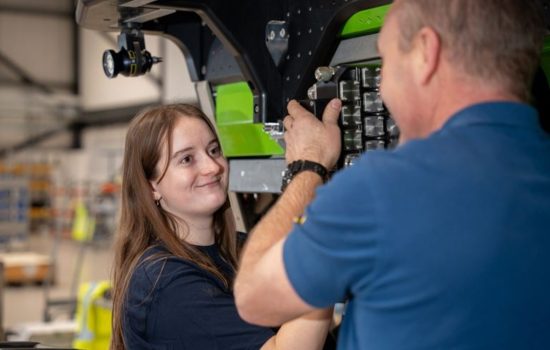
“One way we’ve tackled this is by significantly investing in our relationship with schools and universities and in our apprenticeship programme. Over the last five years we’ve recruited numerous apprentices and we’re beginning to see those people grow through the organisation, and become the leaders and innovators for the future. It is something we are very proud of,” said Tim.
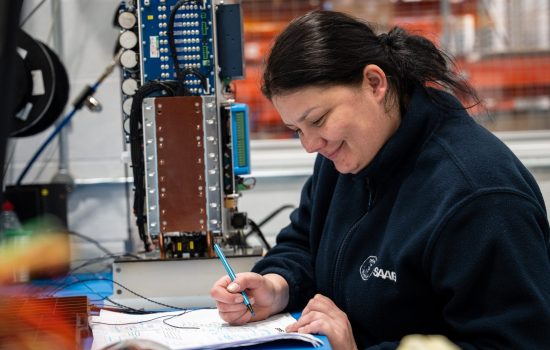
Tim believes that a reason that the apprentices join, stay and grow within the Saab business is the quality of products it manufactures. “They get really excited about what we do here,” he added. A large part of the business revolves around robotics and Saab has managed to attract many people who love the software development and engineering aspect. “We’ve made our organisation people-centric. We really focus on continuous improvement and making sure the ideas in the manufacturing environment come from, and are driven by, the people themselves. We empower people to grow within the business and make decisions as well,” he said.
Tim’s advice for other manufacturers? Don’t be afraid of innovation and make sustainability and resilience central to everything you do as a business.
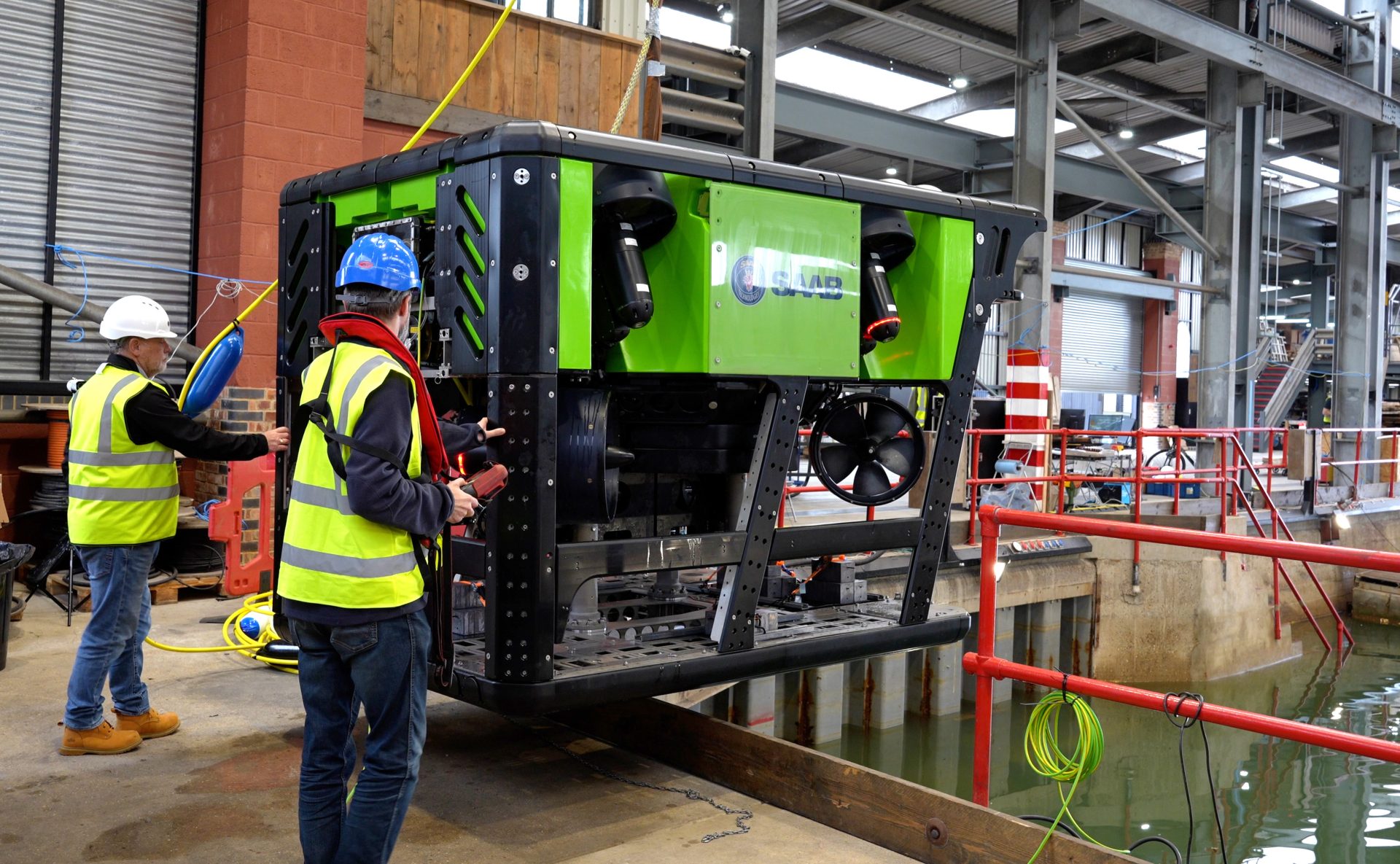
The Saab Seaeye SR20 during a water trial.
Industry trends
Saab UK is seeing strong trends across the offshore energy sector, focused on electrification, increased autonomy and subsea residency. These developments align closely with the company’s product portfolio. In the offshore market, innovations like these play a critical role in reducing operational risk, cutting costs, improving efficiency and lowering the carbon footprint. These benefits are driving customer demand and shaping the future of the industry.
“This is exactly where our technology is headed,” said Tim. “Electric, autonomous and resident systems are at the heart of what we do and that’s where the real growth will come, alongside defence.”
Another trend is data, which is extremely important in all aspects of the work at Saab UK. “Whether we’re collecting data during the design of new products, running simulations before manufacturing, gathering insights from the production environment to improve processes, or using feedback from customers in the field to enhance performance and reliability – data is at the core of making our products better for the future,” said Tim.
However, the challenge is doing that quickly and ensuring the business is staying at the top of the market, delivering what its customers need and continuing to make future products better.
Striving for net zero is near the top of every manufacturer’s list and Saab UK is no different. Not only does the business have its own goals for manufacturing processes, but what it manufactures directly contributes to reducing the carbon footprints of its customers. “The philosophy behind subsea residency and autonomy reduces the carbon footprint of our operators. That’s what our shareholders and customers want to see, so we did it. They are at the core of our business,” he added.
Ever changing supply chains
The issue of supply chains is ever changing and the uncertainty that it presents is a challenge within itself. For Saab UK the pandemic was one of its biggest challenges and it is still being felt today. However, the business has tactics in place to help mitigate those risk factors.
“We’ve reinforced our supply chain organisation by localising much of it within the UK and implementing various mitigation measures, such as building up a stock of critical components. We’re also leveraging the broader Saab organisation’s purchasing power to further reduce the risk of supply chain shortages,” explained Tim.
The SR20
So, what’s next for Saab Seaeye? Right now, its focus is on its latest product, the SR20. Its the world’s most capable all-electric, work-class underwater robot. “With overall power and performance exceeding that of a 200 HP hydraulic equivalent, SR20 delivers maximum capability across all markets and applications, including survey, IMR, construction, drill support and decommissioning,” explained Tim.
But the SR20 and the electric manipulator are just the start. The development of these products has helped Saab UK in the market in terms of sustainability and defence as well. “Our products will always support the defence of critical underwater infrastructure and that will be the heart of what we do going forward,” he said.
For more articles like this, visit our Innovation channel