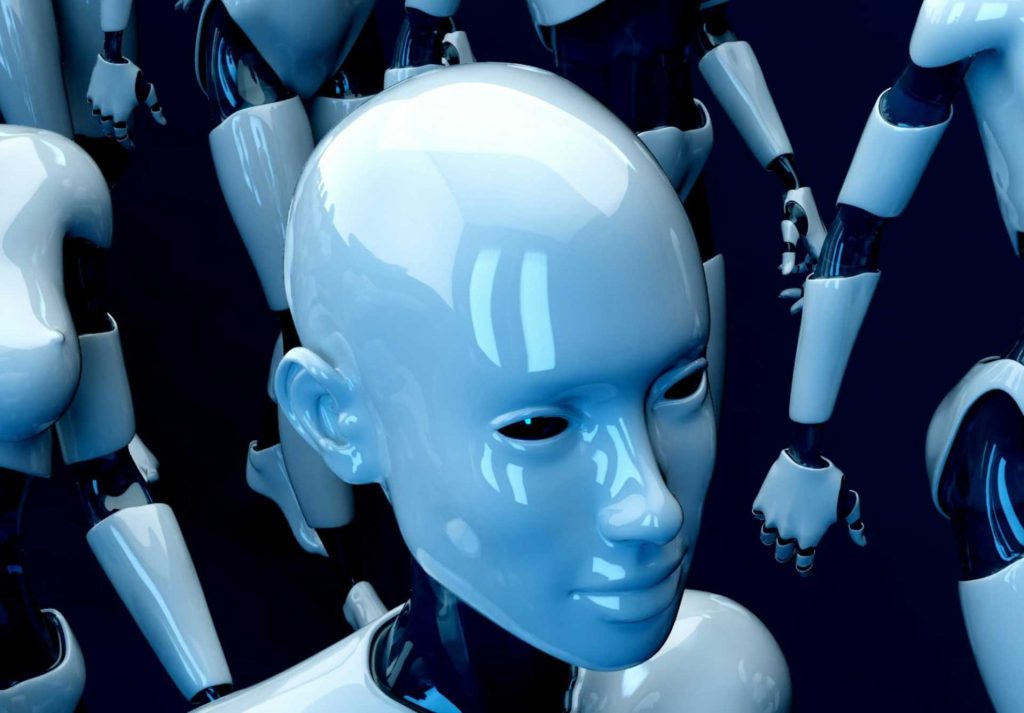
Humanoid robots are no longer confined to science fiction. Their ability to operate in environments designed around humans, particularly where tasks require greater flexibility or physical interaction, is their greatest advantage. Maggie Slowik and Tina Carlile, Global Manufacturing Industry Directors at IFS argue that manufacturers must decide whether they’re ready to embrace the technology or risk being left behind. That means considering how humanoid robots will fit into the production environment, how people can work alongside them, and whether underlying technology and operational infrastructure are ready to support their arrival on to the factory floor.
Humanoid robots are already a serious area of interest for manufacturers looking to improve productivity, address workforce challenges, and rethink how work gets done on the factory floor. Recent predictions suggest the humanoid robot market could surpass $5tn by 2050, with 90% of units serving industrial and commercial use cases. But for manufacturers, this is not simply a case of buying a new piece of equipment. It’s understanding how humanoid robots fit into the wider production environment, how people can work alongside them, and whether the underlying technology and operational infrastructure are ready to support their arrival on to the factory floor.
Q&As
- What are the potential benefits of humanoid robots in manufacturing?: Humanoid robots can help manufacturers improve productivity, address workforce shortages and increase consistency. They are particularly suited to repetitive, physically demanding or hazardous tasks, helping reduce human error and improve workplace safety.
- How is Physical AI transforming humanoid robotics?: Physical AI gives robots the intelligence to understand their surroundings, learn tasks and adapt to changing situations. This allows humanoid robots to move beyond fixed instructions and become more flexible participants in manufacturing operations.
- How can manufacturers integrate humanoid robots into existing factory operations?: Manufacturers need to connect robotic systems with their existing enterprise and operational technology. Integrating robot activity with production, maintenance and operational data will help coordinate people, machines and processes as part of a connected factory.
- Will humanoid robots replace human workers on the factory floor?: Not necessarily. Rather than replacing people, humanoid robots could take on repetitive, physically demanding and dangerous tasks, allowing employees to focus on more technical roles involving engineering, problem-solving, robot management and maintenance. Training and change management will be essential.
- What should manufacturers consider before investing in humanoid robots?: Manufacturers should assess the business case, including purchase costs, maintenance, programming, integration and workforce skills. They should identify processes where robots can deliver measurable value and ensure their existing data, technology and operational infrastructure are ready to support adoption.
The worldwide market for humanoid robots is forecast to be bigger than many analysts initially expected. Last year, 16,000 humanoid robots were installed globally and cumulative installations are set to exceed 100,000 by 2027, with logistics, manufacturing and automotive representing 72% of annual installations by that same year. Much like AI however, the pace of progress in humanoid robots is beginning to outstrip earlier expectations. Morgan Stanley forecasts that more than one billion humanoid robots could be living and working alongside humans by 2050.
The race to make humanoid robots mainstream is now well and truly on, with major technology players including Tesla, Nvidia and Amazon already investing heavily. Now manufacturers must follow suit or risk being left behind as humanoids take to the factory floor to alleviate much-needed pressures around workforce shortages, productivity, and quality.
Physical AI – meet the brains behind the humanoids
Significant progress in end-to-end AI is speeding up humanoid robot development. If robotics provides the physical capability, physical AI provides the intelligence that allows machines to learn, adapt and make decisions. For instance, physical AI can help robots map manufacturing environments, understand different situations and learn how to perform tasks rather than simply following a fixed sequence of instructions.
This will fundamentally change the role of robotics on the factory floor. Rather than having one type of robot performing a specific task, manufacturers could eventually have an ecosystem of humanoid robots, autonomous mobile robots and automated guided vehicles working alongside people on the tasks they’re best suited to perform.
Manufacturers must find new ways to integrate robotics into the connected factory
Manufacturers already rely on vast amounts of operational data and embedded AI to manage production, assets, maintenance, and service. Humanoid robots will become another source of activity and another participant in these processes and there are huge opportunities in connecting robotic systems with the enterprise and operational systems that already run the factory.
When robotic activity can be connected to the wider flow of manufacturing data, manufacturers can begin to think about automation as part of an end-to-end operation rather than a collection of disconnected machines.
This will become increasingly important as factories adopt multiple types of robotic technology and need to coordinate people, machines, and processes more effectively.
Business cases are however, still being established. Manufacturers are in a period of experimentation, where the focus is on identifying the problems that humanoid robots can genuinely solve rather than deploying them simply because the technology is attracting attention.
Dangerous, dirty and dull tasks? There’s a humanoid robot for that!
The strongest early opportunities for humanoid robots are in highly repetitive, high-volume, and repeatable manufacturing processes. These are environments where a robot can perform the same task consistently, reducing variability and human error.
BMW is the most documented case study of humanoid robots in manufacturing to date, and the results from its Plant Spartanburg set the early benchmark for what humanoid robots in manufacturing can realistically achieve. Over an 11-month deployment, humanoid robots loaded over 90,000 sheet-metal parts with greater than 99% placement accuracy per shift and contributed to the production of more than 30,000 BMW X3 vehicles.
There is an obvious opportunity in dangerous or physically demanding work, where removing people from hazardous environments could reduce the risk of injury.
Over time the potential use cases for humanoid robots will be much broader than we are seeing today. As they become more dexterous, autonomous, and capable of understanding their physical surroundings, they could begin to handle tasks with greater variation.
Reprogramming the humans to work with the humanoid robots!
Perhaps the biggest misconception around humanoid robots, however, is that their arrival will mean fewer people on the factory floor. As humanoid robots take on more repetitive, physically demanding, or hazardous tasks, opportunities will open up for human workers to move into roles that require technical expertise, engineering knowledge, and the ability to manage increasingly sophisticated production environments.
Change management will be just as important as the technology itself because the transition will need people not just to understand and maintain how these humanoid robot systems work, but also learn how to integrate them into existing operations. Manufacturers will need to consider how employees interact with robots and how responsibilities are divided between people and machines.
The hidden cost of progress
Cost remains one of the biggest considerations for manufacturers because humanoid robots are an expensive product. They require sophisticated software models and tight integration with hardware. Morgan Stanley estimates that a single humanoid cost around $200,000 in 2024. But the purchase price of a humanoid robot is only part of the equation. There are also hidden costs associated with maintenance, programming, integration, and the technical skills required to keep these systems operating effectively.
However, as the technology advances, production volumes will increase and components will become cheaper. In turn, just like the development of AI, prices are likely to fall, with experts forecasting humanoids will cost around $50,000 by 2050.
The time to build the business cases for humanoid adoption is now
Humanoid robots may not be ready to set foot in every factory just yet. But the technology is evolving rapidly, and manufacturers need to establish now where the business case is strongest to join the early adopters.
The organisations best placed to benefit will be those that start thinking about the processes they want to automate, the skills they will need, the data required to support those processes, and how humanoid robots could fit into their existing operations.
For more articles like this, visit our Automation channel