
Manufacturers facing a shortage of technical skills need to develop people within their businesses as well as recruit new talent, according to industrial packaging manufacturer WERIT UK.
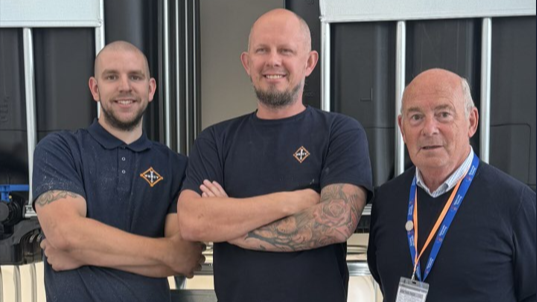
The Irlam-based company is marking National Manufacturing Day by celebrating two employees who have completed Level 3 engineering apprenticeships at very different stages of their careers.
Alex Davies, 23, progressed from production into engineering after joining WERIT around five years ago. He has completed a Level 3 electrical and electromechanical qualification while working full time. Meanwhile, Tomasz Kreft, 47, has completed a Level 3 Science Industries Maintenance Technician Apprenticeship with Distinction after 18 years with the company.
Their progress reflects WERIT’s focus on apprenticeships, upskilling and internal progression as it invests in new manufacturing technology and expands its UK operations. The company’s workforce strategy is focused on retaining specialist knowledge while developing the next generation of operators, engineers and technical staff.
The manufacturing skills challenge will not be solved by recruitment alone. SMEs need to recognise the potential within their existing workforce and give people opportunities to develop.
Alex and Tomasz demonstrate that there is no single route into engineering. One is developing his career at 23, while the other has built considerable practical experience over 18 years, and has now added a formal qualification. Both are important to the future of manufacturing.
Sunny Prakash, Managing Director of WERIT UK
Alex initially studied agricultural engineering, but the practical course moved online during the COVID-19 pandemic. After six months in warehousing, he joined WERIT in production, progressed to supervisor and then moved into maintenance engineering. His role involves maintaining and repairing machinery across WERIT’s manufacturing operation.
Alex said: “I’ve always been interested in hands-on engineering and solving problems. The apprenticeship meant I could train for the role and get a recognised qualification at the same time.
“Maintenance is different every day. You must understand what has gone wrong, work out the problem and get the equipment running again. The qualification gives me more options for where I take my career.”
Tomasz, who is multilingual and speaks Italian, Russian and Polish, followed a different route. Originally from Poland, he joined WERIT in June 2008 after moving to the UK, speaking virtually no English at the time. Starting as a production operator, he progressed to shift leader before moving into engineering and becoming engineering manager. His previous experience included welding, CNC machinery and engineering, and he has continued to develop those skills throughout his career.
Tomasz said: “I have always enjoyed engineering and fixing things. I started at WERIT as an operator, became a shift leader, moved into engineering, and today I am an engineering manager.
“I have always been willing to work and learn. The apprenticeship gave me the opportunity to develop further and gain a qualification alongside the experience I have built over many years.”
Both employees completed their End Point Assessments with Waterside Training Limited. Keith Arnold, Apprenticeship Assessor at Waterside Training Limited, said: “Alex and Tomasz demonstrated excellent practical engineering knowledge and worked extremely hard to complete their qualifications alongside demanding roles.
“Alex achieved a distinction in his professional discussion, while Tomasz achieved a distinction in his apprenticeship. Their results are thoroughly deserved and demonstrate the value of combining workplace experience with recognised qualifications.”
WERIT has invested £8m in its Irlam manufacturing facility and doubled its blow-moulding capacity from three to six machines. Its growth strategy includes an engineering apprenticeship pathway alongside internal progression, cross-training and technical training.
Sunny added: “Investment in technology and skills must go hand in hand. New machinery still needs people with the knowledge and practical experience to operate, maintain and improve it.
“Apprenticeships should not be seen only as a route into work for young people. They can be equally valuable in recognising, developing and adding formal qualifications to skills built over many years in industry.”
For more articles like this, visit our Skills channel