
The Manufacturer MX Awards 2025 saw Cumbria-based Tornado Wire scoop the prize in the Achieving Customer Value category. At Smart Manufacturing Week 2026, the company’s CEO, Rebecca Galley, sat down with The Manufacturer to discuss the company’s customer journey and the secret sauce behind the award win.
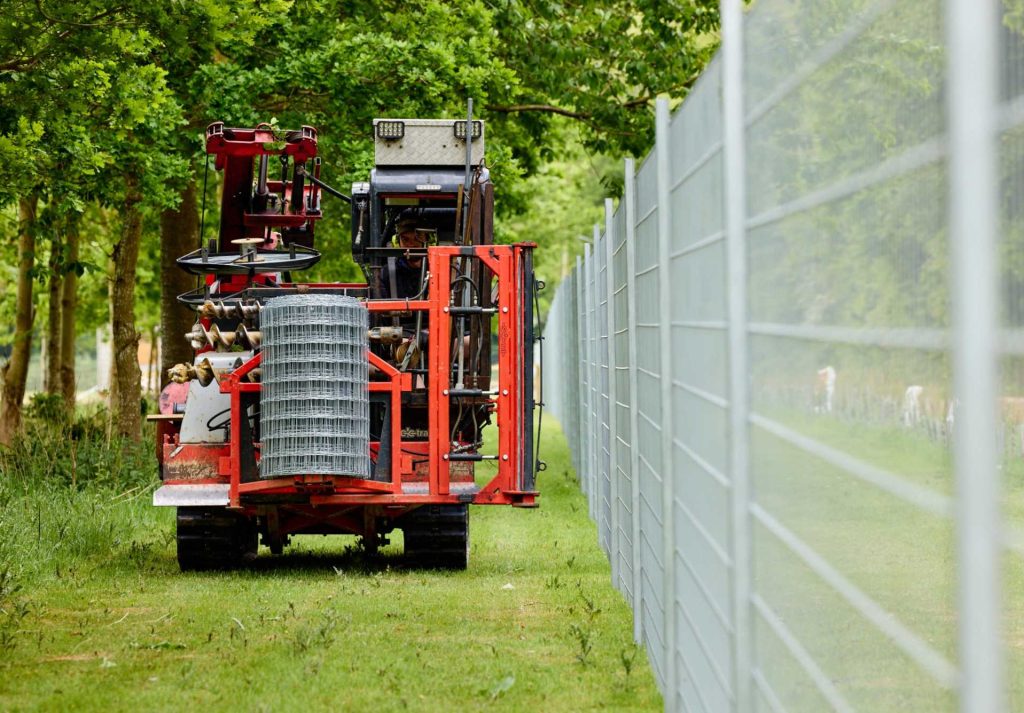
Tornado Wire is one of the UK’s leading manufacturers of high-performance wire fencing solutions, serving the agricultural, equestrian, forestry, infrastructure and conservation sectors.
Q&As
- What do you think made Tornado Wire stand out to the MX Awards judges?
Customer value genuinely runs through the entire business. It goes far beyond the sales team and is reflected in how the whole organisation understands customers, solves their problems and uses their feedback to improve. Customer feedback was also a major part of Tornado Wire’ sawards entry, helping demonstrate that what we believe we’re doing is genuinely valued by customers. - How do you make sure customer value is everyone’s responsibility?
It starts with leadership. Rebecca’s role is to keep the customer front and centre and ask how every decision will ultimately benefit them. Tornado also make sure customer knowledge is shared across the organisation. Its factory and sales teams are physically quite far apart, so Tornado deliberately brings them together through factory visits, trade events and regular communication. - How do you balance customer value with operational efficiency and commercial targets?
They are not competing priorities. Without operational excellence, you won’t achieve customer value. Quality products, reliable operations and strong customer relationships all contribute to securing future orders. Even when there is focus on maintenance, inventory or machinery uptime, the customer needs to be remembered. - How important is customer feedback to improving the business?It’s incredibly important to Tornado Wire. The business doesn’t just collect feedback; it spends time with customers and sees what they’re experiencing in the field. The company’s farming heritage gives the team a strong understanding of the market, while events and competitions help Tornado to further understand customer needs first-hand. That insight has helped shape the business and contributed to the launch of two successful new product lines over the past three years.
- Will technology and AI change the way manufacturers deliver customer value?Technology, digitalisation and AI will have a huge role to play, and manufacturers can’t hide from that transformation. However, the fundamentals won’t change. Customer value will continue to depend on great people, strong relationships and genuinely understanding customer needs. The future will be about combining those human qualities with technology to solve problems and create better outcomes.
Operating from its manufacturing facility in Millom, Cumbria, Tornado Wire combines practical field expertise with advanced engineering to develop products that are trusted by contractors and landowners across the UK and beyond.
Speaking after the award win in November Rebecca commented: “This means so much to us because our business is all about our customers. This win is a real credit to our team and I couldn’t be prouder.
“I think there were two key characteristics that made us stand out for the judges; the combination of how close we are to our customers and how we work so hard to solve their problems continuously, and the fact that customer feedback was part of our entry – so they deserve an element of thanks as well.”
Rebecca also delivered a keynote address at Smart Manufacturing Week 2026 which focused on what winning manufacturers know about customer value, citing well-known businesses who have done it very well and others who still have work to do.
Rebecca also told the story of Tornado Wire’s own journey, citing three key takeaways – that businesses have to know their customers, understand scientifically what they value, and that customer value is everyone’s responsibility in the organisation.
Rebecca picks up the story.
What set Tornado Wire apart during the judging process for last year’s awards?
RG: I only joined the business 12 months before the awards, so essentially, my role was to tell our story. I wanted the team within Tornado to know what a great job they’re doing, as well as sharing our journey with the broader manufacturing community.
Customer value at Tornado Wire truly runs through the entire business, and based on the feedback we received, it was clear that this was a key factor that made us stand out to the judges. We have all the systems in place that you would expect, such as a customer facing sales team, who do an awesome job. However, bringing value to our customers goes way beyond that.

How do you move customer value beyond a function of the sales team and embed it across the wider organisation?
There are lots of ways in which we do this. Firstly, it’s my job to keep the customer front of mind and constantly present. I am guardian of our culture and set the example, so I always make sure that in any decision-making conversation, I ask how it will ultimately benefit the customer.
It’s important to always keep the customer in mind. That sounds simple for someone working within the sales team, but there’s some within the business who don’t see the people who buy our products at all, so we make sure that when we communicate with the wider business, we always talk about our customers and share knowledge from those more client-facing roles.
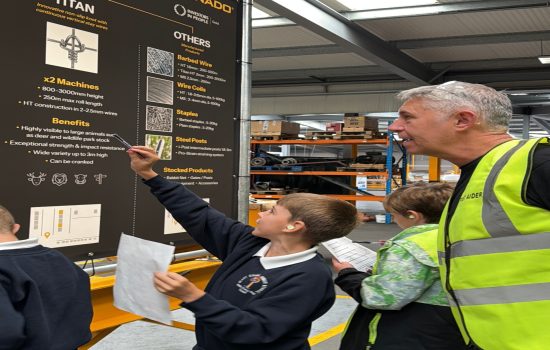
Tornado Wire is an interesting use case because our sales team and the factory itself are very far away from each other. However, we always keep the conversation going, we make sure the sales manager is present in the factory, and we have factory team members attend trade events to see what the sales team is doing.
As the team leader, it’s important to set the right example and safeguard the company culture, while always keeping the customer front and centre. This is particularly pertinent in an SME manufacturing environment. With so much going on, it’s very easy to get absorbed in other tasks such as inventory management, maintenance or uptime of machinery.
However, what’s the point in doing all of that if we’re not doing it for the customer? So, the key for me is to represent the customer back into the business and make sure that what we’re doing will add value for them – which will, in turn, add value for us in the long-term.
How do you balance customer value with operational efficiency, commercial targets etc?
I’ve given a lot of thought to this question, and fundamentally, I don’t believe that they are competing priorities. Without operational excellence, you won’t achieve customer value.
Tornado Wire’s value is as much about the quality of the product and the relationships the teams have with the customers as anything else, and we have to maintain those key facets of the business in order to achieve the customer value which will guarantee our future orders.
So, they certainly go hand-in-hand, but it’s important not to become inward looking. During busy periods each team is devoted to their given areas of the business, but we mustn’t lose sight of why we do what we do.
In addition, we can also be influenced by the customers themselves, and their insight can certainly have an impact on us. As mentioned, I came in to Tornado Wire quite recently, so I can still look at the business through a relative outsider lens.
And so entering the awards and running our recent customer survey were an opportunity for me to show the people within Tornado Wire what a great business we are, what a great job that they are doing, and how much our customers value them.
There are lots of ways in which we do this. Firstly, it’s my job to keep the customer front of mind and constantly present. I am guardian of our culture and set the example, so I always make sure that in any decision-making conversation, I ask how it will ultimately benefit the customer.
It’s important to always keep the customer in mind. That sounds simple for someone working within the sales team, but there’s some within the business who don’t see the people who buy our products at all, so we make sure that when we communicate with the wider business, we always talk about our customers and share knowledge from those more client-facing roles.
Rebecca Galley, CEO, Tornado Wire
 There are lots of ways in which we do this. Firstly, it’s my job to keep the customer front of mind and constantly present. I am guardian of our culture and set the example, so I always make sure that in any decision-making conversation, I ask how it will ultimately benefit the customer.
That’s been immensely helpful. It’s all well and good one person turning up and telling everyone they’re brilliant, but it carries far more weight when our whole customer base – through an independent piece of research – unanimously tells us they really value the quality of what we do and how we treat them.
Not only that but it further helps the internal teams understand what really matters. When our customers tell us what’s important to them – to be treated like a valued customer, have meaningful interactions with us, and be provided with a quality product – that leads to different conversations; ones that are more about value and less about price.
How do you achieve the workforce buy-in that customer value is everyone’s responsibility
One of the many amazing things about Tornado Wire is that this particular ethos has been there from the beginning. The business was founded by people with a farming background, and the business began as a contracting operation before diversifying into manufacturing. And so that inherent knowledge around what our customers are doing has always been present.
In addition, we have a lot of people in the business who have been here a long time, which is wonderful, because that knowledge, wisdom and customer relationship is hard to replace.
That heritage, the systems that we use to capture customer information and the time we spend with customers, all feed into our knowledge of what our customers want.
We run and sponsor agricultural fencing best practice events and competitions, so we can literally see in the field what our customers need, and all that information is collated and shared among a team of people who want to do something meaningful with that information.
Over the last three years, we’ve launched two new product lines which are selling incredibly well, and it’s all because the team at Tornado Wire is really listening to what the customer is saying.
What capabilities will Tornado Wire need moving forward to ensure customer needs continue to be met?
That’s a good question, and Smart Manufacturing Week is a fantastic event to find out the answers. It’s a place full of innovative solutions to the many manufacturing problems we’re all facing, and with new technologies in maintenance, planning and even communications – plus you throw AI into the mix – it’s clear we’re in a revolutionary period.
There’s no hiding away from it and there’s lots that all of those solutions, tools, systems etc, can do for us. However, I believe that some of the fundamentals won’t change, particularly in the market where we operate.
This is also something I’ve been reflecting on. Smart Manufacturing Week is a building full of people who are talking, interacting, building relationships, learning together and solving each other’s problems. I don’t think that environment is going away any time soon. So, manufacturing success and achieving customer value will continue to be a combination of great people supported by some of the latest innovations.
Over-achieving customer value
Tornado Wire’s success in securing The Manufacturer MX Award for Achieving Customer Value serves as a compelling example of what can be achieved when customer focus becomes embedded throughout an organisation. As Rebecca’s insights reveal, customer value is not a standalone initiative or the responsibility of a single team; it is a mindset that influences every decision, process and interaction across the business.
Throughout the company’s journey, Tornado Wire has demonstrated that understanding customer needs requires more than collecting feedback. It involves creating meaningful connections with customers, spending time in their environment and ensuring that those insights are shared across the organisation. From factory teams attending trade events to the company’s investment in customer research and industry engagement, the business has built a culture where customer knowledge is actively gathered, communicated and acted upon.

Importantly, the company’s approach challenges the notion that customer value competes with operational efficiency or commercial performance. Instead, Tornado Wire sees these objectives as intrinsically linked. High-quality products, reliable operations, strong relationships and a deep understanding of customer priorities all contribute to long-term business success. By focusing on what customers truly value, the company has been able to create more meaningful conversations with customers around value rather than price.
Looking ahead, manufacturing faces a period of significant transformation, driven by advances in digital technologies, automation and AI. Yet, as Rebecca emphasised, the fundamentals of customer value are unlikely to change. Technology can enhance communication, improve planning and unlock efficiencies, but it cannot replace the trust, relationships and shared understanding that underpin successful customer partnerships.
For more articles like this, visit our Leadership channel