
What do you get when you combine an age-old manufacturing process with modern digital transformation and sustainability strategies? The Manufacturer Editor Joe Bush found out when he visited the Measham brickworks of Forterra.
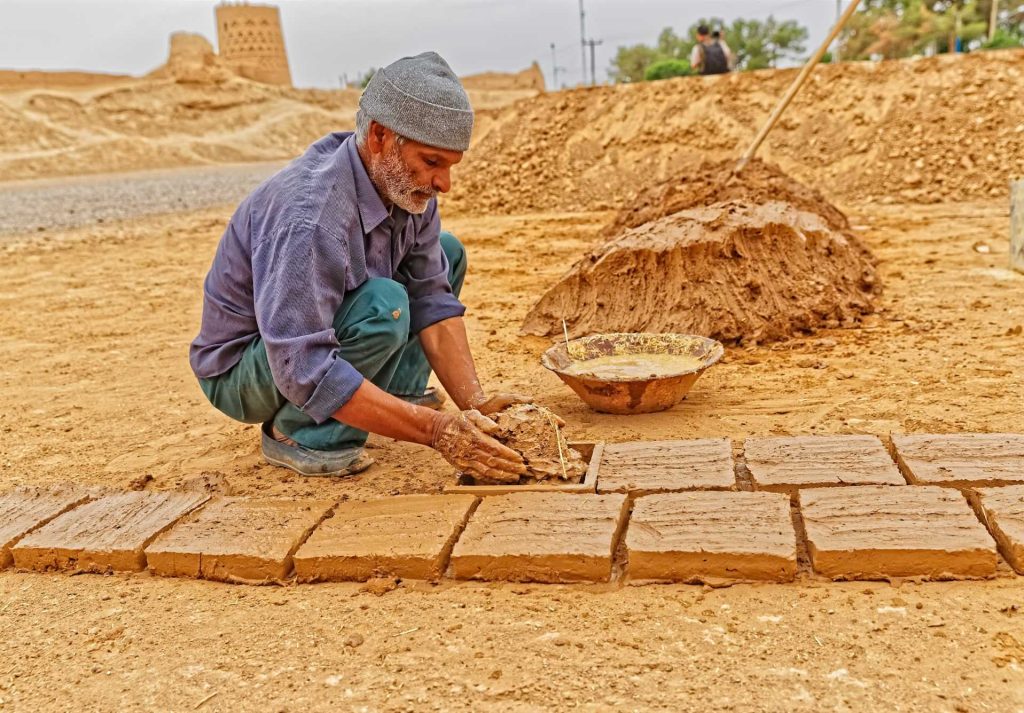
It’s not every day you get to see a manufacturing process that has been around for (literally) millennia. A quick Google search revealed that brick making began around 7,000 BC in what is now modern-day Turkey, with sun-dried mud bricks. Fired bricks are a relatively new kid on the block, appearing only around 3,500 BC in Mesopotamia!
Key takeaways
-
Ancient processes still underpin modern manufacturing
Brickmaking dates back thousands of years, and at the Measham site of Forterra the soft-mud process still mirrors traditional methods—moulding clay and firing it in kilns—while being adapted for modern efficiency and scale. -
Localised supply chains improve resilience
Around 90% of the clay used at the Measham plant comes from an on-site quarry, with sand sourced locally. This short supply chain has helped Forterra avoid many of the disruptions that have affected other manufacturers in recent years. -
Product innovation is expanding market opportunities
Forterra is diversifying beyond traditional bricks with products like the Omnia brick slip, which replicates the look of clay brick while reducing waste and supporting more efficient installation in modern construction projects. -
Digital tools and cross-industry expertise are improving operations
Investments in building information modelling (BIM) allow customers to assess the carbon footprint of buildings using Forterra products, while recruiting talent from sectors like aerospace and automotive has improved maintenance practices and system standardisation. -
Net zero is the biggest long-term challenge
Around 60% of Forterra’s carbon footprint comes from the natural gas used in kilns, so the company is exploring solutions such as hydrogen-powered kilns, efficiency improvements and carbon capture to reduce emissions while maintaining production quality.
FAQs
- How does the brickmaking process work at Forterra’s Measham site?
- Why is Forterra’s supply chain relatively resilient?
- What new products has Forterra introduced recently?
- How is digital technology supporting Forterra’s operations?
- How is Forterra working towards net zero?

Even looking at Forterra in isolation, many of its 11 UK sites, including the brickworks at Measham in Leicestershire, have been around for well over a century. And with that sort of legacy, it’s hardly surprising that the team at Forterra takes great pride in the products it manufacturers across all its UK sites.
The Measham plant has the capacity to produce 100 million bricks per year. These are designed to replicate those that have been hand-made, in what is known as a soft mud plant. Dave Manley, Forterra’s Head of Sustainability, explained: “Essentially, we’re trying to replicate what people did thousands of years ago, in terms of throwing clay into a mould and then firing it.”
Clay is sourced from an on-site quarry a mere 200 metres from the brickworks. This is then processed, moulded, dried and fired in kilns, reflecting centuries-old techniques adapted for modern efficiency.
Indeed, it was quite unusual to talk to a manufacturer that hadn’t been overtly burdened by the myriad supply chain challenges that have impacted the sector in recent years.
The majority of Forterra’s raw material supply is within its own control, with around 90% of the clay used on-site originating from the quarry on the other side of the road – not the longest supply chain in the world!
One of our kilns was converted several years ago to run on a 20-25% hydrogen blend, to see what effect that it would have; not only on the product but also on the refractories within the kiln. We found that we couldn’t tell the difference between the products that were fired on hydrogen and the ones that were fired through natural gas. However, we need to do the groundwork now to make sure that we can actually use hydrogen as a fuel when the time comes.
Dave Manley, Head of Sustainability, Forterra
 One of our kilns was converted several years ago to run on a 20-25% hydrogen blend, to see what effect that it would have; not only on the product but also on the refractories within the kiln. We found that we couldn’t tell the difference between the products that were fired on hydrogen and the ones that were fired through natural gas. However, we need to do the groundwork now to make sure that we can actually use hydrogen as a fuel when the time comes.
Sand, a key element to producing soft mud brick, is also sourced locally. “It’s a completely different process to an extruded brickworks, which basically makes bricks like toothpaste,” added Dave. “The clay is squeezed out in a large column, the individual bricks get cut off, and they then go into a kiln. For soft mud bricks the clay gets thrown into moulds.
“Our process here is more energy intensive, but we manufacture a premium product, due to the fact it looks handmade. An extruded brick is very uniform, while a soft mud brick has more texture and detail, which is valued by our customers.”
However, with large, energy intensive kilns, the demands of modern manufacturing has seen the company adapt in recent years, incorporating new processes for more efficient, sustainable operations.

Product innovation
Product diversification is also a key part of the company’s recent evolution, and while brick is Forterra’s main focus in terms of production, concrete blocks, air crew blocks and pre-cast building materials also make up the product range.
Indeed, the company has recently launched a new product for the commercial space – the Omnia brick slip – which brings together the character of real clay with the performance needed for modern construction. Produced using Forterra’s advanced extrusion technology, their lightweight format supports easier handling and efficient installation while maintaining the refined appearance of traditional brickwork.
Dave added: “Currently, to achieve this effect, the face is cut from the side of an entire brick. With luck, it is sometimes possible to cut the face from both sides, creating two slips from one single brick. However, the rest will be thrown away, which isn’t very efficient. Our Accrington plant has been set up to produce a unit with four slips which significantly reduces the amount of waste from that process.”
Designed for external installation and commercial buildings, the slips are available in a wide palette of colours, textures and engobed finishes. This offers architects and specifiers the freedom to create distinctive façades without compromising on performance, while supporting Forterra’s wider sustainability commitments.
The company is also seeing changes in customer demand with increasing requirements for colour variety in the product offering, which again plays to the strengths and flexibility of the Omnia brand.
The manufacturing process
This has created its own challenges, namely the retrofitting of equipment on Forterra’s various plants. The company is currently in the process of recommissioning its Wilnecote plant in Staffordshire, which involves stripping the site and adding a new kiln and production equipment.
Dave explained that the company has also invested heavily in building information modelling (BIM) as the need to extract insight from the wealth of data being generated around Forterra’s products has become apparent. “I’m heavily involved with producing environmental product declarations, for example,” he added. “The information can go into a BIM model, which allows the customer to accurately calculate the carbon footprint of a building.”
Over the last decade there has also been a drive across the business of recruiting expertise from other sectors such as aerospace and automotive. Dave explained that while the traditional employee journey of working up from the shop floor to be work’s manager has its advantages – namely empathy and understanding up and down the workforce hierarchy – it did create disjointed elements across the business.
“Bringing in people and different maintenance techniques from other sectors has helped create more synergy. This can mean simple changes, such as making sure we have one type of PLC controller across the business. That means that if a breakdown occurs, we know that if there’s no spare on-site, there will be one elsewhere that can be brought across to replace it. So there’s no single point of failure.”
As discussed previously, the traditional process of firing bricks in kilns is very energy intensive. Unsurprisingly therefore, there have been significant developments in kiln technology in recent years, and that has been incorporated into the operations across Forterra’s sites to improve efficiency.
Kilns were originally manufactured at a time when the energy needed to power them was relatively cheap. Now, of course, costs in that regard have skyrocketed. Forterra mitigates this through hedging. Buying well in advance allows the company to know exactly what it will be charging customers in the future because the energy has already been secured at a certain price.
The net zero agenda is integral to Forterra and likewise, kiln efficiency is the number one priority. “The key questions that would be asked of a brickworks back in the 1980s would be how much product can be manufactured and at what cost?,” Dave continued. “Those two questions are still prevalent, but efficiency is now a key part of the discussion. For example, at our Desford plant just outside Leicester, the gas efficiency of the kiln was written into the contract.”

Highlighting hydrogen
So, how do you bring a centuries old, energy intensive process into the modern era without compromising quality and the bottom line? Dave explained that net zero is not only Forterra’s key priority, it is also the biggest challenge.
Not least because of the fact that the level of net zero maturity differs enormously across the manufacturing spectrum. “Everyone is at a different stage in their journey,” he added. “I’ve been in the business a long time, and many of the easy wins that we achieved 15-20 years ago are only now being considered by some other businesses.”
That’s certainly good news on the one hand as you could say Forterra is one of the pace-setters around net zero, and are well on the way to achieving its ultimate goals. However, Dave added that the low-hanging fruit has now been picked and ticked off the to-do list, so the company is now left with only the most challenging pieces of the net zero puzzle.
For example, around 60% of Forterra’s carbon footprint comes from the natural gas used to fire the bricks, and that’s a difficult figure for the company to navigate around. Forterra is looking at and experimenting with hydrogen as a long-term solution but Dave explained that grid connection is at least a decade away, despite the fact that there are positives in the equation – such as the proximity of Forterra’s Kirton plant to the East Coast Hydrogen Network. “We need to do the groundwork now to make sure that we can actually use hydrogen as a fuel when the time comes,” he added.
Despite these challenges, the work that Forterra has done thus far helps ensure the company’s readiness if the government blended hydrogen into the grid. And at the Measham site, Forterra has a small batch kiln which is capable of firing around 10,000 to 12,000 bricks.
“That kiln was converted several years ago to run on a 20-25% hydrogen blend, to see what effect it would have; not only on the product but also on the refractories within the kiln,” Dave added. “We found that we couldn’t tell the difference between the products that were fired on hydrogen and the ones that were fired through natural gas.”
And this potential for hydrogen’s use within the sector was further underlined through a sector-wide project in St Helens, where Ceramics UK and consortium partners (including Forterra), helped build a 100% hydrogen kiln. Members all put product through to highlight how easily hydrogen could be used.
However, the challenge for the sector is not proving the viability of hydrogen as a fuel source. Rather, as so often is the case, it’s cost that is proving to be the X-factor. “We can’t afford to go out and build a brand new, dedicated hydrogen kiln,” said Dave.
Therefore, he explained that most hydrogen deployment will be centred around retrofit. As such, Forterra has been speaking to its kiln suppliers to establish what a large-scale, real-world hydrogen kiln will look like. For example, dual fired kilns have been muted as a possible option – with two burners, one using natural gas and one using hydrogen.
The next stage of the trial process will be to convert one of Forterra’s smaller kilns to 100% hydrogen, which the company is aiming to have working this year.
Of course, industrial projects at this size and scale will inevitably need higher levels of support. However, Dave explained that although help is available, this process also comes with its own set of obstacles. “In terms of government support, we struggle with timing. Government funding is linked to distinct timelines, and if you don’t have a project ready to submit, it’s very difficult to fall in line with those.
“Government funding could come with months of delays. To a degree, I guess we’re guilty of being impatient, but we want to get out there and get on with it.
“Part of our USP is the fact that we’re open to trying anything, as evidenced by the number of different hydrogen options we’re trialling at the moment. Plus, we’re also looking at carbon capture. For us, net zero is a long journey that isn’t going to be completed overnight.”
Ultimately, Forterra’s story is one of evolution rather than reinvention. At Measham, a process rooted in thousands of years of history is being carefully adapted through digital tools, product innovation and a relentless focus on sustainability.
While the path to net zero for an energy intensive industry is complex and far from complete, Forterra’s willingness to invest, experiment and collaborate shows how even the most traditional forms of manufacturing can move with the times – without losing the quality and character that made them enduring in the first place.
For more articles like this, visit our Sustainability channel