

Nissan has expressed concerns about the future of its Sunderland site if the UK is not fully included in new ‘Made in Europe’ manufacturing rules, according to reports.
Under the EU plans, public subsidies to speed up the development of electric vehicles would only be available to EVs made in European plants. An announcement this week by the EU industrial strategy commissioner, Stéphane Séjourné, said the proposed Industrial Accelerator Act (IAA) is designed to protect the bloc from cheap competition from China.
There have been numerous reports this week, although none confirmed by the company itself, that Nissan has privately warned the UK government it could be forced to close if the proposals became law.
The proposals have also been met with concern by the Society of Motor Manufacturers and Traders, (SMMT) which said the automotive sector was “gravely concerned” that this could damage cross-channel trade that’s worth £70 billion annually.
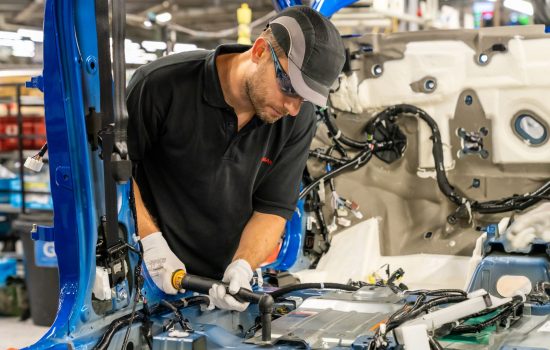
The company’s Sunderland site is Britain’s biggest car factory, with 6,000 employees and the ability to make 600,000 cars a year.
Mike Hawes, the chief executive of the SMMT said: “The UK automotive sector is gravely concerned by the ‘Made in Europe’ proposals set out in the European Commission’s Industrial Accelerator Act. As drafted, it would discriminate against UK-made vehicles and components, damaging a trading relationship worth almost £70bn annually.”
He also expressed fears that the IAA would “effectively put UK manufacturers at a systemic competitive disadvantage in the EU market”, adding that the proposals, as they stood, “may also be in breach of the EU-UK trade cooperation agreement – the Brexit deal”.
Industry concerns appear to centre on the third annex of the proposed legislation, which outlines how corporate fleet purchases — responsible for a significant share of new car registrations and a key source of vehicles for the second-hand market — could qualify for public subsidies. Under the draft rules, eligibility may depend on vehicles being assembled within the EU, potentially excluding cars manufactured in the UK.
Germany’s automotive industry association, the VDA, has also voiced reservations about the proposals. The organisation warned that introducing protectionist measures could increase costs for both manufacturers and consumers, while also risking retaliatory trade actions from countries that represent important export markets for the EU.
“In its current form, the IAA will not significantly improve the competitiveness of industry in Germany or across Europe. Unfortunately, its industrial policy impact is likely to remain very limited,” said VDA president Hildegard Müller.
Hawes urged policymakers on both sides of the Channel to work quickly to address the issue, calling for the UK automotive sector to be granted “full trusted partner status” within the framework.
A spokesperson for Nissan suggested a straightforward fix would be to apply the same rules used to determine ‘Union origin’ to all electric-vehicle support schemes. According to the company, such an approach would align with the EU’s broader aim of simplifying regulatory frameworks.
Meanwhile, UK business secretary Peter Kyle travelled to Brussels last week to argue for the UK’s inclusion as a full partner in the “Made in Europe” initiative, although he did not meet Séjourné, the one responsible for the proposal.
For more stories like this visit our Leadership channel