

From a scholarship-funded move from Mexico to the UK to leading battery programmes at Alexander Battery Technologies, Diana Sanchez has built an engineering career defined by curiosity, adaptability and continuous learning. Ahead of International Women in Engineering Day, The Manufacturer spoke with Diana to discuss the changing role of engineers, the importance of communication and why greater visibility of female role models is vital to attracting the next generation into the profession.
Key takeaways:
- Curiosity drives engineering success – Asking questions and embracing continuous learning are essential traits for engineers.
- Engineering is about more than technical skills – Modern engineers must understand systems, customers, commercial objectives and product lifecycles.
- Communication is a competitive advantage – Collaboration and stakeholder engagement are increasingly important to delivering successful products.
- AI will enhance, not replace, engineers – Human judgement, experience and adaptability remain critical despite advances in digital technologies.
- Representation matters – Visible female role models can help attract more women into engineering and challenge outdated perceptions of the profession.
“I remember being wide-eyed at everything that was happening. There were robots everywhere, and I was fascinated by how everything worked. I just kept asking questions.”
For Diana Sanchez, engineering has always been driven by curiosity.
That early fascination ultimately led her to study Industrial Engineering and Systems in Mexico before moving to the UK on a prestigious British Council Women in STEM scholarship to complete an MSc in Engineering and Manufacturing Management at Cranfield University. Four-and-a-half years on, she has built a career spanning oil and gas, pharmaceuticals and battery manufacturing, bringing a unique perspective to a rapidly evolving industry.
Now, as a project manager at battery pack manufacturer Alexander Battery Technologies, she works at the forefront of one of manufacturing’s fastest-evolving sectors. Yet despite the rapid pace of change in battery manufacturing, she believes the qualities that define successful engineers remain remarkably consistent: curiosity, communication and a willingness to keep learning.
Breaking the ‘rigid’ stereotype
Working at the forefront of battery manufacturing—a sector defined by rapid technological leaps—Diana’s experience challenges the traditional, rigid perceptions of what an engineering career actually looks like. While outsiders often view it as a purely cold, technical discipline, she views the role as inherently creative.
Engineering is much more creative than people realise. It’s about making decisions that balance safety, quality, performance, manufacturability, timelines, and cost. It’s not simply about finding a solution, it’s about finding the best solution.
This broader systemic perspective is increasingly vital as battery technology advances. Diana notes that modern engineers can no longer afford to operate in isolation; they must understand entire ecosystems. Every engineering decision can affect manufacturing processes, customer requirements, commercial objectives and product performance throughout its lifecycle.
Because of this interconnectedness, technical brilliance alone is no longer enough. The modern engineer must also be an expert collaborator.
“Some of the best engineering solutions come from bringing different perspectives together,” Diana explained. “Good communication helps everyone align from the start, reduces unnecessary changes later, and ultimately leads to better products.”
AI as a tool, not a replacement
As manufacturers increasingly adopt artificial intelligence and digital technologies to optimise production, Diana sees massive opportunities for engineering teams to make more informed decisions. She views AI as a powerful ally for managing complex data streams and supporting decision making.
However, she rejects the notion that automation will make human engineers obsolete. Instead, she draws a sharp line between data processing and genuine engineering judgment.
Engineering judgment, experience, and a deep understanding of real manufacturing environments will always be essential. AI will be a massive support tool, but technology is changing so quickly that a human willingness to learn and adapt remains our most valuable asset.
For the next generation of engineers, this means balancing technical knowledge with adaptability and continuous learning.
Building confidence and breaking barriers
While Diana has built a successful international career, the journey has not been without challenges. Moving from Mexico City to the UK represented a major personal and professional transition, requiring her to adapt to a new culture, academic environment and workplace. She has also experienced being one of only a handful of women in technical environments.
“There were moments where I was one of very few women in the room,” she said. “That naturally makes you question yourself. Confidence doesn’t come from the start. It comes through experience, solving problems and recognising that your ideas are valuable.”
Receiving the British Council Women in STEM scholarship in 2021 proved to be a turning point, opening the door to a network of female engineers and STEM professionals who provided support, inspiration and representation.
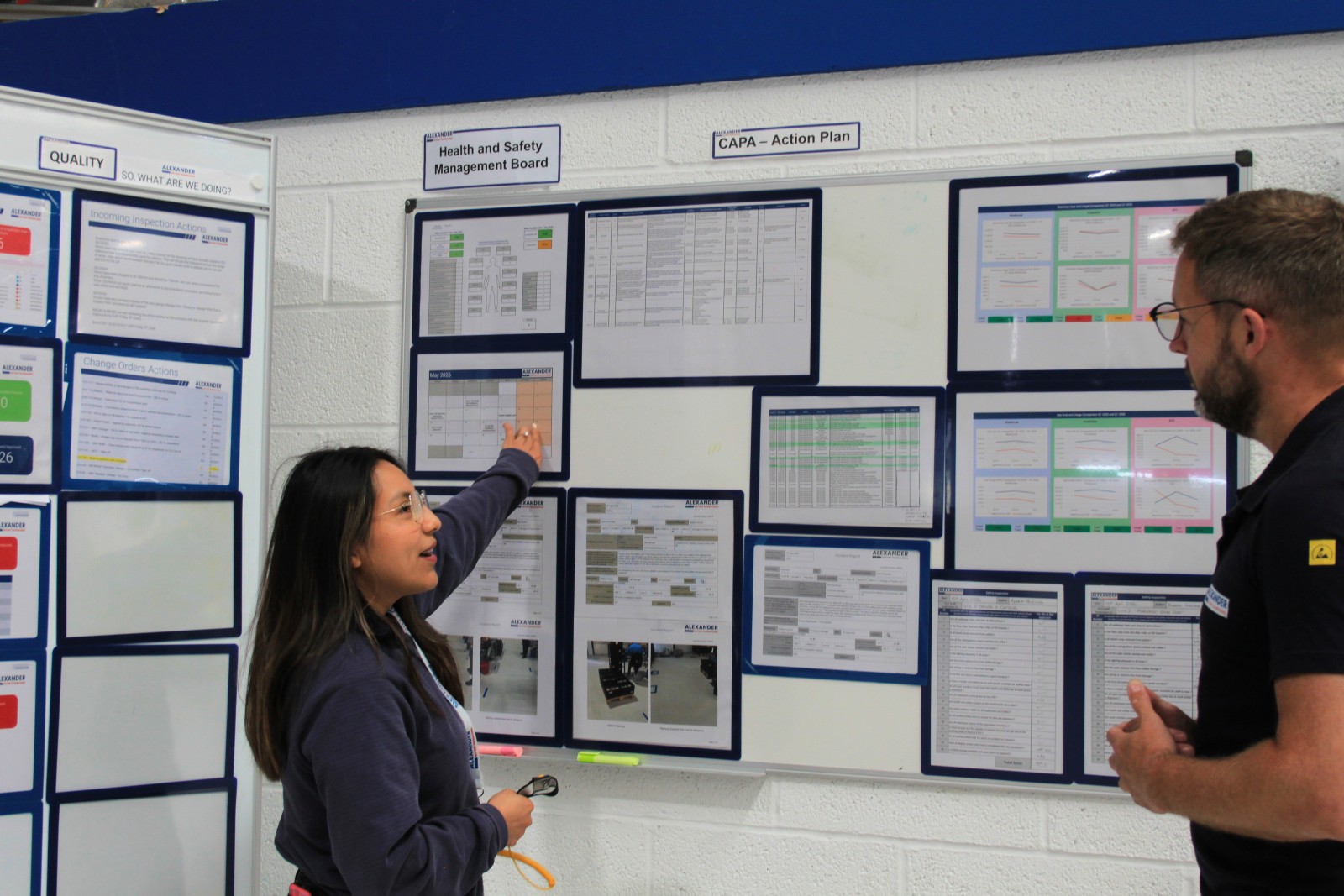
Today, Diana gives back through the same network, participating in mentoring initiatives, webinars and outreach activities designed to encourage more young women to consider careers in engineering.
The power of representation
Despite progress across the sector, engineering continues to face challenges in attracting sufficient numbers of women. Diana believes part of the problem lies in outdated perceptions of the profession.
“Engineering is often seen as very technical and maybe even boring,” she said. “But once you’re in the industry, you realise it’s creative, people-focused and involves a lot of thinking outside the box.”
She argues that showcasing real engineers and the variety of careers available within manufacturing is key to changing those perceptions. Representation, she says, matters.
You can’t aspire to something you’ve never seen. When young women see engineers who look like them leading projects and solving complex problems, engineering starts to feel less intimidating and more achievable.
For Diana, representation is not simply about diversity targets or ticking boxes. It is about opening doors for future generations and ensuring talented individuals can see a place for themselves within the profession.
A message for future engineers
Looking back at her own path from a curious student in Mexico to a leader in battery technology, Diana’s advice for the next generation of women is straightforward: stop waiting for permission.
“Don’t wait until you feel confident,” she said. “Confidence comes from experience. If you’re curious, if you enjoy solving problems and making things better, engineering might be the path for you.
“You don’t need to know everything. None of us did. Engineering has never been about having all the answers – it’s about asking questions.”
For an industry facing significant skills shortages while simultaneously navigating major technological and sustainability transitions, it is a message that resonates far beyond International Women in Engineering Day.
As battery manufacturing and the wider engineering sector continue to evolve, Diana’s story serves as a reminder that curiosity, communication and confidence are just as important as technical expertise in shaping the engineers of tomorrow.
For more articles like this, visit our Skills channel