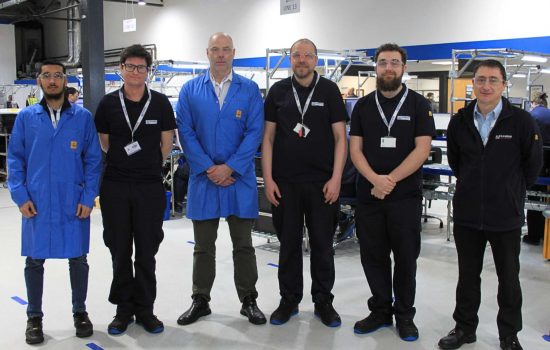

In today’s world, the humble battery is taking centre stage – not just as a tool of convenience, but as a vital component of global infrastructure. At the heart of this shift is Alexander Battery Technologies (ABT), a UK-based manufacturer specialising in custom battery packs. James Devonshire reports…
Key Takeaways
- Batteries are now critical infrastructure – essential for resilience in manufacturing, transport and communications
- Energy resilience boosts productivity – small battery packs can keep SMEs running during outages
- Cyber security matters – connected batteries must be secured against growing cyber threats
- Sustainability is rising – recycling advances and ESG demands are reshaping battery design
- Custom solutions give supply chain control – UK-made, tailored batteries cut lead times and avoid tariff risks
FAQs
- Why are batteries increasingly seen as critical infrastructure?
- How is Alexander Battery Technologies addressing cyber security in its products?
- What steps is ABT taking to improve sustainability?
- What makes ABT different from other battery manufacturers?
- How does ABT help customers manage supply chain and tariff challenges?
Speaking with Alex Stapleton, the company’s Chief Commercial Officer, it quickly became clear that batteries are no longer just about power – they’re about resilience, sustainability and strategic control. From ‘nice-to-have’ to critical infrastructure Traditionally viewed through a sustainability or ‘green tech’ lens, batteries have often been seen as optional enhancements rather than essentials. But recent global events – including infrastructure disruptions and cyber security threats – have changed that perception.
Alex explained that demand for batteries is increasingly driven by their role in maintaining critical services. Whether it’s communication systems, transportation networks or emergency systems, small-scale battery solutions can now mean the difference between continuity and crisis. He pointed to incidents like the unexpected outage in Spain, where small-scale battery storage could have mitigated the impacts on subways and communication channels.
“What we’re seeing is a shift from batteries being seen as helpful to being recognised as essential,” he noted. “This changes the nature of procurement discussions – it’s no longer about whether the price is right, but whether the supply is secure and the system is resilient.”
Manufacturing stability in unstable times
The conversation turned to the idea of using battery packs to support manufacturing operations themselves – particularly in regions where power outages are common. While large-scale manufacturing sites with critical heat or pressure-based processes make headlines when they shut down Alex emphasised that the majority of manufacturers are operating on a much smaller scale.
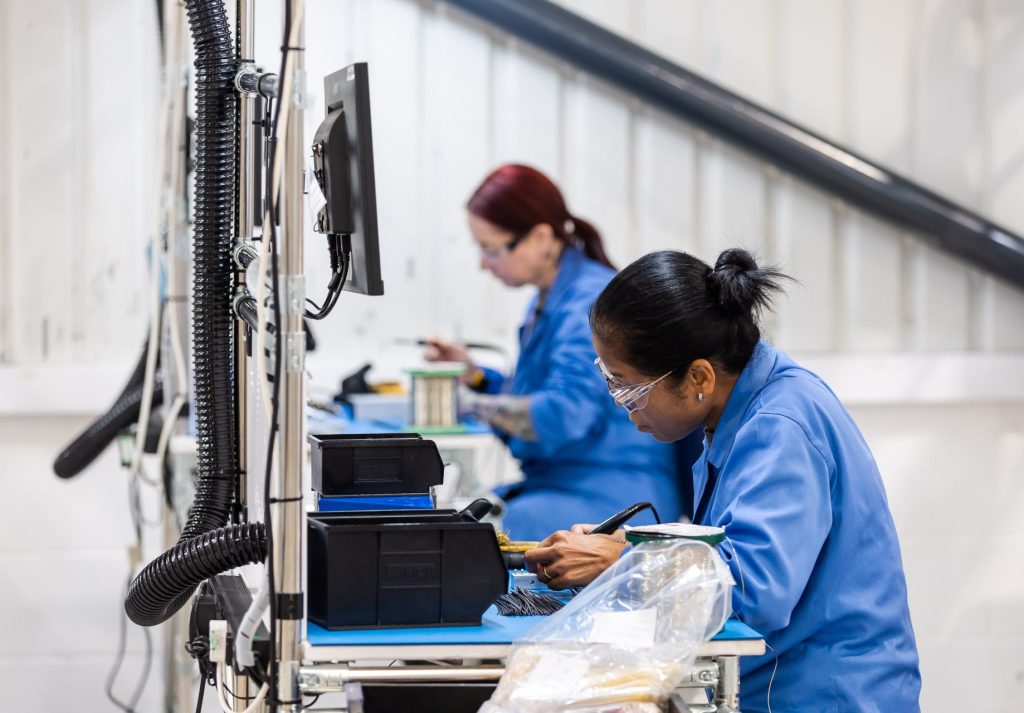
“In many cases, you don’t need a massive battery solution to keep things running. A lot of battery manufacturing still involves manual processes – wiring, welding, assembly – none of which demand huge amounts of power. So for SMEs, deploying a well-sized battery pack can provide hours of uninterrupted productivity,” he said.
This growing awareness of energy resilience is creating new demand across both developed and emerging markets, where a modest investment in battery storage can yield major operational advantages.
The cyber security angle
Manufacturing has overtaken finance as the most targeted industry for cyber attacks, and Alex sees this as another opportunity where battery packs play an important role – particularly in protecting communications and infrastructure.
ABT is currently pursuing ISO 27001 certification, underscoring its commitment to cyber security – a reflection of the increasing technological sophistication of batteries themselves. Modern battery packs now often include communication protocols such as CAN or SMBus, and around 20% of the company’s designs incorporate wireless communications.
“As soon as you introduce wireless capabilities, you’re introducing vulnerabilities,” he said. “Whether it’s an electric vehicle or a drone, the battery is now part of the connected ecosystem – and it needs to be secure to prevent things like unauthorised access to the device.”
For manufacturers relying on battery-supported systems to maintain uptime during outages or cyber incidents, this adds another layer of complexity – and another reason to choose suppliers who understand the risks.
Driving sustainability through innovation
No conversation about batteries is complete without addressing sustainability. Alex readily acknowledged the challenges associated with battery materials and production, especially when it comes to older technologies or high-impact mining practices. But he also highlighted the progress being made across the sector.
ABT holds ISO 14001 certification for environmental management and takes a dual approach to sustainability: raising the ‘floor’ through efficiency improvements and resource reductions, while also raising the ‘ceiling’ by partnering with recyclers and offering customers take-back programmes.
“We’re seeing huge advances in recycling. The best recyclers are now recovering up to 98% of battery material, including the electronics. In many cases, the electronic components outlive the battery cells themselves and can be reused in future builds,” he explained.
Moreover, customer demand is pushing sustainability up the agenda. Large buyers, particularly those with mature ESG strategies, are now requiring recycled content in their supply chains.
ABT is already seeing this in tenders and specifications – an early sign of a shift that’s likely to accelerate under tightening EU regulations.
The custom advantage
One of ABT’s key differentiators is its focus exclusively on custom battery packs. While many competitors offer off-the-shelf solutions, ABT believes that customisation delivers greater value, especially in terms of design efficiency, supply chain control and long-term support.
“Custom batteries give our customers control over their product lifecycle. If you’re relying on a standard battery and the supplier decides to discontinue it, you could be left scrambling to redesign your device. With a custom solution, you own the spec, you manage the risk,” Alex explained.
Design aesthetics and user experience are also drivers. Products with strict form factors – from handheld devices to high-performance tools – benefit from batteries that are shaped and styled to match.
Moreover, for companies with scale, custom batteries can actually be more cost-effective. By controlling the bill of materials and eliminating unnecessary features, manufacturers can optimise their designs and often lower the unit price.

A strategic shift in supply chains
Another area where ABT is gaining traction is tariff mitigation. The company is increasingly helping customers, particularly in the UK and US, to avoid punitive tariffs on Chinese-sourced batteries by demonstrating substantial transformation in the UK.
“Our customers can often qualify for ‘Made in UK’ designation, even if some materials originate overseas,” Alex explained. “The key is that most of the value-add – the design, assembly and testing – happens here in the UK. For a specific case, we will be able to validate that through HRMC to support official status.”
This capability has become a strategic differentiator. In 2024 alone, several customers switched to ABT primarily to navigate tariff complexity – a trend likely to continue as geopolitical uncertainty grows.
But tariff strategy is only one part of the equation. Alex also points to the fragility of global supply chains as another reason why UK manufacturing is enjoying a resurgence.
“Shipping delays, long lead times and unpredictable regulations make domestic sourcing more attractive. With ABT, UK and European customers can move from a 12-week shipping cycle to a monthly or even weekly cadence,” he said.
For SMEs, this improves cash flow, responsiveness and resilience – a compelling trio in today’s volatile market. From design to delivery ABT’s process starts with a customer brief – sometimes a detailed 40-page specification, other times just a few bullet points on voltage, capacity and size constraints. From there, the company builds out an agreed scope of work, collaborates with the customer’s engineers and finalises the product design before validation or production begins.
This collaborative model gives ABT an edge in time-to-market and long-term service. The average customer relationship spans seven to ten years, reflecting the relatively slow pace of battery product cycles – especially in non-consumer markets.
“Battery designs don’t change often,” said Alex. “Whether it’s a power tool, a medical device or a drone, customers want consistency and reliability. That’s what we deliver.”
A quiet giant in battery manufacturing
Founded over 40 years ago, Alexander Battery Technologies may not be a household name, but it’s a recognised leader in the world of custom battery solutions. With manufacturing operations based in the north east of England, the company is well-positioned to offer both engineering excellence and cost-competitive solutions for OEMs across Europe and North America.
Its products now span the full spectrum of energy storage needs – from small handheld devices to high-power robotics and off-road vehicles. The company’s largest pack to date clocks in at 14 kilowatt-hours and includes thousands of individual cells – a far cry from the AA-powered devices of decades past.
For Alex, the mission is clear: to help customers navigate a fast-changing energy landscape with smarter, more resilient and more sustainable battery systems.
“In many ways, the battery is becoming the brain and backbone of modern products,” he said. “It’s where performance, design, sustainability and security all converge – and we’re proud to be at the forefront of that transformation.”
For more articles like this, visit our Leadership channel