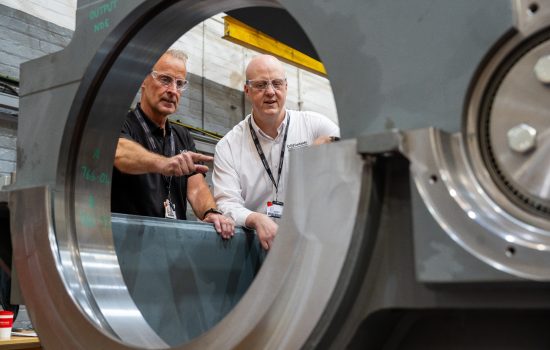

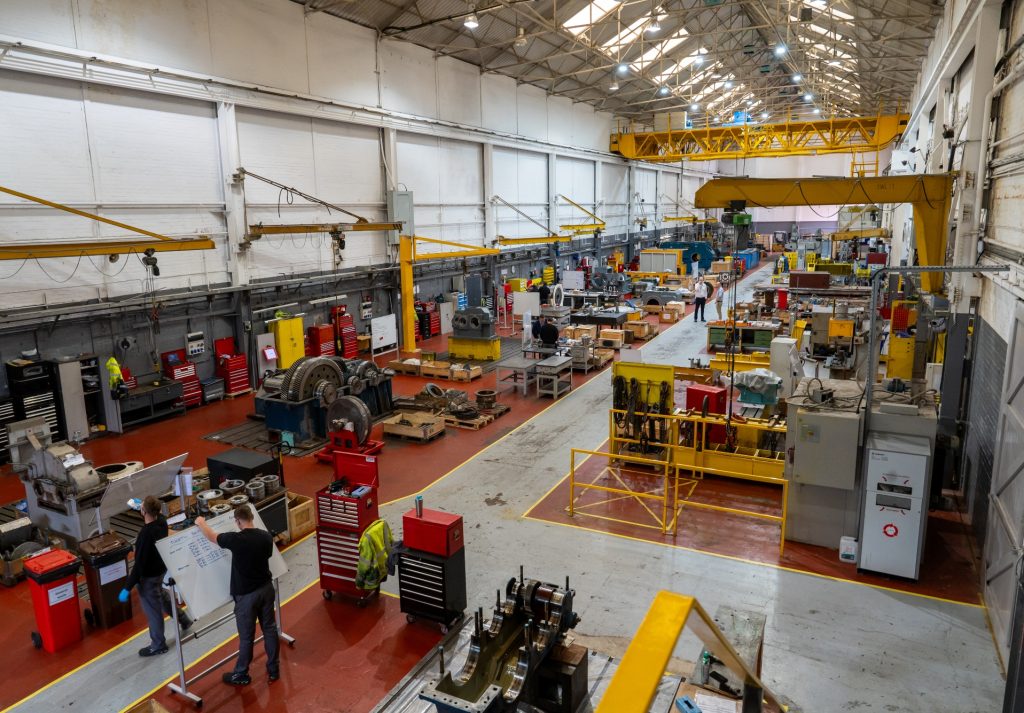
David Brown Santasalo has invested a huge amount of money into its site in Huddersfield. A cool £70m, to be precise.
This has allowed the industrial gearbox manufacturer to quadruple its business in the land and marine defence sectors.
And, as we’ve seen, defence spending appears to be the recent direction of travel. Indeed, ever since Russia’s invasion of Ukraine in 2022, defence in Europe and North America has been given a greater spotlight.
And as part of the UK’s Industrial Strategy, the government has committed £250m over the next five years to Defence Growth Deals, designed to unlock regional strengths, foster innovation, and create thousands of highly skilled jobs across the UK.
This was followed by news that Norway had ordered British Type 26 frigates in a £10bn agreement, marking the UK’s largest-ever warship export deal by value.
For DBS though, and the defence industry generally, it’s quite typical for programmes run across a number of years.
As David Armitt, Group Chief Executive, points out in my interview with him, the £70m investment hasn’t come about due to new programmes that have suddenly come to life, they’re long-term.
David also points out, that defence markets impact the company’s industrial markets too. And the trends are similar in terms of determining how much is invested in the footprint of each country.
“People are looking for national champions in either industry or defence, and we’re quite well-placed for that because of our wide footprint from our service network,” he says.
The growth has also seen a recruitment drive, particularly within the last 18 months, with more planned for the remainder of the year. Last year, 100 people were taken on, with another 100 in coming in this year.
Machinery, unsurprisingly, has been part of the investment, with the purchase of “the most advanced manufacturing machines we can for gear,” according to David.
A full test rig has been designed and built for those products, which has been running for a couple of years. And the company has another test facility currently being developed. The manufacturing capacity, machinery and team, has been acquired and built to support this.
Technology, specifically CRM and ERP systems, has also been part of the investment. CRM systems in particular gives DBS the ability to digitally map where the installed base of products are.
Condition monitoring has also been useful, to use data from the systems as they’re operating, allowing for early interventions, rather than waiting for breakdowns.