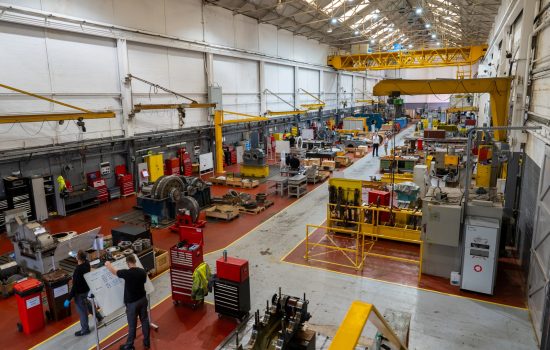

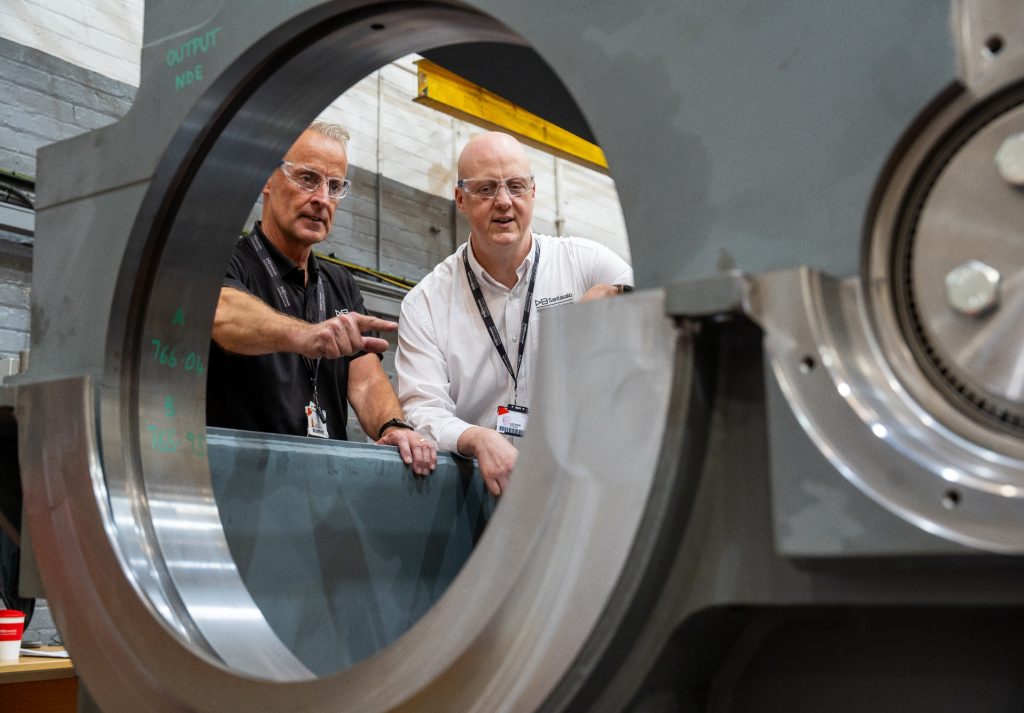
A visit to West Yorkshire brought us face-to-face with another innovative manufacturer. David Brown Santasalo has been on a remarkable growth journey in the last decade, as demand for its gear systems production and services has ramped up. During the last ten years, the UK business, David Brown Defence, has seen investment of £70m into its site in Huddersfield, allowing it to quadruple its business to customers in the land and marine defence sectors. David Armitt, Chief Executive of David Brown Santasalo Group, sat down with me to discuss the company’s journey so far.
Key takeaways
- David Brown Santasalo has invested £70m in its Huddersfield site, quadrupling its defence business over the last decade.
- Operating in 23 locations across 14 countries, the company’s industrial division serves mining, pulp and paper, energy, and defence sectors worldwide.
- Technology advances in CRM, ERP, and condition monitoring are driving preventative maintenance and early-stage AI adoption.
- The company is committed to a 54% emissions reduction by 2032 under the Science Based Targets initiative, with half already achieved.
- There has been a lot of collaboration with universities to enhance digitalisation, testing, and stealth technologies.
FAQs
- When did David Brown start?
- What did the Huddersfield site used to manufacture?
- The company inspired the name of which iconic car?
- Whereabouts is David Brown Santasalo’s new hydro powered factory based?
The history at the David Brown Defence (DB Defence) site in Huddersfield is extensive. David Brown began 165 years ago, and it’s been a manufacturing site since the start of the 1900s. Today, the factory retains plenty of that history, as well as a lot of modernisation from recent investment. The company still receives calls from customers looking for tractor parts, as it used to be a site where David Brown Tractors were made.
There is also a lovely nod to some iconic automotive history, when David Brown used to own Aston Martin. The Aston Martin DB5, driven by Ian Fleming’s James Bond, is a nod to David Brown, and the company still license the DB moniker to Aston Martin today. Yes, a classic emblem, the epitome of Aston Martin engineering, made famous by a Hollywood movie spy, has its roots in a factory in Huddersfield.
Santasalo, a Finnish company that manufactures industrial gearing, also has more than 100 years of history. And the business became David Brown Santasalo in 2016, a merger that brought that heritage into the group. David Brown Santasalo’s industrial business is now located in 23 locations in 14 countries. These locations make up its industrial division, where it services a wide range of gear systems.
This has created a global service network. About 80% of the industrial business is aftermarket. Those service customers, as well as OEMs, are also supported with the installation of new equipment, and the manufacturing and design elements that come with that. DB Defence in Huddersfield produces around 60-70% of new equipment for defence programmes – mostly for the UK, Australia and Canada.
The markets that David Brown Santasalo’s industrial business serves across the world is varied. The biggest are industrial mining, pulp and paper, as well as other energy markets. And in the UK, the defence markets are split between land defence vehicles and marine defence propulsion systems.
David Armitt, Group Chief Executive, welcomed us to the DB Defence site in Huddersfield, and went into more detail about the company’s growth in defence, and the significant investment that has allowed this.
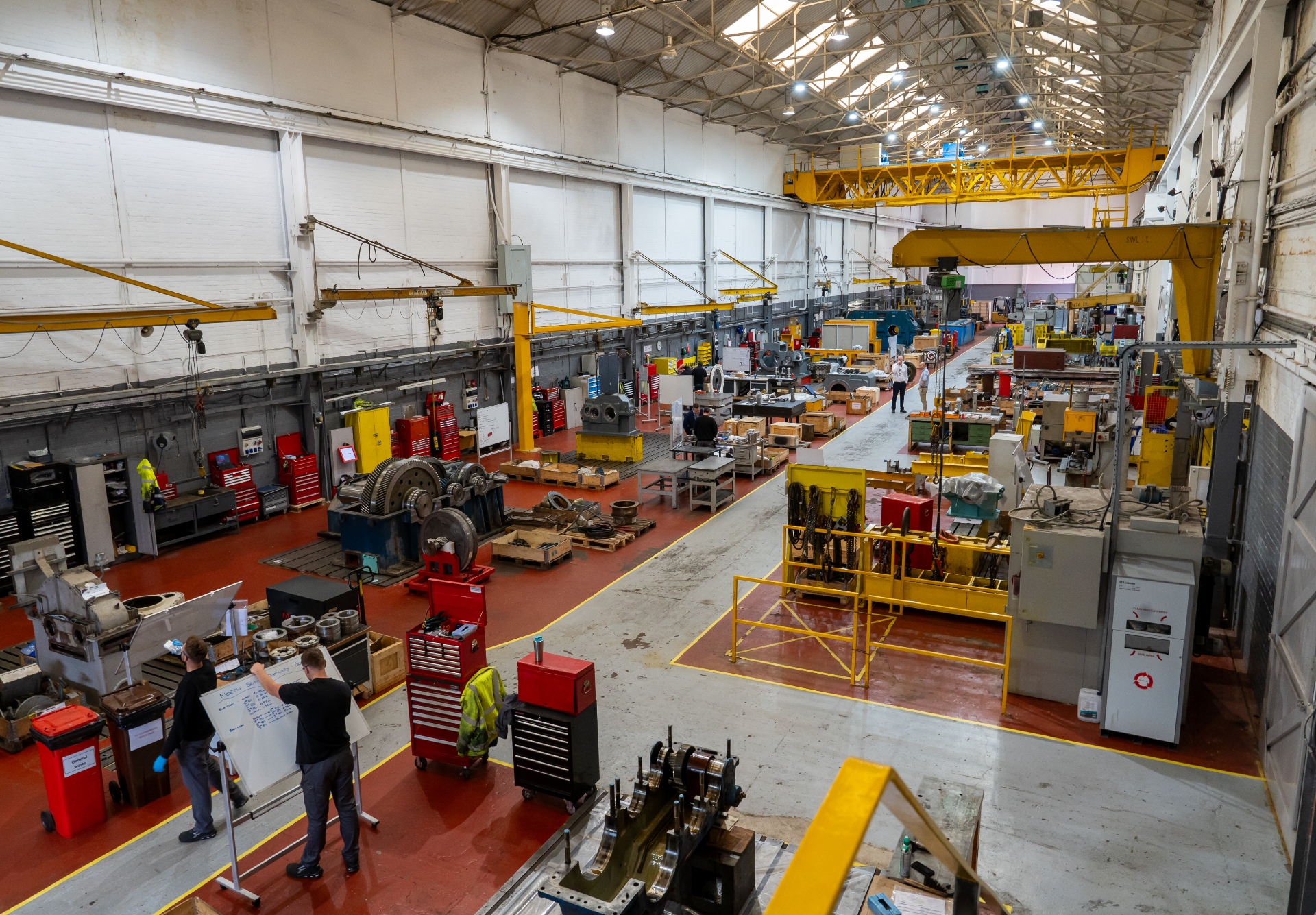
The David Brown Santasalo Huddersfield site is a mix of history and modern investment
What sort of trends are you seeing in the defence industry?
DA: Ever since 2022 and Russia’s invasion of Ukraine, there has been an increasing focus on defence in Europe and North America. The recent rhetoric around NATO has changed the landscape a little, and has been a catalyst for looking for future investment in the sector. That said, in the UK we operate on programmes that have been long in gestation.
These aren’t new programmes that have suddenly come to life, they’re long-term. The drivers that we’re seeing in defence markets definitely impact industrial markets too. A lot of the trends there are similar in terms of determining how much we invest in the footprint of each country. People are looking for national champions in either industry or defence, and we’re quite well-placed for that because of our wide footprint from our service network.
Our industrial group is made up of local businesses and we have production hubs around the world; here at DB Defence, we export from either UK programmes or Canada and Australia. Our industrial manufacturing hubs are in Finland and China. There have been some interesting trends there recently, because of course, we’ve had trade wars going on between the US and China. We’re fortunate in that we’ve got options.
We have some flexibility around where we can manufacture our gearboxes and parts. As well as the main hubs in Finland and China, we’ve got four additional production facilities that make parts for the local markets in Canada, Australia, South Africa and India. So, the trends are quite strong at the moment and keep us on our toes. There’s a fair bit of uncertainty but we’re well placed to deal with that. W
What products are made at DB Defence in Huddersfield? And tell us a bit about the manufacturing process
Ten years ago, this site was mostly a land service operation. That business has more than quadrupled in the last decade, and it’s been due to marine and some land programmes. We’re partnered with some big UK defence companies, and we’re working on Ministry of Defence programmes with them. We’ve invested £70m in this site in the last ten years on buildings, machining, test facilities and people.
We’ve been recruiting a lot of people in the last 18 months or so, and we plan to continue that this year. We added 100 people in 2024 and we’re looking at another 100 in 2025. In terms of the manufacturing process, we’ve been adding the most advanced manufacturing machines we can for gear. We’ve designed and built a full test rig for those products, which has been running for a couple of years. And we’ve got another test facility currently being developed. We’ve been building manufacturing capacity and the team to support it
I assume a lot of that investment has also been in technology?
Absolutely, and there are a number of areas where we’re benefiting from technology investment in our defence and industrial businesses. We’ve invested in CRM and ERP systems, so that we can map where the installed base of our product is. That’s a very important aspect for us, because these are customers that we’ll serve in the future, and we have to make sure we’re responsive and proactive with them.
Having CRM systems gives us the digital map for us to do that. We’ve also invested in condition monitoring – using data from the systems as they’re operating. This allows us to look at early interventions, rather than waiting for breakdowns. We’re moving from reactive maintenance to preventative maintenance. And in reference to this site in Huddersfield, all of what I’ve already mentioned is built into the systems we use for defence, in terms of sensors and other technology.
On the industrial service side, we’re looking in to tools for diagnostics to try and make that process less labour intensive and turn it into an exceptional reporting system. This is where we’re starting to look at AI; asking ourselves what’s the process? What data do we gather? And how do we learn from that data? To get to that stage, however, we need to standardise a lot of the processes in the service business and across the service network – that’s the next phase.
What is the company doing in terms of sustainability initiatives?
We committed to the Science Based Targets initiative (SBTi) a few years ago, and we believe we were the first in our industry to do so. Our group target is a 54% reduction by 2032. The reason for this commitment is because it is important to people; to our customers, who are looking for partners and service providers that are committed, to the investment world and shareholders, and to the people working for us. There has been recent news of some companies extending their net zero targets or even backing off all together. We won’t be doing that.
A big part of our customer base want us to continue with our target. Having set this, we have identified a number of projects and areas of improvement that could get us to our goal of a 54% reduction. We’ve already made it half way. This has been partly due to new investments across the group.
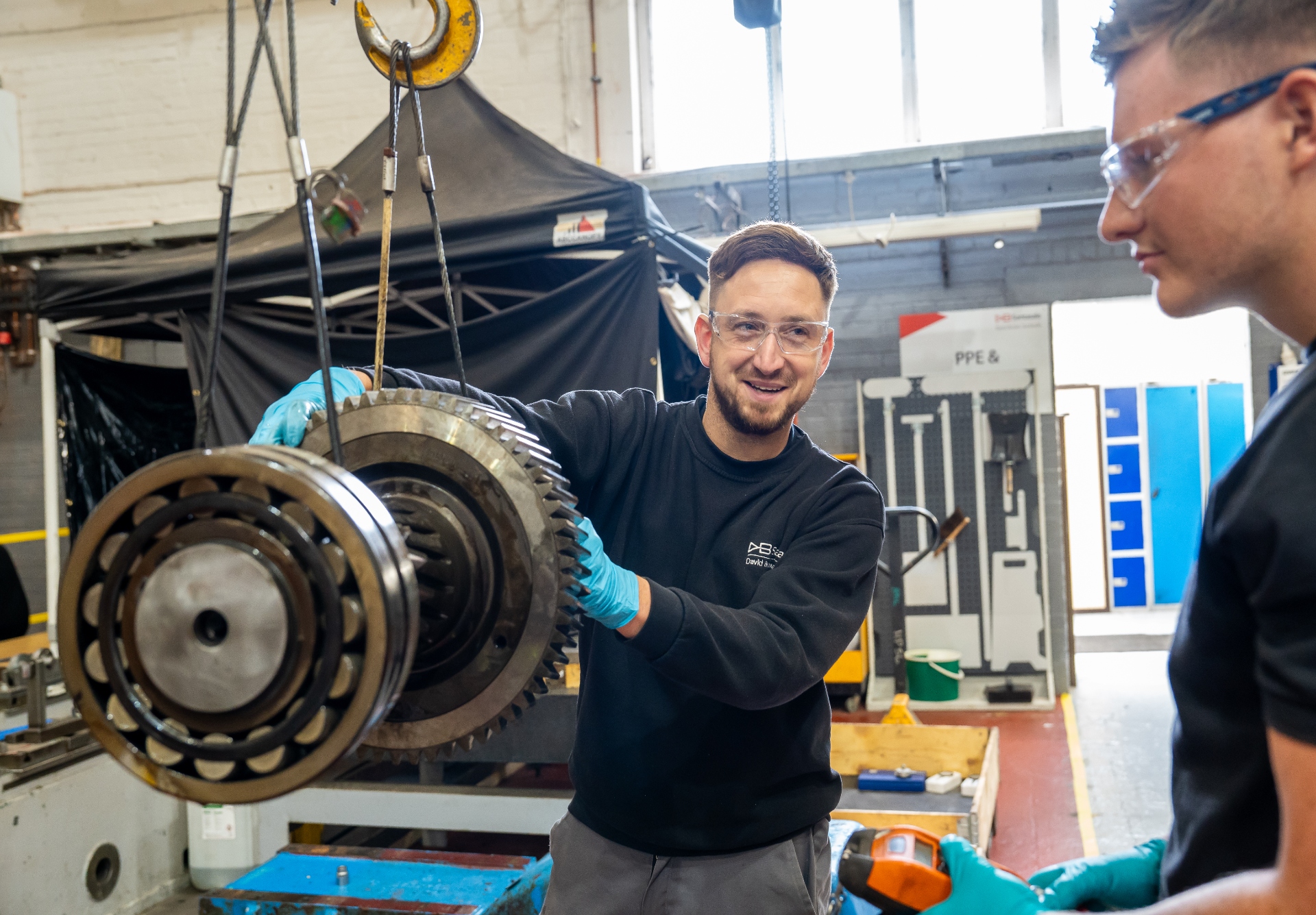
Gear systems and services for land and marine applications have more than quadrupled in the last decade
For DBS Industrial, we’ve got a new facility in Finland which is hydro powered, and one in China where 50% of the energy comes from solar. The other reason this is important is it’s going to cost you less in the long run. There is an initial cost of doing a sustainability project, but the net zero commitment makes financial sense for businesses in the long run.
What advice do you have for other manufacturing organisations?
It’s all about the team. When conducting projects in parallel you create a lot of change. We’ve just done a systems upgrade, which went live at Easter, at the same time as we were expanding on-site; new buildings went up, new machines were coming online and there was training taking place. Change is normal for manufacturing businesses. There has been so much uncertainty and disruption in the sector that companies have had to pivot and adapt.
However, starting with a team that works well together and has a common goal and purpose makes this a whole lot easier. It’s very easy, for example, to focus on technology or hardware. But actually, starting with the team should be your number one priority. That team can then identify the right technology or hardware, and implement it.
And you should always look for advice. At this site, we’re talking with Strathclyde University’s team about digital twinning – looking at the facility, and seeing how we could expand capacity in the most efficient way, rather than just sketching it out on a piece of paper.
We’ve done a lot with universities, including work on the test facility and technology. A lot of what we do in defence is about stealth, so getting their advice on that has been really helpful. So, start with the team and then look for advice from others that are experts in whatever project you’re looking at.
Read more articles like this one on our Sustainability channel