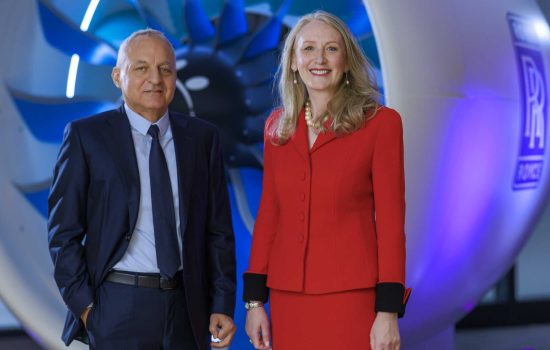


In November 2025, The Manufacturer hosted The Manufacturer MX Awards at a gala ceremony in Liverpool, with Alexia Williams of Rolls-Royce winning the prestigious Young Manufacturer of the Year.
Molly Cooper sat down with her to find out more about her current role and route into aerospace engineering.
FAQ’s
- What is an aerospace engineering apprenticeship in the UK?
- Can you become a chartered engineer through an apprenticeship?
- Why are apprenticeships important for engineering careers?
Key takeaways
- Apprenticeships offer a viable alternative to university, enabling early career entry without student debt.
- Rolls-Royce supports career progression through flexible learning, including master’s-level apprenticeships.
- Hands-on experience and exposure to different roles help apprentices find their strengths.
- Mentorship—both internal and external—is critical for career development in engineering.
- Diversity in engineering is improving, with more women entering the industry and leading change.
Starting a career in aerospace engineering
When in Year 9, Alexia attended a careers fair and while there, spoke with a recent graduate from GKN Aerospace about her passions of maths, science and design technology. It was this conversation that would be the catalyst behind her journey into engineering. “He was a graduate and his role in engineering sounded great. More importantly, he mentioned a colleague that had opted for the apprenticeship route over academia and as a consequence, was able to get started on his career much earlier and didn’t have any student debt,” she said.
Choosing an apprenticeship over university
This sounded like the right path for Alexia so she began researching and found that she could take a degree apprenticeship after her A-levels and get straight into the workplace. “As someone who didn’t really enjoy sitting in a classroom, committing to another three years of that at university didn’t seem like the route for me,” she added.
From apprentice to engineering leader at Rolls-Royce
From there, Alexia found a four-year apprenticeship in aerospace engineering at Rolls-Royce from which she advanced to secure a full-time role as a Deployed Life Cycle Engineer. Yet Alexia wanted more and found that she could continue her studies and complete a master’s degree with Cranfield University.
Becoming a pioneer in master’s apprenticeships
After pitching it to Rolls-Royce, she found that although the company weren’t currently funding master’s degrees, it would fund a master’s apprenticeship degree, meaning the business only needed to allow Alexia time to study and fund her accommodation. “From this, I became the first person at Rolls-Royce to do a master’s engineering apprenticeship degree,” she said.
After this Alexia has performed a variety of roles at Rolls-Royce, with her current position being Technical Lead.
Achieving chartered engineer status
“Earlier last year, I received my chartership, meaning I became one of only 12 women to become a chartered engineer by the age of 25.”
Driving innovation through engineering projects
In her current role, Alexia works with long life assets, yet most of her time is spent working with Rolls-Royce’s partner companies and the Ministry of Defence. “We work together to make improvements, feasibility studies and projects. But the focus is availability, making the product last longer and to operate better for the customer by reducing maintenance and improving performance,” she said.
Learning from shop floor experience
In previous roles, Alexia has spent more time on the shop floor, something which she looks back on fondly. “My last job was one of my career highlights within engineering. I was leading on turnaround time for a project which allowed me to meet and speak with suppliers, find new technologies in the manufacturing space and look at how we could make improvements on the shop floor,” Alexia explained.
Using technology to improve manufacturing processes
The project focused on using robotic arms with cameras for inspection which required new tooling. “I scanned the whole product and then 3D printed each part, which were identical to their real counterparts. This allowed me to test all the tooling, inspection and instructions using 3D printed components,” said Alexia.
For her, this was a great example of how modern technology can be used to make processes faster. “Also, we didn’t have to worry about accidentally damaging a £600,000 part,” she added.
Women in engineering: breaking barriers and leading change
Why diversity is a strength in engineering
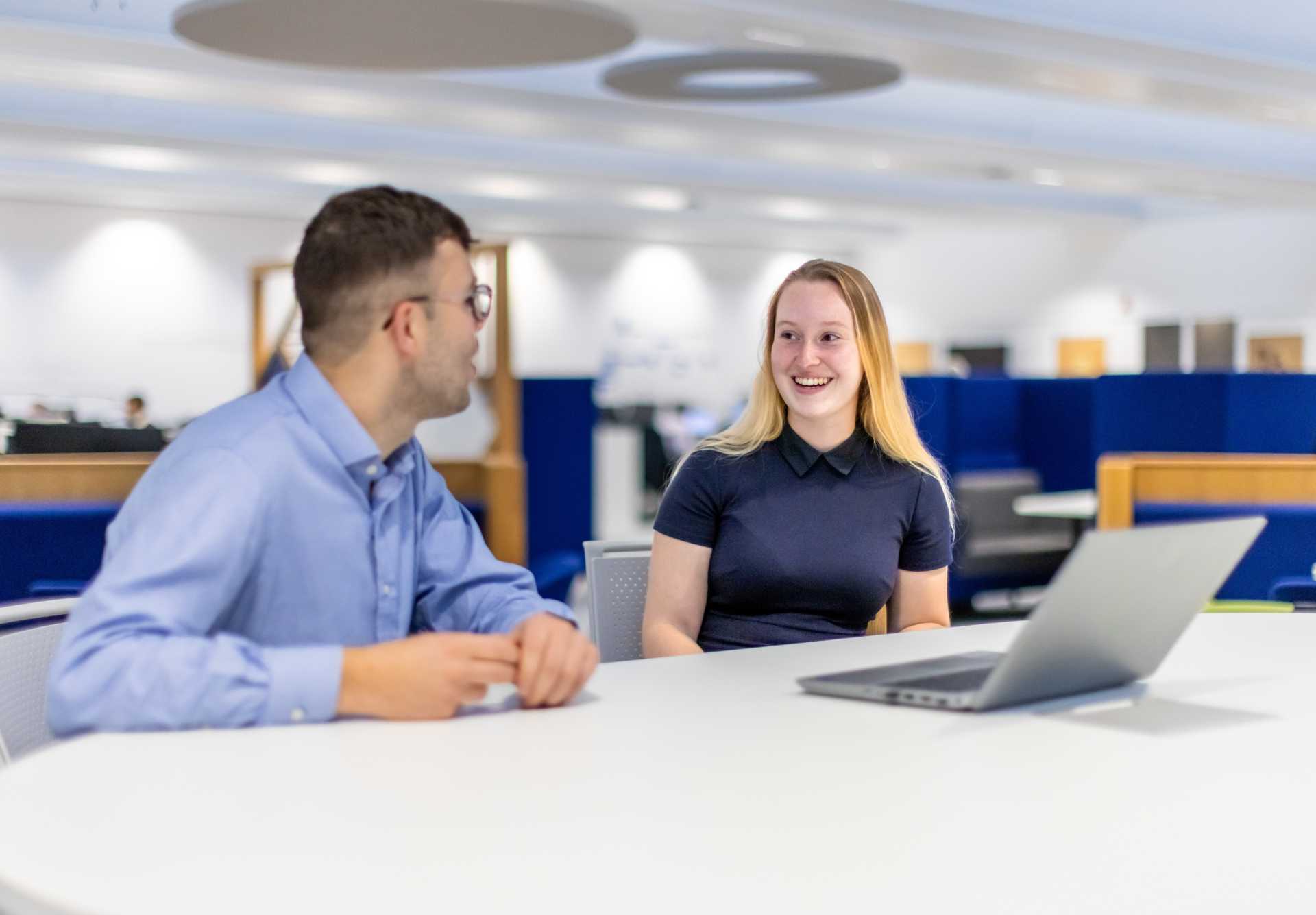
“I often get asked if I find it challenging being a woman in engineering. The answer is no, I don’t. For me, being a woman in the sector is a superpower because there’s not as many of us. This means you’re more memorable,” Alexia explained.
“On my apprenticeship cohort I was the only girl. However, the ratio is now around 50/50 so it’s been great to witness an increase in the number of girls applying.” As she has been remembered for excelling in her roles, people have been supportive of Alexia, pushed her and helped her challenge herself. “When I’ve reached out to people about roles or activities – because they remember me – they are more likely to help,” she added.
The main challenge Alexia has faced was breaking new ground and being something of a guinea pig. “I was in the first cohort of aerospace degree apprentices and then again with my engineering master’s apprenticeship degree. So, it’s been a journey of trial and error in finding out what works and what doesn’t. But this has allowed us to improve along the way,” she said.
Inspiring the next generation of female engineers
Now Alexia is contacted by people throughout the business who ask about her experience in taking a master’s apprenticeship. Two others have followed in her footsteps and are already on the course. “It’s been great to lead the way for others,” she added.
Making engineering careers more attractive
As we know all too well, careers in manufacturing and engineering often come with an outdated stereotype, but Alexia is keen to look beyond that, and towards what the industry actually has to offer.
Giving apprentices freedom to explore career paths
“One of the key factors that attracted me to the apprenticeship at Rolls-Royce was that I wasn’t pigeonholed. I was given the opportunity to move around and to find out where my passion within engineering and aerospace actually was.”
Alexia Williams, Technical Lead, Rolls Royce
This is the advice Alexia would give to other employers; let apprentices work within different areas of the business and find out the inner-workings across a range of potential careers. “Where there are spaces you want to fill, or skills that are lacking, let them try.
Often, they won’t know what suits them straight away as there are so many roles within engineering businesses – many of which will be unknown to most apprentices,” she added. It is rare that all apprentices will want to follow the same path; some will prefer design and CAD, others research and development. “By allowing them to find their own passion, it’s likely they’ll stay longer in the company because they’ll enjoy it and the business will organically fill its gaps.”
The role of mentorship in engineering careers
Mentoring is a vital part of evolving careers within the manufacturing sector, from internal mentors passing down skills and knowledge, to external networking groups offering careers advice. Alexia has been involved in both, as a mentor and mentee.
Learning from internal and external mentors
“While going through my apprenticeship and my first role at Rolls-Royce, I was mentored internally by a senior women in engineering. It was great to see her perspective of how to climb the ladder,” she said.
She also had a manager who worked as her silent champion when positions became available. “He was in a role I could see myself doing one day, so he was really helpful in terms of providing tips and advice on how he got there. He was also supportive of my growth, mentioning my name when positions for which I’d be a good fit became available,” she said.
The impact of mentoring programmes
However, one of the most beneficial mentors Alexia has had on her journey thus far was found through the UWE Women Like Me Mentoring Scheme, where young women early in their career are paired with more senior women within engineering and STEM.
“I was partnered with a woman that worked at a completely different company, and was around seven years further ahead on her career. Having someone that had worked in engineering, gone through similar stages and encountered different challenges, was particularly useful. The fact she was also external meant she could offer a view from outside of the Rolls-Royce bubble,” Alexia explained.
The scheme was only supposed to last a year but now, two years later, Alexia is still having mentor sessions once every few months. “We have now gone full circle and started some reverse mentoring as well. She’s now asking me career questions that I’m helping her with,” she added.
Recognition in the manufacturing industry
Winning young manufacturer of the year
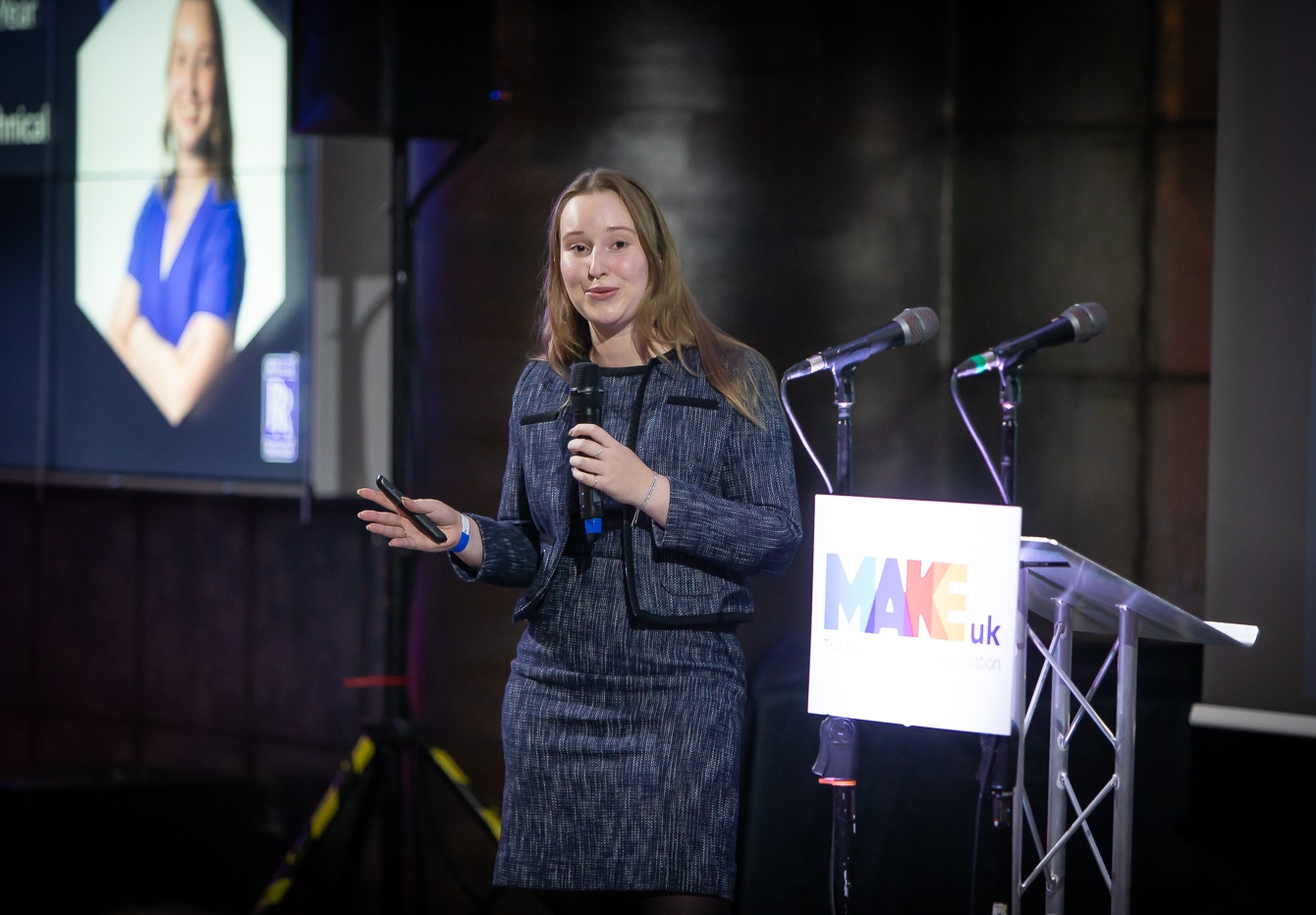
In November 2025, Alexia was named Young Manufacturer of the Year at The Manufacturer MX Awards. “It was a very nice surprise as I wasn’t expecting to win. I initially entered to share what I get up to and why I want more young people to get into manufacturing,” she said.
Why industry awards matter
“Winning an award is always great; it’s a recognition of all your work and an indication to keep doing what you’re doing.
Many people don’t see what I do, so it’s nice to know it’s appreciated both internally and externally,” she added. The process of judging the award takes place over a few months and includes an initial application with an online form and then an in-person judging day. “Unlike other awards I’ve entered, TMMX had an interview stage which helped reinforce some of the key points I wanted to get across. It allows the judges to understand what motivates you and why. That’s something which can get missed in a written application,” said Alexia.
The importance of sharing your engineering story
“For anyone entering the awards, my top tip would be to share as much as you can. I thought about not including some details that the judges ended up picking up on,” Alexia said.
One of those parts highlighted by the judges was the work Alexia is doing around sustainability. “I moved all our shop floor processes from paper to digital. To me, it felt like just a small part of my role, but the judges found that it had a huge impact and wanted to know the steps I had taken to make that change,” she explained.
“The whole process was a great way to reflect on the last few years of my career. Even though I have internal reviews as part of my work, those smaller details don’t always get captured, such as speaking at STEM events, representing the company or taking part in a scheme. TMMX has really helped me reflect on how far I’ve come in the industry.”
What’s next for the future of engineering careers
For now, Alexia wants to explore as much of the Rolls-Royce business as she can.
“For my next role, I want to step slightly away from engineering to experience the business and financial side of an engineering company. I want to learn how they operate from a contract side,” she said.
A judges perspective
Taahir Patel, Process Development Manager at LISI Aerospace in Rugby, won Young Manufacturer of the Year at The Manufacturer MX Awards in 2023. In 2025, Taahir was on the judging panel, and a key part of the decision making process to crown Alexia winner of the Young Manufacturer of the Year.
 What was it like being a judge for The Manufacturer MX Awards?
 What was it like being a judge for The Manufacturer MX Awards?
It was a real privilege. I have been involved in the process ever since winning the award in 2023, and being on the other side of the table has been a genuinely enjoyable experience. The process is thorough and robust and it really pushes candidates to showcase their achievements. For me, the most enjoyable part is the second stage of judging, where each candidate has to concisely present their journey in a short space of time and reflect on what they have achieved so far. The whole process is truly inspiring and highlights the incredible talent we have across the industry.
Why is the in-person judging day so important?
The first stage of the process focuses on written submissions, which gives the judges a good understanding of each candidate and their achievements. However, the in-person judging day is where candidates can really bring their application to life. It allows them to expand on their written submission, demonstrate their passion and confidence, and show how they think and communicate under pressure. This stage gives the judges a deeper insight into the individual behind the application and plays a crucial role in final decision making.
What made Alexia stand out?
Within an extremely competitive and talented group of finalists, Alexia’s presentation was very well structured and engaging, demonstrating her passion behind everything she does. What particularly stood out for me was the way she used analytics to evidence her STEM activities, showing not just what she was doing, but the real impact of her efforts. The scale of her outreach and the measurable difference she is making through these engagements was impressive. To see the level of influence alongside her very busy role, demonstrated her motivation and commitment to the industry, which really set her apart.
What advice would you give to young people thinking of entering in 2026?
I would encourage potential entrants to see the process as an opportunity to reflect on everything that’s been achieved during the time in industry. Use the submission to tell the judges about project involvements and the people who have been supported along the way. The more evidence that can be provided, the stronger the submission will be. That includes additional information around personal journeys and the inspiration to join the industry; this really helps bring the application to life and adds an important personal touch.
What do the judges look for in each application?
We’re looking for a clear picture of the candidate’s journey and their career path – supported by evidence of how defined goals are to be achieved. Include examples of projects and the impact they have had on the organisation. Sharing testimonials or feedback from individuals who have been mentored is also valuable, as it helps demonstrate influence, leadership and the difference being made beyond the own role.
Further reading
- Explore aerospace careers and pathways: Royal Aeronautical Society – insights into aerospace careers, qualifications, and professional development.
- Find engineering apprenticeships and career advice: Enginuity – UK-wide resources on engineering skills, apprenticeships, and workforce development.
- Learn about STEM careers and pathways: National Careers Service – guidance on aerospace engineering roles, skills, and entry routes in the UK.
For more articles like this, visit our People & Skills channel.