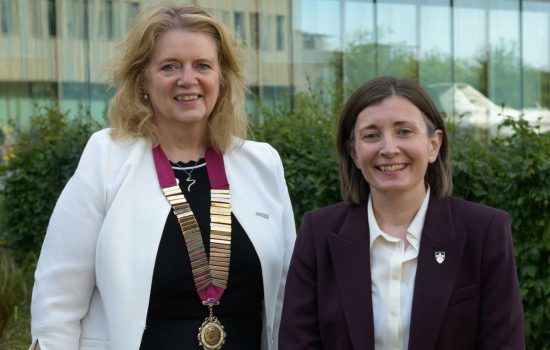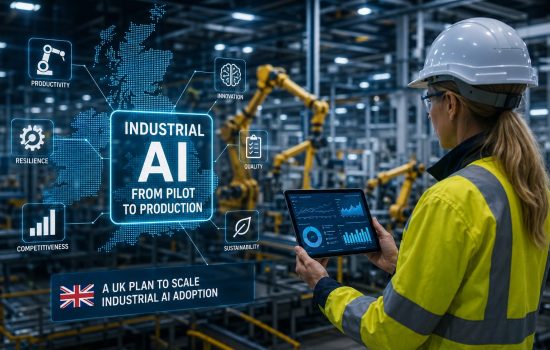


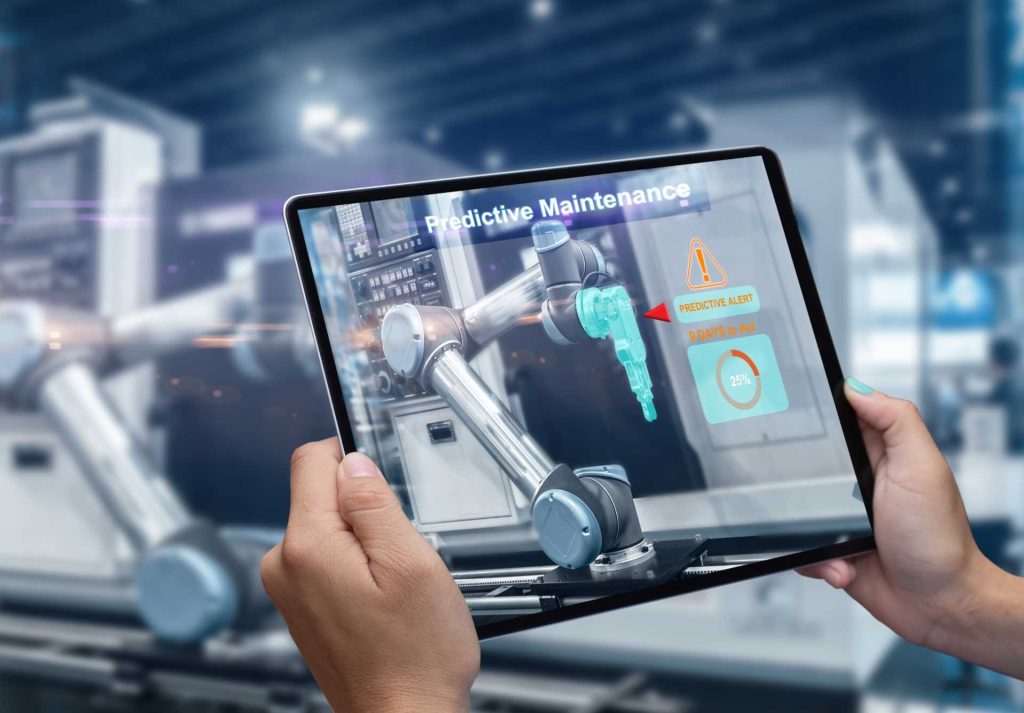
The UK government has appointed the High Value Manufacturing (HVM) Catapult’s Chief Technology Officer, Professor Chris Dungey, to the role of national AI Champion to accelerate adoption of AI across industry and boost productivity and growth. The Manufacturer Editor Joe Bush sat down with Chris to find out more.
Supported by a team of HVM Catapult specialists and a steering board of government and industry representatives, Chris Dungey’s mission is to turn the UK’s industrial AI potential into widespread, practical adoption, especially among SMEs.
Key takeaways
-
A new national AI Champion aims to accelerate AI adoption in UK manufacturing: Professor Chris Dungey has been appointed by the UK government to help manufacturers—especially SMEs—adopt AI technologies that improve productivity, competitiveness and economic growth.
-
The main challenge is turning AI innovation into real-world industrial use: Many AI solutions remain in research labs or pilot projects. The AI Champion’s role is to ensure proven technologies are implemented on factory floors to solve practical manufacturing problems.
-
SMEs are a major focus because of their potential economic impact: Many smaller manufacturers lack awareness, expertise or confidence to adopt AI. Supporting SMEs to improve performance even slightly could significantly boost the UK economy.
-
AI can deliver quick operational gains with relatively simple interventions: High-value use cases include energy optimisation, predictive maintenance, defect detection and process control. Many benefits—such as lower energy bills or reduced waste—can come from small, low-cost digital upgrades.
-
Collaboration, trust and practical guidance are essential for adoption: The role will coordinate industry, government, academia and technology providers, create clearer adoption pathways (like testbeds and sandboxes), and ensure AI systems are trustworthy, compliant and commercially viable.
FAQs
- What is the role of the UK’s AI Champion for manufacturing?
- Why was the AI Champion role created?
- Why are SMEs a major focus of the initiative?
- What are some practical ways AI can benefit manufacturers?
- How will the initiative help companies adopt AI safely and confidently?
His role brings together government, technology providers, researchers and manufacturers to design and deliver AI programmes that go beyond advancing digital capability to materially improve productivity, reduce inefficiencies and cut operating costs.
As AI Champion, Chris is responsible for strengthening the critical link between innovation and implementation, ensuring that proven AI technologies don’t remain locked in labs or pilots, but are applied on real shop floors to real industrial problems. Chris picks up the story.
Why has the role of AI Champion been created?
CD: This role, created by the Department for Business & Trade (DBT) in partnership with Make UK, Made Smarter and the HVM Catapult network, has been established to tackle the well-known challenge of AI adoption in UK manufacturing remaining far too low, particularly when compared with global competitors.
So, how can AI and associated technologies – such as robotics and advanced automation – come together to help the UK to maintain and ultimately increase its global competitiveness, and therefore GVA to the economy?
Manufacturing is central to UK growth and productivity, yet the sector’s digital and AI maturity varies enormously. Many SMEs simply don’t know where to start. AI is in the news every day, but most companies want to know the business value it delivers. The choices can be complex, but the benefits – lower energy bills, reduced scrap, shorter cycle times and stronger resilience – can start quickly with relatively simple, low‑cost steps.
At the recent AI Champion Steering Group meeting, one message was clear: manufacturers don’t want conversations focused on technology for its own sake, they want proof of impact. The priority is helping companies see measurable improvements in business performance and this insight is shaping a practical, commercially grounded and outcomes‑focused approach.
My job is to bring clarity, coordination and confidence, helping manufacturers on their AI adoption journey to understand what’s relevant, connecting them to credible providers, ensuring solutions are practical and then shaping policy so adoption becomes easier and less risky.
Manufacturers don’t want conversations focused on technology for its own sake, they want proof of impact. Success will be measured not by how much AI is discussed, but by how much productivity, competitiveness and cost reduction UK manufacturers achieve by adopting it.
But the benefits of AI – lower energy bills, reduced scrap, shorter cycle times and stronger resilience – can start quickly with relatively simple, low-cost steps.
Professor Chris Dungey, AI Champion
 Manufacturers don’t want conversations focused on technology for its own sake, they want proof of impact. Success will be measured not by how much AI is discussed, but by how much productivity, competitiveness and cost reduction UK manufacturers achieve by adopting it.
No two manufacturers start from the same point. So a core responsibility is convening the ecosystem – industry, tech developers, government, academia and innovators – and serving as a bridge between manufacturers and the wider AI landscape.
Equally important is representing industry to government, ensuring that we are developing appropriate capabilities, testbeds and solutions and, ultimately, pathways for companies to access AI tools, expertise and resources.
Raising awareness of AI and the associated workforce skills among SMEs is absolutely fundamental and there is a huge focus on SMEs as part of this role. It’s not exclusive to those smaller businesses, but the government appreciate that if the UK can support SMEs, and increase their performance – even by a fraction of a per cent – it can provide a huge boost to the UK economy.
Where does AI have the most potential within manufacturing?
AI offers huge value across the sector, from quality inspection and defect detection, autonomous and adaptive process control, energy and material optimisation, predictive maintenance to real time quality control, and workforce augmentation and knowledge capture. But the most compelling opportunities are those that deliver immediate operational gains, such as reduced waste, fewer unplanned downtime events and lower energy consumption. These improvements often stem from modest digital interventions rather than major transformation programmes.
One fast‑return area is energy optimisation. With rising energy costs, even small efficiency gains matter. Simple digital twinning of factory assets – such as ovens, compressors and HVAC systems – can reveal hidden inefficiencies, reduce peak‑time energy draw and cut bills while supporting decarbonisation goals. These are low‑risk, low‑cost steps that companies can trial quickly.
A major priority of the AI Champion role is building a digital front door for industrial AI, giving manufacturers a single place to understand what AI can do today, identify credible solution providers, access structured use cases, provide advice and guidance on key regulatory considerations, identify relevant skills and content providers for your business and see relatable examples from companies ‘like them’.
Not only will they highlight what is sensible and relatable in a manufacturing context with a realistic return on investment, these use cases will actually lead a business down the route of acquiring the capability, and show the hard yards needed to bring the technology on board. Because the integration effort, skills, change management and true cost is often not fully understood.
How do we break down the barriers to AI adoption?
The AI landscape is crowded and fast‑moving, and manufacturers often struggle to distinguish what is real, reliable and worth investment. Companies also find it hard to demonstrate true impact and value from acquiring AI capabilities because the objective isn’t well defined at the very beginning.
Clear, relatable use cases are essential to cut through the noise and help companies understand where AI will deliver measurable value – whether saving thousands in energy costs, improving throughput or reducing scrap.
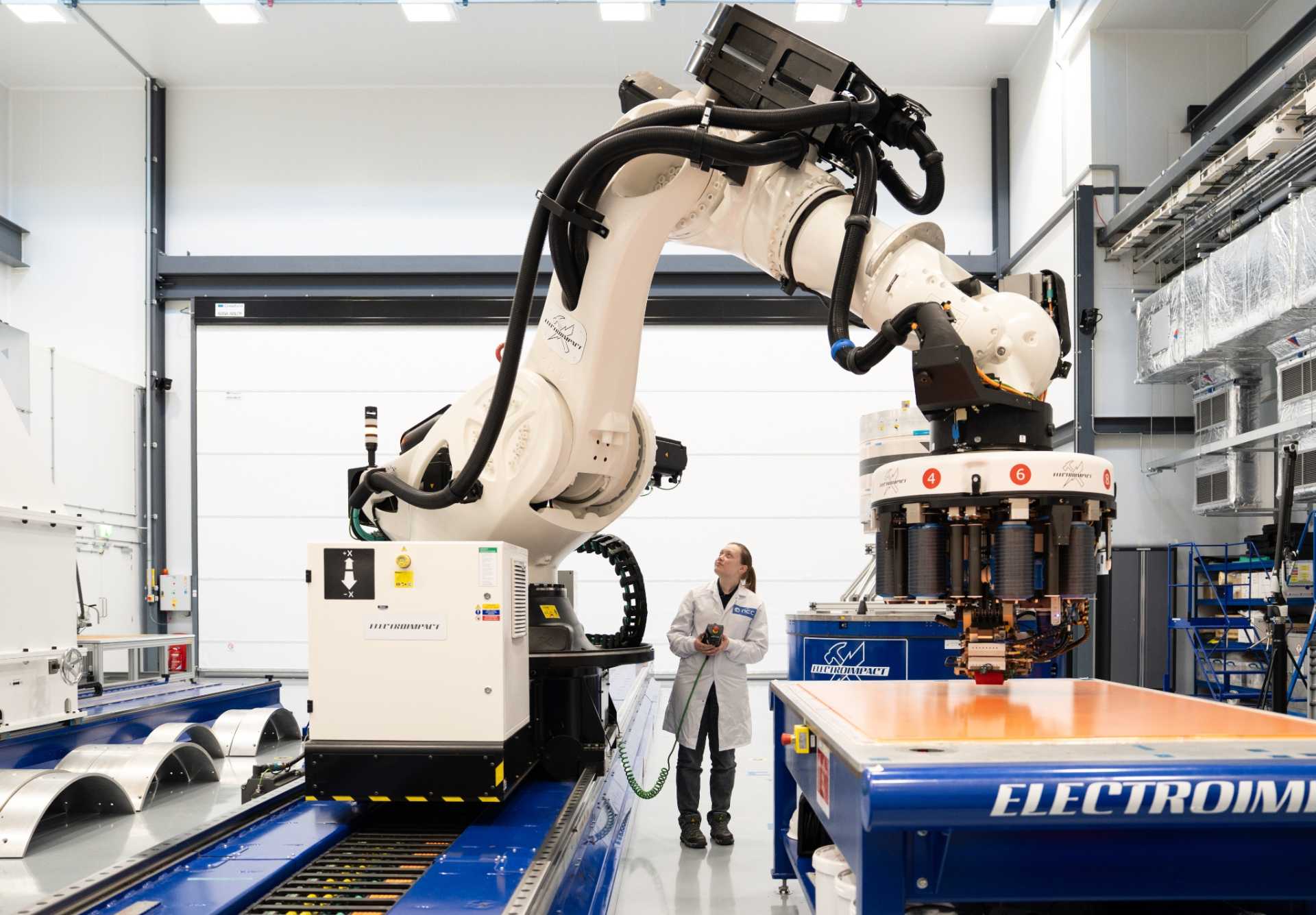
Many manufacturers assume AI requires major investment, but some of the highest‑return opportunities start small. ‘Lightweight’ analytics on machine energy use or digital twins modelling live consumption can deliver rapid payback without disrupting production, helping companies build confidence incrementally.
My role is to help organisations focus on what’s practical and appropriate, not theoretical. The technology exists; the challenge now is integration, and supporting companies through that journey is central to this mission.
How do we raise awareness of AI capabilities?
Connecting manufacturers to expertise, testbeds and sandboxes is vital. These controlled environments allow companies to trial AI solutions to see if it works for them and their product without disrupting production or taking unnecessary risks. They also help companies explore low‑cost, high‑impact interventions first; for example, running energy optimisation algorithms in a testbed to estimate savings before committing to on‑site deployment.
SMEs are lean for a reason; they have fine margins and don’t want to invest without first having a high degree of confidence that it’s going to pay back. So these testbeds are key to be able to bring the provider and end user together to prove the tech can be deployed with as low a risk as possible before it goes anywhere near the shop floor. This applies to skills as well, so these environments essentially offer an opportunity to train people offline.
One of the recommendations we will make is that the UK needs more platform-based AI environments where companies can trial solutions with speed and confidence.
These are the relatively quick wins, which is great for industry, but alongside this we are also looking at more ambitious opportunities: how we innovate across engineering, from design all the way through to manufacture, prototyping, iteration and refinement, production, and then end of life and second life to enable new business models.
It is not just what’s in front of us – which is really important for industry to actually start moving the needle in this particular space – but also what we do next.
How do we make sure everyone works together?
The ecosystem is fragmented. Numerous initiatives exist, but manufacturers rarely see a joined up picture. This role puts a strong emphasis on coordination, stitching together UK capabilities and ensuring the system behaves as a connected whole.
Success very much depends on connection and coordination between industry, academia, government and tech providers. Understanding ‘the art of the possible’ and feeding that knowledge back into industry is a core part of what the AI Champion must deliver.
What about security concerns around AI?
There are many safety critical applications within manufacturing and engineering, so AI must be trustworthy, explainable and compliant.
Trustworthy AI is a core pillar of this role. Is it explainable? Is it transparent? Is it fair? Is the governance piece in place? And as part of the role, I’ll be working with regulators very closely to understand what needs to happen in terms of AI evolution, to make sure that what’s developed is trustworthy.
At HVM Catapult, we have an AI model ‘MoT centre’, an environment where AI systems can be independently evaluated for safety, data quality and regulatory alignment. This gives manufacturers reassurance that models they intend to deploy meet current ISO and British Standards.
So, we have an environment where organisations can work with us to test and validate AI models so they are ‘compliance confident’. Although, the fact that the regulatory landscape is changing does add to the complexity and the nervousness of industry to get involved.
What does the future look like for the AI Champion?
Looking ahead, we are strengthening strategic alignment with DBT and shaping the UK’s long-term approach to manufacturing for AI and specifically AI for manufacturing.
We will continue to evolve national sandboxes, define skills requirements and develop clearer pathways for adoption. Myself and the steering board will also be acting as a trusted advisor to UK government and making sure we’ve got a strong voice that enables us to represent manufacturing on this topic.
Part of that will be highlighting the opportunities, challenges and, therefore, the appropriate interventions government need to make.
And that’s always a challenge as it’s an environment that can become over-complicated. So the model will not only look at the quick wins that are achievable, but also identify the more profound goals we need to focus on in parallel to make sure, ultimately, that the UK wins this race, and is actually at the forefront of AI so we can really push the envelope and use the technology to create world-class businesses.
Ultimately, success will be measured not by how much AI is discussed, but by how much productivity, competitiveness and cost reduction UK manufacturers achieve by adopting it, from lower energy bills to more efficient workflows and more resilient operations. By keeping the focus on practical adoption and tangible outcomes, the UK can build world‑class industrial performance powered by AI.
For more stories like this, visit our Industrial Data & AI channel