
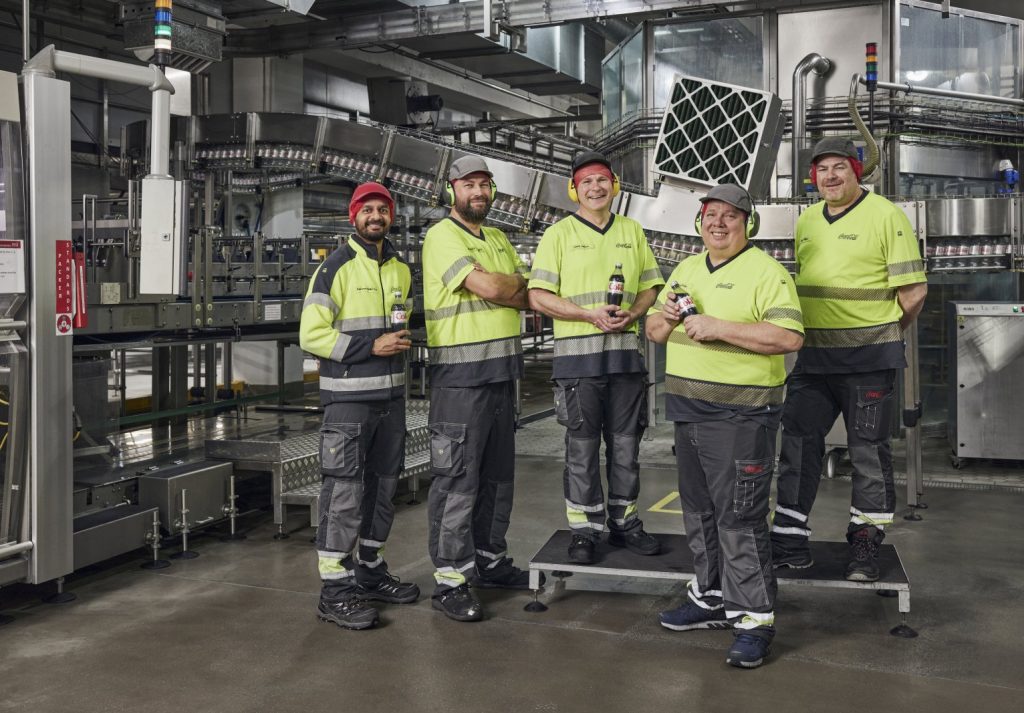
In this exclusive op-ed for The Manufacturer, Coca-Cola Europacific Partners’ Chris Goodall says National Manufacturing Day is a reminder that accessibility must be embedded across manufacturing – not as compliance, but as a core business priority – to remove barriers, unlock talent, and ensure colleagues of all abilities can thrive.
Key takeaways:
-
Accessibility as strategy: Embedding accessibility is a business priority, not a compliance exercise.
-
Challenging perceptions: Manufacturing must remove barriers and attract disabled talent.
-
Action through design: Inclusive facilities and assistive tech improve safety, productivity and morale.
-
Sector-wide learning: CCEP’s Accessibility Matrix helps other manufacturers drive inclusion.
-
Business and culture gains: Accessibility fuels innovation, talent growth and resilience.
National Manufacturing Day gave us a chance to celebrate the people behind the products – a reminder that this sector is powered not only by technology and machinery, but by the diverse talent that keeps it moving.
For too many people, however, work can still feel out of reach. One in six people globally has a disability – whether visible or non-visible – and the majority will face higher barriers to accessing education, training and employment opportunities.
Accessibility, therefore, is about far more than compliance with legislation. It means creating environments where colleagues can contribute safely, confidently and with dignity. With the right adjustments and support, barriers can be removed and potentially unlocked.
This is particularly relevant for manufacturing. For too long, our sector has been seen as ‘off limits’ for many disabled colleagues. That perception must change.
We’re working to break down those barriers. One way we’re doing that is through a disability employee working group, which is part of CCEP’s JustBe allyship network. The network brings together 250+ ambassadors across six pillars, Disability, Gender, Culture & Heritage, Social Mobility, LGBT+ and Multi-Generations, and each pillar is sponsored by a senior leader to ensure accountability and drive engagement. Within the Disability pillar, our ambassadors provide a safe space for colleagues to share experiences, shape improvements, and ensure that different abilities – whether physical, mental or neurodiverse – are recognised and supported across our business.
As senior sponsor of the Disability pillar, I’ve seen first-hand how increasing accessibility isn’t just a moral duty – it’s a business-critical one. At CCEP, we live by the ethos that everyone’s welcome. Making that real in manufacturing means removing barriers, opening doors – literally and figuratively – and ensuring colleagues of all abilities can thrive.
A sector that thrives on diversity of thought
Manufacturing thrives on problem-solving, adaptability and resilience. Diverse perspectives are the key to all three. When disabled talent is excluded, businesses lose not just people, but potential: ideas that could spark innovation, skills that could strengthen operations, and experiences that could build more resilient teams.
There’s also a clear business case too. Accessible workplaces are safer, more productive, and more engaged. But inclusion goes beyond numbers on a spreadsheet – it’s a responsibility that every manufacturer should take seriously if we are to secure the workforce of the future.
Turning commitment into action
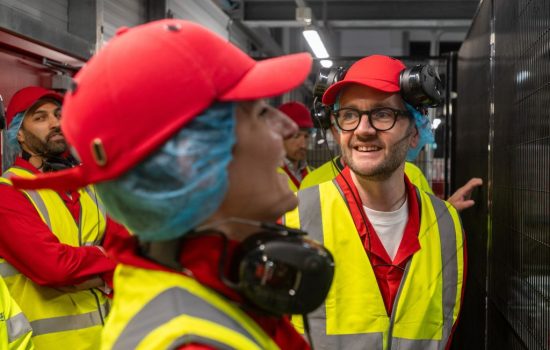
At CCEP, accessibility is not a side project. It’s embedded in how we design, build and run our sites. The Disability pillar has driven practical change across our factories and distribution centres. At our Edmonton site in London, we’ve invested almost £1 million to transform one of our largest manufacturing and distribution facilities. More than 50 heavy doors have been replaced or automated, signage and worktops redesigned, and 75% of the site is now wheelchair accessible. These changes were led by our colleague and Accessibility Ambassador, Mohammad Koheeallee, who has turned lived experience into lasting change and shown what’s possible when operational design includes accessibility from the outset.
We’ve also embedded a workplace adjustments process across our sites, ensuring colleagues can easily access tailored support, from ergonomic kit to assistive technology, and we run regular accessibility audits to proactively identify barriers and develop ways of removing or overcoming them. Together, these actions make our sites safer, smarter, and more welcoming.
For example, in Wakefield, Jemma Townend became our first Deaf engineer. She is supported by British Sign Langauge (BSL) interpreters, adapted safety systems and tools like vibrating pagers for emergency alerts. Her story demonstrates how inclusion enables colleagues not only to succeed, but to support and inspire others.
Sharing what we’ve learned
In 2024, we launched our Accessibility Matrix – developed with AccessAble and endorsed by the Business Disability Forum. It’s a step-by-step guide that demystifies accessibility and translates complex rules into practical, easy-to-use guidance.
We’ve chosen to make it publicly available so that other businesses can utilise what we’ve learned and adapt the framework to their own needs. Already recognised by the Department for Work & Pensions as a case study in disability employment, it’s supporting organisations across manufacturing and wholesale to accelerate their own progress.
Stories that spark change
Behind every audit or investment is a story of lived experience. Jemma’s journey at Wakefield shows how accessible design unlocks dignity and independence, not just ‘accommodation.’ Mohammad’s leadership at Edmonton demonstrates how one colleague’s vision can reshape an entire site.
Through our Disability pillar, now with more than 30 members, colleagues are sharing personal challenges and ideas for change. From neurodiversity training for managers to new hiring practices like anonymised CVs and skills-based interviews, these insights are helping us refine our approach and foster a culture that ensures ability, not disability, defines opportunity.
Progress we can build on
The impact of prioritising accessibility is clear. In 2021, 7% of our colleagues identified as having a disability. By 2024, that figure had grown to 13% – already surpassing our 2030 target of having 10% of our workforce represented by people with disabilities.
Beyond physical access, technology is also playing its part. Tools like Audio Access, which converts text into lifelike speech, have already powered more than 1,000 audio projects, making training and communication more inclusive and cutting costs by 99% by replacing time-consuming video dubbing.5 It’s an example of how accessibility often drives efficiency as well as inclusion.
Recognition from external bodies reinforces our progress. We’re proud to be a Disability Confident Leader, a signatory of the Disability Employment Charter, and to be included in Stonewall’s Global Workplace Equality Index, Bloomberg’s Gender Equality Index, and the Social Mobility Foundation’s Top 75 list. But what matters most is the difference these efforts make every day for colleagues on site.
The aspiration is clear: workplaces across the manufacturing sector where disabled colleagues are not exceptions, but integral to every team.
A responsibility we all share
Inclusion is not just good practice – it’s a responsibility for all manufacturers. As we reflect on National Manufacturing Day, it’s a chance to celebrate the talent that makes our sector thrive, and to recognise that accessibility is the foundation of innovation.
My call to peers across the sector is simple: audit your sites, listen to your colleagues, share what works. Accessibility is not a benefit or a favour – it’s a right. By working together, we can reshape perceptions and ensure manufacturing is truly accessible for all.
About the author
 Chris Goodall is Vice President of Customer Service and Supply Chain Great Britain, at Coca-Cola Europacific Partners (CCEP). In his role, Chris is responsible for ensuring CCEP’s end-to-end supply chain in GB is robust, reliable and sustainable. He has a wealth of experience in manufacturing and operational excellence across a 25+ year career in food and drink organisations and a passion for developing diverse and talented teams.
Before taking on his current role in December 2023, Chris was the GB Manufacturing Director for CCEP, joining the business in October 2021.
Prior to CCEP he worked for PepsiCo from 2017 to 2021, responsible for West Europe performance improvement and before that was the Manufacturing Director for Walkers Crisps, part of PepsiCo, in the UK. He spent an extensive part of his career at Nestle working across Coffee and Confectionery in different operational and project roles over a 12-year career with Nestle working in the UK, as well as Spain and Switzerland. He began his career with the snacking company, McVitie’s, in 1997, as a manufacturing apprentice spending 7 years in increasingly senior roles.
Chris is committed to growing talent across all levels of the organisation and promoting sustainability within the supply chain, as well as working with suppliers and customers to help them make their operations more environmentally friendly. He’s also a key supporter of CCEP’s JustBe allyship network, driving engagement around CCEP’s ID&E agenda, and a sponsor of its Disability catalyst group.
For more articles like this, visit our People & Skills channel