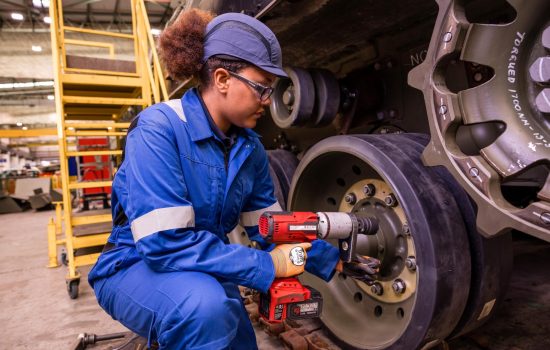


As the defence sector faces mounting skills shortages and shifting workforce demands, attracting more women is becoming a strategic priority. Babcock International Group’s Jo Rayson discusses the challenge with The Manufacturer’s James Devonshire.
Key takeaways:
- Attracting women is a strategic necessity, not just a diversity goal: The defence and manufacturing sectors face significant skills shortages, and failing to engage women effectively excludes half the potential talent pool.
- Early engagement is essential to change perceptions: Many young women never consider careers in defence or engineering due to outdated stereotypes. Outreach programmes are crucial, especially when introduced at an early age.
- Visible role models help break down barriers: Seeing women in leadership and across all career stages helps make the industry feel more accessible. Representation plays a key role in showing that progression is achievable.
- Structural barriers still need active solutions: Challenges such as lack of mentorship, career breaks (e.g. parenthood), and pay equity issues continue to affect women’s participation.
- Retention and progression matter as much as recruitment: Attracting women into the sector is only the first step. Long-term success depends on supportive workplace cultures, clear career pathways, life-stage support and alignment with values like sustainability and community impact.
The defence and aerospace sectors have long faced a persistent challenge: how to broaden their talent pipelines in industries that have historically been male-dominated. For companies such as Babcock International Group, the issue is not simply about equality. It is also about ensuring the future workforce has the skilJo Rayson, Chief Operating Officer (COO) for Land and UK Aviation at Babcockls needed to support increasingly complex technologies and national security priorities.
Few people are better placed to discuss this challenge than . In her role, Rayson oversees operational delivery across a wide portfolio that spans building, supporting, training and flying services for customers including the British Armed Forces, NATO and emergency services.

Yet her own career path into defence was far from traditional. Before joining Babcock nine years ago, Rayson worked across sectors including telecoms, construction, financial services and rail, holding a range of HR and change leadership roles. She originally joined Babcock as HR Director for its emergency services and training business before transitioning into operational leadership roles and eventually becoming COO.
According to Rayson, her experience moving between sectors demonstrates that defence careers are far more accessible than many people assume.
The real challenge now, however, is encouraging more women to see the sector as somewhere they belong.
Changing perceptions: reaching young women earlier
For many young women, defence, aviation and engineering simply do not appear on the list of possible careers. Changing that perception requires engagement much earlier in the education pipeline.
Rayson believes outreach programmes are critical in helping students understand the wide range of opportunities available within the sector.
“This is a real challenge that we face as a sector, and actually a number of sectors face similar challenges,” she explained.
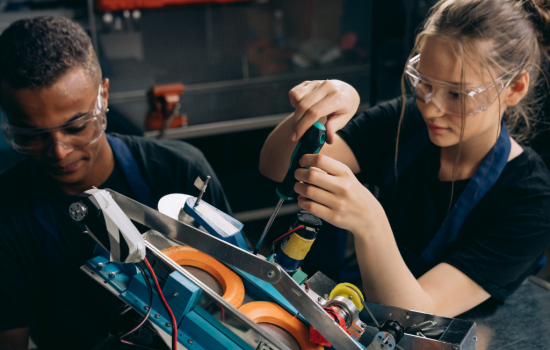
One of the most effective approaches has been opening doors to students and letting them experience engineering first-hand. Events such as engineering festivals, STEM days and school outreach initiatives can provide a tangible introduction to careers that might otherwise feel distant or unfamiliar.
At Babcock, initiatives like its Festival of Engineering have brought hundreds of schoolchildren into its facilities to explore technologies ranging from robotics to virtual-reality welding. Such experiences can transform perceptions of manufacturing from outdated stereotypes into something modern and exciting.
“Bringing to life what a career could look like if you chose to work for a company like Babcock is really important,” Jo said.
Equally important are clear pathways into the industry. Apprenticeships, early career programmes and structured development routes can help young people visualise how they might progress from education into a long-term career.
For organisations operating in remote or specialised locations, community engagement can also play a vital role. Babcock employees are encouraged to take part in local initiatives through a volunteering programme that allows them to support schools, careers events or mentoring activities.
The aim is simple: expose as many young people as possible to the possibilities of engineering and defence careers.
Jo also believes that outreach should begin earlier than many organisations currently target.
“If possible, we should engage people earlier in the process,” she said, noting that career perceptions often form well before students reach secondary school.
By opening conversations at a younger age, companies can challenge assumptions and ensure students understand the full breadth of opportunities available.

Babcock’s Festival of Engineering has brought hundreds of schoolchildren into its facilities.
The power of visible role models
Representation matters. For decades, senior leadership across defence and manufacturing has been dominated by men. That is gradually changing, but visibility remains an important factor in shaping how potential recruits view the sector.
“When you went to an event years ago, it would be predominantly men,” Jo recalled.
Today, she said, the picture is slowly shifting. Seeing women in leadership positions sends a powerful message that career progression is possible.
Babcock itself has taken steps to increase representation at the highest levels. The company’s Chair, Dame Ruth Cairnie, is a prominent female leader in the UK defence sector, while women now account for around 40% of the company’s board.
The organisation has also set a clear ambition to increase female representation across the wider business. Babcock is targeting a minimum of 30% women in its workforce by 2030, a goal that Rayson said is embedded throughout recruitment, development and outreach activity.
For Jo, these examples matter not only internally but across the wider industry.
“The more women can see that there are females in very senior roles, the more that comes to life,” she said.
Role models are not limited to senior leaders. Graduates, apprentices and early-career professionals can also play an important role in shaping perceptions.
Many are entering the defence sector for the first time, bringing fresh perspectives and sharing their experiences with younger generations considering similar careers.
By showcasing real career journeys, including those that did not start in engineering or defence, organisations can demonstrate that the sector is more open than stereotypes suggest.
Addressing the barriers that remain
Despite progress, structural barriers still exist and Jo is clear that the sector cannot assume the work is done. “We’re still not in a place where everyone has the most positive experience,” she said.
One of the most effective ways to support women entering the industry is through mentoring. Having a trusted mentor can provide guidance, encouragement and advocacy during key career moments.
At Babcock, a mentoring initiative known as Illuminate focuses specifically on supporting women’s development within the business. The programme pairs female employees with mentors who can help them build confidence, expand networks and explore long-term career pathways.
“Mentorship has been instrumental in my career,” Jo explained.
Another area companies are examining is the points in a career where women are most likely to leave the sector. Parenthood is one such transition that has historically led to talent leaving engineering and defence roles, highlighting the need for better support structures and workplace flexibility.
Pay equity is another important consideration. Transparent reporting of gender pay gaps has also encouraged organisations to review how roles are structured and rewarded.
For Jo, however, the solution also lies in collaboration. Defence companies cannot solve these challenges in isolation.
Partnerships with industry networks and professional groups, such as organisations promoting women in defence and engineering, allow companies to share best practice and learn from one another.
“This is an industry challenge that we need to address together,” Jo said.
Gender diversity as a solution to the skills crisis
The defence and aerospace sectors are experiencing acute skills shortages, particularly in engineering and advanced manufacturing roles.
For Jo, the connection between gender diversity and workforce sustainability is clear.
If companies fail to attract women into these careers, they are effectively closing off half of the potential talent pool.
“There is very much a war for talent at the moment,” she said.
Broadening recruitment to include more women and individuals from diverse backgrounds is therefore not just a social objective but a strategic necessity.
This requires thinking beyond immediate recruitment needs and focusing on the long-term skills pipeline.
Technological change is transforming defence and manufacturing, bringing new requirements in areas such as digital engineering, automation, data analysis and advanced materials.
As these skills evolve, companies must work closely with educational institutions, training providers and small and medium-sized enterprises to develop the workforce needed for the future.
“Helping us understand what those skills gaps are and how we bring them into our organisation is pivotal,” Jo said.
Encouraging greater gender diversity is therefore not just about fairness, it is also about ensuring the sector has access to the widest possible pool of talent.
Retaining talent: beyond recruitment
Attracting women into defence careers is only the first step. Retention and career progression are equally important.
Jo pointed to several areas where organisations can make meaningful improvements.
“We’ve looked carefully at the exit points we see for women in our business,” she said. “There is definitely a piece around becoming a parent, so we focus a lot on the policies, support and networks we can put around women when they leave to have children, to encourage them to return and make that experience as positive as possible.”
While parenthood remains a major transition point in many careers, it is far from the only one.
Companies are increasingly recognising the need to support employees through different life stages, including menopause, which can significantly affect workplace experiences but has historically received little attention.
Providing open conversations, appropriate policies and supportive workplace cultures can make a tangible difference in keeping experienced employees within the organisation.
Career visibility is another key factor. Employees are far more likely to stay if they can see a clear path for development. Structured talent programmes, leadership training and technical upskilling opportunities help individuals understand how they can progress.
In Babcock’s case, talent development initiatives aim to provide employees with both technical expertise and leadership capabilities, ensuring they have the tools needed to advance their careers.
Beyond professional growth, workplace culture also plays a role in retention. Increasingly, employees want to work for organisations whose values align with their own. Sustainability, community engagement and environmental responsibility are becoming important factors in how younger workers choose employers.
Jo noted that Babcock’s annual employee surveys consistently highlight interest in the company’s environmental, social and governance (ESG) initiatives.
Programmes such as community volunteering days and environmental sustainability projects have therefore become an integral part of the organisation’s culture.
These initiatives not only benefit local communities but also strengthen employees’ sense of purpose and connection to their work.
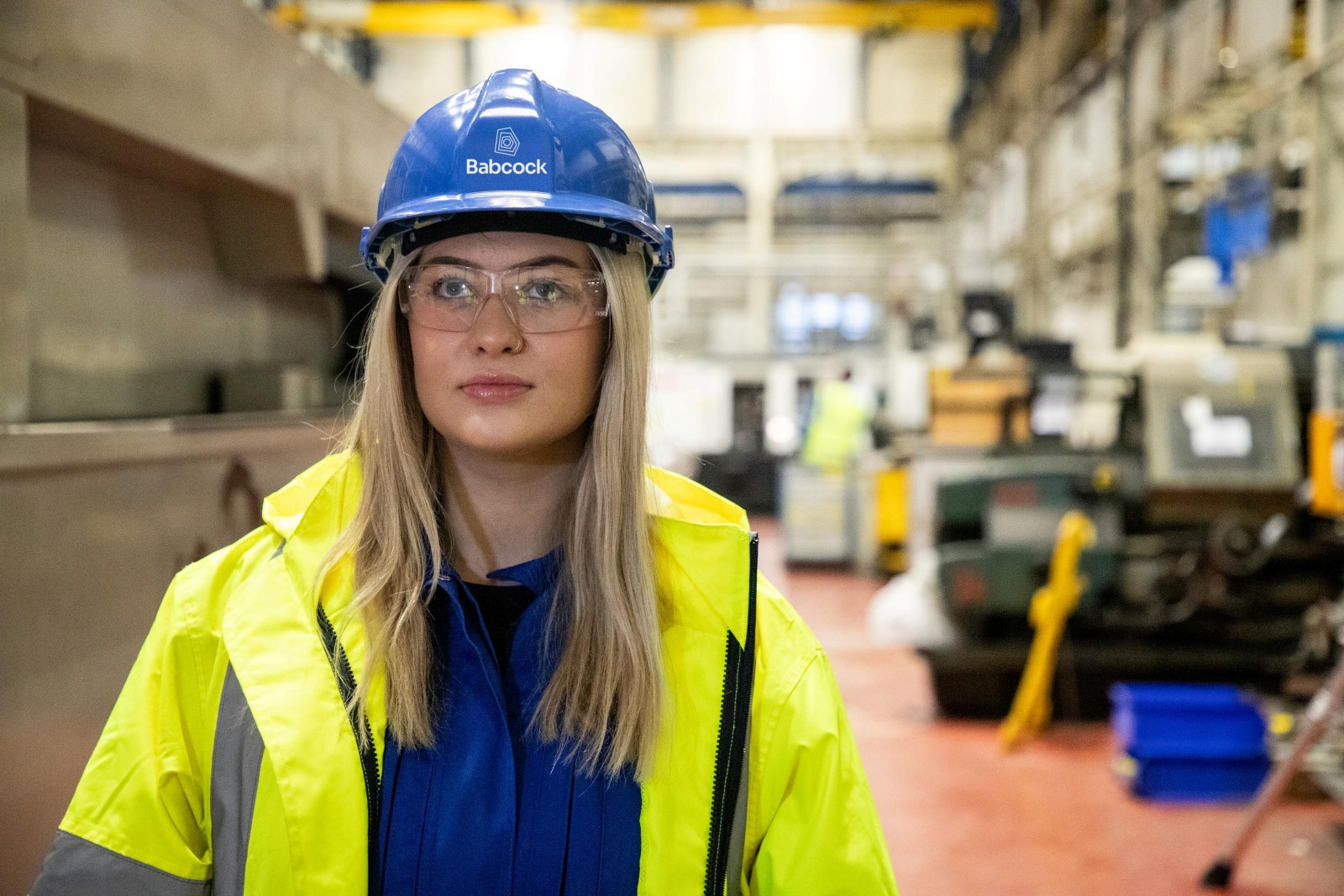
Attracting more women into defence careers is critical to addressing skills shortages and building a more resilient workforce.
Advice for the next generation
For young women considering careers in defence, aviation or manufacturing, Jo’s message is straightforward: do not assume you need a traditional background to succeed. “I’m not an engineer,” she pointed out.
Her own career demonstrates that many skills developed in other sectors – from leadership and project management to operational strategy – can translate effectively into defence roles.
The key, she said, is to approach the industry with an open mind. “Come and understand what we are as an industry. Don’t have preconceived ideas about what it might look like to work in these sectors.”
Manufacturing environments have changed dramatically over the past few decades. Modern facilities increasingly feature advanced robotics, automation and digital technologies that bear little resemblance to outdated stereotypes of heavy industry.
For those willing to explore the sector, opportunities extend far beyond traditional engineering roles.
From digital specialists and project managers to sustainability experts and operational leaders, the defence industry requires a diverse mix of skills.
Rayson also encourages young professionals not to place artificial limits on their ambitions.
“Don’t be self-limiting in what you can achieve,” she said.
Measuring progress: what success should look like
Looking ahead, meaningful progress in gender diversity will require both measurable targets and cultural change.
Metrics such as representation at different levels of an organisation remain important. Without clear goals and accountability, progress can stall.
However, Jo believes the ultimate measure of success will be when gender diversity becomes less of a separate topic and more simply a natural part of how organisations operate.
“The reason we talk about it so much is because we need to drive a step change,” she said.
Jo suggested that, in an ideal future, conversations would focus less on gender and more on building inclusive workplaces where everyone can thrive.
“I’d love to be in a position where we’re just talking about inclusion and creating great places to work.”
Reaching that point will take sustained effort across the entire industry.
Yet with skills shortages intensifying and technological change accelerating, the incentive to broaden the talent pool has never been stronger.
Encouraging more women into defence and manufacturing is therefore not just about representation, it is about ensuring the sector has the diverse skills, perspectives and leadership needed to meet the challenges of the future.
For more articles like this, visit our Skills channel