
For nearly six decades, Telford-based Transicon has been designing and making bespoke industrial control systems and machinery for UK manufacturers. For General Manager, Jennifer Hughes, the company’s story has been one of resilience, adaptation and ambition – from navigating the pandemic and adapting to the changing cyber security landscape, to addressing skills shortages and pursuing employee ownership. The Manufacturer’s James Devonshire picks up the story…
Key takeaways:
- Strengthen culture to build resilience: A loyal, family-oriented workforce helped Transicon adapt quickly in times of crisis. Investing in people pays long-term dividends
- Diversify to mitigate risk: Serving multiple industries provided stability during the pandemic. Avoid over-reliance on a single sector
- Treat cyber security like safety: With connected systems now standard, protection against cyber threats must be embedded from the outset of any automation project
- Broaden the talent pipeline: Addressing skills shortages requires targeting underrepresented groups and inspiring young people early to see manufacturing as a viable career
- Champion innovation through support: Access to fair R&D incentives is essential for SMEs to take risks, develop solutions and remain competitive
Transicon has been designing and building bespoke industrial control systems and production machinery since 1967. With a workforce of around 50, the company continues to play a vital role in supporting UK manufacturers across sectors including automotive, steel, food and beverage and water.
Despite its modest size, Transicon is known for delivering turnkey solutions that extend from consultancy through to full production lines. Nevertheless, the company’s culture remains rooted in its family-run heritage. Indeed, as Jennifer highlighted: “Many of us have worked together for years, and some are literally family. It has created an atmosphere of loyalty and shared purpose.”
Leadership shaped by the pandemic
Jennifer, a chartered accountant by training, joined Transicon 13 years ago after a career at a FTSE 250 company in the aerospace and defence sector. Initially brought in to the family business to improve forecasting and financial processes, she became finance director before being appointed general manager.
The shift occurred during the COVID-19 pandemic, when other directors were shielding and Jennifer assumed responsibility for operations alongside shop floor teams. “It completely changed the way I felt about the business,” she said. “I went from focusing on the numbers to understanding how our systems worked and how our engineers delivered solutions.”
Exposure to frontline operations also reshaped her leadership style and broadened her understanding of UK manufacturing. Jennifer highlighted the breadth of domestic industry: “Seeing first-hand what we made in this country, and how much of it went uncelebrated, was amazing. We make fantastic things in the UK, but don’t shout about it enough.”
Diversification underpinning resilience
COVID-19 had a significant impact on capital expenditure, but Transicon’s diverse customer base provided resilience. The business continued to operate as a key supplier to food, beverage and water industries, as well as legacy control systems.
“Projects slowed as customers delayed investments,” Jennifer recalled. “But diversification paid dividends. Flour mills, for example, were working flat out because of increased demand for bread, and we were there to support them,” she added.
“Our engineers worked remotely where possible, and on the shop floor we spread people out. Everyone had their own kettle – it was strange, but it worked.”
Jennifer highlighted that resilience came not just from sector diversity but from a long-term strategy of refusing to rely too heavily on any single industry. “Years ago we were almost entirely focused on the water sector. The conscious decision to diversify paid off when the pandemic hit.”
Cyber security as a priority
Technological change was identified as the most significant industry development of recent years. Jennifer pointed to the shift from siloed control systems to fully connected, web-enabled devices. Once designed for local operation only, control equipment is now routinely accessed remotely, often across national borders.
While such advances have improved efficiency and visibility, they have also created new risks. The recent cyber attack on Jaguar Land Rover, which has halted car production for over a month and counting (at time of writing), was a stark reminder of the potential consequences. “Cyber security is like safety – it has to be built into systems from the start,” Jennifer stated. “It was no longer optional. The first thing we considered was how to deliver projects securely.”
The wider sector has also felt the impact. Retailers including Marks & Spencer have reported operational disruption caused by cyber incidents. According to industry data, manufacturers are now among the most frequently targeted companies worldwide. For SMEs like Transicon, this has meant significant investment in training and recruiting engineers with cyber expertise, embedding security checks and protocols into every automation project.
Jennifer described it as a permanent shift in priorities: “It used to be about throughput and efficiency first. Now, security is the baseline. Everything else follows from there.”
Skills shortages and productivity pressures
Jennifer identified skills shortages as the most pressing challenge for both Transicon and the wider manufacturing sector right now. Experienced engineers retiring has created knowledge gaps, while recruitment from a limited talent pool has proved difficult.
“In the past, customers provided detailed specifications,” she explained. “Now, they describe problems and expect us to design solutions. That requires more engineering resource at the outset. For SMEs, that creates significant pressure on staffing and growth.”
The shortage extends beyond engineering. Welding, for example, is a skill in critically short supply, with manufacturers struggling to recruit even at premium wages. Jennifer said that attempts by companies to inspire interest through school outreach often prove fruitless because of industry stereotypes deterring would be future welders.
Productivity, too, has been affected. With fewer engineers available, SMEs are finding that projects require more consultancy upfront and longer delivery times. For customers, this often means that automation and efficiency gains are delayed – a frustrating irony when many are investing specifically to offset labour shortages on their own shop floors.
Inclusion as an untapped opportunity
Jennifer also pointed to workforce diversity as an underutilised opportunity. She sits on the Industry Advisory Board for Women in Manufacturing UK (WiM UK) and fully supports the ‘35 by 35’ initiative, which aims for 35% female participation in the sector by 2035 – see page 42.
“The biggest opportunity we have in manufacturing is to appeal more to a wider demographic,” she said. “We’ve got this big, untapped talent pool out there, because we haven’t appealed to women in particular, but other groups as well,” she added.
“Manufacturing delivers stable careers and rewarding jobs. If we could increase the participation of women in the sector and hit the 35 by 35 target, we’d make a massive dent in the skills gap.”
Jennifer highlighted the fact that other sectors, such as finance and technology, have significantly improved female participation rates through targeted programmes and culture change. She argued that manufacturing could do the same if it modernised its image. “We know that the roles exist – creative, analytical, hands-on, problem-solving. We just have to show that this is not a male-only environment.”
Industry bodies have identified diversity as a productivity driver as well as a recruitment tool. As Jennifer pointed out: “It wasn’t just the right thing to do morally. It was good business. Teams with wider perspectives create better solutions.”

Government policy: progress and gaps
Jennifer welcomed the government’s Industrial Strategy, released earlier this year, for recognising advanced manufacturing and including the 35 by 35 target. She was encouraged that the sector had been identified as a national priority, with ambitions for supply chain resilience and growth.
However, she noted the absence of SME voices from the strategy’s main committee. “We are the backbone of the supply chain,” she said. “Not having SME representation was a missed opportunity.”
Jennifer also believes the government scored an own goal when it comes to innovation with its R&D tax credit changes. As she explained, before April 2023, SMEs could recover up to 45% of eligible spend, but the figure now stood closer to 15% for profitable businesses. “That reduction has been significant,” she warned. “It has discouraged innovation and disproportionately impacted smaller companies prepared to take risks.”
While she acknowledged the government’s intent to simplify the system and reduce abuse, Jennifer argued that the reforms had been blunt and disproportionate. “I would ask the government to reconsider that decision, because for a company like us, it makes a huge difference,” she said.
Inspiring the next generation
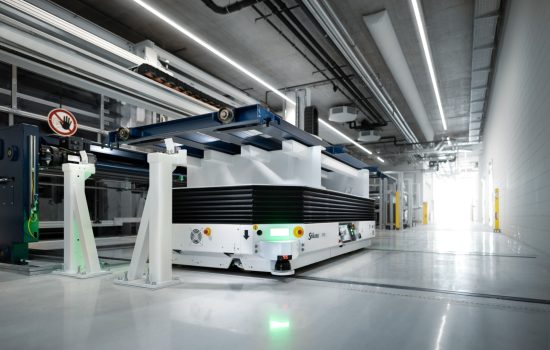
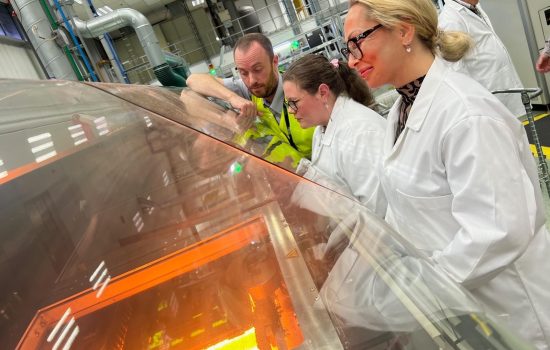
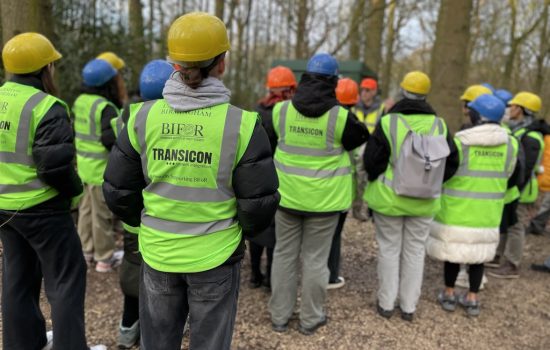
For this year’s National Manufacturing Day (25 September), Transicon engaged with local schools, providing Year 8 students with exposure to all aspects of the business, from design and manufacturing to testing and commissioning. Demonstrations included a prototype Delta robot stacker and an autonomous guided vehicle model.
“Traditionally, at school, children saw careers as teachers, doctors or lawyers,” Jennifer said. “Manufacturing was invisible. That’s why we wanted to show that it was creative, technical and practical, with roles for everyone.”
The initiative received positive feedback, with students applying ideas from the visit to personal projects at home. Jennifer described early engagement as essential, particularly given the decline of design and technology in schools. “We target Year 8 because they haven’t yet chosen their options. But the earlier the better really. We have to capture interest before it fades.”
Partnerships with organisations such as Marvellous Manufacturing – which helps businesses engage with schools, colleges and universities – has helped SMEs like Transicon manage the logistics of outreach, from safeguarding to scheduling. Jennifer credited these collaborations with making engagement sustainable: “It’s a lot of work for a small company to organise on its own. Support networks make it possible.”
Future direction: employee ownership
Looking ahead, Jennifer confirmed Transicon’s intention to transition to an employee ownership trust. The move, she argued, would secure the company’s culture and values for the long-term.
“That’s where we’d like to get to,” she stated. “We are investing in growth and sales to fund the transition. Along the way, there will be plenty of bespoke projects, but the ultimate goal is to secure Transicon’s future as an employee-owned business.”
The model has gained traction among UK manufacturers in recent years, with companies citing improved employee engagement, retention and resilience. Jennifer said Transicon viewed the transition as a natural fit: “We’ve always run the company for the benefit of our employees. Employee ownership is simply a way of formalising that for the future.”
For more articles like this, visit our Leadership channel