

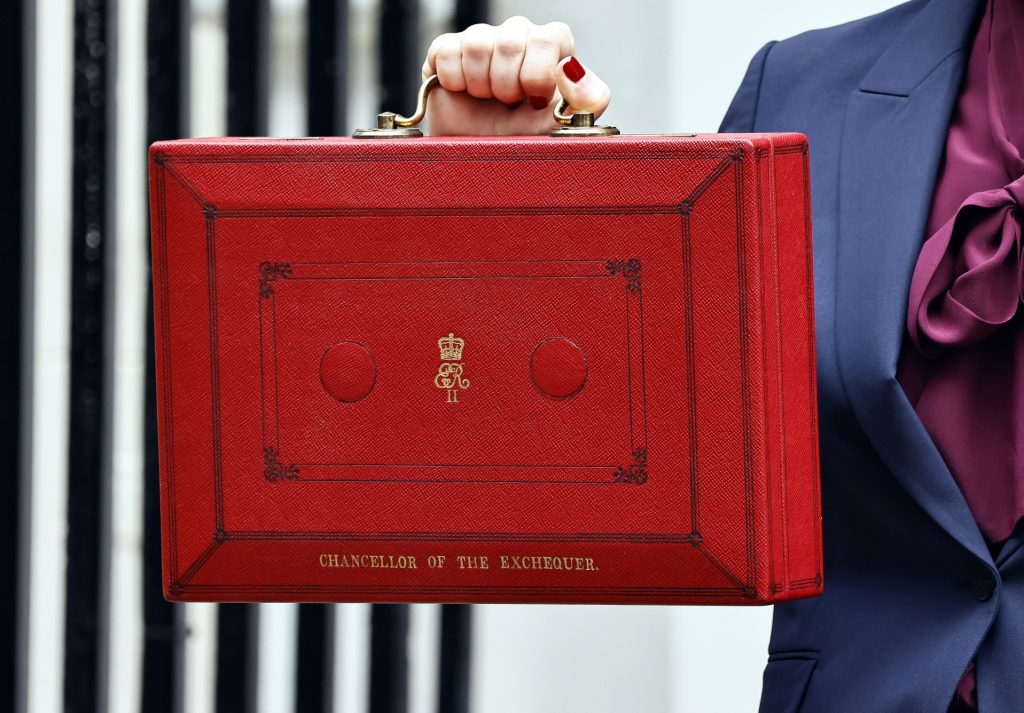
Today, the Autumn Budget was announced. Marked by an early leak from the Office for Budget Responsibility (OBR), Chancellor of the Exchequer Rachel Reeves laid out a plan aimed at bolstering the UK’s manufacturing and industrial sectors. The strategy is focused on targeted investment, significant cost reduction for businesses and a drive on productivity and growth.
The Chancellor started by emphasising the broad economic context: “We are re-building our economy, forging new trade deals with the U.S, India and European Union. We have reformed visa systems and raise public investment to highest level in over four decades.”
A key focus of the Budget was addressing the immediate financial pressures facing manufacturers. Responding directly to calls from industry groups like Make UK, the government announced plans to slash electricity prices for manufacturing businesses. This measure is designed to enhance the competitiveness of UK-based production.
The Chancellor acknowledged that low investment is core of productivity problem and introduced major tax incentives to reverse this trend. The flagship measure is a 40% first-year allowance allowing businesses to write off a significant portion of their investment against tax immediately. This is to increase the attractiveness of the UK as aplce to start and grown a business.
This all adds to a broader corporate tax roadmap intended to make the UK a more attractive place to grow a business, maintaining one of the lowest corporate tax rates in the G7.
Securing the future: strategic sector support
The Budget commits to a “buy make and sell more” within the UK philosophy with significant support directed toward high-value, strategically important sectors across the nations of the UK:
- Defence and national security: Defence spending is set to increase, underscored by the government’s earlier commitment to intervene and save British Steel and buy British when it is crucial to national security.
- Next-generation technologies: Targeted investment in the semiconductors sector, which the government deems critical for industry, alongside funding for advanced manufacturing in Northern Ireland and two AI growth zones in Wales creating 8,000 jobs. Scotland will get £14m for low carbon technologies in Grangemouth alongside other investments.
- Clean energy manufacturing: A significant commitment was made to the nuclear sector, backing Rolls Royce building UK first small module nuclear reactors (SMRs), a move that supports high-skill manufacturing jobs and energy independence.
The overarching economic goal was clear: “Growth is the engine of stability investment and reform,” she said.
To ensure the industrial strategy is supported by a strong domestic workforce, £13m in funding has been allocated for skills, business support and infrastructure to seven regional mayors, aiming to spread economic opportunity and growth across the country.
Alongside this, funding for under-25 apprenticeships will be free for SMEs, encouraging businesses to take on the scheme and expand workforces. The Government has also confirmed they will maintain all income tax and National Insurance thresholds from their current level for three years from 2028.
Industry reactions
 Given the difficult economic circumstances the Chancellor faced, as well as the intense speculation, this was a case of two steps forward one step back for manufacturers.
On the upside, companies will welcome the decision to expand capital allowances for leased equipment and greater investment in Apprenticeships for SMEs. Funding for skills, business support and infrastructure, targeted at the Regional Mayors, will also help support growth. The Chancellor should also be commended for her personal intervention to kick start the consultation on the business energy support scheme which is vital if we are to address the UK’s eye watering and uncompetitive industrial energy prices.
On the downside, however, restricting tax relief on salary sacrifice and, a further increase in the National Living Wage mean that manufacturers are again facing greater barriers to successful recruitment and retention of skilled staff. The electric vehicle road tax will also potentially hinder their adoption and damage an automotive sector already facing a challenge to meet its EV targets.
The Government came to power promising that growth was going to be its number one mission and, while it was dealt poor cards, we have yet to see any significant upswing in our economic performance and productivity. It is the private sector that will provide this growth and create high value, high skill jobs and, while the industrial strategy was a major signal of intent, we need to see a much stronger focus on delivery.

The double whammy of restricting tax relief on salary-sacrificed pension contributions and a further increase in the National Living Wage mean that once again, the UK’s manufacturers are facing greater barriers to successful recruitment and retention of skilled staff.
Make UK had called for the Government to consider how to use the tax system more effectively to support employers to invest more in the health and wellbeing of their workforce. Charging both employers and employees NICs on pension contributions simply increases employment costs further and makes it harder still to recruit successfully, instead of investing in productivity.
A further NICs rise for employers as a result of this change following last year’s increase will be difficult to stomach for businesses who want to support the Government’s efforts to improve recruitment and employment.
 There is welcome news on skills, with extra investment for SMEs hiring apprentices and greater flexibility in the Apprenticeship Levy, helping cut training costs for those under 25s.
At first sight, the funding for the devolved authorities will be good news for employers across the UK. While targeted packages on engineering skills in the Industrial Strategy will be a boost to manufacturers.
However, cutting the expiry window to 12 months under the Growth and Skills Levy – which limits how long unspent levy funds can be used – will make it harder for some employers to hire apprentices.
The Government’s approach to EVs is creating more push than pull factors for mass adoption of EVs which is preventing consumers from making the much-needed transition to cleaner vehicles.
The measures introduced today will dissuade consumers, just as manufacturers are facing increased pressure to make EVs 80 per cent of total sales in 2030. Furthermore, the continued inclusion of employee car ownership schemes (ECOS) within the scope of Benefit in Kind rules will hamper companies’ ability to encourage employee use of EVs and, restrict stimulation of a healthy, second-hand market.
Taken alongside the introduction of the Electric Vehicle Excise Duty (eVED), this will put a massive block on consumers adopting EVs. This new charge is likely to reduce demand for EVs as it increases their lifetime cost and so manufacturers will need to respond through either lowering prices or, by reducing sales of non-EV vehicles.
This is a welcome move which shows Government is letting businesses choose how they invest in modern technologies whilst rewarding productive activities.
It is important we continue to monitor how capital allowances are being used to support growth and ensure they remain competitive on the global scale which can be done with further expansions to how full expensing is used in the tax system.

Government has recognised the automotive industry as a pillar of national strategic importance, backing it with an industrial strategy and additional £1.5 billion to drive competitiveness and investment. Deferring the end of employee car ownership schemes into the next parliament, meanwhile, will be welcomed by workers across the sector.
Changes to the VED expensive car supplement are welcome, as is the additional £1.3 billion funding for the Electric Car Grant and support for charging infrastructure. These will help, but will not offset the impact of introducing a new electric-Vehicle Excise Duty – the wrong measure at the wrong time.
Manufacturers have invested to bring more than 150 EV models to market. However, the pressure to deliver the world’s most ambitious zero emission vehicle sales targets – whilst maintaining industry viability – is intense. With even the OBR warning this new tax will undermine demand, government must work with industry to reduce the cost of compliance and protect the UK’s investment appeal.

We recognise the Chancellor had difficult decisions to make given the challenging fiscal situation. But we would have liked to see more in this Budget on growth. Investment in productivity and growth in our sector is the best medium-term protection against the UK’s persistently high rates of food inflation, and it preserves jobs and boosts skills. While it’s positive to see the government engaging on inflation, there’s much more government and industry can do together now to address this.
This includes ensuring the UK’s largest manufacturing sector receives an adequate share of government R&D funding, maintaining stable regulation, and not overlooking food and drink in support for energy intensive industries. Where regulation needs to change, government must ensure meaningful consultation with business – as there was on the Soft Drinks Industry Levy, but which we need to see on the Nutrient Profile Model too. The right engagement between our industry and government will create the conditions for sustained growth, investment, and productivity gains.
On pension changes
Food and drink manufacturing employs half a million people in communities across the UK and, as responsible employers, we want to ensure our colleagues are rewarded properly. However, we’re concerned that the changes to salary sacrifice for pension contributions will discourage people from adequately saving for their retirement, creating further costs for the State down the line.”
On SDIL
“We’re pleased the government has listened to industry. The new proposals take into account the costly and technically complex work that companies have to do to bring healthier products to market, and go some way to protecting the investment companies are making to help people follow healthier diets.
Drinks manufacturers will continue conversations with government to ensure we have the right conditions to keep investing in healthier product innovation in the UK, even while the rate of food inflation continues to run so high. Government support and partnership to ensure industry has the R&D investment it needs for healthier product development would help food and drink companies move further and faster.
On packaging:
“It’s good news the government has committed to legislating for mass balance accounting in this Finance Bill. This means that companies using mechanically or chemically recycled plastic will no longer have to pay as much in the plastic packaging tax. It’s also welcome that government will formally consult on the future of the costly, volatile and outdated Packaging Waste Recovery Notes (PRNs) system, and on ensuring councils run efficient, cost-controlled recycling services.
To drive real change and value, it’s good to see government again acknowledging the key role of producers in leading the EPR scheme, through a Producer Responsibility Organisation.”

Thankfully, the budget was not a disaster for UK Manufacturing, but it did feel slightly disappointing in that more wasn’t committed to in terms of energy support for the sector.
BICS only benefits some, not the industry in general, and by the time it is implemented, it may be too late for some.
It was also a shame to see no mention of R&D tax credit reform as this could have been a real opportunity to supercharge investment. The 40% FYA is welcome but not bold enough.
The commitment to ensure free apprenticeship training for under 25’s for SMEs was welcome but there was no detail offered as to how this will be delivered – and based on the Government’s new apprenticeship standard proposals, whether this training will actually be of sufficient quality standards to help, rather than hinder industry. There is no point in delivering free training if it is sub-standard.
The continuing commitment to the Industrial strategy is great but the industry needs to start seeing positive actions and results being driven by the strategy. In my humble opinion, that will only happen with an improved version of the Industrial Strategy Council, and some SME Supply Chain involvement within this.

The Autumn Budget arrived at a pivotal moment for skills reform, with the recent post-16 skills white paper highlighting the declining provision of apprenticeships for young people, including in key Industrial Strategy growth sectors.
The Chancellor’s decision to fully fund SME apprenticeships for young people under 25 – up from age 22 currently – will help to break down barriers to SME participation in apprenticeships. However, government must go further with additional wrap-around support for SMEs. We also welcome the commitment to invest an additional £725m in the Growth and Skills Levy over the next 5 years, and look forward to seeing further detail ahead of April 2026.
The government must ensure that this funding uplift is adequately targeted at young people and at filling critical skills gaps within sectors with the greatest employment demand, such as engineering and technology. Many of these are likely to be entry-level apprenticeships. Skills England are forecasting that over a third (34%) of the increased employment demand in the IS-8 sectors over the next decade will be in Levels 2 and 3 occupations.
To deliver a resilient engineering and technology workforce in the long-term, government must ensure this investment is matched by an equal scale of ambition in the pre-18 education system. It should adopt a joined-up approach to talent development across pre- and post-18 by investing in high-quality STEM education for young people. This should be delivered both through lessons and STEM outreach activities, and ensure young people are informed and inspired through modern careers advice and guidance in schools.
 Much of this budget has been around taxation and increasing headroom for the British economy as a whole, with a focus on areas such as pensions, property and fuel duty proving the key headlines of this 2025 Budget set out by the Chancellor.
Lower underlying productivity growth has been cited as a reason behind real GDP figures falling short of forecasts, and this is something that British manufacturers have been sounding the alarm over for quite some time. A productive economy can only be achieved when the right support is in place for businesses and manufacturers to excel in their industries, and it is already so difficult for our members to create a profitable business when so much is being thrown at them due to a struggling UK economy.
It has therefore been welcoming to see the Chancellor prioritise homegrown suppliers for future government procurement contracts, which should place British manufacturers and businesses in a good position to grow and work on large-scale projects. We would also like to see this go further moving forward, incentivising British businesses that seek these procurement opportunities.
Manufacturers desperately need the Treasury and all government departments to do all they can to ensure that profitability is tangible and feasible. Many of our members at Made in Britain are small and medium sized businesses who will need to find additional funds in their cashflow to account for minimum wage increases, dividend tax hikes and the costs of complying with additional rules and regulations.
Another key area for businesses was energy bills, which have been a large contributing factor to why it is as costly to manufacture products here in the UK as it is anywhere else in the world, and we would have liked to have seen a greater focus placed on bringing those down towards more competitive levels in comparison to other nations.
Steep overhead costs only make it more challenging for British manufacturers to offer the best and most affordable products to customers, which in turn impacts profitability and revenue as a whole.
 We welcome the government making apprenticeship training for under-25s free for small and medium businesses.
Almost a fifth of year 13 leavers from our network of University Technical College secondary schools progressed to apprenticeships this year. But we have noticed a tightening of apprenticeship opportunities, which could be attributed to rising business costs.
Relief on training costs should therefore help more young people progress to apprenticeships and bring more skilled workes into vital supply chains.
We look forward to working with former social mobility commissioner Alan Milburn on his review into young people not in education, employment or training (NEET).
However, we argue that the best way to tackle youth unemployment and industry skills gaps would be to expand the UTC programme. Just five per cent of UTC year 13 leavers became NEET this year and UTC students are more likely to stick at their apprenticeship or university course than students at similar schools.
UTC Sleeves would replicate this high-achieving programme in mainstream schools while new UTCs in Southampton and Doncaster would help meet huge demand from families for places at existing UTCs.
We are already working with the Greater Manchester Combined Authority to introduce UTC Sleeves in the region and are interested in whether the Budget’s additional skills funding for mayoral authorities could support this.
 A more focused R&D budget is welcome – but it must back the UK’s industrial base. The government has published its new Entrepreneurship in the UK prospectus alongside the Budget, setting out plans to turn the UK’s research strengths into commercial ones.
This includes a strategic reset of UK Research and Innovation (UKRI) to concentrate investment in the eight Industrial Strategy growth-driving sectors and to make bigger, more deliberate bets aligned with national priorities.
Instead of spreading R&D money thinly, the government now intends to focus resources into a smaller number of priority areas or “buckets”: £7bn for innovative company growth and £8bn for research aligned with government priorities.
A more strategic approach is welcome. The UK is a global leader in R&D, yet it has undergone the fastest deindustrialisation in the G7. Several of the country’s remaining high-value sectors now face increasing pressure from global competitors, raising serious questions about their long-term resilience. But focusing mainly on start-ups won’t be enough. Too often, industrial growth is equated with creating more start-ups, while established SMEs and existing industries receive far less attention.
The UK’s strengths in life sciences, software, and fintech show what actually works: mature sectoral ecosystems where world-class research is tied to a strong industrial base. These sectors thrive because they have a critical mass of science and industry partners, large anchor firms, clear regulatory pathways, mature supply chains, translational infrastructure, and talent pipelines built through careers in established companies.
The lesson is clear: successful scale-up depends not just on innovation, but on the systems that support it – linking knowledge, skills, capital, production capability, and market access.
Looking ahead, success should mean one thing: a globally competitive UK manufacturing base, tightly connected to world-class research and creating high-value jobs across every region. A focused R&D strategy can be a powerful catalyst for this – but it needs to support the whole industrial ecosystem and unlock the strengths of both new and established firms.
We welcome the Government’s focus upon driving down energy bills for UK households, but further measures are needed to ensure that we are creating a sustainable energy system by supporting investment from consumers and businesses with credible, delivery-focused policies that bring the public along with us.
With much still to do to achieve Clean Power by 2030 and a need to accelerate progress towards the Net Zero 2050 requirement, now is not the time to introduce uncertainty. The scrapping of the Energy Company Obligation and other domestic electricity levies will deliver immediate savings to energy bills. However, without a clear policy on how this essential funding will be replaced within the twice-delayed Warm Homes Plan, the Budget has added further policy confusion as we work towards Clean Power 2030.
Manufacturers need policy consistency over time and tangible delivery plans to encourage investment, and Government should understand this investment cannot appear overnight. Businesses also continue to struggle with energy and hiring costs which have not been materially improved by today’s Budget.
Our members enthusiastically welcomed the action plans for Clean Power, Industrial Strategy and Green Jobs, demonstrating the positive sentiment that Government can set. But manufacturers quickly need a clear and consistent policy to ensure short term relief is followed by long term improvements that will bring benefits to consumers for decades to come.
Energy bills and investment
Our members have consistently supported policies to reduce electricity costs as a top priority to help consumers and encourage investment in energy saving technologies. As such the bill savings announced in today’s Budget are welcome a short-term measure.
However, while the Government has announced an additional £1.5bn capital spending to the Warm Homes Plan pot, industry will want to receive clarity as soon as possible on how this will be raised and spent following the scrappage of the Energy Company Obligation (ECO).
Uncertainty remains over the publication of the delayed Warm Homes Plan, Future Homes Standard, and longer term structural changes to electricity prices. These policies are a great opportunity to stimulate consumer and business investment, economic growth, and accelerated decarbonisation.
We will be supporting the Government to accelerate policy development and decisions to boost industry confidence and press ahead with developing an energy system fit for the present and future.
Electric vehicles
The Chancellor’s proposal to introduce a 3p per mile electric vehicle excise duty (VED) risks sends the wrong signal at a crucial time for the UK’s transport transition.
While it is inevitable that electric vehicle drivers will eventually need to contribute more to make up for the reduced fuel duty revenue from ICE vehicles, now is not the right time to discourage EV ownership. While only 5% of UK vehicles are electric according to the SMMT, the UK has a long way to go to reach its 2035 EV adoption target.
Similar schemes have reduced EV demand, undercutting the business case for continued investment in charging infrastructure rollout.
 Overall, today’s Budget delivers welcome signals for UK manufacturing through long-term investment, sector-specific backing and commitments on energy and specifically, apprenticeships.
However, let’s not get carried away. There are still significant concerns around productivity, with very little in there to encourage investment in automation and technology and, apart from the encouraging news on funding for under 25 apprentices, a skills crisis that hasn’t really been fully addressed.
In fact, the deeper you investigate the announcements, many of the key policies give a little bit with one hand but then take away with another. For example, a strong commitment to nuclear is welcome, yet there was little additional clarity on timelines for grid reform, hydrogen rollout, CCS clusters or renewable supply-chain commitments.
Devolution and more regional funding can boost ecosystems and local supply chains, yet more details on the much vaunted Industrial Strategy and its implementation was glaringly missing from the speech.
From where I sit as an SME manufacturer, this Budget lands as a mixed picture. The promise to fully fund apprenticeship costs for SMEs up to age 25 should be a real win, yet the training infrastructure doesn’t exist to make it meaningful. Local colleges are already stretched, so the policy risks looking good on paper but making little difference in practice.
Energy support is another area where I’m waiting to see substance. The government’s language suggests help is coming, but nothing in the details convinces me that SME energy costs will decrease significantly.
Investment incentives like full expensing and higher first-year allowances are welcome, but they depend on companies making profits to reinvest. Currently, many SMEs are under pressure from high borrowing costs, rising import barriers, NI increases, and overall cost inflation. If margins keep shrinking, these incentives become more theoretical than practical.
For entrepreneurs planning a future exit, halving the relief for EOT sales is a significant setback. And the additional 2% tax on savings and dividends only tightens household budgets at a time when financial resilience is already thin.
Taking a step back, this Budget seems more focused on patching anomalies and expanding welfare than addressing the core issues that drive growth. Public-sector pension pressures, pay agreements made to settle disputes, and long-term spending commitments remain unaddressed. The consequence is a tax burden at its highest since the Second World War — and little in the statement indicates that this trend will change.
The Autumn Budget delivered today offers a mixed bag for UK manufacturers. On the positive side, the government reaffirmed its commitment to investment and innovation, maintaining the £1 million Annual Investment Allowance and introducing a new 40% First Year Allowance for main rate assets (for certain assets that do not currently qualify for Full Expensing). Although this is tempered by a reduction in the rate of allowance for main pool assets from 18% to 14%, extending the period over which remaining relief will be received. Additional support for electrification and EV infrastructure, including 10-year business rates relief for charge points, aligns with the sector’s decarbonisation goals and could benefit automotive manufacturers in particular.
However, the Budget falls short in addressing some of the sector’s most pressing concerns. Energy costs remain a significant burden, and while there were nods to green investment incentives, manufacturers had hoped for relief under schemes like the British Industrial Competitiveness Scheme to apply sooner. Rising costs from another increase in the National Minimum Wage (on top of the 2024 increases in employer National Insurance and the National Minimum Wage) — continue to squeeze margins, and today’s Budget offered little respite on these fronts. In fact the impact of the restrictions on salary sacrifice pension contributions impacting both employee and employer salary sacrifice schemes could have a significant detrimental impact from April 2029 onwards (a measure forecast to raise nearly £7.5bn between 2029 and 2031).
Skills development received attention, but manufacturers were looking for more targeted, sector-wide measures to close persistent gaps in engineering and technical roles. Without stronger commitments to workforce training and regional support, the sector risks falling behind in global competitiveness.
In short, while the Budget signals support for investment and green transition, manufacturers might have hoped for bolder action on energy costs and skills—two critical levers for long-term growth. Manufacturers will welcome the incentives announced, but many will feel this was a missed opportunity to further deliver a comprehensive industrial strategy backed by funding and timelines. For a sector facing rising costs and global competition, incremental steps (or indeed giving with one hand just to take with another) will not be enough to secure the UK’s position as a manufacturing leader. Indeed the OBR acknowledges that it expects business profits to fall in 2025, not recover as much as expected, and forecasts that growth in business investment will be weaker over the forecast period when compared to March 2025.
The budget sends the right signal with its promise that ‘if you build here, Britain will back you’. An increasing defence budget, free apprenticeships for under-25s at SMEs and faster planning decisions are all steps we welcome and will make a real difference to manufacturing businesses like ours.
But signalling is not the same as delivery. Manufacturers need to know the specific measures that will actually unlock investment, including more accessible machine tool financing and clearer support for smaller firms. A review of the tax system is a start, but businesses like ours need clarity and action, not just intent.
This budget moves in the right direction, but there is still more to do if Britain is serious about rebuilding its industrial base.
After a year of welcome but mostly high-level policy announcements from the Government, including on energy and finance this week, today’s lacklustre Autumn Budget could have provided more detail to deliver these strategies and drive growth.
With the tax burden projected to reach an all-time high for UK businesses by 2030–31, the Government absolutely must prioritise driving investment in a globally competitive marketplace.
While today’s Budget rightly recognises the critical role our sectors play in national security and prosperity, the pathway to spend 3.5% of GDP on defence by 2035 unhappily remains unclear.
We acknowledge that the macro and geopolitical landscape has shifted dramatically in recent months, let alone since the last Budget. However, support and stability for our businesses should not be overlooked, given they employ over 440,000 people across the UK.
At the heart of today’s Budget lies a stark reality: the UK’s productivity challenge. A 0.3% reduction in productivity growth may sound marginal, but in practice it means a £16 billion gap in the public finances. A gap the Chancellor has had to fill in today’s Budget.
Tackling the UK’s productivity challenge demands sustained collaboration between academia, industry, and government to accelerate skills development, drive technology adoption, and build capability across every sector.
The Budget rightly spotlighted the UK’s advanced manufacturing strengths – from automotive to defence, nuclear to digital – and reaffirmed the need to invest in skills and enable businesses to both start up and scale up. But now, more than ever, we must be ambitious if we are to secure the UK’s global competitiveness for decades to come.
 Most of the interest around this budget has been on the big picture tax questions facing the Government, but we should not forget that budgets are crucial opportunities for the Government to make the serious investments needed to achieve stated goals on growth and clean energy.
We welcome the Budget explicitly recognising the foundational role of chemicals sector (albeit it hidden in the footnotes) and the need for support with energy costs. What is important now is that this support is – in fact and actions – appropriately targeted, timely, and delivered effectively.
We support the principle of expanding maintenance grants for disadvantaged students studying priority courses – particularly STEM subjects. However, it is vital that linking this to the new International Student Levy does not impair further the financial viability of some STEM courses which are already under considerable strain.
“Despite some definite headline moments in today’s Budget, it was somewhat of a missed opportunity to give UK manufacturers the clarity and support they urgently need. UK energy costs are still among the highest globally and the OBR has now downgraded productivity growth to just 1% by 2030; firms were looking for decisive action to ease pressure and unlock investment. Instead, many now face another year of rising costs and delayed decisions on production, which risks widening the competitiveness gap at a time when the UK can least afford it.”
“The new investment in advanced manufacturing in Northern Ireland and the creation of growth zones across Wales and the wider UK are welcome, but they are only part of the answer. These plans must be delivered quickly and matched with real action on energy, skills and infrastructure if they are to make a meaningful difference. Without targeted measures that tackle the fundamentals, the UK will struggle to materially reverse the long-term decline in industrial output.”