
The UK automotive industry has warned that rising costs and weakening market conditions are placing increasing strain on the transition to electric vehicles (EVs), with manufacturers calling for an urgent review of government regulations designed under far more optimistic economic assumptions.
According to the Society of Motor Manufacturers and Traders (SMMT), the global automotive landscape has become markedly more uncertain in recent years, with cost pressures intensifying and long-standing international trading relationships coming under strain. The industry body said these challenges are making it increasingly difficult for manufacturers to meet ambitious decarbonisation targets while maintaining competitiveness and attracting investment.
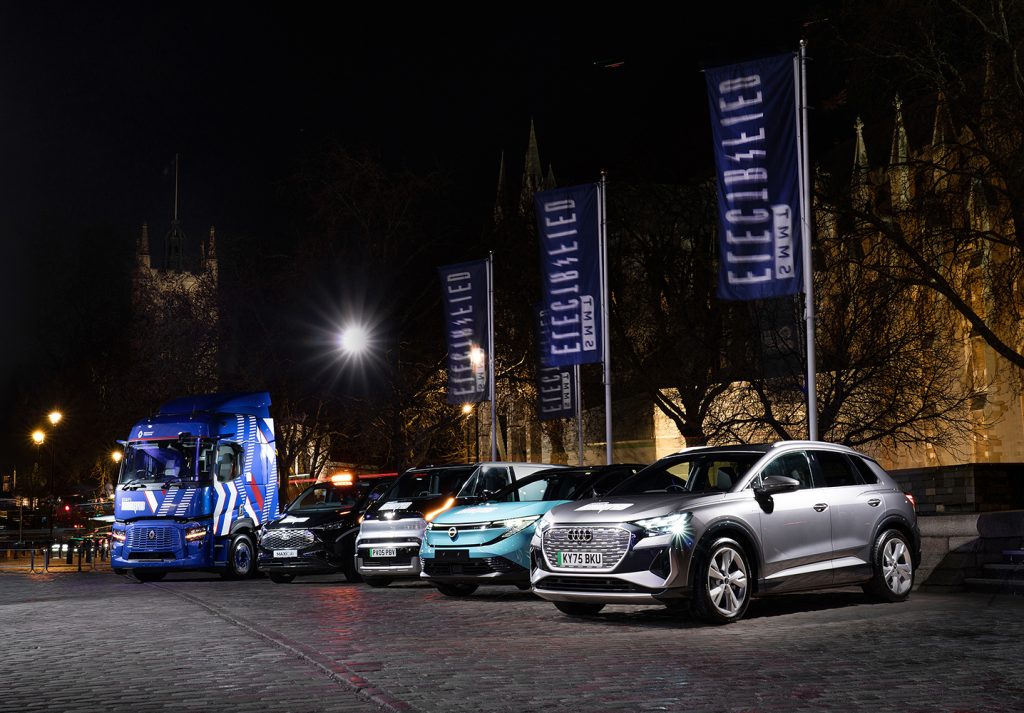
Speaking following the SMMT Electrified Conference, SMMT Chief Executive Mike Hawes said many of the assumptions underpinning current EV policy frameworks, including strong consumer demand, declining costs and a flourishing global market, no longer reflect reality.
Nevertheless, headline figures suggest progress is being made. The UK currently has the largest EV market share of any major European economy, while the EV passenger car market grew by almost a quarter last year. Manufacturers also achieved compliance with the government’s Zero Emission Vehicle Mandate in 2024.
However, Hawes said those statistics mask the true cost of meeting regulatory targets.
Manufacturers must comply with the mandate regardless of market conditions, whether through subsidising vehicle purchases, trading credits with competitors, or potentially paying compliance penalties. As a result, the industry has spent more than £10bn on vehicle discounts since the mandate was introduced in order to stimulate EV demand beyond what the market would otherwise deliver.
“That scale of intervention is simply unsustainable,” Hawes said, particularly as economic realities have diverged sharply from the expectations that shaped the mandate when it was first designed in 2021.
New analysis published in the SMMT’s report Same Destination, Smarter Route highlights the extent of the cost pressures now facing the sector. Battery costs are estimated to be around 30% higher than projected in 2021, while industrial energy prices have risen by roughly 80%.
At the same time, EVs remain around 17% more expensive than petrol and diesel equivalents, with price parity — once predicted to arrive by 2025 — now likely to take longer to achieve. Charging costs have also risen significantly, with public charging prices increasing by more than 120%, and even higher on ultra-rapid networks.
The sector also faces the upcoming introduction of the Electric Vehicle Excise Duty (eVED), alongside tightening ZEV mandate targets. According to the SMMT, the combined effect of these policies risks undermining the UK’s ability to attract global automotive investment.
The government has already committed to reviewing the ZEV mandate framework, but the SMMT argues that waiting until 2027 is too late given the widening gap between policy ambition and natural consumer demand.
Hawes said the review must take place sooner and deliver clear outcomes within the year to provide certainty for manufacturers.
“If we get this wrong, we risk damaging an industry that is vital to the UK economy and, crucially, undermining the very decarbonisation ambitions we all share,” he warned.
Industry leaders attending the conference — including representatives from government, automotive manufacturers, global suppliers and related sectors such as energy, infrastructure and insurance — emphasised the need for closer collaboration to address the challenges facing the transition.
Despite the increasingly fragmented global environment, Hawes said dialogue and partnership across the automotive ecosystem will be essential to safeguarding the UK sector’s long-term competitiveness and ensuring the shift to zero-emission mobility remains achievable.
For more articles like this, visit our Leadership channel