
A new cluster of British-designed and manufactured satellites has successfully reached low Earth orbit, marking a significant step forward in the UK’s ambitions to strengthen space-based intelligence, surveillance and reconnaissance capabilities across defence, security and civil sectors.
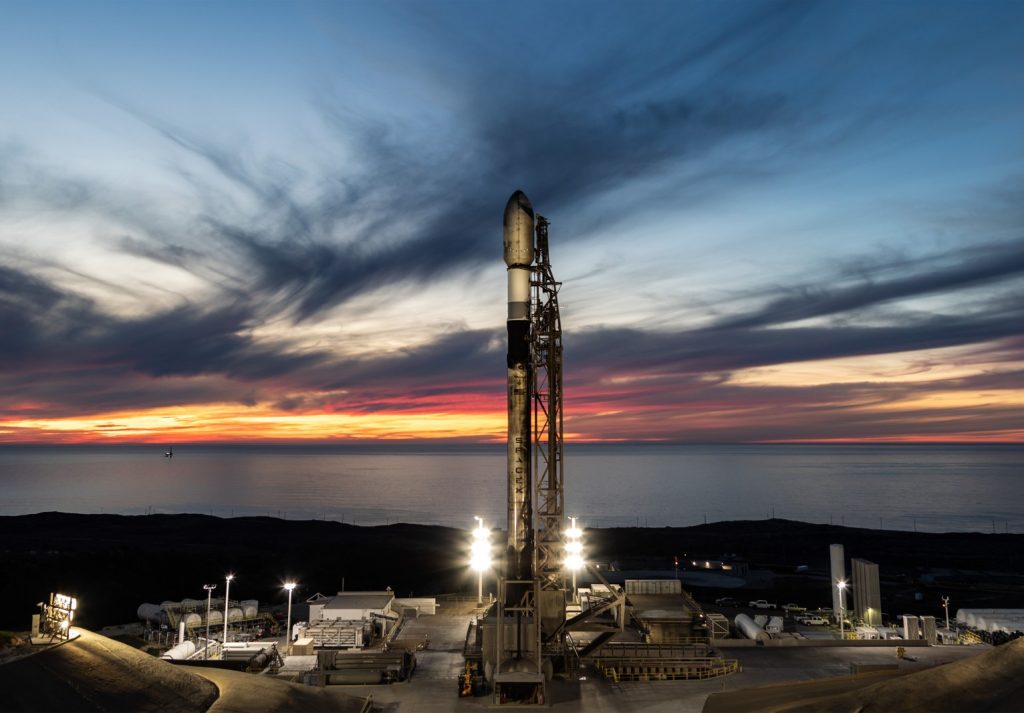
Three Azalea radio-frequency (RF) satellites, developed by BAE Systems, were launched on 28 November 2025 as part of SpaceX’s Transporter-15 rideshare mission, facilitated by Exolaunch. The company confirmed that communications with all three UK-built spacecraft were established during their first contact windows between 23:05 and 04:55 GMT.
The deployment represents a major milestone in BAE Systems’ self-funded Azalea mission. The satellites will fly in formation at approximately 350 miles above Earth, using ultra-wideband RF sensors to detect, monitor and geolocate radio signals across long distances.
Joining the three-spacecraft formation is a synthetic aperture radar (SAR) satellite from Finnish manufacturer ICEYE, also launched aboard Transporter-15. Together, the four-satellite cluster will provide advanced multi-sensing capabilities, combining RF and SAR data to improve situational awareness in near real time.
BAE Systems plans to process both RF and SAR data onboard the satellites, delivering actionable intelligence directly to decision-makers across land, sea and air domains. The company expects the system to support a range of applications — from protecting military personnel and critical infrastructure to monitoring maritime activity and assisting with disaster response. Trials of the data fusion technology will be conducted in the coming months in collaboration with customers.
Andrea Thompson, Group Managing Director at BAE Systems’ Digital Intelligence business, said the launch underscores the strategic importance of space in modern defence. “Building on decades of experience in defence, security and space innovation, our Azalea mission reflects the critical role space plays in defence and national security, offering a unique vantage point of Earth which enables us to better understand and respond to today’s complex threats,” she said. “This cutting-edge technology is designed to deliver near real-time, space-based insights directly to users, empowering them to make informed decisions that help protect the UK and its allies.”
Each Azalea satellite weighs roughly 150 kilograms and carries the company’s Enhanced Software Defined Radio — a system designed, built and operated in the UK. Using artificial intelligence, the payload processes RF and SAR data in orbit, converting raw inputs into intelligence products before transmitting them securely to ground users. The system can also be updated remotely while in orbit, allowing rapid reconfiguration for future missions.
The satellites will orbit the planet every 90 minutes at speeds of around 7.6 kilometres per second.
Dr Paul Bate, CEO of the UK Space Agency, welcomed the launch as a boost to the nation’s space capabilities. “The successful launch of the Azalea constellation will increase the availability of advanced information from space, to help meet the fast-growing global demand from civil, national security and defence customers,” he said. “The new satellites, which will use AI to convert raw data into actionable intelligence, represent a significant and welcome investment by BAE Systems in the UK space industry, which plays a vital role in driving economic growth and keeping us safe.”
For more articles like this, visit our Innovation channel