


Today (November 5th) is National Engineering Day, a day which aims to “re-engineer what it means to be an engineer.” Today’s engineers are shaping the technologies and industries of the future – from defence and artificial intelligence to quantum and climate change, developing innovative solutions to some of the world’s biggest problems.
There are almost 6.4 million people working in engineering and technology roles in the UK, making up around a fifth of the workforce. As part of its Industrial Strategy, the government has identified Advanced Manufacturing as one of the eight strategic priority sectors. Its ability to develop lighter, stronger materials is set to change the future of engineering for good, encouraging further investment and employment in this sector.
In this article, engineers at Alloyed, an Oxford-based high-tech metals specialist, share what day-to-day life is like working in the cutting-edge sectors of Advanced Manufacturing and 3D printing, and share suggestions for how the next generation can enter a highly resilient, future-facing industry.
The myths vs reality
A common misconception with engineering is that it’s a solitary, desk-based career – but in fact, it is the complete opposite. Engineering requires teamwork and communication to meet client deadlines, engage new customers, and get the job done to a high standard. Take Georgina Frater, Head of Innovation Services at Alloyed, who has been with the company for five years.

“I work with companies in the aerospace industry, helping them to build metal components for aircrafts and satellites using additive manufacturing techniques. One example of these components is an aluminium alloy, which is extremely strong. The challenge is that when they are 3D printed, they are prone to cracking and breaking apart. We have a customer interested in using this alloy at high temperatures, so our job is to optimise the 3D printer to build parts without any cracks. My work involves understanding our experiments, presenting results to the customer, and solving problems along the way. We’ve developed bespoke software to control the laser used for printing to a very high level, resulting in the creation of crack-free, strong and highly flexible components.”
According to Georgina: “It’s an exciting time to be at the forefront of this new technology that has the potential to have a huge impact on some of the biggest challenges engineers are facing – from decarbonisation to miniaturisation. Being at the cutting edge of an emerging industry, we’re making things that no one else can.”
But this can’t be done in isolation, it requires a team with varying expertise to work together and overcome complex issues.
The unexpected skills
Another key national priority for the UK government is defence. Its recently published Defence Industrial Strategy promised to strengthen national security and grow the British economy. While some jobs are directly engineering-focused, the defence industry also needs a wide range of technical expertise in areas like cybersecurity, and soft skills such as project management and problem-solving. One example is Theo Hales, an Associate at Alloyed’s microturbine and propulsion business – Argive – working on supply chain development and management.
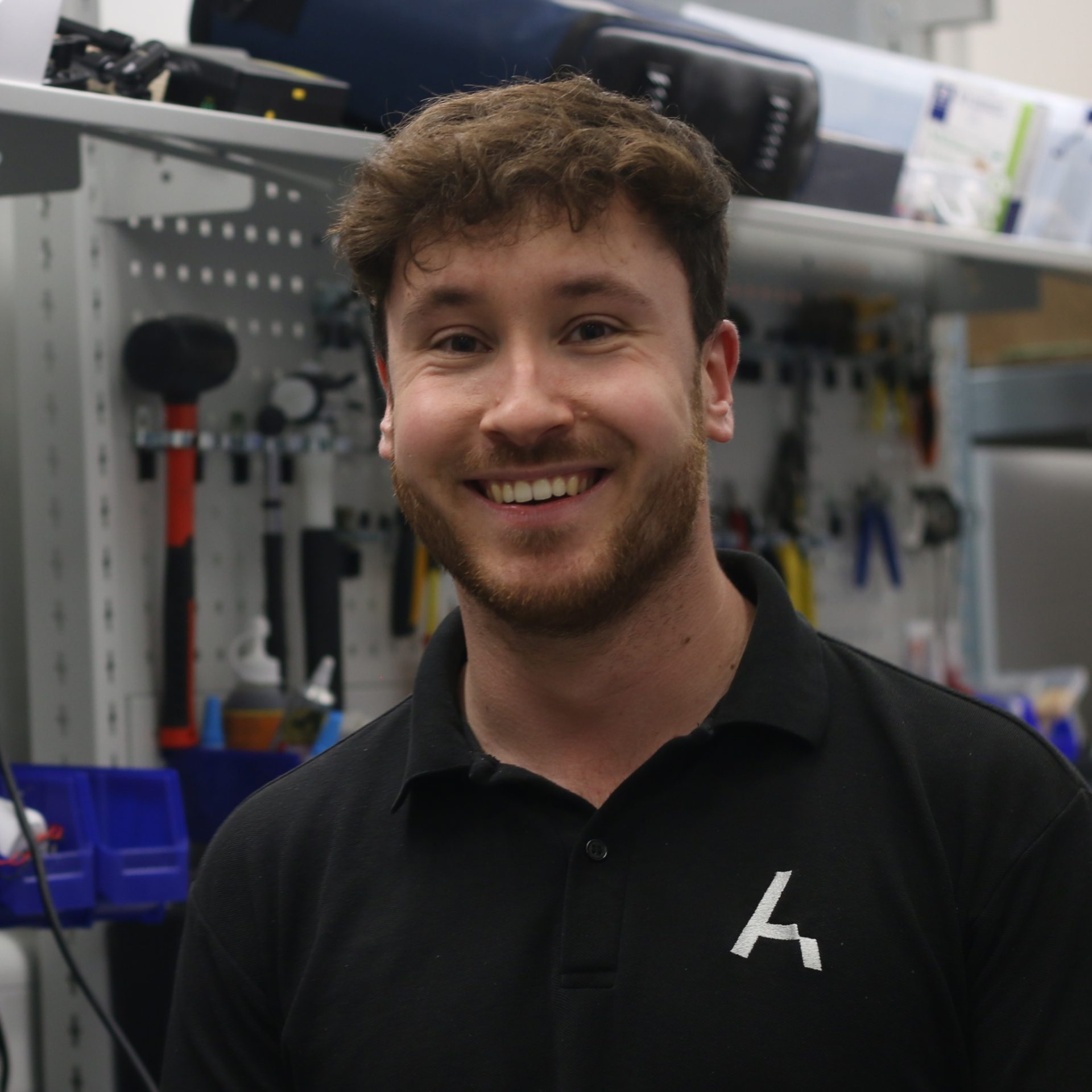
“I’m responsible for sourcing components which start up and control the microturbine engines we produce, as well as making sure we can get them on time and within budget. This is important as the majority of the ancillary components we require, such as pumps, microelectronics, and bearings, have supply chains which run through China. Finding controlled, alternative supply chains for parts like these is vital to making Argive’s engine supply secure and resilient.
“This role requires a wide range of skills from communicating with suppliers and managing shipments and invoices, to testing the turbines we’ve built and helping with process improvements and assembling parts. It’s a real mix of hands-on and desk work. The variety of the work is something I don’t see many other places offering. It’s a chance to get stuck in and gain experience in all sorts of business areas under the umbrella of one company.”
If that sounds of interest, the next question is: how does one go about getting into a career in engineering in the first place?
Diverse pathways into engineering
The traditional route of a four-year university degree is no longer the sole entry point into engineering. It is a sector that values experience and skills as highly (if not more so) than a degree, which can often be acquired through internships or apprenticeship schemes. Alloyed takes on several apprentices each year, including Ewan Morgan, who has been with the company for just over three years.

“I work in the manufacturing development team creating and optimising processes for making complex metal parts. I help print and process parts for cars and rockets but also AR (Augmented Reality) glasses. Before joining Alloyed, I took part in a foundation engineering degree at Oxford Brookes University. This allowed me to understand the basic principles of engineering in more detail, and helped me realise that my strengths lie in utilising my pre-existing knowledge and applying that in a real-world practical environment.
“Being an apprentice enabled me to work on a variety of projects which have a real impact across industries. My focus each day ranges from working on parts for the next generation AR products in the morning, to components for luxury cars in the afternoon. This is something I wouldn’t have experienced by sitting in a classroom. The knowledge and skills I have gained over the apprenticeship scheme have allowed me to move to a project engineering role in the components engineering team, which I was unsure I would ever be able to reach before.”
With a recent £182 million investment in the defence industry alone, it’s clear that the government is pushing to boost the talent pipeline to ensure it has the workforce it needs for the future.
Engineering your future
For current students, graduates and school leavers considering a career in a booming industry that is largely resistant to AI displacement, Natalie Wu, a recent graduate from Imperial College London, shares her top tips for anyone looking to enter the sector. Natalie started as an intern at Alloyed, and now works full-time in the operations team, ensuring everything runs smoothly and efficiently at Alloyed’s manufacturing site.

“Firstly, get hands-on experience and challenge yourself. Whether it’s through internships, hackathons, university societies, or personal projects, actively working on real-world problems is one of the best ways to grow. Even if things don’t go perfectly, you’ll gain valuable lessons that will make you a better engineer and better prepared to push boundaries in a field like additive manufacturing (AM).
“Secondly, stay curious and keep up with the industry. Take the time to explore the world of AM and stay up to date with recent developments, breakthroughs, and trends. Following industry news helps build a strong foundation and gives you insight into where the field is heading.
“Last but not least, don’t underestimate the power of soft skills. Communication, teamwork, and adaptability are essential in AM, especially when working in multidisciplinary teams or with high profile clients. Being able to explain complex ideas clearly, collaborate effectively, and stay open to feedback will set you apart just as much as technical expertise.”
The engineering landscape is rapidly evolving, moving beyond traditional perceptions to embrace diverse roles and innovative technologies like Advanced Manufacturing and 3D printing. It is an industry that thrives on collaboration, problem-solving, and a blend of technical and soft skills. As it becomes a sector of increasing focus for the government and the UK growth agenda, more engineers will be required to continue building this resilient and future-facing industry.
For more articles like this, visit our People & Skills channel.