

Maintenance, repair and overhaul delivers faster, cheaper and more sustainable solutions than replacement and may be the key to keeping industry resilient. Andrew McClusky, Managing Director, BEP Surface Technologies explains more.
Manufacturers today operate in a world defined by disruption. Supply chain instability, rising costs of raw materials, stricter regulations, and constant demand for greater sustainability have all pushed industry leaders to rethink their strategies for keeping operations running. One area gaining renewed attention is maintenance, repair and overhaul (MRO), a field once considered a back-office function, but now proving to be central to cost efficiency, resilience, and environmental responsibility in manufacturing.
Key takeaways
- MRO is a strategic advantage, not a back-office function: Repairing and refurbishing equipment delivers faster, cheaper, and more sustainable solutions than replacement, making it essential for cost efficiency, resilience, and compliance.
- The economic case is compelling: Examples like pump shafts and cooling rolls show that refurbishment often costs 20–25% of new parts and is completed in weeks instead of months, reducing downtime and avoiding multimillion-pound production losses.
- Sustainability and compliance drive adoption: MRO supports the circular economy by extending asset lifespans, cutting waste, and reducing raw material demand. The authorisation of Chrome 6 under strict safeguards shows how even regulated processes can remain vital for responsible refurbishment.
- Barriers remain in trust and mindset: Many manufacturers still treat MRO as a low priority, leading to costly breakdowns, unplanned downtime, and lost competitiveness. Concerns over quality and compliance further highlight the need for experienced, certified MRO providers.
- The future lies in predictive and proactive refurbishment: IoT sensors and analytics now enable planned maintenance before failures occur, turning MRO into a driver of innovation, sustainability, and supply chain resilience rather than just cost savings.
FAQs
- Why is MRO becoming more important for manufacturers today?
- How does refurbishment compare to buying new components?
- What role does MRO play in sustainability?
- What are the main challenges to wider adoption of MRO?
- How is technology shaping the future of MRO?
The global MRO market for manufacturing is enormous and growing, projected to reach $701.3bn by 2030, growing at a CAGR (compound annual growth rate) of 2.9%. This steady expansion is driven by automation, predictive maintenance technologies, and demand for operational efficiency.
This growth is not just about volume, but about value. Manufacturers are under intense pressure to minimise downtime, control spiralling costs, and extend the lifespan of critical assets. MRO offers an obvious solution: refurbish, repair, and recondition components instead of waiting months and paying multiples more for new replacements.
The economics of choice
The decision between buying new and repairing existing equipment is rarely straightforward, but the numbers tell a compelling story.
Consider a pump shaft, a common component in manufacturing. A new one, with multiple bearing diameters and complex machining, can cost more than £40,000 and take up to 16 weeks to deliver. Alternatively, refurbishing, stripping, grinding, re-plating and finishing costs around £7,000, less than 20% of the price of a new unit, and can be completed within just three to four weeks.
The savings are more than just financial. Faster turnaround means less downtime, and in manufacturing, time is money. A stopped production line can cost millions per day in lost output. Choosing repair over replacement often becomes not just a financial decision, but an operational necessity.
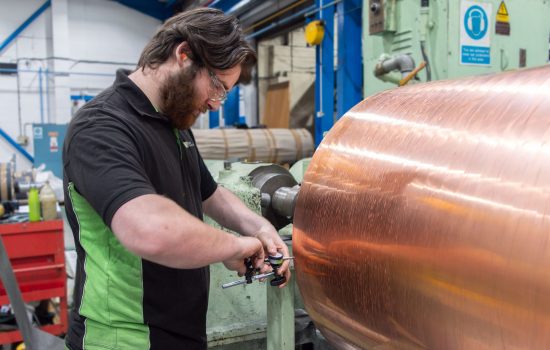
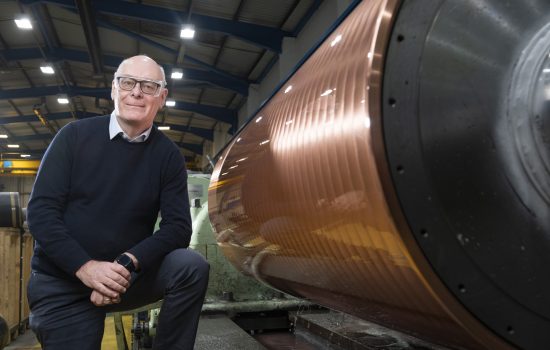
These aren’t isolated cases across industries; the logic of repair over replacement repeats itself in powerful ways. Refurbishing cooling rolls for the packaging industry costs just 25% of buying new.
And re-chroming turbine shafts saves significant amounts compared to replacement, regardless of the repair cost. For manufacturers, MRO is not a compromise; it is a way to maintain “as good as new” performance at a fraction of the time and cost.
Beyond cost: compliance and circular economy
Manufacturing faces real pressure to improve from customers, regulators, and the environment. Opting to refurbish instead of replacing not only saves money but also gives machinery a second life, reduces waste, and lowers the continual demand for raw materials.
Every component that’s repaired instead of scrapped is a win for both industry and the environment. That’s why MRO isn’t just good business practice; it’s part of building a circular, more responsible future for manufacturing.
As specialists in surface finishing, BEP view chrome plating as a prime example where perception and reality often differ. Often labelled as expensive, heavily regulated, and environmentally complex, chrome still plays an essential role in restoring precision components. The Surface Engineering Association (SEA)’s recent achievement in securing approval for the continued use of Chrome 6 under UK law marks a significant industry milestone.
It demonstrates that with strict safeguards and compliance, chrome processes can remain a vital part of refurbishment, helping manufacturers extend asset lifespans while avoiding waste and the costs associated with scrapping and remanufacturing.
The authorisation from REACH not only guarantees continuity for vital sectors such as energy, defence, and aerospace, but also conveys a clear message that responsible MRO is part of the sustainability solution, not the problem.
The hesitation
The benefits of MRO are clear, yet many manufacturers still hesitate. Under pressure to cut costs, refurbishment is often pushed down the priority list until a breakdown forces action. Waiting for failure is the most expensive option of all; it leads to unplanned downtime, emergency repairs and equipment that never lasts as long as it should.
The reasons are familiar: spare parts aren’t always kept on hand, oversight of suppliers is patchy, and refurbished components sometimes sit neglected until they’re no longer usable. These may feel like minor oversights in the moment, but together they add up to considerable losses in time, money, and competitiveness. The encouraging truth is that with a shift in mindset and the willingness to treat MRO as an investment rather than a cost, this weakness can be turned into a significant strength for manufacturers.
The credibility gap
Another barrier is trust. For high-value, high-risk applications like nuclear reactors and aerospace turbines, manufacturers require complete confidence in their supply chain. Working with small, under-resourced operators can expose prime contractors and tier-one suppliers to reputational and operational risks. The industry has experienced this in other sectors: cheap suppliers might seem appealing, but when quality or compliance issues arise, the cost of failure far outweighs initial savings.
This is where experienced MRO specialists can assist. BEP consistently invest in heavy-duty grinding machines and plating tanks, ensuring compliance with international standards (ISO 9001, 14001, 45001) to meet the scale, quality, and assurance requirements of global operators. For manufacturers, this level of expertise and compliance turns MRO from a gamble into a strategic advantage.
The future of MRO
It’s tempting to see MRO as just a way to save money. But that underestimates its full value. Refurbishment not only repairs a component, but also often improves it. By re-engineering parts during an overhaul, performance can be increased, tolerances made tighter and operational life extended beyond the original design. That’s real value creation, not merely cost saving.
Just as important, refurbishment is a lifeline for supply chains. Manufacturers cannot afford to pin production schedules on components that take 16 weeks to arrive or that depend on fragile global supply routes. By choosing to repair and reuse, companies keep plants running and customers supplied, even in the face of geopolitical shocks or raw material shortages. In today’s climate, resilience isn’t a luxury; it’s survival.
The argument becomes even stronger with predictive maintenance. IoT sensors and data analytics now enable failures to be anticipated before they occur, making refurbishment a planned, proactive process rather than a reaction to emergencies. That shift transforms MRO into a strategic advantage, reducing downtime, minimising waste and giving manufacturers greater control.
The scale of the opportunity is enormous. If industries adopted refurbishment systematically, savings in costs, carbon, and downtime would be revolutionary. For instance, one of BEP’s packaging industry customers has been with the company for over 25 years, during which BEP has refurbished around 500 rolls. Even without a strict two-year service cycle, that approach has saved significant costs and extended the lifespan of critical assets. The partnership shows how refurbishment, applied consistently, can deliver long-term value while keeping operations running smoothly.
For manufacturers facing the dual challenges of cost and sustainability, the logic of MRO is clear. Refurbishment offers parts that perform ‘as new’, at a fraction of the cost and time, while supporting environmental objectives and strengthening supply chains.
The Chrome 6 authorisation victory demonstrates another point: even processes once dismissed as toxic or impossible can become part of the solution if approached with rigour and responsibility. Combine this with the rise of predictive tools, and the route to a more innovative, more sustainable manufacturing model is clearly within reach.
The real question
The question is no longer whether to repair or replace, but whether manufacturers can afford to ignore MRO. Those who embrace it will save money, build resilience, and meet the expectations of a world that demands more responsibility from industry. Those who do not risk being left behind.
And for industry leaders, the question is no longer whether MRO is viable; it is whether they can afford not to adopt it. Those who do so will not only save money but also build resilience, credibility, and sustainability in a sector where these qualities determine long-term success.
For more articles like this, visit our Innovation channel