
Over the past decade, the automotive industry made focused investment on electrification as the primary route to decarbonisation. That progress has been significant. But as markets mature, emission regulations evolve and customer requirements change, it is becoming increasingly clear that no single propulsion technology can meet every transport need, as Todd Anderson, Vice President and Chief Technology Officer, PHINIA, explains.
The latest Global EV Outlook report from the International Energy Agency (IEA) illustrates both the progress being made towards electrification but also the growing complexity of that transition. In 2025, one in four new cars sold globally was electric, with growth accelerating in emerging markets. For example, annual EV sales more than doubled in Southeast Asia and increased by 75% in Latin America.
- Q: Why can’t electrification alone solve transport decarbonisation?
A: Different sectors have different operating requirements. While battery EVs suit many passenger vehicles, commercial transport, agriculture, construction and off-highway equipment may face challenges such as limited charging infrastructure, long operating hours, heavy loads and downtime constraints. - Q: What is meant by “multiple propulsion futures”?
A: It means manufacturers should develop a portfolio of technologies rather than rely on one solution. Battery electric, hybrid, cleaner combustion, hydrogen engines and renewable fuels can all contribute to reducing emissions in different applications. - Q: Why are renewable fuels important to decarbonisation?
A: Fuels such as HVO, biofuels and e-fuels can reduce lifecycle emissions while allowing existing vehicles and fleets to remain in service. This can provide a faster and more practical route to emissions reduction without replacing entire vehicle fleets. - Q: What challenges do heavy-duty and off-highway vehicles face with electrification?
A: Equipment such as combine harvesters, construction machinery and mining vehicles often operate for long periods in remote or demanding environments. High energy requirements, limited charging access, heavy loads and vibration or impact risks can make large battery systems less practical. - Q: What should manufacturers do to prepare for the changing market?
A: Manufacturers should maintain broad engineering and manufacturing capabilities and develop combustion, hydrogen, renewable-fuel and electrified powertrains in parallel. This flexibility will help them respond to changing regulations, customer needs, infrastructure and regional priorities.
But the same report also highlights a more nuanced reality. Electric trucks accounted for only 9% of global truck sales in 2025, while infrastructure, operating requirements and affordability continue to slow adoption across many commercial and industrial applications.
The implication is straightforward: decarbonisation will progress at different speeds across different sectors, requiring multiple technology pathways rather than a single solution.
The destination: decarbonisation
The automotive industry has, at times, treated electrification as synonymous with decarbonisation. Yet, the real objective is reducing lifecycle carbon emissions, not promoting a single propulsion technology. Achieving that will require manufacturers to innovate across multiple technologies, matching each solution to the right application.
While battery EVs are well-suited to many passenger vehicle applications, other sectors, including commercial transport, agriculture, construction and off-highway equipment, face very different operational demands, posing substantial challenges for effective electrification adoption in those sectors.
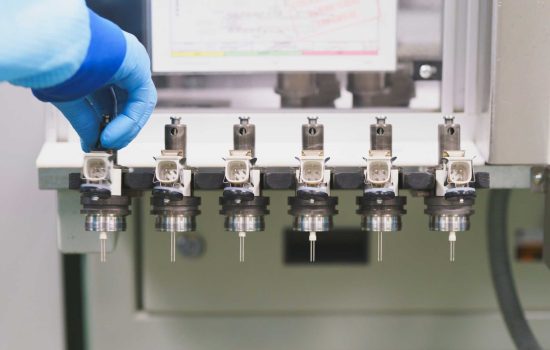
Electric vehicles are just one part of the decarbonisation puzzle. Engineering continues to advance across cleaner combustion systems, hybrid powertrains, advanced fuel injection, hydrogen internal combustion engines and renewable fuels, expanding the range of technologies capable of reducing transport emissions.
This is particularly important in industries where electrification may not always be the most practical or immediate solution. In commercial and industrial applications, adapting proven technologies to operate on renewable or lower-carbon fuels can offer a faster and more pragmatic route to emissions reduction.
Todd Anderson, Vice President and Chief Technology Officer, PHINIA
 Electric vehicles are just one part of the decarbonisation puzzle. Engineering continues to advance across cleaner combustion systems, hybrid powertrains, advanced fuel injection, hydrogen internal combustion engines and renewable fuels, expanding the range of technologies capable of reducing transport emissions.
Regional differences further add to the complexity. Infrastructure maturity, energy availability, regulatory priorities and customer demands vary significantly between markets. While some regions are rapidly expanding charging infrastructure, others are investing in hydrogen, renewable liquid fuels or natural gas to decarbonise sectors where electrification is less practical.
During harvest season, a combine harvester cannot afford prolonged downtime to recharge, particularly when operating in remote locations with limited charging infrastructure. In these environments, reliability, operating hours, refuelling or recharging availability are often as important as emissions performance when selecting the most appropriate powertrain.
Construction, mining and other off-highway applications face similar challenges. Heavy loads, demanding terrain and long operating hours place exceptionally high energy demand on equipment. Constant mechanical shocks, vibrations, and bottom-out impacts from rough terrain risk compromising the structural integrity of large batteries, making alternative propulsion technologies a more practical option in many scenarios.
When success is measured by emissions reduction rather than technology preference, a different picture emerges: the future of mobility will be shaped by a portfolio of technologies rather than a single winner. Together, advances across multiple propulsion systems and fuels can reduce emissions across a far broader range of vehicles and industries.
Building on today’s innovation to enable tomorrow’s mobility
Electric vehicles are just one part of the decarbonisation puzzle. Engineering continues to advance across cleaner combustion systems, hybrid powertrains, advanced fuel injection, hydrogen internal combustion engines and renewable fuels, expanding the range of technologies capable of reducing transport emissions.
This is particularly important in industries where electrification may not always be the most practical or immediate solution. In commercial and industrial applications, adapting proven technologies to operate on renewable or lower-carbon fuels can offer a faster and more pragmatic route to emissions reduction.
Cleaner combustion systems powered by biofuels, HVO, e-fuels, ethanol, methanol, natural gas or hydrogen have the potential to reduce lifecycle emissions while building on existing vehicle platforms and infrastructure.
Renewable fuels also demonstrate that decarbonisation is not limited to new vehicle programmes. Solutions such as HVO and e-fuels allow existing fleets to continue reducing emissions without requiring wholesale vehicle replacement, extending the value of technologies already in service.
With all of this, it’s clear that innovation is no longer limited to the vehicle itself. It extends to the fuels that power it, the systems that deliver those fuels and the manufacturing processes behind them. Advancing each of these areas together will be just as important as developing the next generation of propulsion systems.
Building capability for a changing market
For manufacturers, the challenge is not deciding which propulsion technology will dominate. It is ensuring their engineering organisations, manufacturing capabilities, and product portfolios remain flexible enough to support multiple technology paths as markets evolve.
Manufacturers that preserve broad engineering capability will be better positioned to respond as customer requirements, regulations and regional priorities continue to evolve. Rather than replacing existing expertise, they should build on it. Decades of investment in fuel systems, manufacturing capability, engineering knowledge and established supply chains provide a strong foundation for developing lower-carbon solutions across multiple propulsion technologies.
We don’t need to reinvent the wheel. A successful, innovative transition can be achieved by adapting proven technologies to meet new environmental and commercial demands.
However, the pace of transition will differ according to application, regional infrastructure and customer requirements. Maintaining broad engineering capabilities will be essential. By advancing combustion, hydrogen, renewable fuels and electrified powertrains in parallel, manufacturers can respond to changing market requirements and regional priorities without losing the expertise that will underpin the next generation of lower-carbon mobility.
By focusing on the right technology for the right application, manufacturers can reduce emissions more quickly, respond to changing market demands and provide OEMs with the flexibility needed to support customers through an increasingly diverse transition.
For more articles like this, visit our Innovation channel